(7% discount is applied at checkout)
Cart is empty
Your go-to destination for cutting-edge server products
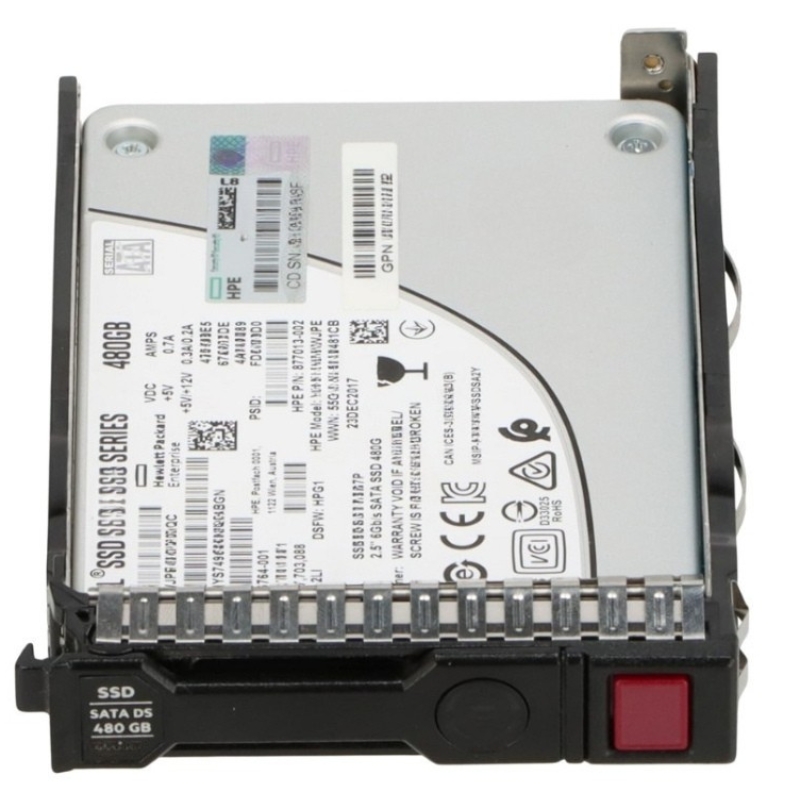


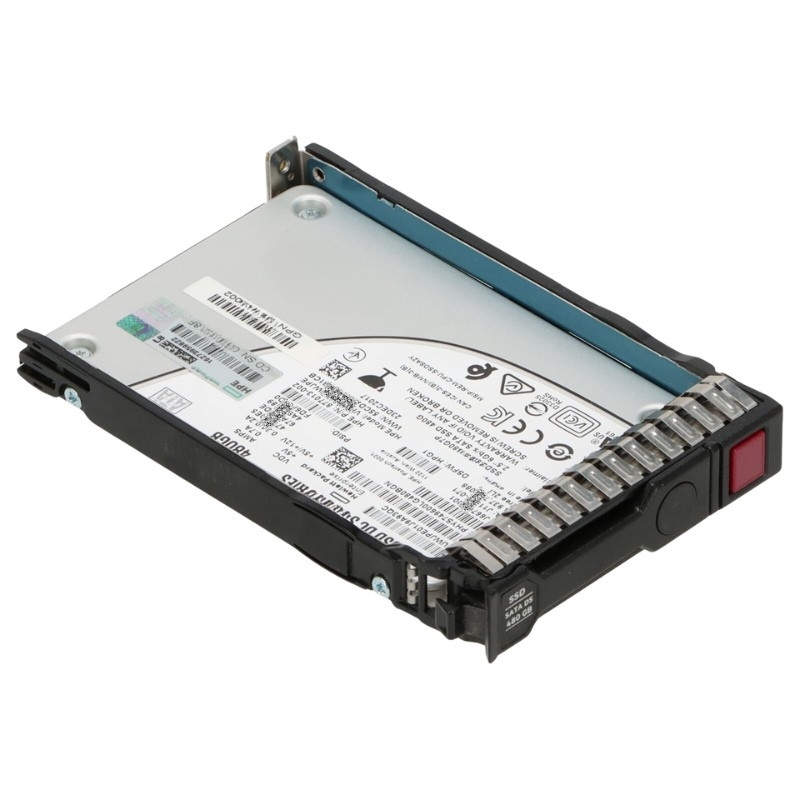
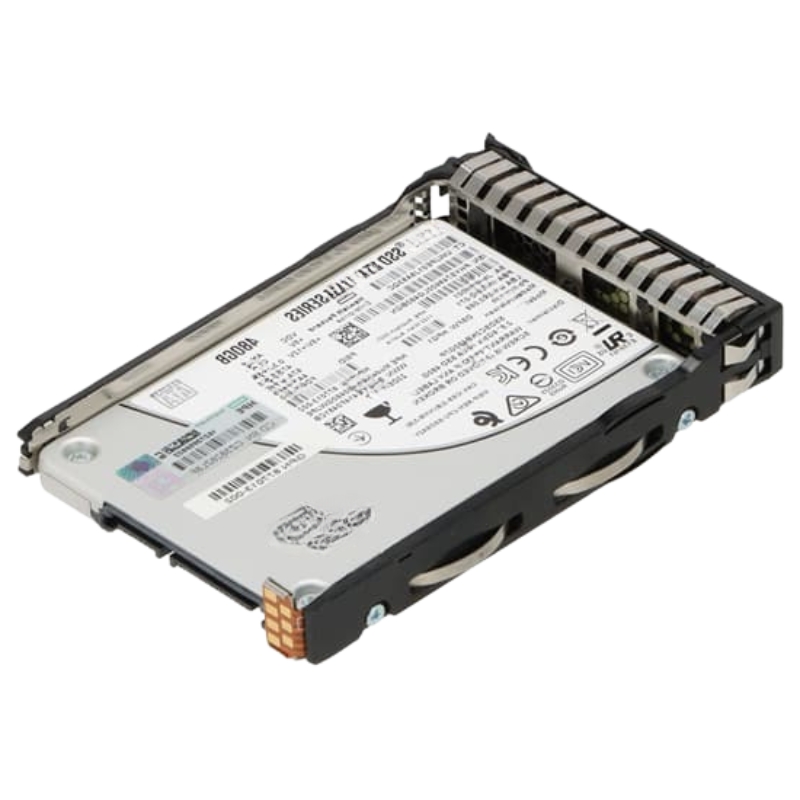
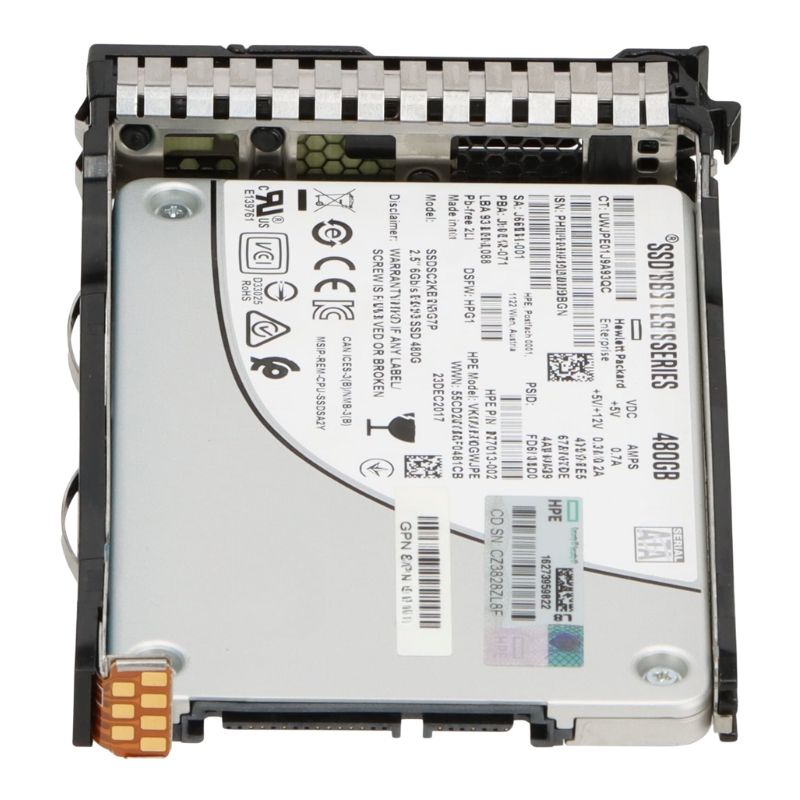
HPE 878846-001 480GB SSD SATA 6GBPS SFF Hot Swap SC. Excellent Refurbished with 1-Year Replacement Warranty
The HPE 878846-001 480GB SFF DS SATA-6GBPS SC Read Intensive Server Solid State Drive sits within a focused category of enterprise-class storage designed specifically for read-heavy server workloads. This category is built around fast, durable, and thermally stable 2.5-inch small form factor (SFF) drives that use the SATA 6.0 GBPS interface and prioritize sustained sequential and random read performance while offering sensible endurance for environments where read operations vastly outnumber writes. The category encompasses drives intended for database read replicas, web servers, virtualization boot volumes, content delivery nodes, analytics caches, and other applications where predictable low-latency reads are the highest priority.
Drives in this category, typified by the HPE 878846-001, are optimized for enterprise servers and storage arrays that require consistent read throughput and I/O responsiveness. Typical deployments include front-end web and application servers, search-index storage, read-oriented databases, VDI pools where reads dominate boot storms, and caching tiers in hybrid storage architectures. These drives are engineered to integrate seamlessly with HPE ProLiant servers and HPE storage controllers, though their form factor and SATA-6Gbps interface also make them compatible with many third-party server platforms and RAID controllers that support 2.5-inch SATA SSDs.
The “SFF DS” or small form factor dual-sided construction of these drives allows manufacturers to pack more NAND capacity into the standard 2.5-inch footprint, enabling larger capacities like 480GB while maintaining a compact physical profile. The small footprint is crucial in dense server environments where rack space and drive bay density determine total storage capacity. Dual-sided builds are common in server-grade SSDs because they enable higher density without changing backplane compatibility.
The SATA 6.0 Gbps interface remains widely supported across enterprise platforms and is suitable for workloads that prioritize cost-efficiency and broad compatibility. Although NVMe and PCIe SSDs deliver higher maximum throughput and much lower latencies, SATA-6Gbps SSDs still provide a compelling balance of performance, compatibility, and price for read-heavy roles. The drives in this category are designed to maximize the effective bandwidth available over the SATA link, delivering high sustained read rates while maintaining low power draw and predictable thermal behavior under continuous operation.
“Read intensive” is a class designation that signals firmware and NAND management tuned to extend endurance for workloads where reads outnumber writes by a large ratio. These drives commonly feature firmware heuristics that optimize garbage collection and wear-leveling to minimize write amplification in environments where steady reads are the norm. For IT planners this means a drive that can run for years serving read requests with fewer endurance concerns than a consumer SSD used in a server setting, while still delivering the responsiveness expected in production systems.
HPE-branded parts like the 878846-001 are often validated against HPE server platforms and storage controllers, and they are typically listed on compatibility matrices for HPE ProLiant families. This validation reduces deployment risk, simplifies procurement, and ensures firmware-level interoperability with management features such as SMART attribute reporting, predictive failure analysis, and power-loss protection logic where applicable. System administrators should consult server firmware and controller compatibility lists to confirm the best slot, backplane, and BIOS settings for optimal operation.
For a read-intensive SATA server SSD, purchasers should expect low single-digit millisecond read latencies, fast random read response, and high sustained sequential read throughput that fully utilizes the SATA 6.0 Gbps interface under favorable conditions. While NVMe alternatives statistically deliver higher peak IOPS and lower latency, the SATA read-intensive class provides performance that is more than adequate for many mission-critical read workloads and is often the most cost-effective solution when read performance is the primary metric.
Enterprise 2.5-inch SATA SSDs are designed to operate within the thermal envelopes of server drive bays. The compact SFF design often includes heat-spreading elements and controller throttling behaviors to preserve integrity under sustained load. Power efficiency is another hallmark: read-focused drives typically consume less active power than high-performance NVMe counterparts, which benefits dense server racks where thermal load and power budgets are limiting factors.
When selecting storage, it's important to compare different SSD classes and interfaces. The read-intensive SATA SSD offers a cost-effective solution where read performance is paramount and absolute lowest-latency NVMe is not required. In contrast, mixed-use and write-intensive enterprise NVMe drives prioritize endurance and peak IOPS for write-heavy analytics and transactional systems. Choosing between these categories involves evaluating application I/O patterns, budget constraints, and expected growth.


 Contact Us
 Information
 Catalog
 Solid State Drives (SSD)
 Network Switches
 Hard Disk Drives
 HBA & Controllers
 PC & Servers
 PC & Server Memory
 CPU & Processors
 Network Routers
 Power Supplies
 Tape Drives & Libraries
 Network Devices
 Computer & Network Cables