(7% discount is applied at checkout)
Cart is empty
Your go-to destination for cutting-edge server products
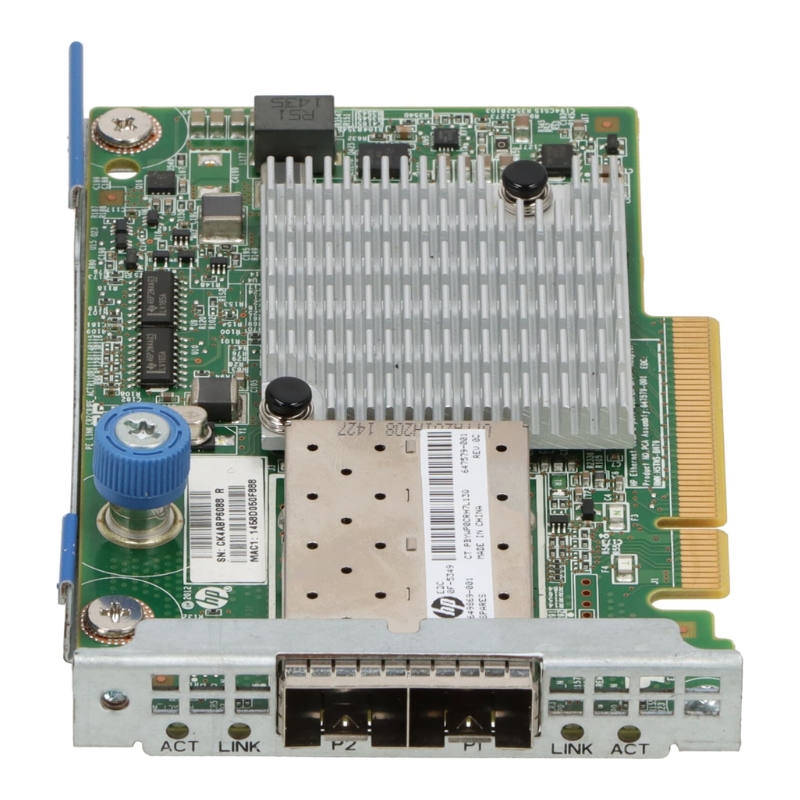


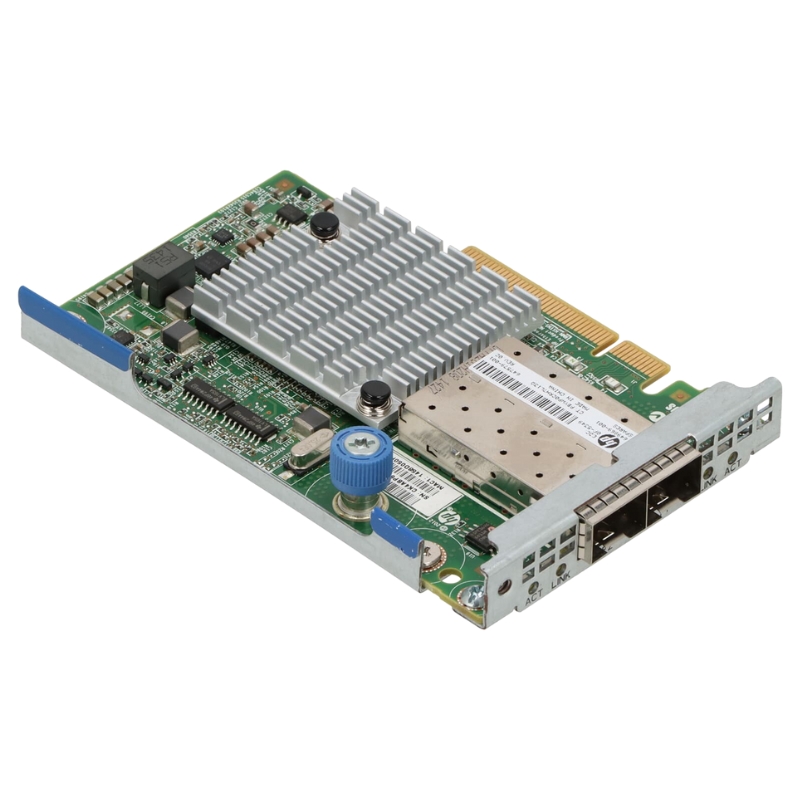
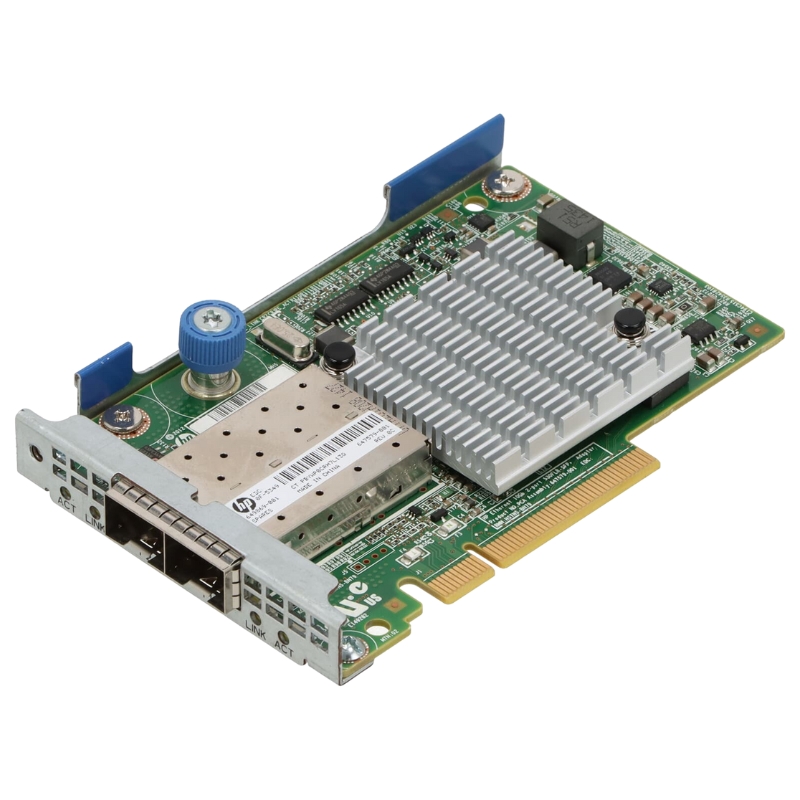
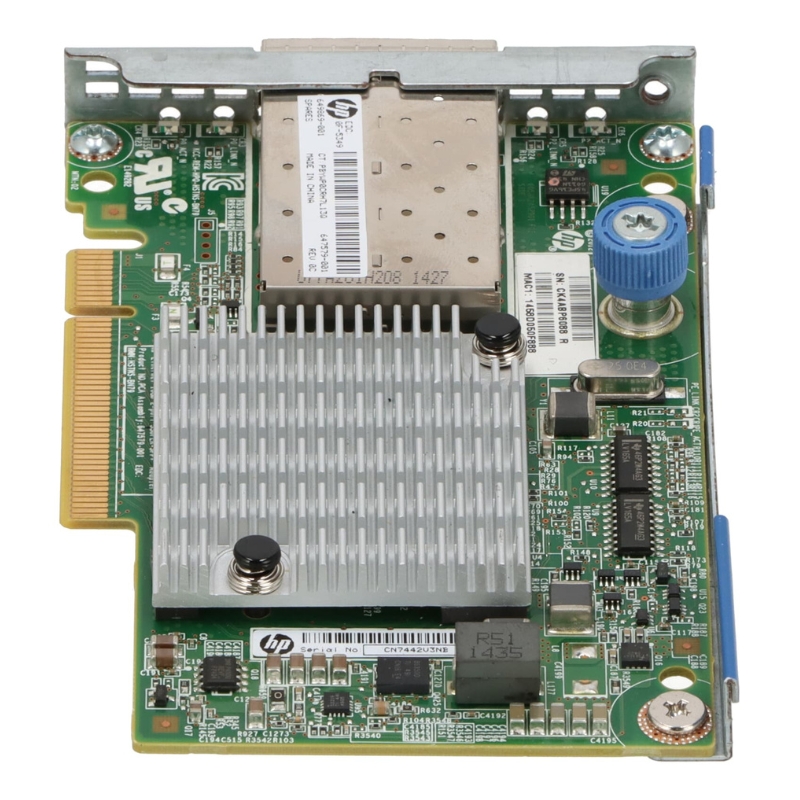
HPE 530FLR Dual-Ports SFP+ 10Gbps Gigabit Ethernet PCI Express Adapter. Excellent Refurbished with 1 year replacement warranty
The HPE 530FLR 10Gb 2-Port SFP+ Adapter offers high-performance networking capabilities for modern IT environments. Below are the key specifications that define its efficiency and versatility.
The HPE 530FLR Dual-Port SFP+ 10Gbps Ethernet PCI Express Adapter is a high-performance networking solution engineered for enterprise servers requiring reliable, low-latency, and high-bandwidth connectivity. Designed specifically for HPE ProLiant server environments, this FlexibleLOM adapter delivers dual-port 10 Gigabit Ethernet functionality through SFP+ interfaces, enabling organizations to support demanding workloads, virtualization environments, cloud infrastructures, and data-intensive applications.
Built on advanced networking technologies, the adapter combines efficient data transfer capabilities with enterprise-grade reliability. The dual-port configuration allows administrators to deploy redundant network paths, increase aggregate throughput, and improve overall network resilience. By utilizing SFP+ connectivity, the adapter supports a wide range of optical transceivers and direct attach copper cables, providing deployment flexibility across different network architectures.
The FlexibleLOM architecture enables organizations to customize server networking configurations without occupying traditional PCIe expansion slots. This design improves server flexibility while preserving valuable expansion resources for additional storage controllers, accelerators, or specialized adapters. The compact form factor is optimized for integration within supported HPE server platforms, reducing cabling complexity and simplifying system deployment.
FlexibleLOM technology also provides investment protection by allowing network upgrades and changes without requiring complete server replacement. Organizations can adapt networking capabilities as infrastructure requirements evolve, supporting future scalability and operational efficiency.
The adapter delivers 10 Gigabit Ethernet performance across both ports, enabling significantly higher bandwidth compared to traditional Gigabit Ethernet solutions. This increased throughput supports modern enterprise workloads, including virtualization clusters, database servers, cloud computing platforms, software-defined storage, and high-performance computing environments.
By reducing network bottlenecks and improving application responsiveness, 10GbE connectivity contributes to enhanced productivity and optimized resource utilization throughout the data center.
One of the primary advantages of the HPE 530FLR adapter is its dual-port architecture. Each port can operate independently, providing redundant communication paths that improve network availability and business continuity. In mission-critical environments, redundancy minimizes service interruptions caused by cable failures, switch outages, or network maintenance activities.
Administrators can configure active-passive failover mechanisms or active-active load balancing arrangements depending on infrastructure requirements. This flexibility helps maintain application availability while maximizing network resource utilization.
Link aggregation technologies allow multiple network connections to function as a single logical interface. Through supported teaming and bonding configurations, the adapter can increase available bandwidth while providing fault tolerance. This capability is particularly valuable for environments with heavy network traffic, such as virtualization hosts, storage servers, and large-scale application platforms.
Traffic distribution across multiple links improves network efficiency by balancing workloads between available interfaces. As network demands increase, aggregated connections help maintain consistent performance while reducing congestion on individual links.
The SFP+ interfaces on the HPE 530FLR adapter support a wide range of optical and copper connectivity options. This modular approach enables organizations to select transceivers that match specific deployment requirements, including short-range, long-range, and direct attach configurations.
By separating network adapters from physical media components, enterprises gain flexibility when designing and expanding network infrastructures. Organizations can adapt cabling strategies without replacing the core adapter hardware.
Fiber optic transceivers provide high-speed communication with excellent signal integrity and electromagnetic interference resistance. These characteristics make fiber connectivity ideal for data center deployments, enterprise campuses, and environments requiring long-distance communication.
Fiber-based networking supports reliable high-bandwidth data transfer while maintaining consistent performance under demanding operating conditions.
For short-distance server-to-switch connections, direct attach copper cables provide a cost-effective alternative to optical transceivers. DAC connectivity simplifies deployment, reduces power consumption, and lowers overall infrastructure costs while maintaining full 10GbE performance.
The HPE 530FLR adapter utilizes PCI Express technology to establish a high-bandwidth communication pathway between the network interface and host server. PCIe architecture provides the throughput necessary to support dual-port 10GbE operations while minimizing latency and maximizing data transfer efficiency.
This advanced interconnect technology enables rapid movement of network traffic between applications, memory subsystems, and storage resources.
Efficient PCIe integration contributes to lower communication delays across enterprise workloads. Reduced latency improves responsiveness for real-time applications, virtualized environments, transactional databases, and distributed computing platforms.
Applications requiring rapid data access benefit from streamlined communication pathways and optimized network processing capabilities.
The adapter supports efficient data flow operations that maximize available bandwidth and minimize processing overhead. These capabilities enhance overall server performance and improve infrastructure scalability.
Cloud environments require scalable and reliable networking solutions capable of supporting dynamic workloads. The HPE 530FLR adapter provides the bandwidth and reliability necessary for private, public, and hybrid cloud deployments.
Its dual-port architecture facilitates flexible network design while supporting multi-tenant environments and resource-intensive applications.
Software-defined infrastructures depend on high-performance networking components to connect compute, storage, and management resources. The adapter integrates effectively within software-defined architectures by providing dependable connectivity and enterprise-grade performance.
Modern data centers frequently deploy high-density server environments where networking efficiency is critical. The adapter helps organizations maximize server utilization while maintaining reliable communication between infrastructure components.
Within rack deployments, high-speed Ethernet connectivity supports efficient communication between servers, switches, and storage platforms. The adapter contributes to streamlined network operations and optimized traffic flow.
As infrastructure requirements evolve, organizations can expand network capacity without significant architectural changes. The adapter supports long-term scalability initiatives and future growth strategies.
The adapter supports enterprise network management practices by enabling administrators to monitor, configure, and optimize network operations. Comprehensive management capabilities contribute to improved visibility and proactive infrastructure maintenance.
Network teams can implement performance monitoring, fault detection, and configuration management processes that support operational excellence.
Quality of Service technologies help prioritize critical workloads and ensure consistent application performance. Traffic management capabilities enable organizations to align network behavior with business objectives and service level requirements.
Prioritizing essential traffic helps maintain responsiveness for business-critical applications. This capability is particularly valuable in shared infrastructure environments where multiple workloads compete for network resources.
Traffic optimization mechanisms improve overall network efficiency by allocating bandwidth according to operational priorities and workload requirements.
Advanced networking technologies incorporate mechanisms that help maintain data integrity during transmission. Reliable packet handling contributes to accurate communication between servers, storage systems, and network resources.
Consistent throughput is essential for enterprise applications that depend on predictable network behavior. The adapter helps maintain stable data transfer rates across varying workload conditions.
Combined redundancy, reliability, and performance features contribute to resilient infrastructure deployments capable of supporting critical business operations.
The HPE 530FLR adapter is designed for compatibility with supported HPE ProLiant server platforms. Integration within HPE ecosystems simplifies deployment, management, and lifecycle maintenance while ensuring reliable operation.
Organizations utilizing HPE infrastructure can leverage native compatibility advantages that support streamlined installation and optimized performance.
Standardizing networking components across server deployments simplifies administration and reduces operational complexity. Consistent hardware configurations improve maintenance efficiency and facilitate infrastructure planning.
Uniform networking solutions enable predictable deployment procedures across multiple server environments. This consistency reduces implementation risks and improves operational efficiency.


 Contact Us
 Information
 Catalog
 Solid State Drives (SSD)
 Network Switches
 Hard Disk Drives
 HBA & Controllers
 PC & Servers
 PC & Server Memory
 CPU & Processors
 Network Routers
 Power Supplies
 Tape Drives & Libraries
 Network Devices
 Computer & Network Cables