(7% discount is applied at checkout)
Cart is empty
Your go-to destination for cutting-edge server products
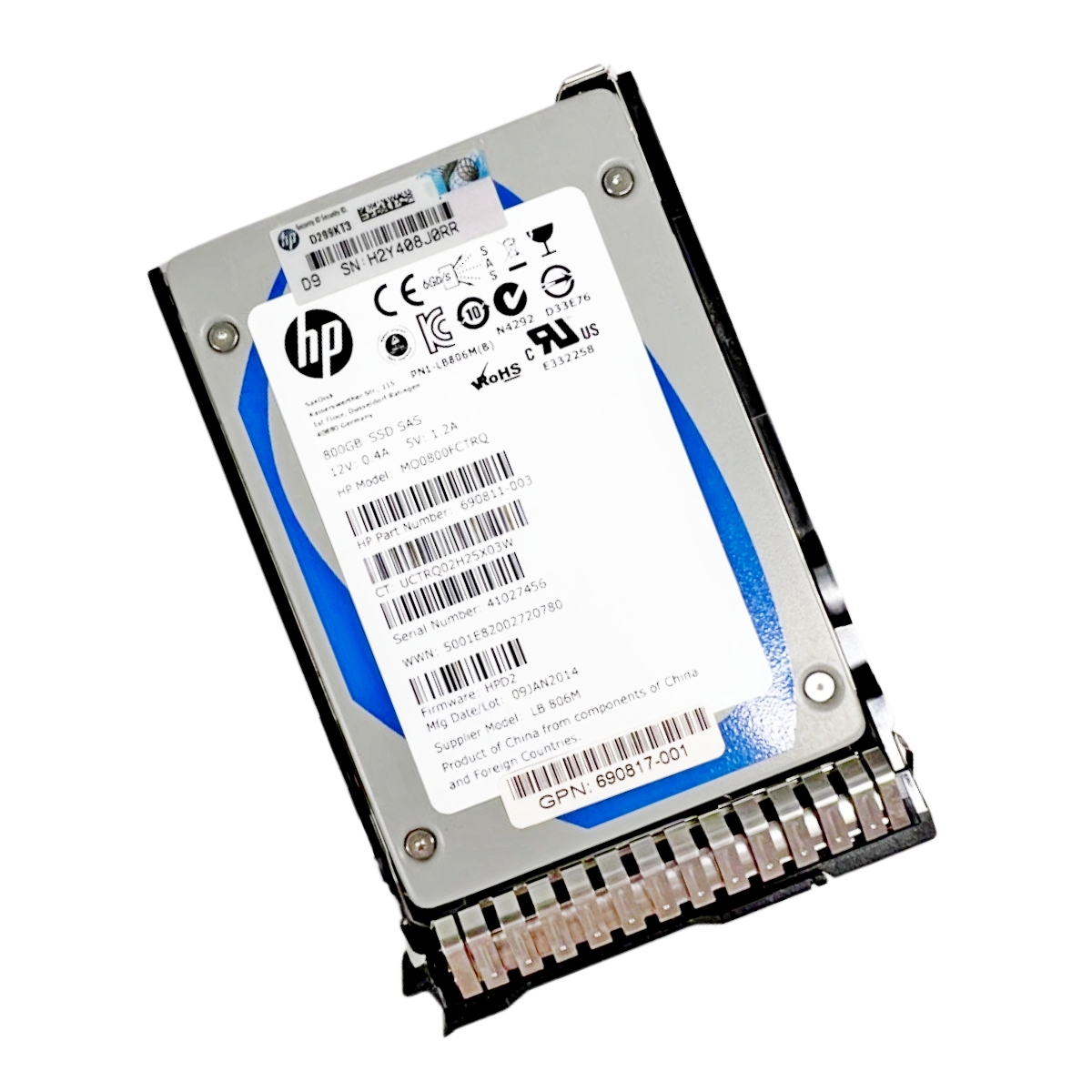


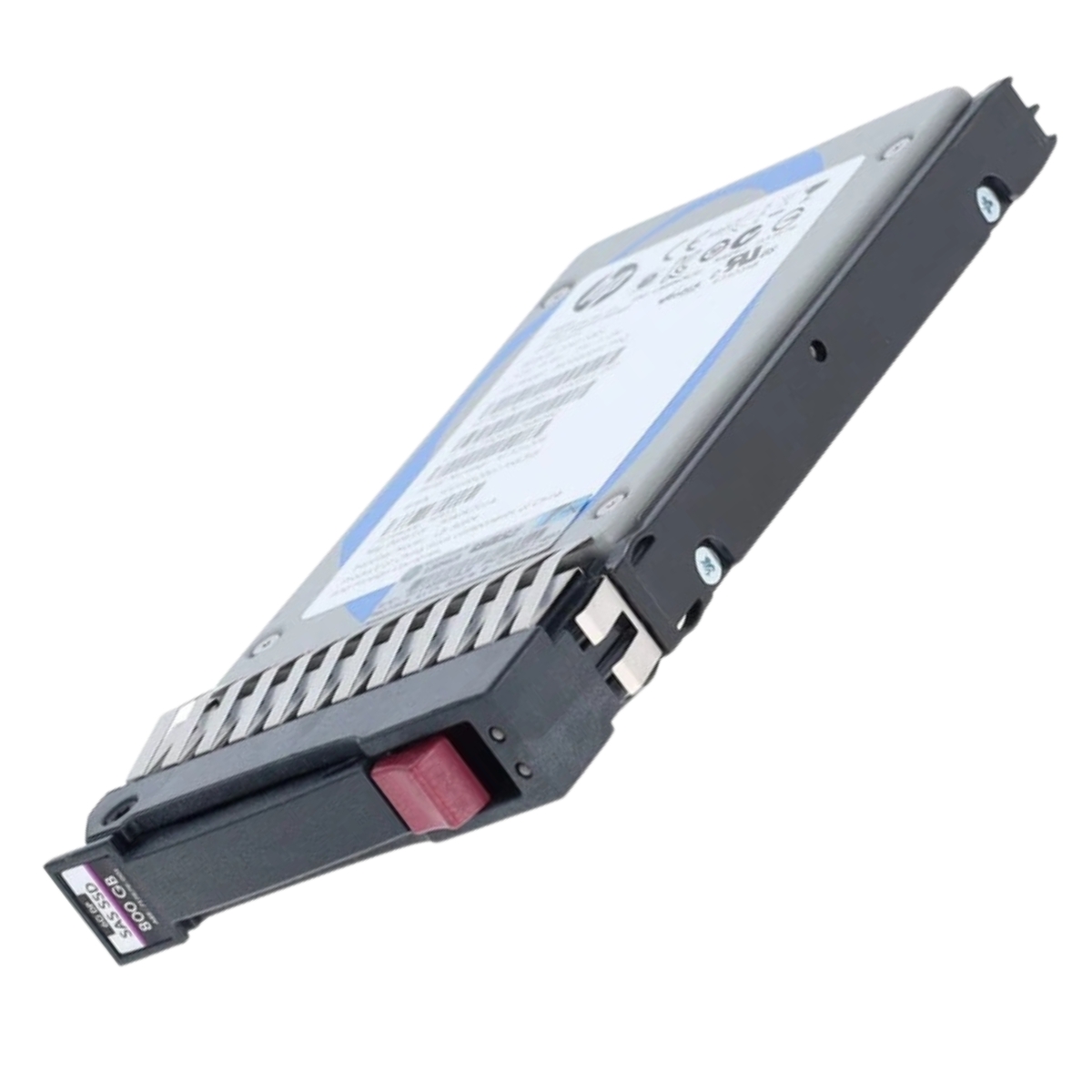
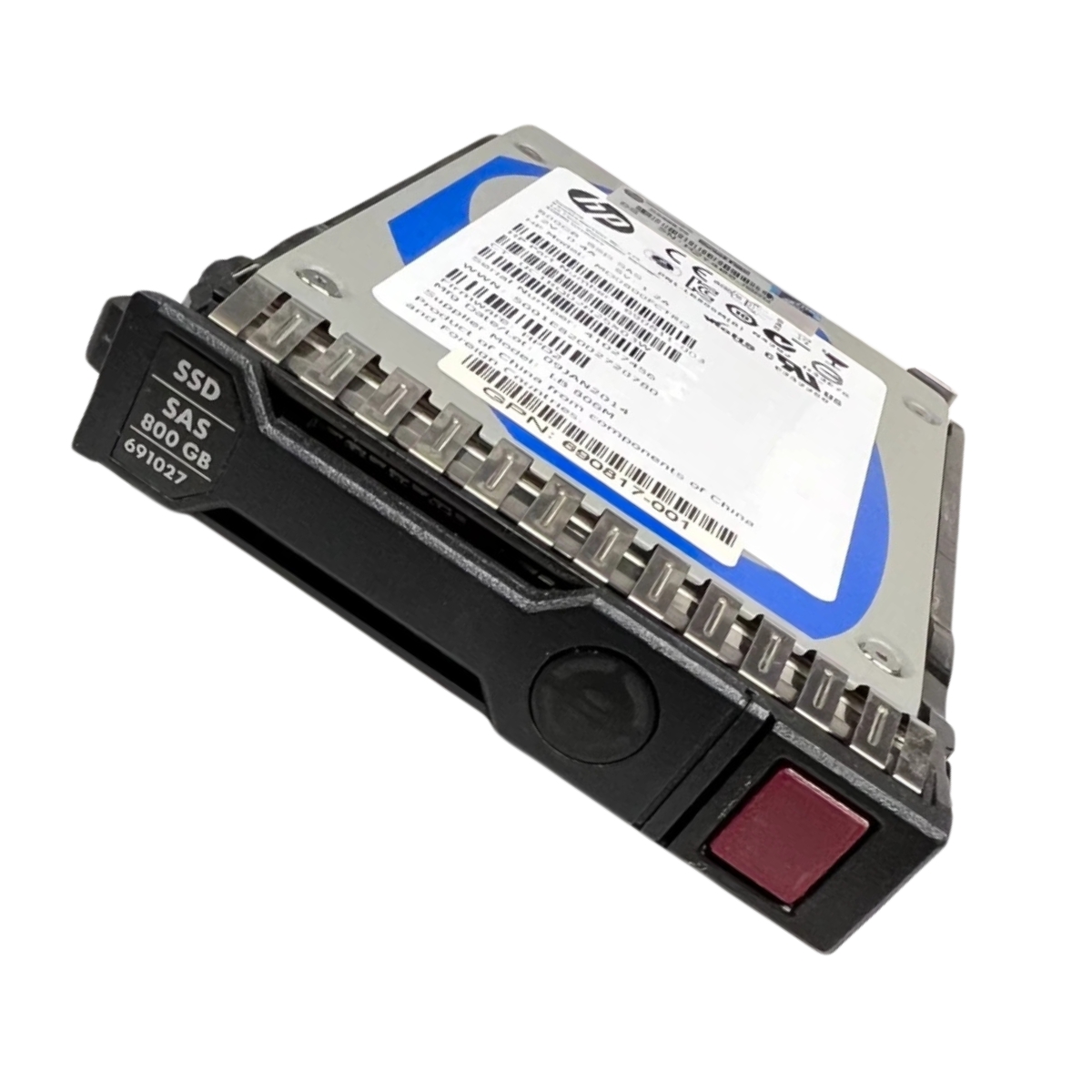
HPE 632430-003 SAS 800GB 2.5 inch SFF Standard Carrier Enterprise Mainstream SSD. Excellent Refurbished with 1 year replacement warranty
The HPE 632430-003 800GB 2.5-inch Small Form Factor Multi-Level Cell (MLC) SAS 6Gbps solid state drive represents a class of enterprise mainstream storage optimized for ProLiant Gen2 through Gen7 servers. This category description addresses the technical specification set, typical deployment patterns, performance characteristics, reliability metrics, firmware and management considerations, and the practical benefits of selecting MLC SAS SSDs for data center and enterprise server environments. The HPE 632430-003 sits within a family of server-attached SAS SSDs designed to deliver a balance between cost, endurance, and consistent throughput for mixed workloads commonly found in virtualization, database, application servers, and high-performance caching scenarios. Because it is a server-certified part, it pairs tightly with HPE system firmware and backplane ecosystems to ensure predictable behaviour under sustained load.
The 2.5-inch SFF form factor of the HPE 632430-003 allows dense storage configurations in rack-mounted servers, blade chassis, and converged infrastructure. This compact footprint reduces drive bay consumption compared with larger form factors while enabling higher aggregate IOPS per chassis when multiple drives are populated. The physical design includes a standard SAS connector and fits into HPE-approved carriers or trays for Gen2 through Gen7 ProLiant models, enabling hot-swap serviceability and simplified field replacement. Enterprise data centers appreciate the SFF profile because it supports higher storage density and lower power-per-terabyte ratios when deployed with modern server generations.
The SAS 6Gbps interface used by the HPE 632430-003 offers full-duplex, enterprise-class connectivity tailored for predictable latency and consistent throughput. SAS offers native support for multipath I/O and dual-port redundancy in enterprise backplanes, which supports resilient deployment options and continued operation during controller or path failures. Compared with SATA consumer interfaces, SAS provides stronger error recovery, better queuing and tagging mechanisms, and superior compatibility with server-class RAID controllers and HBAs. For operations that demand consistent performance under concurrent workloads, the SAS interface reduces stalls caused by error recovery procedures and offers administrative visibility through SCSI attributes exposed to management tools.
Multi-Level Cell flash offers a compromise between single-level cell (SLC) endurance and triple-level cell (TLC) capacity-cost efficiency. The MLC NAND in this HPE drive is engineered for enterprise mainstream workloads, delivering sustained write endurance sufficient for mixed read/write applications while offering a favorable cost per gigabyte relative to SLC. Manufacturers tune firmware and over-provisioning to optimize write amplification, wear-leveling, and background garbage collection to maximize the functional life of the drive in typical server workloads. When choosing an MLC SAS SSD, architects weigh projected write volumes, typical duty cycles, and the workload's sensitivity to latency to determine appropriate drive counts and RAID configurations that meet both endurance and service-level objectives.
The listed 800GB capacity reflects the drive’s nominal raw capacity; usable capacity on the host may vary due to controller formatting, reserved space, and enterprise over-provisioning. HPE-certified drives often include a portion of reserved NAND as over-provisioning to stabilize performance and prolong endurance under enterprise workloads. System integrators planning storage tiers should account for this effective usable capacity when provisioning file systems, virtual disk images, and RAID arrays to avoid unexpected shortfalls during expansion or rebalancing.
Enterprise-grade SAS SSDs like the HPE 632430-003 are tuned to deliver low-latency random reads and sustained performance under mixed workloads. Typical deployments will see high random read IOPS that accelerate database queries, virtualization boot storms, and metadata operations. Sequential throughput on SAS 6Gbps is adequate for streaming and backup tasks, while random write performance benefits from the drive’s controller architecture and internal caching strategies. When used as part of RAID-protected volumes, overall latency characteristics will also depend on the controller’s write-back or write-through settings, battery backup units, and the RAID level chosen for redundancy.
Reliability is central to the enterprise SSD category. The HPE 632430-003 implements power-loss protection mechanisms, sophisticated ECC (error-correcting code), and firmware features that reduce the risk of data corruption during unexpected interruptions. Enterprise drives typically include end-to-end data path protection and robust built-in self-test routines (BIST) that aid in early failure detection. Coupled with HPE server management frameworks, these drives also offer SMART attributes and vendor-specific telemetry that administrators can query to monitor health, temperature, wear-level, and predicted remaining life. These telemetry capabilities are critical for proactive replacement schedules and minimizing unplanned downtime.
Mean time between failures (MTBF) ratings for enterprise-class SSDs are sourced from manufacturer testing under specified workloads and environmental conditions. While MTBF is a statistical measure rather than a guarantee for any single device, drives in this category are typically backed by enterprise warranties and support contracts. The HPE-certified SKU benefits from HPE’s supply chain and warranty policies when installed in supported server models, simplifying support escalation and RMA processes. Organizations should pair warranty terms with their change management practices to ensure timely swap-out and minimal impact to critical services.
Certification for ProLiant Gen2 through Gen7 servers means the HPE 632430-003 has undergone interoperability testing with HPE system firmware, RAID controllers, and management stacks. Certified compatibility reduces integration risk, streamlines firmware update paths, and ensures the drive will be recognized and managed correctly by HPE’s Integrated Lights-Out (iLO) management platform and system management agents. Enterprises operating mixed-generation fleets appreciate this backward-compatible certification because it allows phased upgrades without wholesale replacement of existing server fleets. System administrators should ensure their server firmware, controller drivers, and HPE management tools are kept at supported versions to maximize compatibility and performance consistency.
This class of SSD is particularly well suited to a set of enterprise use cases where low latency, sustained IOPS, and predictable behavior are important. Virtualized server environments hosting numerous small virtual disks benefit from strong random I/O performance that reduces VM boot times and improves application responsiveness. Online transactional processing systems, small-to-medium databases, and mail servers benefit from the balanced read/write endurance of MLC. Additionally, as a caching tier in hybrid storage architectures, these drives accelerate frequently accessed datasets while keeping colder data on higher-capacity spinning media. The enterprise mainstream SSD category also performs well for metadata indexing, log separation, and as tiered scratch space for analytics pipelines that require fast temporary storage.
Works best for mixed read/write workloads where sustained performance and moderate endurance are required. It is particularly apt for environments where operating cost and capacity efficiency are important but where TLC-class capacities would not meet required endurance metrics. In many deployments, the HPE MLC SAS drive will sit in the middle tier of a three-tier storage strategy: above the highest-throughput NVMe or write-optimized tier, and below bulk HDD capacity tiers, balancing cost and performance effectively.
When deploying the HPE 632430-003, administrators should consider RAID level selection, over-provisioning, and wear management as part of an overall storage strategy. RAID configurations that protect against single-drive failures while preserving performance—such as RAID 10 or parity-based RAID with appropriate rebuild strategies—are common. Because SSD rebuilds differ from HDD rebuilds, choosing controller settings that prioritize background consistency operations without overwhelming remaining drives is important. Monitoring drive SMART attributes and provisioning spare capacity for rebuild operations can reduce the risk of performance degradation during failure scenarios. Regular firmware updates, applied per HPE recommendations and maintenance windows, can also address performance improvements and reliability fixes provided by the manufacturer.
Dense drive population within servers leads to thermal load that must be managed to avoid throttling or reduced lifespan. Server chassis airflow design, fan control policies, and ambient data centre temperature all influence SSD thermal behaviour. The HPE 632430-003 is engineered for typical data center thermal envelopes; however, administrators should follow HPE’s published operating temperature ranges and ensure consistent airflow across drive bays. Power-loss protection capacitors and firmware safeguards mitigate the risk of data loss during sudden power events, but reliable power infrastructure and rack-level UPS systems remain essential for maximum data integrity and uptime.
Enterprise drives provide a range of firmware-level features designed to optimize performance and extend usable life. The HPE 632430-003’s firmware handles garbage collection, wear leveling, and internal error handling while exposing vendor and SCSI attributes for external monitoring. Administrators should integrate drive monitoring into their server management tools so that metrics such as media wear indication, total bytes written, and uncorrectable error counts are visible to operations teams. HPE’s management ecosystems, including iLO and server management packs, often include automated alerts and compatibility checks that can speed incident response and assist with lifecycle planning. When replacing drives, ensure the replacement is an HPE-approved SKU to retain full supportability with HPE’s service contracts.
Firmware updates should follow a controlled process aligned to change management policies. Apply firmware updates only after confirming compatibility with server firmware and RAID controller firmware to prevent mismatches that could affect drive visibility or performance. Many enterprises test firmware updates in staging environments that reflect production topologies before wide rollout. It is recommended to schedule updates during maintenance windows and to verify backups and redundancy before applying changes that could affect availability.
Compared with consumer SATA SSDs, enterprise MLC SAS drives offer superior endurance, improved error handling, and better integration with RAID environments. Against TLC SSDs, MLC generally offers higher write endurance and more predictable performance under mixed workloads, though at a slightly higher cost per gigabyte. Versus NVMe drives, SAS SSDs on a 6Gbps interface may have lower peak throughput and higher latency ceilings, but they retain advantages in compatibility with legacy server controllers and provide a cost-effective path for broad capacity deployment in established SAS infrastructures. Choosing between SAS and NVMe often comes down to workload latency sensitivity, existing infrastructure, and budget constraints. The HPE MLC SAS line is compelling where server fleets are HPE-certified and where administrators prefer a predictable SAS ecosystem over switching to NVMe architectures.


 Contact Us
 Information
 Catalog
 Solid State Drives (SSD)
 Network Switches
 Hard Disk Drives
 HBA & Controllers
 PC & Servers
 PC & Server Memory
 CPU & Processors
 Network Routers
 Power Supplies
 Tape Drives & Libraries
 Network Devices
 Computer & Network Cables