(7% discount is applied at checkout)
Cart is empty
Your go-to destination for cutting-edge server products
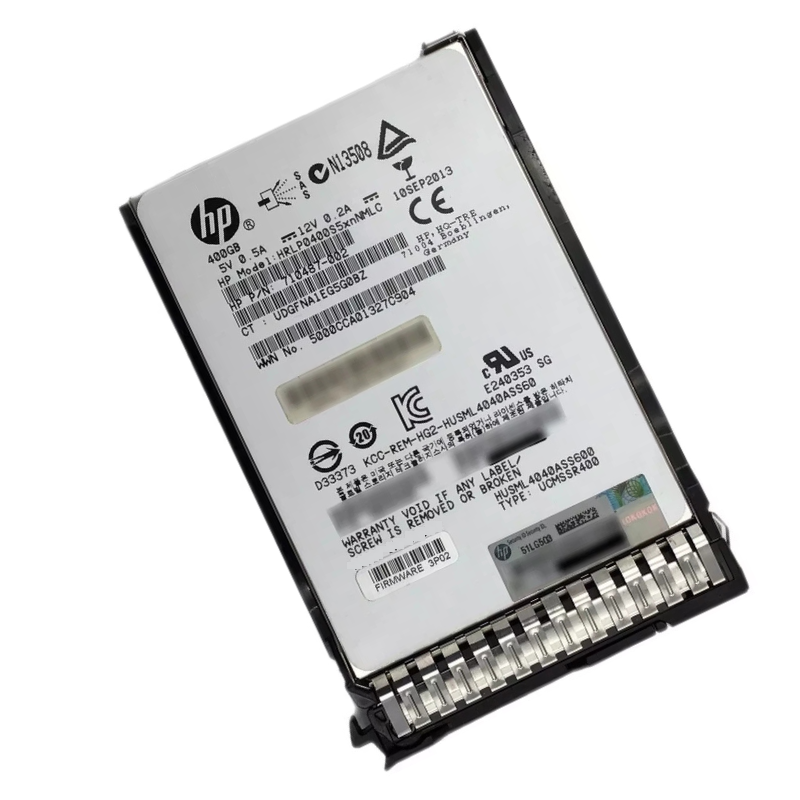


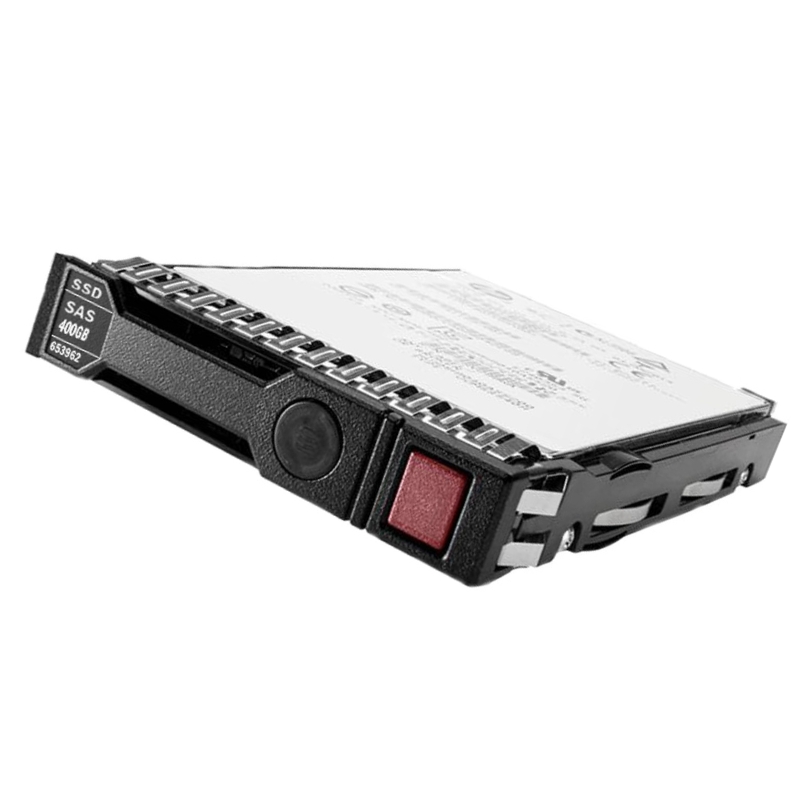
HPE 632630-001 Enterprise Performance SSD Factor SAS 6GBPS 400GB Hot Swap. New (System) Pull with 1 year replacement warranty
| SKU/MPN | Warranty | Price | Condition | You save |
|---|---|---|---|---|
| 632630-001 | 1 Year Warranty | $1,425.00 | New (System) Pull | You save: $498.75 (26%) |
| 632630-001 | 1 Year Warranty | $615.00 | Excellent Refurbished | You save: $215.25 (26%) |
The HPE 632630-001 is a purpose-built enterprise solid state drive engineered to bring predictable, low-latency performance to ProLiant server environments that depend on high I/O responsiveness and mission-critical reliability. Offered in a 2.5-inch small form factor, this 400GB SAS device uses the Serial Attached SCSI (SAS) interface at the 6Gbps signaling rate, providing a direct upgrade path for older HPE ProLiant generations while delivering the read/write characteristics expected from enterprise-grade flash. The product’s designation as an “Enterprise Performance” SSD reflects HPE’s focus on combining endurance, consistent I/O, and firmware tuned for server-class workloads, making it well-suited for virtualization, database acceleration, and transactional application tiers.
At its core, the 632630-001 pairs 400 gigabytes of raw solid-state storage with a SAS-6Gbps interface in the 2.5-inch SFF form factor. The drive’s enterprise firmware and SLC/Mission-Critical class flash technology are intended to reduce latency variability and extend service life under sustained server workloads. This SSD is hot-pluggable, supporting fast field replacement and minimizing downtime in clustered or rack-mounted ProLiant systems. HPE specified part mappings for the 632630-001 indicate compatibility across several ProLiant generations, which makes it a practical choice for organizations running legacy hardware alongside newer infrastructure.
One of the defining strengths of the 632630-001 is its broad compatibility with HPE ProLiant server lines. HPE and resellers list this model as appropriate for multiple ProLiant family generations—commonly referenced as the G1 through G7 series—so it can be dropped into existing server fleets without complex controller or firmware change requirements. This compatibility is particularly valuable for enterprises that must extend the service life of older, stable platforms while still reaping the performance benefits of solid-state storage. The result is a simple migration path for accelerating legacy application stacks without a forklift upgrade of the entire server estate.
Enterprise SSDs like the HPE 632630-001 are tuned to deliver sustained throughput and consistent I/O performance under mixed read/write loads. While raw sequential bandwidth is largely a function of the SAS interface, the real advantage of enterprise-grade flash is the minimized tail latency and predictable latency distribution under IOPS-heavy conditions. This makes the 632630-001 an excellent fit for virtualization hosts, database servers, and latency-sensitive middleware where microsecond-level stability benefits overall application responsiveness. Because the drive is specified as an “Enterprise Performance” SSD, it emphasizes consistent service rather than transient peak throughput alone.
Businesses commonly deploy this class of SSD for server boot drives where fast OS startup and quick application failover are critical. It is also well-suited as a primary storage tier for virtual machine images, caching layers in hybrid storage architectures, and read/write-intensive cache volumes for databases and analytics engines. In stacked architectures, these drives can dramatically reduce query times and improve consolidation ratios by enabling more VMs or application instances per host with reduced I/O contention.
At the application level, moving from HDD to the 632630-001 SSD family typically results in lowered transaction latency, faster commit times, and more predictable service-level behavior during peak loads. This can translate directly into faster page loads for web applications, shorter backup and snapshot windows, and improved end-user experience for transactional systems. Enterprises that measure performance with percentiles (for example, 95th and 99th percentile latencies) will see the most meaningful gains, because enterprise SSDs are engineered to reduce tail-end latency spikes that disproportionately affect those percentiles.
Reliability is a central tenet of enterprise storage, and HPE’s part numbering and certification processes for drives such as the 632630-001 reflect that focus. The drive typically comes with server-oriented firmware, which includes features such as power-loss protection, robust error correction, and wear-leveling algorithms purpose-built for sustained server workloads. These features help maintain data integrity across writes and ensure that performance does not degrade unpredictably as the media is consumed. Additionally, the device’s hot-plug design and HPE-coded firmware allow it to participate in controller-level features such as RAID rebuilds and predictive failure analysis, enabling faster and safer maintenance workflows.
Enterprise SSD endurance is commonly expressed in drive writes per day (DWPD) or total terabytes written (TBW). While exact endurance figures can vary by specific model variant and the flash technology used, enterprise-grade SLC and high-end MLC or eTLC variants are optimized for higher DWPD numbers compared with client-class drives. HPE’s enterprise firmware also integrates health reporting that is compatible with server management stacks, enabling administrators to proactively monitor wear, reallocate workloads, and schedule replacements before field failures occur.
The 632630-001 benefits from HPE’s ecosystem of management tools and signed firmware releases, which help ensure that drive firmware updates are digitally authenticated and suitably matched to the company’s server controllers and BIOS/UEFI versions. This reduces the risk of incompatibility and makes it straightforward for administrators to include the drives within standard monitoring frameworks for SMART data, drive health alerts, and lifecycle reporting.
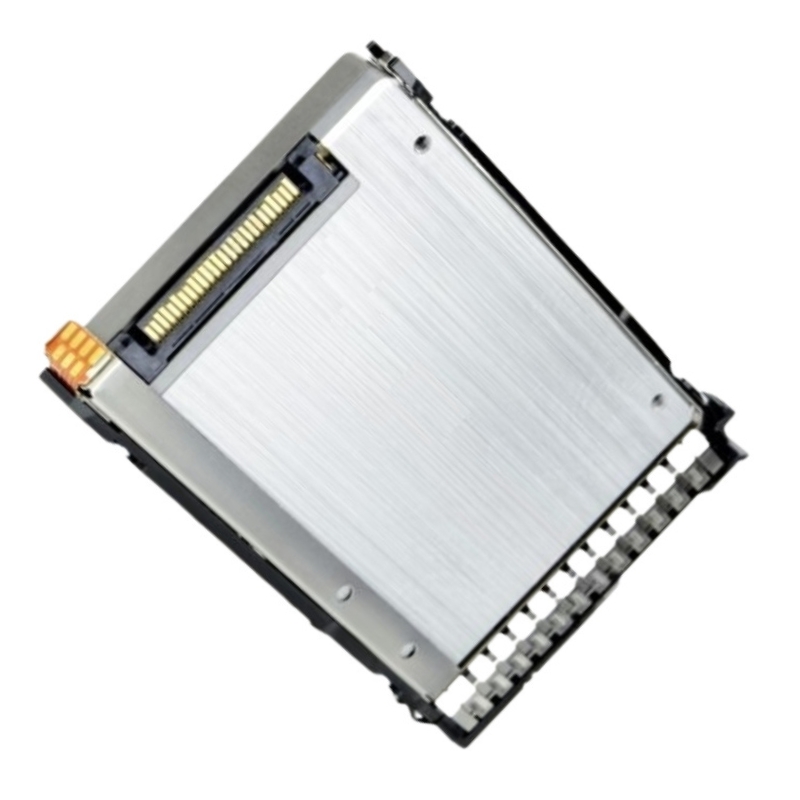
Physically, the 632630-001 is a 2.5-inch small form factor SSD designed to fit HPE SmartCarrier or standard SFF trays depending on the server generation and tray SKU. Its hot-plug capability allows technicians to replace drives while the host remains powered, provided the server’s configuration and RAID/volume policies support online replacements. When planning an upgrade or replenishment, it’s important to match the carrier type and confirm that the server’s backplane supports SAS-6Gbps signaling to avoid unexpected interface fallbacks or negotiation issues. Proper physical compatibility ensures the drive’s firmware can interact with the controller as intended and enables features such as hot-spare reallocation and RAID rebuild acceleration.
Depending on your ProLiant chassis and the spare part mapping, the SSD may be sold with or without the SmartCarrier tray. If your environment uses a specific SmartCarrier SKU (for example those created for Gen8/Gen9 trays in later lines), confirm the spare part mapping to ensure seamless fitment. Matching the tray type prevents mechanical mismatches and preserves the drive’s hot-swap behavior. Always consult your server’s maintenance and service guide for the recommended spare part numbers and insertion procedure to avoid damage to backplane pins or connectors.
Compared with 2.5-inch spinning disks, enterprise SSDs typically consume less power under sustained load and produce less heat per IOPS, but they can exhibit higher peak currents during bursts. Proper chassis airflow and thermal design are therefore still important. Maintain recommended airflow paths and consult thermal guidance for high-density configurations to ensure the drives operate within their rated temperature windows; this preserves both performance and lifespan.


 Contact Us
 Information
 Catalog
 Solid State Drives (SSD)
 Network Switches
 Hard Disk Drives
 HBA & Controllers
 PC & Servers
 PC & Server Memory
 CPU & Processors
 Network Routers
 Power Supplies
 Tape Drives & Libraries
 Network Devices
 Computer & Network Cables