(7% discount is applied at checkout)
Cart is empty
Your go-to destination for cutting-edge server products
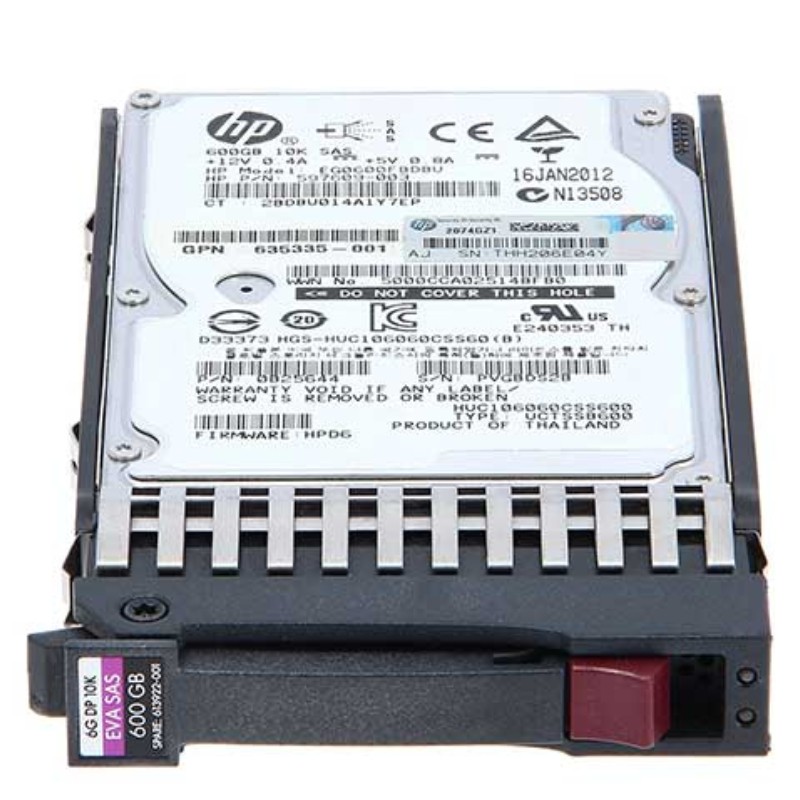


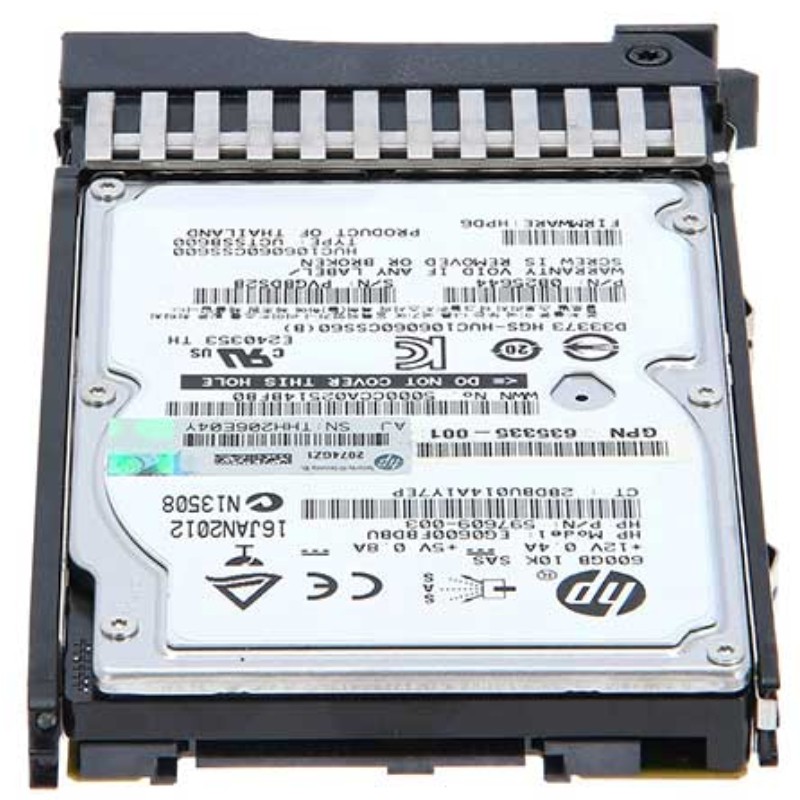
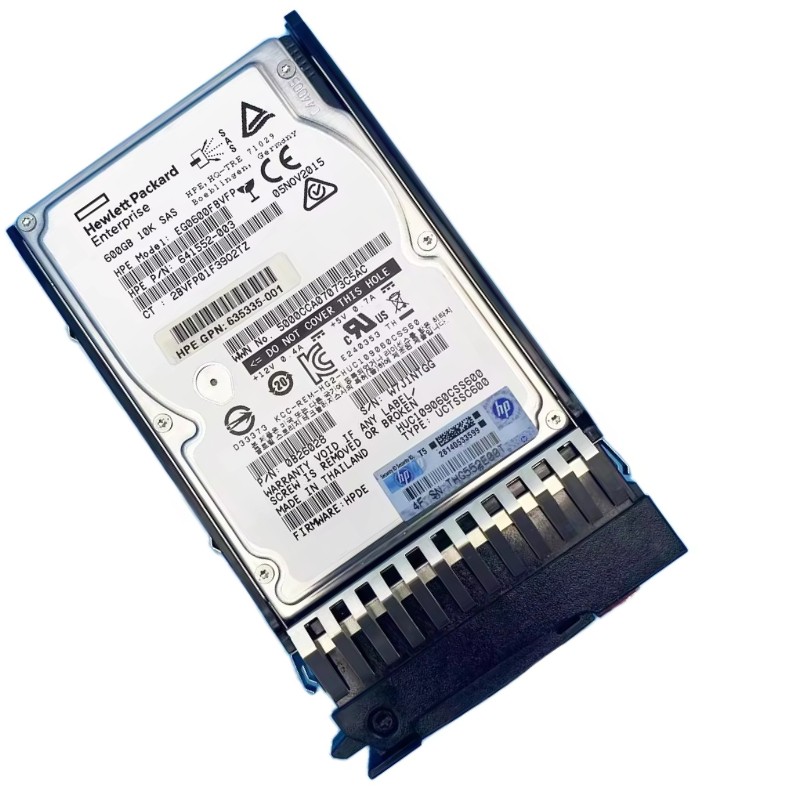
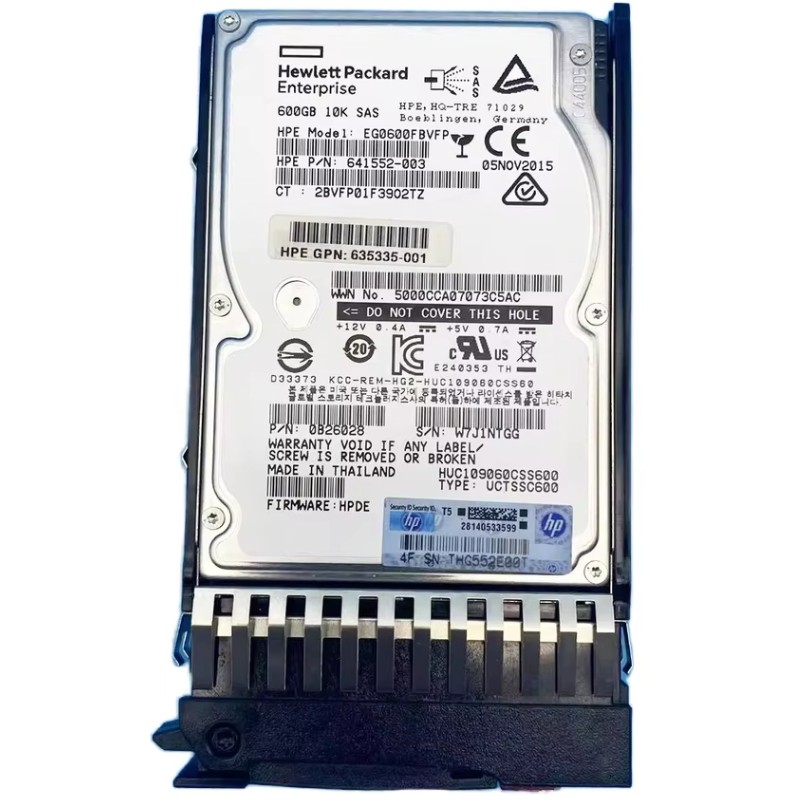
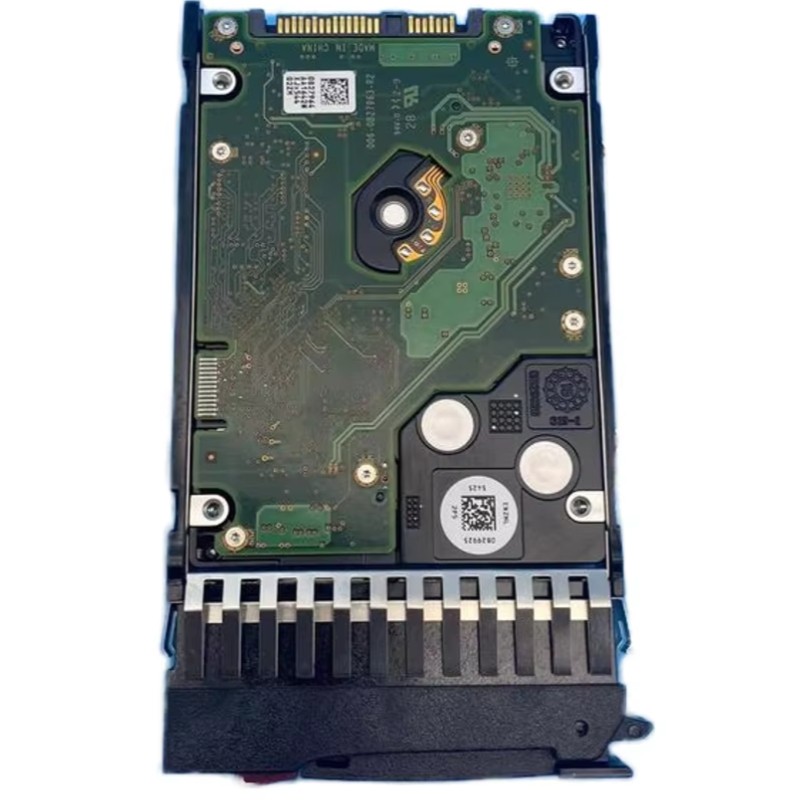
HPE 635335-001 600GB 10K RPM SAS 2.5 INCH Small Form Factor SFF 6GB/S HARD DRIVE. Excellent Refurbished with 1-Year Replacement Warranty
Discover the M6625 series enterprise storage drive — a high-performance, 2.5-inch small form factor (SFF) SAS hard disk engineered for demanding data-centre and SAN environments. Optimized for midline to mission-critical workloads, this 600GB, 10,000 RPM SAS drive (Part No. AW611A, Product ID 200318) delivers a balanced mix of throughput, low latency and reliability.
Built for consistent I/O, the M6625 leverages a SAS-600 interface (commonly called 6G SAS) to deliver up to 6 Gb/sec (approximately 750 MB/s) external data transfer rates under ideal conditions. The 10K spindle speed and sub-4ms seek time reduce latency, making this drive a solid choice for mixed transactional workloads and read/write-heavy applications.
The M6625 is a compact, low-profile (1/3H) 2.5-inch drive designed for dense server and storage arrays. Its small form factor enables higher drive counts per chassis, increasing storage density without compromising performance.
The drive uses the SAS-600 protocol (often listed as 6G or 6Gb/s SAS), providing backward compatibility with earlier SAS controllers while enabling higher sustained transfer speeds when paired with 6Gb/s-capable hosts.
Designed for enterprise duty cycles, the M6625 includes hot-swap capability so drives can be replaced without powering down systems. This hot-swappable design reduces downtime and simplifies maintenance for 24/7 operations.
The M6625 600GB 10K SAS drive is suitable for a variety of enterprise scenarios:
This drive class occupies the mid-tier in enterprise storage architectures: it offers considerably better random I/O performance than nearline 7,200 RPM drives at a substantially lower cost-per-GB than all-flash arrays. The balance makes the 635335-001 ideal for environments that need predictable mechanical performance (virtual machine datastores, database log volumes, application servers) without paying SSD price-per-GB for entire datasets. Use it as a capacity/performance compromise in hybrid designs where SSDs cache hot data and 10K SAS supplies the larger working set.
The 2.5" SFF footprint allows increased drive density in blade enclosures and high-density 1U/2U server drawers. Compared to 3.5" LFF drives, SFF drives support more spindles per enclosure, reduced power draw per drive and lower physical vibration per bay when properly supported by the chassis. For rack-scale designs this means more usable IOPS per rack unit and greater aggregate bandwidth within tight physical constraints.
The drive uses a Serial Attached SCSI (SAS) interface with a typical external signaling rate of 6 Gb/s (SAS-600) for the models commonly cross-referenced with 635335-001. SAS provides enterprise-grade features such as multipath I/O, robust error detection and (on dual-port models) redundant controller connectivity for SAN-class availability. Confirm whether the specific unit you buy is single- or dual-port if you require multipath SAN topologies.
At 10,000 RPM, expect materially lower rotational latency compared with 7,200 RPM drives. That rotational advantage — combined with enterprise servo and head technology in this family — yields better random IOPS and faster average seek times, which are significant for workload types dominated by small random I/O (VM boot storms, metadata lookups, OLTP). Absolute IOPS will vary by RAID level, controller, queue depth and workload mix; for budgeting, treat each 10K drive as a low-hundreds IOPS device under realistic mixed loads and test with your workload traces where possible.
Enterprise SFF drives are tuned for sustained operation in server environments: review the vendor datasheet for precise idle and active power draw, typical operating temperature ranges and recommended airflow rates per bay. Adequate cooling and chassis airflow are essential to maintain MTBF and to avoid thermal throttling within dense drive packs. When retrofitting into older arrays, verify enclosure cooling specs and plan for incremental power and cooling capacity.
The 635335-001 is frequently listed as compatible with HPE EVA M6625 and related StorageWorks/EVA platforms and is cross-referenced with multiple OEM SKUs used in those product lines. It is often found in reseller listings and refurbishment inventories targeted for EVA and server refresh projects. For full compatibility and supportability (including firmware expectations), always consult the HPE compatibility matrix or platform-specific support documentation before large-scale deployment.
SAS drives interact with RAID controllers and HBAs at the firmware level. Some controllers impose restrictions or mark unsupported drive families with warnings; others may permit operation but flag reduced functionality. In SAN or dual-controller arrays, prefer dual-port SAS drives and a validated drive family to maintain multipath resilience and predictable rebuild behavior. Verify that your controller firmware is up to date and that the chosen drive FRU is listed for the controller/enclosure combination.
Use the 635335-001 as a mid-tier in a three-tier architecture: SSD (hot) → 10K SAS (active-cold) → 7.2K NL-SAS (cold/archive). This allows cost-efficient retention of large datasets while keeping frequently accessed objects responsive via caching and IO prioritization. Many HPE reference architectures show similar tiering approaches for mixed workloads.
Follow vendor and controller guidance for drive replacement: mark or off-line failing drives via the management interface, confirm automatic rebuild settings, and replace with like-for-like FRUs where possible. Maintain at least one compatible hot spare in production arrays to minimize rebuild start delay. Keep spare carriers/trays pre-configured to reduce hands-on time.
Integrate SMART monitoring and HPE system health tools into your monitoring stack. Track reallocated sector counts, pending sectors, read/write error rates and temperature trends. Replace drives proactively when predictive indicators consistently trend toward failure — this reduces the chance of concurrent failures during rebuilds and minimizes SLA impact.
Plan hot spares according to array rebuild time, criticality and acceptable risk: high-criticality arrays typically keep at least one hot spare per RAID domain (or more in large configurations). Factor in procurement lead times for OEM FRUs in your region to avoid extended downtime during scale-up events. :contentReference[oaicite:18]{index=18}
Maintain a controlled firmware update process: test updates in a lab or staging environment, follow vendor-provided firmware bundles where recommended, and update controllers and enclosures in coordinated windows. Device firmware can affect performance, SMART reporting and compatibility; mismatched or unsupported firmware may be flagged by system management tools.
For end-of-life or redeployment, use approved secure erase procedures to meet organizational and regulatory requirements. When returning drives for recertification or resale, request certificates of data destruction if required by policy. Data sanitization steps should be auditable and repeatable for compliance.
If drives return repeated SMART failures, non-recoverable read/write errors, or if controller/array firmware reports unsupported FRU behavior, escalate per your support contract. For HPE-supported systems, provide part numbers, serial numbers and event logs to speed triage. Maintain spare inventory and vendor RMA processes to minimize downtime for critical systems.


 Contact Us
 Information
 Catalog
 Solid State Drives (SSD)
 Network Switches
 Hard Disk Drives
 HBA & Controllers
 PC & Servers
 PC & Server Memory
 CPU & Processors
 Network Routers
 Power Supplies
 Tape Drives & Libraries
 Network Devices
 Computer & Network Cables