(7% discount is applied at checkout)
Cart is empty
Your go-to destination for cutting-edge server products
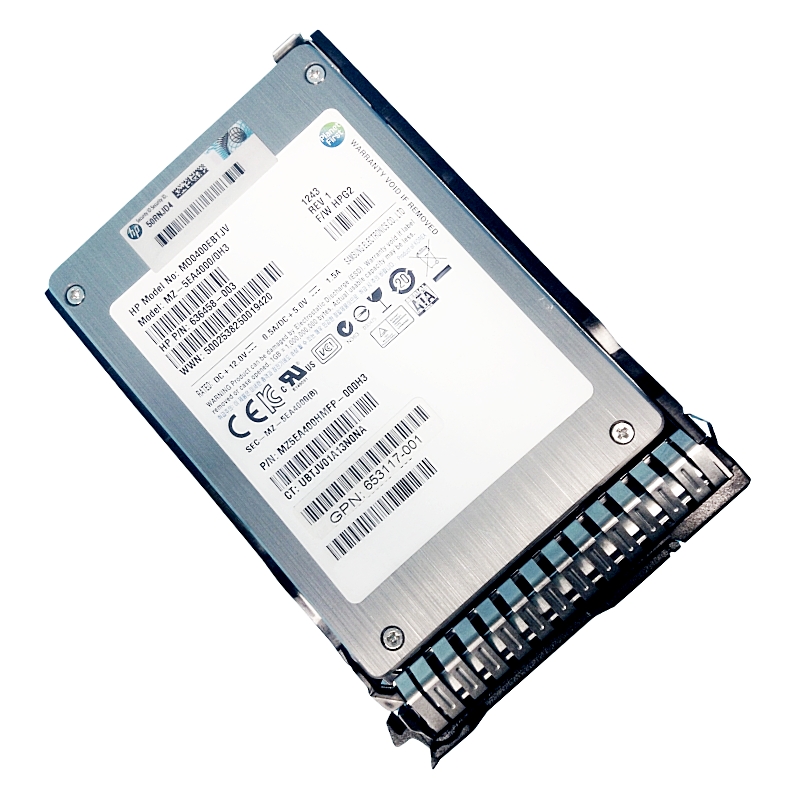


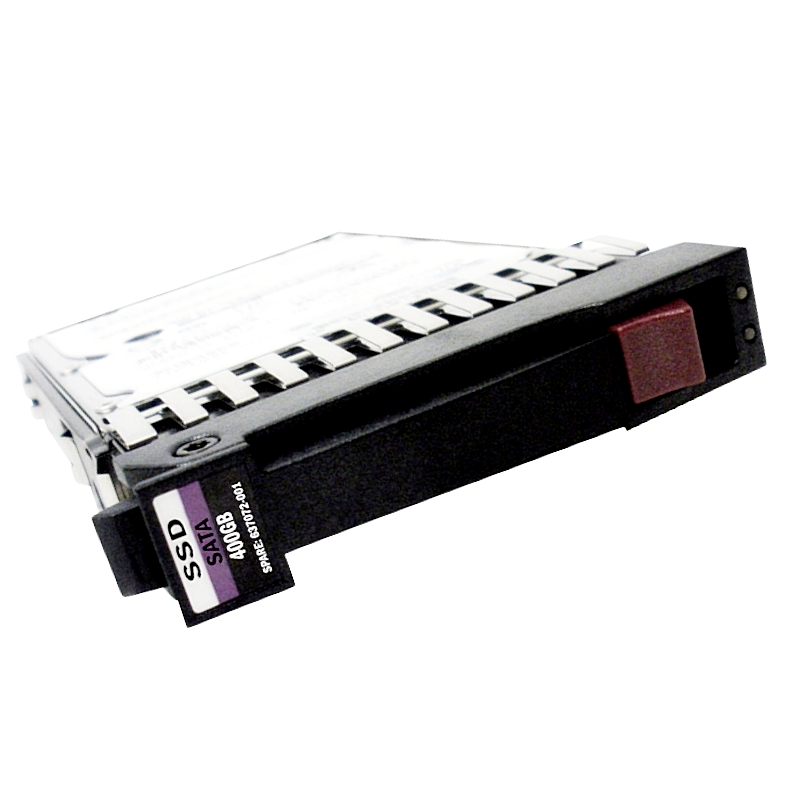
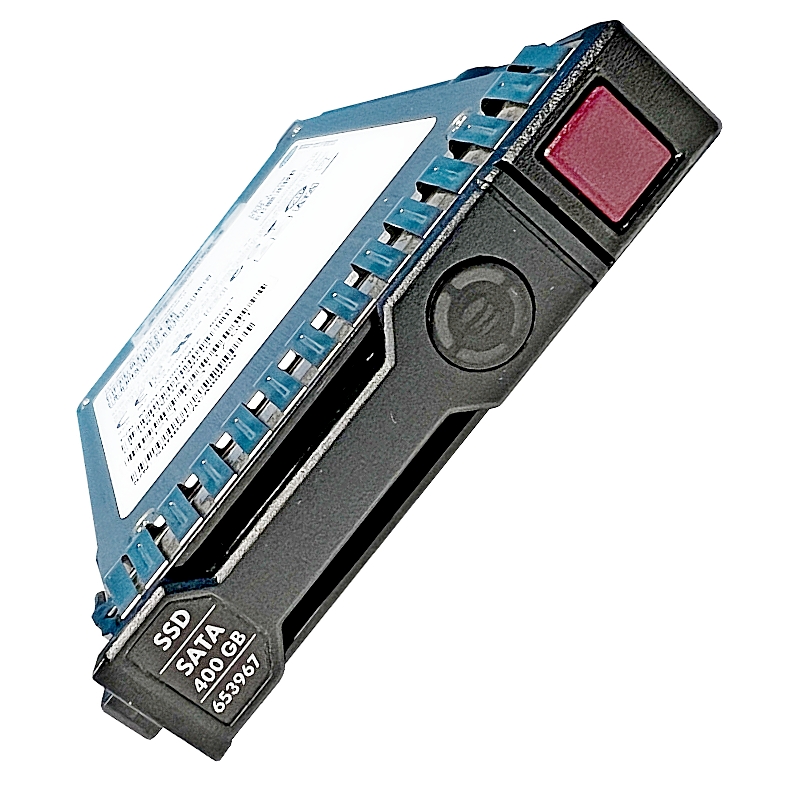
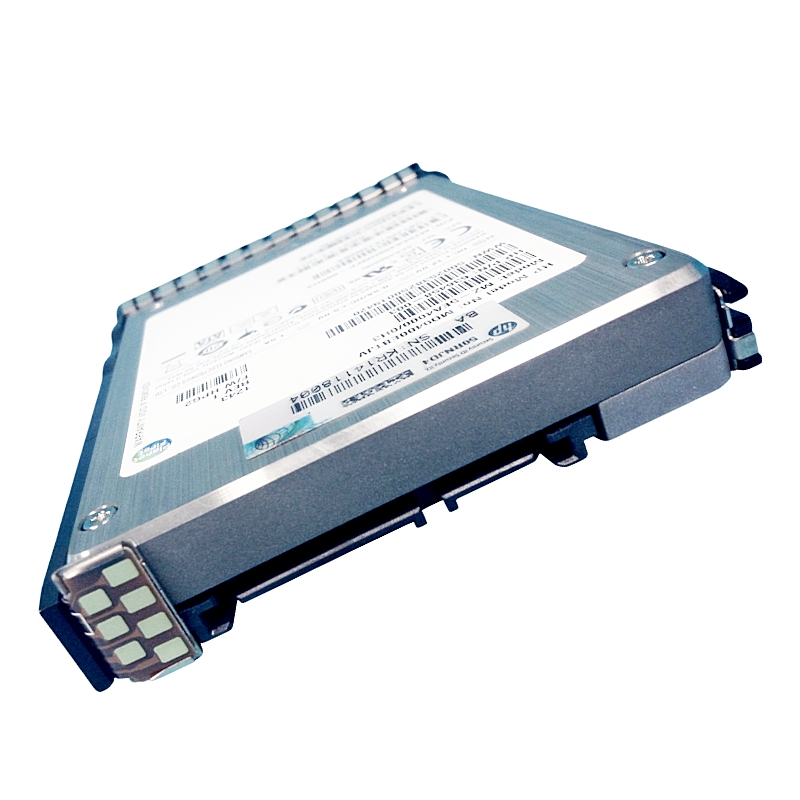
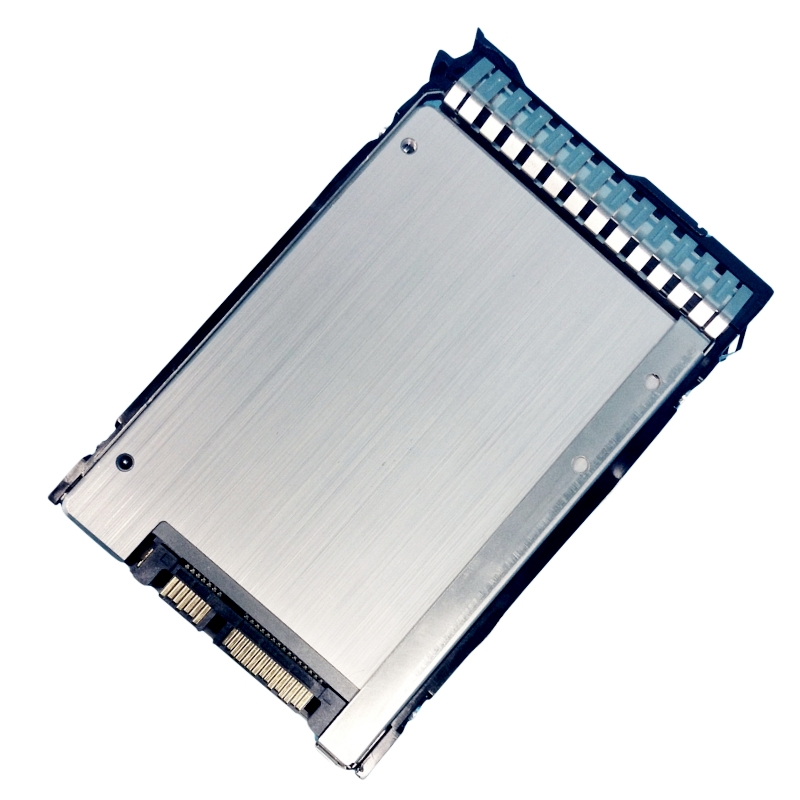
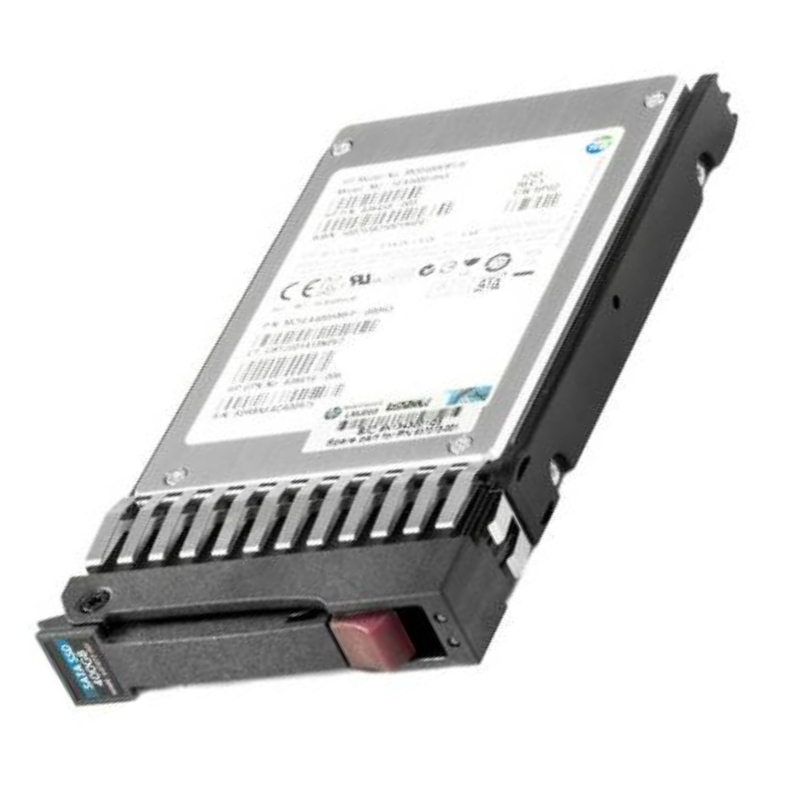
HPE 636619-006 2.5inch SATA 3GBPS 400GB Solid State Drive. Excellent Refurbished with 1 year replacement warranty
The HPE 636619-006 is a high-performance 400GB Solid State Drive designed for enterprise mainstream workloads. Engineered for HPE ProLiant Gen8 and Gen9 servers, this 2.5-inch Small Form Factor (SFF) drive combines reliability, speed, and efficiency to support critical business applications.
The HPE 636619-006 400GB 2.5-inch Small Form Factor SATA-3GBPS Smart Carrier Enterprise Mainstream Solid State Drive represents a dependable storage tier within HPE’s ProLiant-compatible SSD family. This category description focuses on the drive’s role as a mainstream enterprise SSD engineered for ProLiant Gen8 and Gen9 servers, describing its technical profile, typical applications, deployment considerations, and why IT professionals choose this model for balancing cost, performance, and reliability. Throughout this section we emphasize search-optimized phrases—HPE 636619-006, 400GB SSD, 2.5-inch SATA, Smart Carrier SSD, ProLiant Gen8, ProLiant Gen9—to make this content discoverable for purchasers, system integrators, and infrastructure teams reviewing storage upgrade options for legacy and mid-generation HPE servers.
The HPE 636619-006 is a 400GB solid state drive in a 2.5-inch Small Form Factor (SFF) designed for SATA 3Gb/s environments. Packaged with an HPE Smart Carrier, the drive is optimized for easy installation in ProLiant Gen8 and Gen9 hot-swap bays. Its mainstream enterprise designation indicates a balance between read/write performance, endurance, and cost per gigabyte that makes it suitable for a wide range of workloads—from OS boot volumes and virtualization hosts to cache layers and mixed application environments. By combining the 400GB capacity point with enterprise-grade firmware, the drive category targets IT teams that need predictable behavior under multi-tenant virtualization and sustained I/O patterns commonly found in small-to-medium datacenter clusters.
Designed with a 2.5-inch SFF form factor, the HPE 636619-006 fits modern server sleds and storage enclosures that accept small form factor drives. The SATA 3Gbps interface ensures compatibility with older backplanes and controllers used in Gen8 and Gen9 ProLiant systems, making this SSD a practical upgrade path for organizations that want to replace aging mechanical drives without needing a controller or backplane refresh. The Smart Carrier adds administrative convenience, providing the familiar drive-tray form factor HPE administrators expect for hot-swap replacement and asset tracking within HPE chassis.
As an enterprise mainstream SSD, the HPE 636619-006 offers performance characteristics that outperform traditional HDDs substantially while delivering lower latency and vibration-immunity advantageous in multi-drive enclosures. The SATA 3Gbps bus caps theoretical throughput relative to newer SAS or NVMe options, yet for many use cases—especially read-intensive and mixed small-block workloads prevalent in virtualization platforms—this drive provides a meaningful performance uplift versus spinning media. Measured in input/output operations per second (IOPS) for random read and write patterns, the 400GB mainstream SSD yields consistent latency at scale, enabling denser VM consolidation and faster boot and response times for application servers running on Gen8 and Gen9 ProLiant hosts.
Common deployments include hosting operating system volumes, caching and tiering within hybrid storage architectures, and serving as persistent storage for small databases or logging and analytics agents. The drive’s endurance and firmware optimizations are tuned for enterprise scenarios where data integrity and predictable performance are essential. For environments with heavy sequential throughput requirements—such as large-scale backup targets or bulk archival—the SATA-3Gbps interface may be a limiting factor compared to higher-bandwidth alternatives. However, in read-dominant server roles, web-serving, and virtualization workloads, this SSD category often provides the best blend of performance, capacity, and compatibility for mid-generation HPE fleets.
Enterprise mainstream SSDs like the HPE 636619-006 are deployed with firmware that emphasizes power-loss protection, consistent garbage collection behavior, and endurance-management features to safeguard data integrity in the event of unexpected power interruptions. While endurance metrics vary by usage pattern, the drive’s design assumes duty cycles typical to mainstream enterprise usage—meaning it offers sufficient drive writes per day (DWPD) for OS volumes, VM storage, and mixed-access application data without the higher price tag of write-intensive enterprise flash. IT staff should track firmware updates released by HPE and apply validated updates through HPE’s management tools to ensure compatibility with ProLiant Gen8 and Gen9 server firmware and to maintain optimal drive behavior over its lifecycle.
One of the strongest selling points for the HPE 636619-006 is its validated compatibility with ProLiant Gen8 and Gen9 platforms. HPE tests and certifies drive models for backplane, BIOS, and Smart Carrier interactions to ensure predictable Hot Plug operations and accurate drive health telemetry in HPE integrated management suites. This compatibility includes support for HPE Integrated Lights-Out (iLO) monitoring and the HPE Smart Storage Administrator (SSA) for RAID configuration when paired with appropriate controllers. For organizations maintaining ProLiant Gen8 and Gen9 systems, selecting an HPE-branded SSD with Smart Carrier simplifies procurement, firmware lifecycle management, and inventory reconciliation across server racks.
Installing the HPE 636619-006 is straightforward for administrators familiar with ProLiant maintenance procedures. The 2.5-inch Smart Carrier slips into a compatible bay and engages the backplane connector without the need for adapter rails. Because the drive is intended for hot-swap service, administrators can replace failing drives in redundant arrays during production hours without powering down servers—though following HPE’s recommended hot-swap best practices and confirming RAID rebuild policies is essential to prevent data loss. The Smart Carrier also provides visual status indicators consistent with HPE chassis design, helping technicians quickly identify drive state during routine maintenance and troubleshooting.
While the drive supports use with HPE Smart Array controllers and third-party controllers that accept 2.5-inch SATA devices, the best results are achieved when used with HPE-validated controller models and firmware revisions. Modern ProLiant controllers offer features like drive health reporting, background media scan, and rebuild optimization that leverage firmware-level communication with HPE-branded drives. Administrators should match drive types across RAID sets where possible to ensure uniform rebuild times and predictable performance. When adding the HPE 636619-006 into existing arrays, it is prudent to review controller compatibility notes and consider the impact on rebuild times and RAID resiliency during maintenance windows.
At 400GB, the drive occupies a niche between lower capacity boot drives and higher capacity SSDs intended for dense data pools. This makes it a suitable choice in scenarios where a moderate amount of fast storage is needed across many nodes—such as distributed virtualization clusters or scale-out application tiers. Capacity planning should account for provisioning overhead, RAID parity allocations, and snapshot/backup retention policies. Because enterprise mainstream SSDs often serve as high-performance tiers within a larger storage hierarchy, architects can use the HPE 636619-006 to accelerate I/O-sensitive portions of workloads while leaving bulk storage to higher-capacity HDD arrays or cloud-based object storage. The result is a cost-aware hybrid architecture that balances performance and capacity across the data center.
The mainstream enterprise SSD category aims to lower the TCO for performance-sensitive storage tiers. The HPE 636619-006’s 400GB capacity provides a middle-ground price point that reduces per-server storage cost when compared to high-capacity enterprise SSDs while offering much better power efficiency and density than 2.5-inch HDDs. Over time, SSDs reduce operational expenses through lower power draw, less cooling demand, and higher rack density, enabling IT teams to consolidate servers and reduce management overhead. When evaluating TCO, organizations should include expected drive lifetime under workload-specific metrics, potential firmware update costs, and the value of lower-latency performance for business-critical applications.
Most production environments feature a mix of random and sequential access patterns. The HPE 636619-006 shines when placed in roles where random read latency matters more than raw sequential throughput. Software-defined storage layers, caching solutions, and hypervisor-level I/O scheduling can all take advantage of the drive’s latency profile to improve real-world application responsiveness. System architects should benchmark representative workloads, including mixed read/write ratios and realistic I/O sizes, to validate performance expectations and ensure the selected drive complements existing infrastructure components like controllers, cache, and network fabric.
Within the HPE storage portfolio and the broader enterprise market, the 400GB SATA mainstream SSD is positioned between consumer-grade flash, high-endurance enterprise SSDs, and legacy HDDs. Compared to consumer flash, the HPE enterprise mainstream drive offers superior firmware, telemetry, and certified compatibility for server environments. When measured against write-intensive enterprise SSDs, the mainstream model trades some endurance and peak write performance for a lower price point and still-robust reliability. Versus HDDs, the SSD delivers dramatic improvements in latency, IOPS, and energy consumption, making it the clear choice for latency-sensitive workloads. The choice ultimately depends on workload characteristics, budget, and long-term support strategy for ProLiant Gen8 and Gen9 infrastructures.
Buying HPE-branded drives like the 636619-006 typically includes access to HPE’s support channels and firmware release cycles. For enterprise procurement, the availability of validated replacements, long-term support windows, and clear EOL (end-of-life) timelines factor heavily into purchasing decisions. When evaluating suppliers, buyers should ensure that parts are OEM-certified and that warranty and return policies meet organizational risk tolerances. Maintaining a predictable spares strategy—stocking a small number of Smart Carrier 2.5-inch SSDs—reduces mean time to repair and helps maintain service-level objectives without massive inventory investments.
When adding the HPE 636619-006 to production arrays, administrators should follow HPE’s best-practice checklist: validate firmware compatibility with the server BIOS and RAID controller; schedule replacement and rebuild operations during windows that minimize user impact; stagger rebuilds to avoid concurrent rebuilds across multiple arrays; and monitor array health closely until rebuilds complete. RAID level selection should reflect workload and recovery objectives, and a hot-spare strategy is recommended to speed recovery from media failures. Regularly scheduled background checks and media scans help surface latent issues early and maintain the integrity of storage pools over time.


 Contact Us
 Information
 Catalog
 Solid State Drives (SSD)
 Network Switches
 Hard Disk Drives
 HBA & Controllers
 PC & Servers
 PC & Server Memory
 CPU & Processors
 Network Routers
 Power Supplies
 Tape Drives & Libraries
 Network Devices
 Computer & Network Cables