(7% discount is applied at checkout)
Cart is empty
Your go-to destination for cutting-edge server products
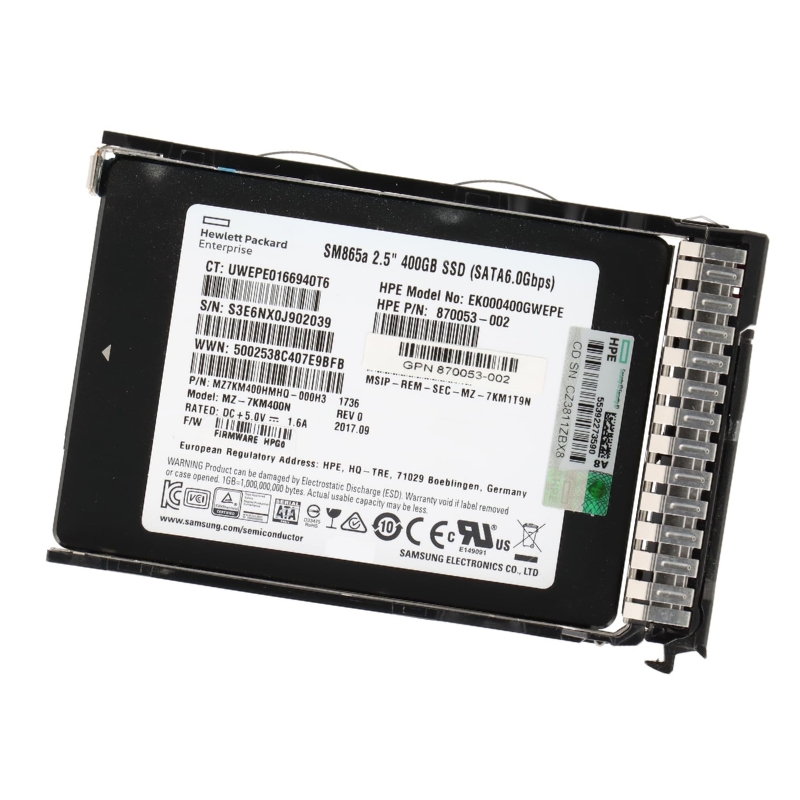


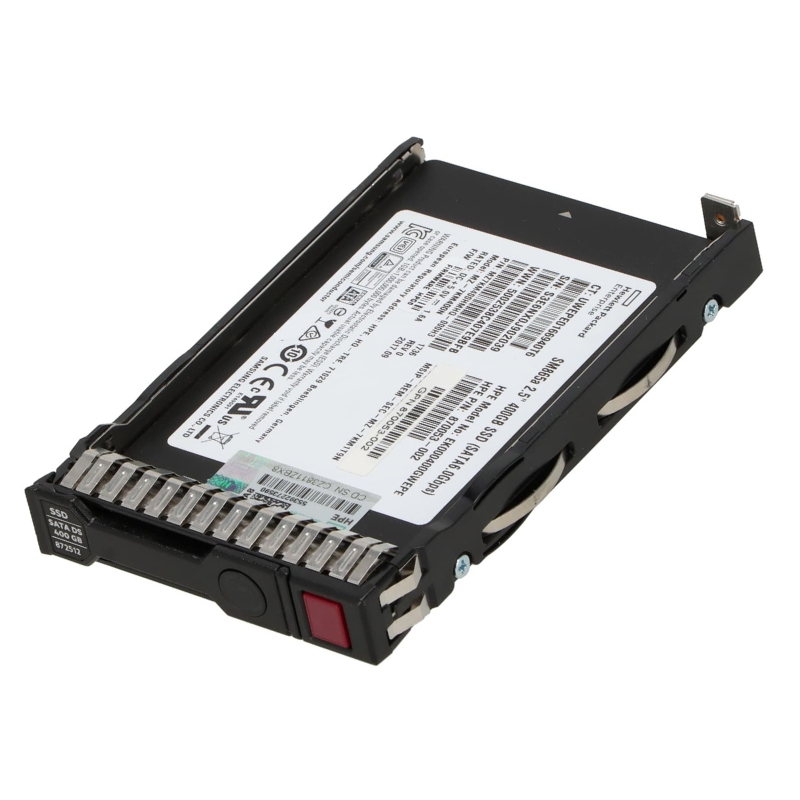
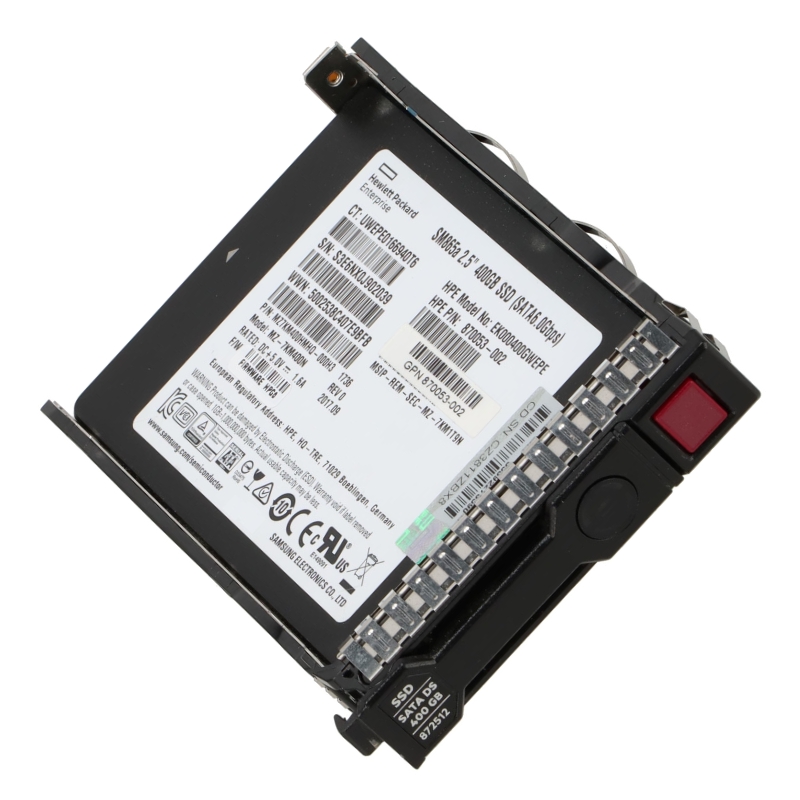
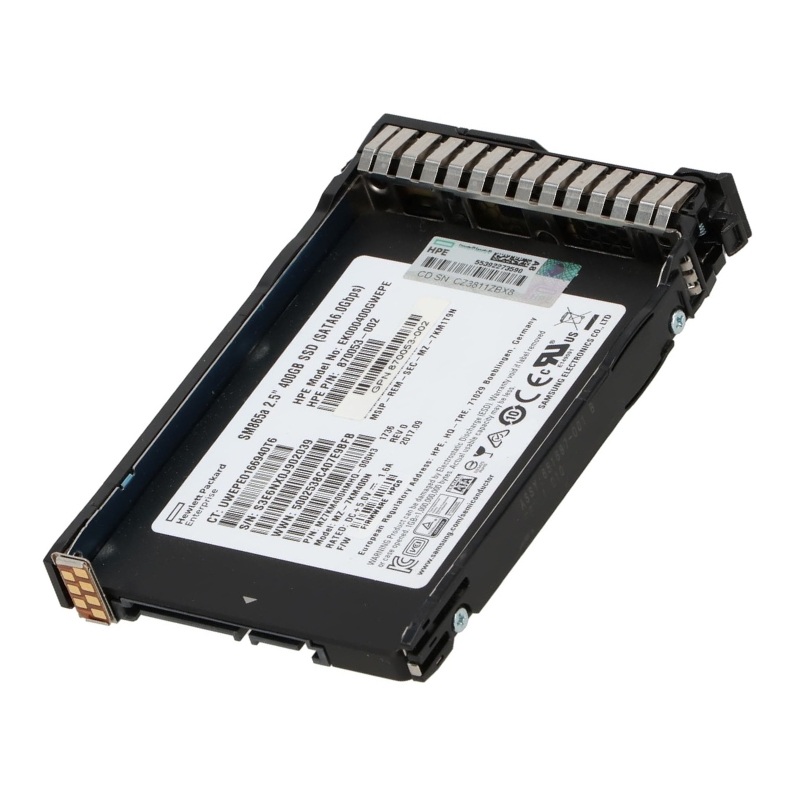
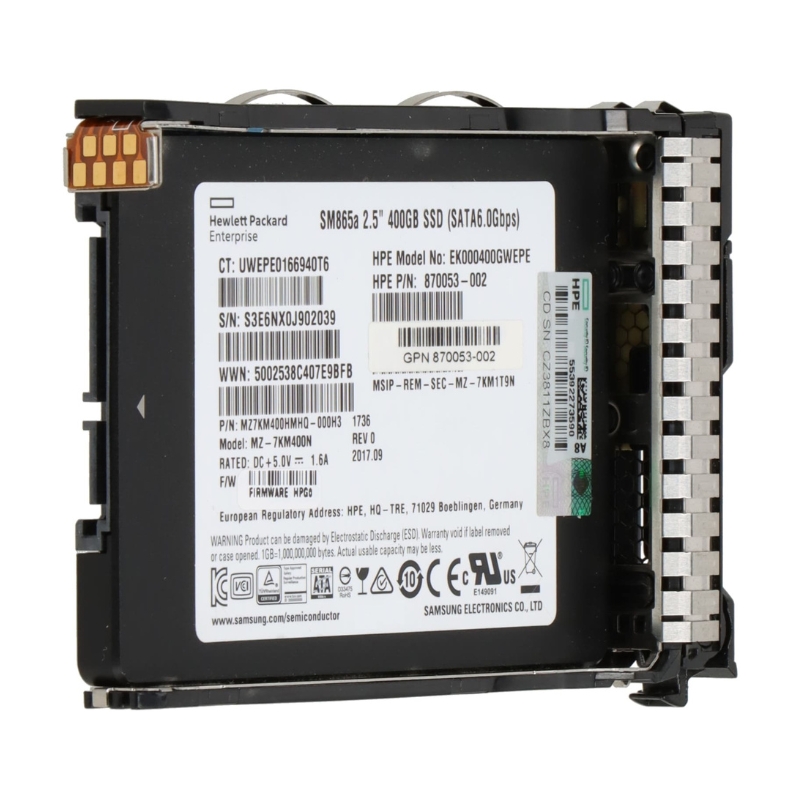
HPE 653109-B21 800GB SAS 6GBPS Hot Swap 2.5-inch Smart Carrier SSD. Excellent Refurbished with 1 year replacement warranty
| SKU/MPN | Warranty | Price | Condition | You save |
|---|---|---|---|---|
| 653109-B21 | 1 Year Warranty | $2,050.00 | New Sealed in Box (NIB) | You save: $717.50 (26%) |
| 653109-B21 | 1 Year Warranty | $546.00 | Excellent Refurbished | You save: $191.10 (26%) |
The HPE 653109-B21 800GB SAS 6Gbps Hot Swap 2.5-inch Smart Carrier SSD represents a high-performance enterprise storage class designed for modern data center workloads. This category targets system administrators, procurement teams, and infrastructure architects who demand low-latency, high-availability block storage for transactional databases, virtualization platforms, and mixed workload environments. By combining SAS 6Gb/s interface compatibility with HPE’s Smart Carrier design, drives in this family prioritize hot-swap convenience, predictable I/O performance, and integration with HPE ProLiant servers, storage enclosures and arrays. The description below elaborates on the technical attributes, operational benefits, deployment considerations, and buyer guidance essential for marketing and category indexing.
The HPE 653109-B21 class of SSDs is defined primarily by its 800GB capacity, SAS 6Gb/s interface, 2.5-inch form factor, and hot-swap Smart Carrier design. The 800GB capacity category is especially appealing where capacity per drive must be balanced against IOPS and endurance requirements. The SAS 6Gb/s interface ensures wide compatibility across enterprise controllers and HBAs while delivering the throughput necessary for demanding read/write cycles. The 2.5-inch form factor is the data center standard for high-density server deployments, allowing for greater drive counts per chassis and better thermal management. Hot-swap support means drives can be removed and replaced while systems remain powered, vastly improving maintainability and minimizing downtime for mission-critical services. Finally, the HPE Smart Carrier provides operational advantages such as easy tray replacement, consistent fitment, and support for HPE-specific monitoring and firmware update workflows.
In enterprise contexts, raw capacity matters less than consistent performance under load. Drives in this category are engineered to deliver high IOPS for small-block, random read/write workloads that characterize databases and virtual machine images. Typical SAS enterprise SSDs offer significantly lower read and write latencies compared to spinning disks, often measured in single-digit hundreds to tens of microseconds depending on controller and firmware optimizations. The 6Gb/s link provides sufficient headroom for many mixed use scenarios, and when combined with modern RAID controllers and caching strategies, these SSDs reduce transaction times and accelerate application responsiveness. For environments where deterministic performance is critical — for example, OLTP databases or high-concurrency virtualization hosts — this class of SSDs is a strategic upgrade from rotational media.
Endurance metrics for the HPE 653109-B21 family are tuned to mixed-use workloads, offering a balance between write endurance and useful capacity. Enterprise SSDs incorporate advanced wear-leveling algorithms, over-provisioning, and error correction mechanisms to sustain consistent performance across the drive’s service life. Additionally, SMART reporting, media wear indicators, and HPE-integrated monitoring tools provide administrators with visibility into drive health and remaining endurance, enabling proactive replacement and lifecycle planning. For systems that require high availability, the combination of SSD endurance, controller-level redundancy, and hot-swap capability reduces the risk of unplanned outages while simplifying the operational runbook for drive maintenance.
One of the principal selling points of HPE-branded SSDs is their compatibility with HPE ProLiant servers, HPE storage enclosures, and management suites. The 2.5-inch Smart Carrier is intended to seat correctly in HPE-compatible drive bays and interact with server firmware, allowing for seamless firmware updates and reporting via the iLO and storage management tools. SAS interface compatibility also ensures these drives work with a wide array of third-party RAID controllers and HBAs that support the 6Gb/s standard. Buyers should always verify firmware compatibility lists and HCL (Hardware Compatibility List) entries for their specific server model to ensure optimal performance and to avoid edge-case interoperability issues. Proper integration also extends to hot-swap policies and documented drive replacement procedures, so that administrators can confidently service hardware without affecting running workloads.
Firmware plays a central role in enterprise SSD performance, endurance, and feature set. HPE SSDs typically ship with vendor-tested firmware that is validated against HPE systems and management tools. When deploying drives at scale, administrators should adopt a controlled firmware update cadence: validate releases in a test environment, take backups of critical configuration, and schedule updates during maintenance windows if necessary. Firmware updates can introduce performance improvements, security patches, and better error handling. Lifecycle management also includes tracking warranty periods, recording serial numbers and firmware revisions in asset databases, and coordinating firmware update policies with broader change management practices.
Hot-swap capability is a decisive feature for enterprise operations. Drives in this category are engineered for removal and replacement without powering down the host. The HPE Smart Carrier provides an intuitive mechanical interface that secures the SSD in the bay while facilitating quick extraction. Administrators should follow vendor-recommended steps for hot-swap: initiate a drive offline action through management software if applicable, confirm the drive is no longer in use by the OS or RAID controller, unlock the carrier latch, and remove the drive. Replacement is the reverse. Proper hot-swap procedures reduce the risk of accidental data loss and preserve array integrity. For critical arrays, ensure that RAID rebuild policies, spare drive availability, and thermal considerations are part of the standard operating procedure.
This category of SSD is particularly well-suited for a variety of enterprise applications. Virtualization platforms such as VMware ESXi and Microsoft Hyper-V benefit from the low latency and high random IOPS that SSDs provide for VMDK or VHD workloads. Database systems, both transactional and analytic, see improved query response and faster commit times. VDI (Virtual Desktop Infrastructure) deployments gain smoother boot storms and application launch times. In mixed workload environments — where read and write patterns vary — a mixed-use rated SSD, like the HPE 653109-B21, provides a resilient compromise between read-optimized and write-intensive drives. The drives are also an excellent fit for caching tiers in hybrid storage solutions, where a smaller pool of high-performance SSDs accelerates access to hot data while large-capacity HDDs store cold data.
Effective storage architecture often uses a tiered approach. A performance tier composed of 2.5-inch SAS SSDs accelerates workloads that demand fast random I/O, while capacity tiers built on high-density HDDs offer economical long-term storage. In such designs, HPE 653109-B21 class SSDs can serve as the primary tier in small-to-medium deployments or as the caching and metadata tier in larger arrays. Tiering policies should be defined by access patterns and SLA targets. Combining SSDs with HPE storage features like SmartCache or SmartTier enables automated data placement based on usage, which optimizes both cost and performance.
The 2.5-inch form factor enables a higher drive count per chassis compared to 3.5-inch drives, which is advantageous for scaling out capacity and maintaining IOPS per rack unit. For dense compute clusters and blade or rack-mounted ProLiant servers, these SSDs help conserve rack space while delivering predictable performance. When scaling, consider controller limits for queues and outstanding commands, backplane bandwidth, and thermal design. Adding more drives increases aggregate throughput but also raises power and cooling demands; a holistic infrastructure plan ensures the benefits of increased density are realized without compromising reliability.
To extract the maximum value from enterprise SSDs, teams should adopt monitoring, logging, and scheduled maintenance practices. Integrating drive telemetry into existing monitoring suites ensures early detection of anomalies such as rising reallocated sector counts, increasing media wear, or unexpected SMART attribute changes. HPE systems offer tools that aggregate drive health and lifecycle metrics through iLO and array management interfaces, enabling actionable alerts. Regularly reviewing these metrics and cross-referencing with workload changes helps determine when to add capacity, move data between tiers, or retire aging drives. Also, maintain firmware inventories and reconcile them against the HPE recommended versions to maintain a stable and supported environment.
While SSDs are incredibly reliable relative to mechanical drives, they are not immune to failure. Thus, redundancy and robust backup policies remain imperative. RAID configurations can protect against single-drive failures, and for higher availability requirements, multi-node replication or synchronous mirroring can be used. Snapshot and backup strategies must account for the speed differential between SSDs and backup targets. For instant recovery objectives, consider using snapshots on the SSD tier coupled with replication to persistent storage. Ensure recovery procedures are tested periodically to validate RTO and RPO targets and to confirm that drive replacements and rebuilds do not introduce unacceptable performance degradation during recovery operations.
Enterprise drives often include features that facilitate secure data handling. Self-encrypting drive (SED) variants and firmware-level encryption can help meet compliance mandates and simplify secure decommissioning. When retiring drives, follow NIST-compliant sanitization workflows or vendor-provided secure erase utilities to guarantee that sensitive information is irrecoverably removed. HPE documentation outlines supported erasure methods and best practices for maintaining compliance with organizational policies and regulatory frameworks. For environments where encryption-at-rest is mandatory, ensure the storage architecture and key management solutions are validated for interoperability with the SSD firmware features.


 Contact Us
 Information
 Catalog
 Solid State Drives (SSD)
 Network Switches
 Hard Disk Drives
 HBA & Controllers
 PC & Servers
 PC & Server Memory
 CPU & Processors
 Network Routers
 Power Supplies
 Tape Drives & Libraries
 Network Devices
 Computer & Network Cables