(7% discount is applied at checkout)
Cart is empty
Your go-to destination for cutting-edge server products
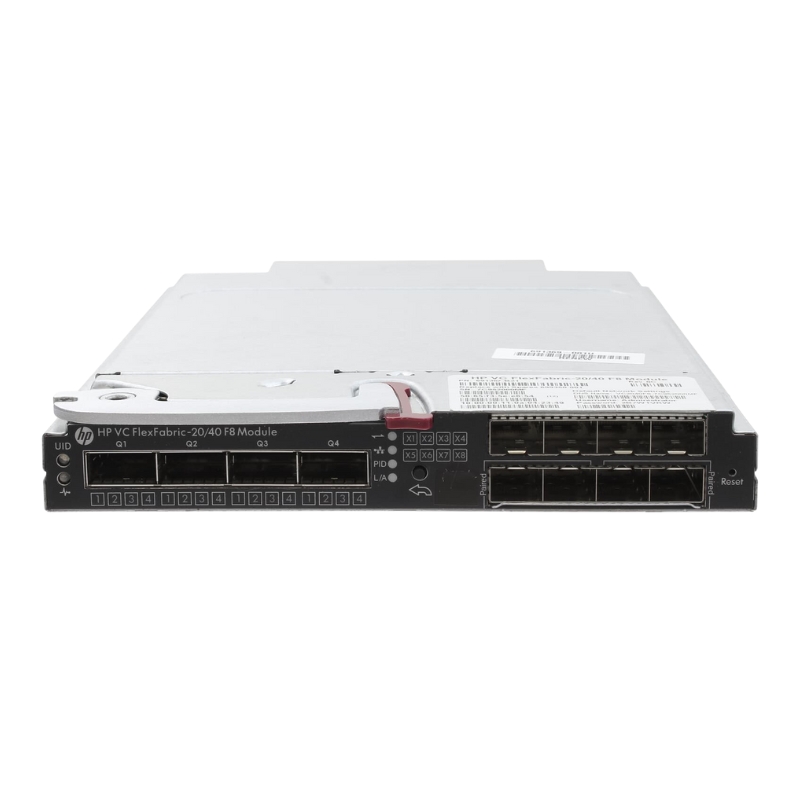


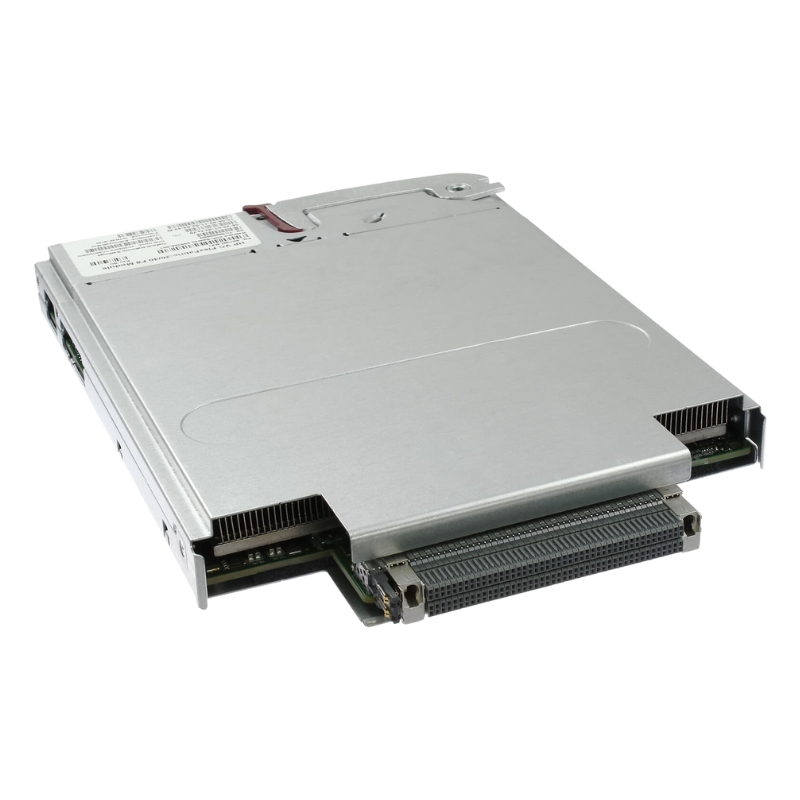
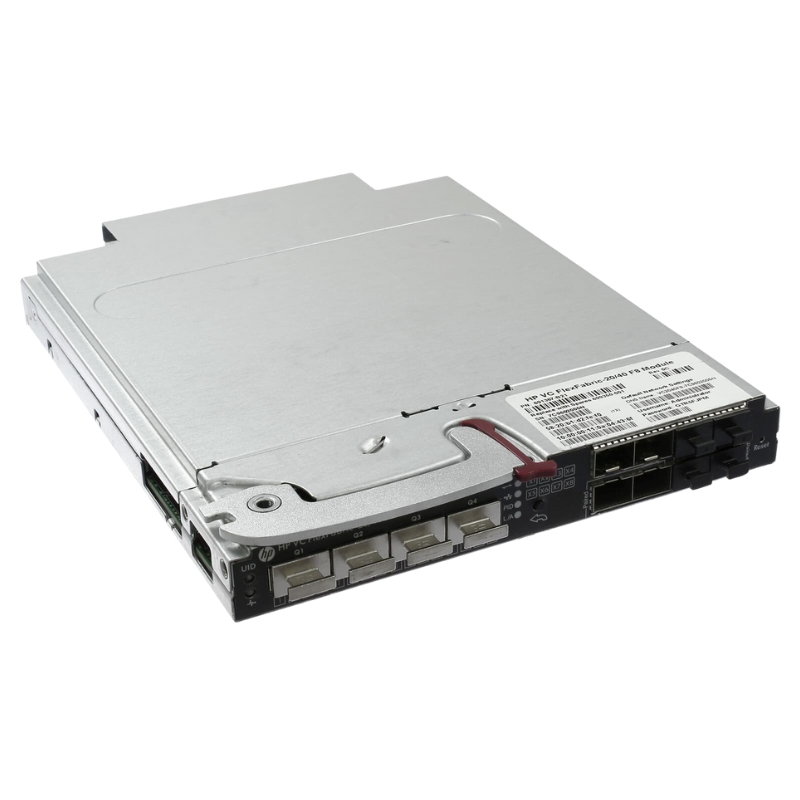
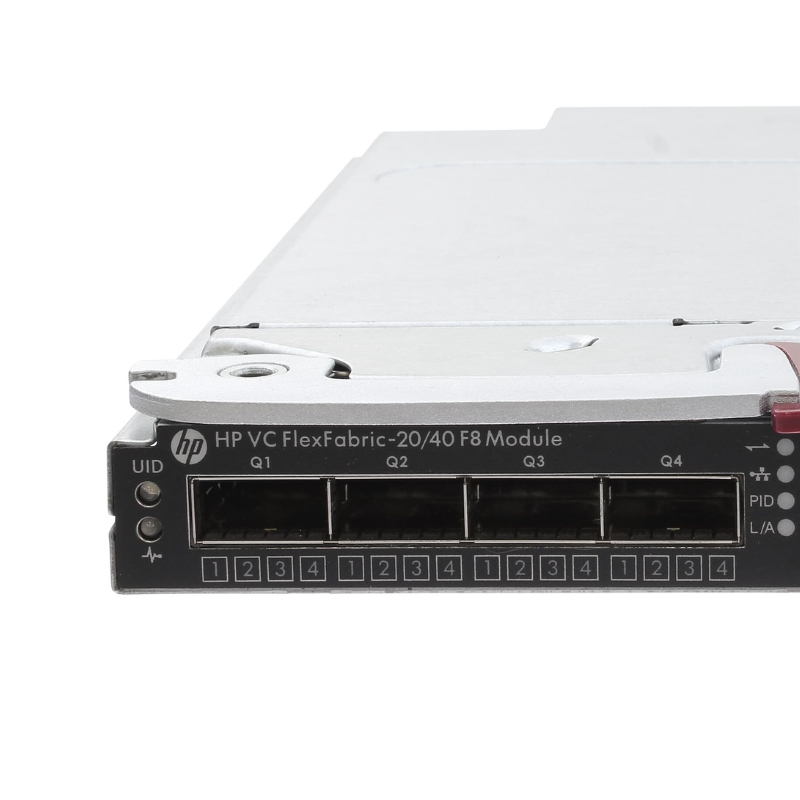
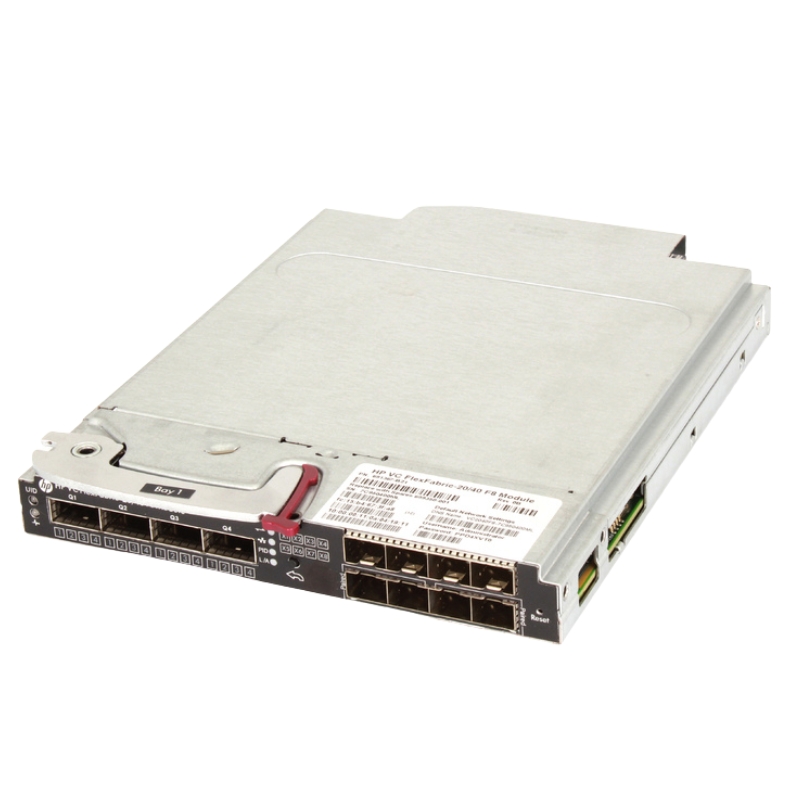
HPE 691368-B22 BLc VC FlexFabric-20/40 F8 TAA Module. Excellent Refurbished with 1 year replacement warranty
The HPE 691368-B22 FlexFabric module is a powerful and efficient connectivity solution designed for the HPE BladeSystem c-Class environment. This advanced Virtual Connect (VC) technology helps streamline network and storage traffic by merging them into a unified fabric. It is optimized for enterprises looking for flexibility, high throughput, and simplified management. Its architecture supports multiple speeds and protocols, making it highly adaptable to modern data center requirements.
This FlexFabric module supports both Ethernet and Fibre Channel protocols, ensuring versatile deployment across various workloads. With the ability to utilize QSFP+ for 40Gb uplinks or SFP+ for 20Gb connections, organizations can easily adapt to evolving bandwidth needs without hardware overhauls.
With eight flexible uplink ports, IT administrators can customize their connectivity for redundancy, high performance, or cost optimization. This scalability makes the HPE 691368-B22 suitable for both small-scale and enterprise-grade environments.
One of the most valuable aspects of the HPE 691368-B22 module is its ability to virtualize network and storage adapters. This means a single physical adapter on a server blade can be partitioned into multiple vNICs and vHBAs. Such virtualization improves resource utilization, simplifies provisioning, and supports stateless computing models.
The HPE 691368-B22 FlexFabric-20/40 F8 Module significantly reduces networking complexity in a blade environment. IT teams can configure and manage virtual networks centrally, cutting down on repetitive tasks and deployment times.
Stateless computing provided by this module allows administrators to detach server identities from the physical hardware. This leads to quick disaster recovery, simplified replacement of failed hardware, and improved agility in large-scale operations.
Being TAA compliant, the HPE 691368-B22 meets U.S. government procurement standards, making it a trusted solution for public sector deployments. Its engineering ensures enterprise-grade reliability and long-term operational stability.
The HPE 691368-B22 BLc VC FlexFabric-20/40 F8 TAA Module is engineered to simplify and accelerate networking for HPE BladeSystem c-Class environments by consolidating LAN and SAN traffic, reducing top-of-rack switch sprawl, and streamlining server-to-network provisioning. As part of the HPE Virtual Connect family, this FlexFabric module delivers flexible 10GbE server downlinks and high-bandwidth 20/40Gb uplinks, while offering Trade Agreements Act (TAA) compliance for public sector and regulated buyers. It enables administrators to carve multiple logical connections from a single physical link, present clean Ethernet and storage interfaces to servers, and manage connectivity profiles at the enclosure level rather than at every external switch, significantly reducing complexity and ongoing operational costs.
Designed for converged infrastructure, the FlexFabric-20/40 F8 integrates Ethernet, iSCSI, and FCoE capabilities, making it easier to support diverse workloads—virtualization clusters, hybrid cloud platforms, VDI, container orchestration, and tiered storage. With Virtual Connect Manager and profile-based networking, you can assign MAC addresses, WWNs, VLANs, and SAN fabrics to server bays dynamically, enabling rapid repurposing of compute capacity without re-cabling or touching upstream networks. The result is a cleaner architecture that accelerates provisioning, maintains policy consistency, and supports high availability through link aggregation and multi-module redundancy.
Within the HPE portfolio, the 691368-B22 module sits at the intersection of server, storage, and network infrastructure. It is embedded in the HPE BladeSystem c-Class enclosure and interacts with on-blade adapters (LOMs and mezzanines) to abstract connectivity. Instead of wiring each server directly to separate LAN and SAN switches, the FlexFabric module aggregates internal server connections and presents a unified, simplified set of uplinks to the broader data center network. This central abstraction layer supports:
Organizations standardizing on HPE BladeSystem that want to collapse multiple networks, reduce cables, and simplify change management gain immediate value. It is particularly compelling for buyers who need a verified TAA-compliant supply chain, who operate mixed Ethernet and storage traffic, or who want to minimize external switch counts in edge or core racks.
The 691368-B22 module is designed to be feature-rich yet operationally simple. Core capabilities revolve around bandwidth flexibility, protocol convergence, and profile-driven automation.
Downlinks from the FlexFabric-20/40 F8 to server blades are typically 10GbE connections that can be partitioned into FlexNICs and FlexHBAs. This approach lets administrators assign independent bandwidth caps and priorities per logical function—separating, for example, VM traffic, vMotion/live migration, backup, management, and storage flows—without requiring additional physical adapters or cabling.
On the uplink side, the module supports 40Gb capabilities (commonly via QSFP+ form factor) and 10Gb options (often via SFP+). QSFP+ can be broken out into four lanes of 10Gb for flexible topologies. This lets operators choose whether to build a few fat uplinks to core aggregation or many smaller 10Gb links to ToR/End-of-Row switches, striking the right balance between throughput, redundancy, and cabling simplicity.
Built for convergence, the FlexFabric-20/40 F8 presents standard Ethernet to LAN domains and supports iSCSI and FCoE for storage. This allows organizations to leverage existing SAN investments while streamlining wiring. iSCSI provides IP-based storage flexibility, while FCoE bridges Fibre Channel semantics over Ethernet for integration with FC fabrics through appropriate upstream gateways or native support.
TAA (Trade Agreements Act) compliance indicates that the product meets sourcing and manufacturing requirements for government procurement. The 691368-B22 TAA variant is intended for agencies and contractors obligated to procure compliant hardware, simplifying acquisition cycles and audit trails.
The module functions as a Virtual Connect interconnect, abstracting the internal blade fabric from external switches. Administrators manage server-facing identities and network mapping within the Virtual Connect Manager (VCM) or centrally via HPE OneView, while keeping external network configurations relatively static.
Virtual Connect decouples server identity from physical location. This separation enables workload mobility and consistent policy adherence without altering upstream networks. The module is effectively a boundary where internal server profiles meet external VLAN/SAN topology.
When used with HPE OneView, the FlexFabric-20/40 F8 becomes part of a software-defined lifecycle. Templates control enclosure, interconnect, and server profile configuration. Infrastructure-as-code practices emerge naturally, with repeatable patterns for VLAN sets, SAN fabrics, and QoS policies applied across multiple enclosures.
The 691368-B22 FlexFabric-20/40 F8 supports a mix of high-speed uplink options and dense server downlinks within the c-Class enclosure. The “F8” designation is associated with eight high-speed uplink-capable positions, designed to maximize enclosure-to-network throughput while limiting cabling.
Each blade slot connects internally to the interconnect bay via the midplane. With appropriate LOM or mezzanine adapters, servers obtain 10GbE links that can be virtualized into multiple FlexNICs and FlexHBAs. These links are configured in profiles and can be adjusted without downtime in many cases, enabling bandwidth reallocation as workloads evolve.
Common uplink strategies include deploying QSFP+ ports for 40Gb trunks toward aggregation layers or using SFP+ ports for 10Gb links to top-of-rack switches. QSFP+ breakouts can feed multiple 10Gb endpoints from a single 40Gb port for efficient fan-out, while LACP provides both increased throughput and link-level fault tolerance.
The module provides a policy-centric approach to delivering network services to blades. VLAN tagging separates tenant or application networks, while QoS and bandwidth controls ensure fair resource distribution across shared physical links.
Administrators define networks with specific VLAN IDs and combine them into network sets for easy reuse. Server profiles then attach to these sets, automatically inheriting VLAN availability. This scales well in multi-tenant environments and large virtualization clusters where dozens or hundreds of VLANs are common.
QoS tools help prioritize latency-sensitive traffic (e.g., storage or vMotion) and cap non-critical flows (e.g., backup during business hours). Minimum/maximum bandwidth reservations and relative weighting keep shared links predictable even during congestion bursts.
Storage convergence is a hallmark of FlexFabric. Whether you use iSCSI or FCoE, ensure designs maintain multipathing, redundancy, and consistent zoning or LUN masking at the arrays.
Server profiles are the nexus of speed and governance. By binding network/storage identities to profiles rather than to specific hardware, administrators enable rapid replacement and workload mobility while maintaining auditability.
Profiles can include MAC addresses, WWNs, boot settings, firmware baselines, and network mappings. When a blade fails or is upgraded, simply assign the profile to a replacement bay; the network perceives the same identity, minimizing change scope.
Security in converged networking is a layered exercise. The FlexFabric-20/40 F8 supports network segmentation, role-based administration, and consistent identity assignment for predictable enforcement at policy boundaries.
Performance is determined by uplink design, redundancy, and bandwidth governance. The FlexFabric-20/40 F8 lets architects scale enclosure bandwidth using 40Gb trunks or fan-out 10Gb breakouts depending on topology constraints.
The FlexFabric-20/40 F8 TAA module is designed for the HPE BladeSystem c-Class enclosure portfolio, integrating with compatible server LOMs and mezzanine adapters. Before deployment, confirm adapter support matrices for your server generation and desired protocols (Ethernet, iSCSI, FCoE) to ensure optimal performance and feature availability.
Maintaining a consistent firmware baseline is key for large deployments. Align server adapter drivers with interconnect firmware to ensure features like QoS, FCoE, and link aggregation perform as intended. Coordinated updates reduce the risk of unexpected behavior after change windows.
Successful rollouts combine sound cabling practices, clear naming conventions, strong templates, and proactive monitoring. Below are field-proven recommendations to keep environments stable and auditable.
Many organizations adopt the FlexFabric-20/40 F8 while modernizing from legacy 1GbE or non-converged designs. A staged approach minimizes risk and downtime.
Achieving high availability starts with redundancy at every layer—server adapters, interconnect modules, uplinks, and fabrics. The FlexFabric-20/40 F8 supports resilient topologies that withstand link, port, and device failures with minimal impact.
As a TAA-designated product, the 691368-B22 BLc VC FlexFabric-20/40 F8 TAA Module can fit into procurement frameworks that require compliant sourcing. When budgeting, include optics, breakout cables, and any required transceivers. Plan lifecycle schedules that align enclosure refresh, interconnect firmware updates, and server generation transitions to reduce overlapping change risks.
Consolidation through Virtual Connect reduces top-of-rack device counts and can lower power and cooling requirements. High-density uplinks minimize cables, improving airflow and serviceability, while profile-based management reduces truck rolls and hands-on time.


 Contact Us
 Information
 Catalog
 Solid State Drives (SSD)
 Network Switches
 Hard Disk Drives
 HBA & Controllers
 PC & Servers
 PC & Server Memory
 CPU & Processors
 Network Routers
 Power Supplies
 Tape Drives & Libraries
 Network Devices
 Computer & Network Cables