(7% discount is applied at checkout)
Cart is empty
Your go-to destination for cutting-edge server products
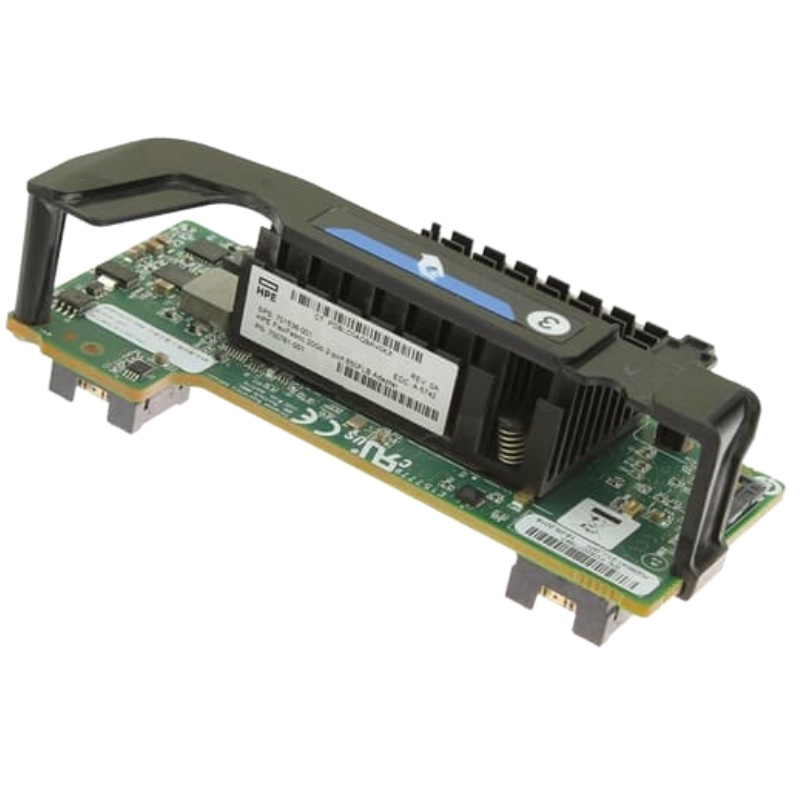


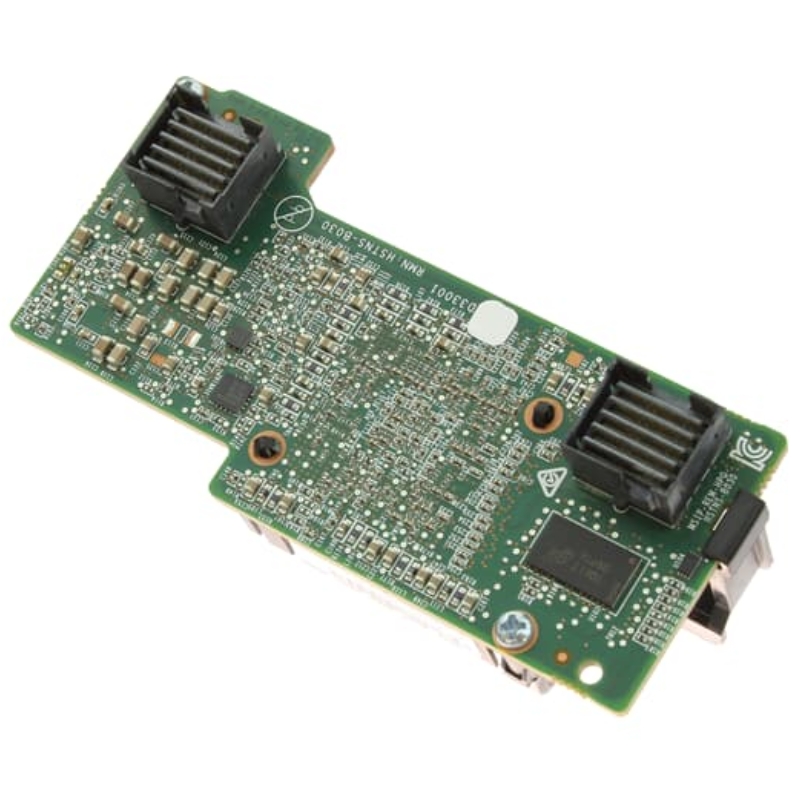
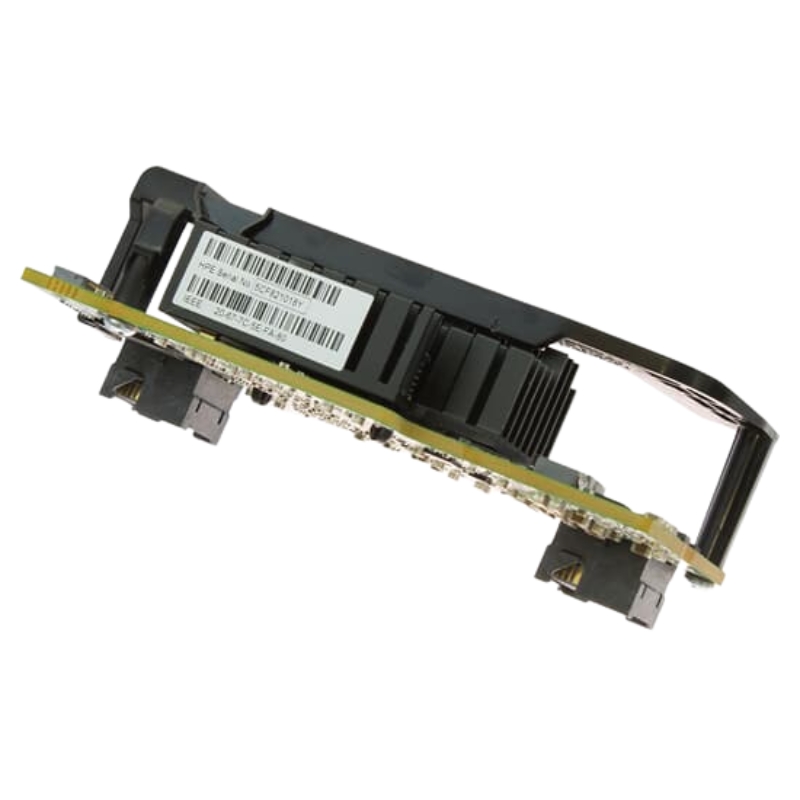
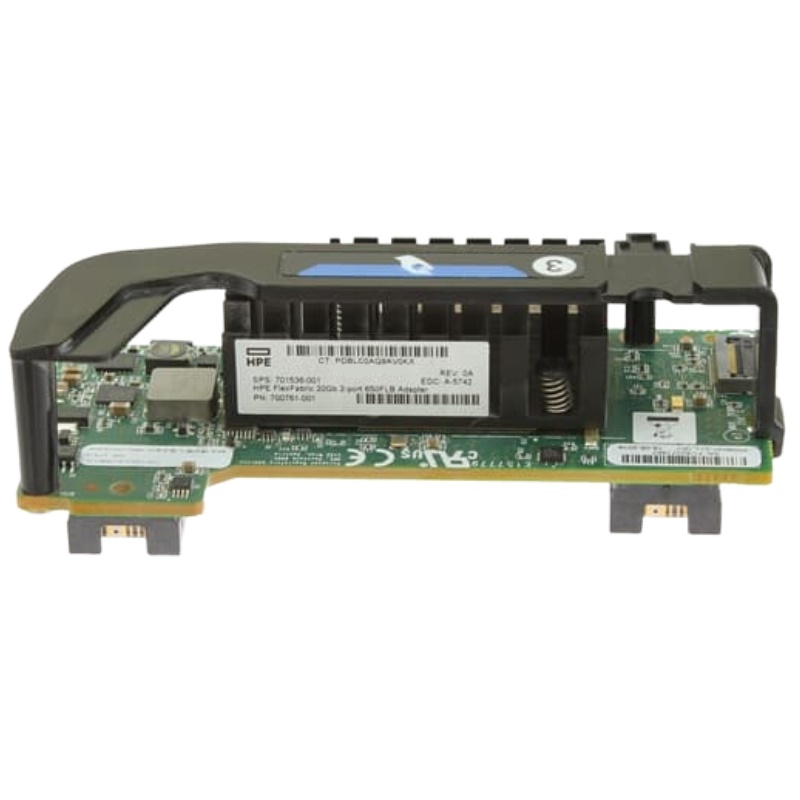
HPE 700761-001 Flexfabric 20GB 2-Port 650flb Network Adapter Pci Express V3.0 Optical Fiber. Excellent Refurbished with 1 year replacement warranty
The HPE FlexFabric 650FLB dual-port adapter is engineered for data-intensive server environments that require dependable throughput, low latency, and advanced traffic handling. Designed as a PCI Express 3.0 x8 plug-in card with a FlexibleLOM form factor, this network interface solution delivers stable 20Gb Ethernet connectivity for virtualization clusters, cloud infrastructure, storage networking, and business-critical workloads.
The HPE 700761-001 FlexFabric 20GB 2-Port 650FLB Network Adapter PCI Express V3.0 Optical Fiber category is designed for enterprise data centers, virtualized server clusters, cloud infrastructure, storage networking, and high-throughput application environments where dependable bandwidth and low-latency communication are essential. This category covers advanced dual-port FlexibleLOM network adapters built for HPE ProLiant server platforms that require scalable 20Gb connectivity, efficient traffic handling, and optimized PCI Express 3.0 data transfer performance. As a specialized server networking subcategory, it serves organizations that need optical fiber-based connectivity for long-distance, interference-resistant, and highly stable network communication across racks, floors, and large campus-grade infrastructure deployments.
Built around FlexFabric architecture, this adapter category supports converged networking workloads where LAN and storage traffic can coexist efficiently across the same infrastructure. Enterprises deploying virtualization hosts, blade environments, database clusters, software-defined storage, and private cloud ecosystems often rely on this type of optical fiber PCIe adapter to maintain performance consistency under sustained traffic loads. The 2-port design provides redundant connectivity paths and traffic distribution flexibility, making it suitable for high-availability environments where uptime and failover resilience directly impact operations.
The defining strength of the HPE 700761-001 FlexFabric 650FLB adapter category lies in its 20Gb aggregate throughput capability, allowing server systems to support bandwidth-intensive workloads such as virtualization migrations, high-volume backups, distributed analytics, and transactional databases. In enterprise environments, network bottlenecks can affect application responsiveness, VM density, storage replication speed, and user experience. This 20GB FlexFabric category is built to reduce such limitations by delivering high-speed dual-port communication over optical fiber infrastructure.
Each port is engineered to support consistent data flow with reduced packet loss and excellent signal integrity. Optical fiber transmission provides advantages over copper-based alternatives in scenarios requiring longer cable runs, electromagnetic noise resistance, and predictable throughput. This makes the category especially valuable for multi-rack server farms, enterprise SAN-over-Ethernet strategies, and large-scale switching topologies. The optical medium helps preserve signal quality across extended distances, which is critical in hyperscale and modular data center layouts.
Virtualized environments benefit significantly from this subcategory because multiple virtual machines compete for bandwidth simultaneously. The adapter’s FlexFabric design allows traffic segmentation, workload prioritization, and virtual NIC support features that improve overall host efficiency. Hypervisors running dozens or hundreds of VMs per node require adapters capable of stable multi-queue processing and predictable throughput, and this category directly addresses that demand.
Cloud service providers and private cloud administrators often select this type of PCIe 3.0 optical fiber adapter for east-west traffic optimization between clustered compute nodes. Workloads such as container orchestration, API gateways, distributed caches, and replicated databases generate continuous internal traffic. The 2-port architecture supports network isolation policies, tenant segmentation, and dedicated uplink paths for management versus production traffic.
Latency-sensitive applications such as ERP systems, real-time analytics engines, VDI deployments, and transactional middleware depend on stable packet delivery. This category supports low-latency communication patterns that improve response times between compute, storage, and network layers. For database replication and clustered failover services, reduced latency contributes to better synchronization efficiency and minimized recovery windows.
The PCI Express V3.0 interface further enhances performance by ensuring the adapter can exchange data rapidly with the host system bus. Compared to older PCIe generations, Gen3 bandwidth availability supports more efficient movement of large packet streams, reducing host-side congestion and improving network stack responsiveness under heavy load.
The PCI Express V3.0 design makes this HPE FlexFabric adapter category highly relevant for modern server upgrades and replacement cycles. PCIe Gen3 offers substantial bandwidth improvements, which are especially important when dual optical ports operate under simultaneous peak demand. Enterprise applications such as backup appliances, virtualization clusters, and AI preprocessing nodes often generate concurrent traffic bursts that require a fast host interface.
As a FlexibleLOM-oriented adapter category, it integrates efficiently with supported HPE ProLiant server systems, reducing slot consumption while enabling robust networking expansion. This design approach is highly valuable in dense rack deployments where PCIe slot availability must be preserved for GPU accelerators, RAID controllers, NVMe expansion, or FPGA cards. By using a server-optimized networking form factor, organizations can scale functionality without sacrificing expansion flexibility.
One of the major benefits of this category is its ability to reduce host CPU overhead through advanced offload and packet processing support. Enterprise servers running virtualization, database engines, and software-defined networking stacks need adapters that help minimize CPU cycles spent on routine packet handling tasks. This allows processor resources to remain focused on applications, VMs, and compute-heavy services instead of excessive networking overhead.
Features commonly associated with this class include checksum offload, segmentation support, receive-side scaling, and virtualization-aware queue optimization. These capabilities improve throughput consistency while lowering CPU interrupt pressure, particularly in multi-core Xeon-based HPE servers handling mixed workloads.
Large organizations often standardize on a specific adapter category for simplified lifecycle management. The HPE 700761-001 650FLB class is suitable for fleet-wide deployment across application servers, storage gateways, virtualization nodes, and backup infrastructure. Standardization improves firmware governance, spare inventory control, deployment automation, and driver compatibility across server generations that support the same architecture.
Because this is an HPE enterprise networking component category, it aligns well with centralized procurement strategies and long-term support planning. IT teams responsible for data center modernization can deploy this subcategory as part of a broader network refresh strategy focused on higher throughput, optical cabling consistency, and improved rack-level resilience.
The FlexFabric ecosystem is especially valuable in environments where network convergence is a priority. Rather than maintaining isolated physical infrastructures for standard Ethernet traffic, storage communication, and management services, enterprises can consolidate traffic types over fewer high-speed links. This category is ideal for organizations pursuing reduced cabling complexity, simplified switch architecture, and better resource utilization.
In converged infrastructures, the HPE 700761-001 optical fiber adapter category can support workload separation using VLANs, virtual functions, and policy-based segmentation. This enables backup traffic, VM migration, production application traffic, and management communications to coexist efficiently without requiring dedicated physical adapters for each use case.
Backup windows and storage replication performance often depend heavily on server NIC throughput. This category supports high-volume data transfer operations between compute nodes and storage arrays, making it highly effective for enterprise backup servers, deduplication appliances, and disaster recovery replication systems. The 20Gb throughput profile helps reduce replication lag and improves recovery point objective alignment.
Optical fiber is particularly beneficial in storage-heavy environments where server racks may connect to centralized storage networks over longer distances. Its immunity to electromagnetic interference helps maintain consistent transfer rates in high-density data halls with substantial power and cooling infrastructure.
Data center architects often evaluate networking hardware categories not only on throughput but also on physical deployment efficiency. This subcategory supports cleaner rack layouts by enabling high-speed converged links over fewer cables. Dual-port optical design allows redundant paths while still reducing cable bulk compared with multiple lower-speed interfaces.
Cleaner cable routing improves airflow management, maintenance accessibility, and troubleshooting speed. In large enterprise environments, these operational benefits translate into lower service times, easier rack audits, and reduced risk of accidental cable displacement during hardware changes.
The practical deployment scenarios for this category span a wide range of enterprise and specialized workloads. In virtualization clusters, the adapter supports VM mobility, live migration, storage synchronization, and software-defined networking overlays. In cloud infrastructure, it enables fast node-to-node communication essential for orchestration frameworks and distributed application architectures.
High-performance computing environments also benefit from this category when large datasets must move rapidly between compute nodes, storage repositories, and ingestion layers. Research institutions, engineering simulations, media rendering farms, and analytics platforms can leverage the dual optical ports for resilient data paths and balanced throughput.


 Contact Us
 Information
 Catalog
 Solid State Drives (SSD)
 Network Switches
 Hard Disk Drives
 HBA & Controllers
 PC & Servers
 PC & Server Memory
 CPU & Processors
 Network Routers
 Power Supplies
 Tape Drives & Libraries
 Network Devices
 Computer & Network Cables