(7% discount is applied at checkout)
Cart is empty
Your go-to destination for cutting-edge server products
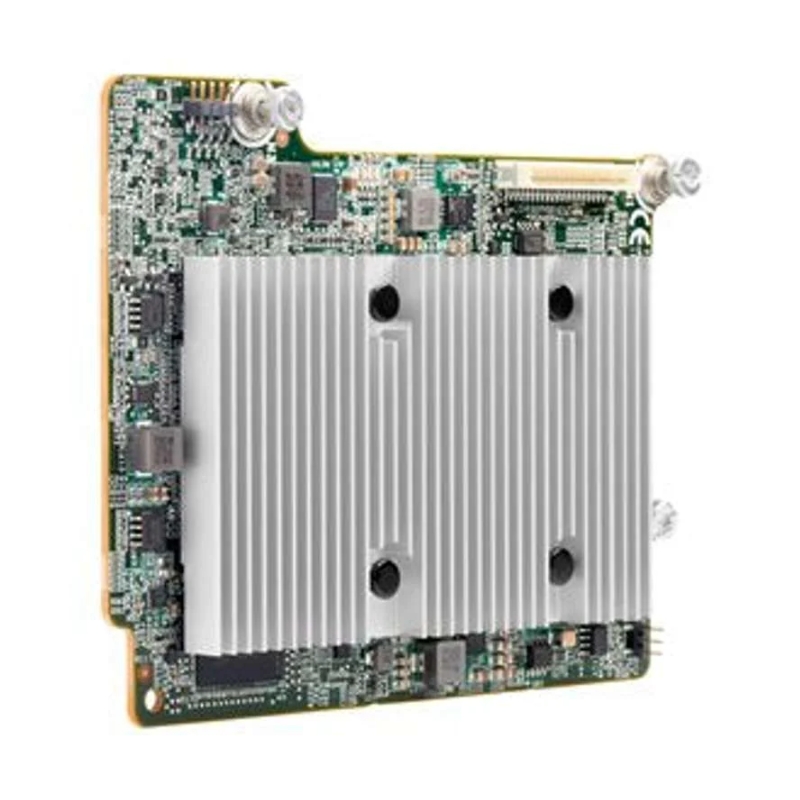


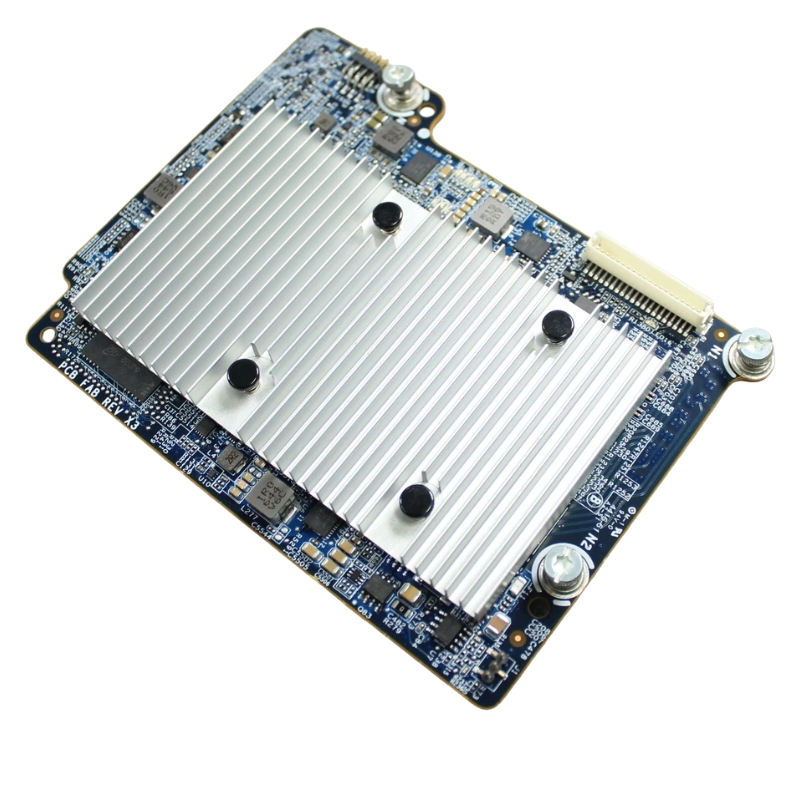
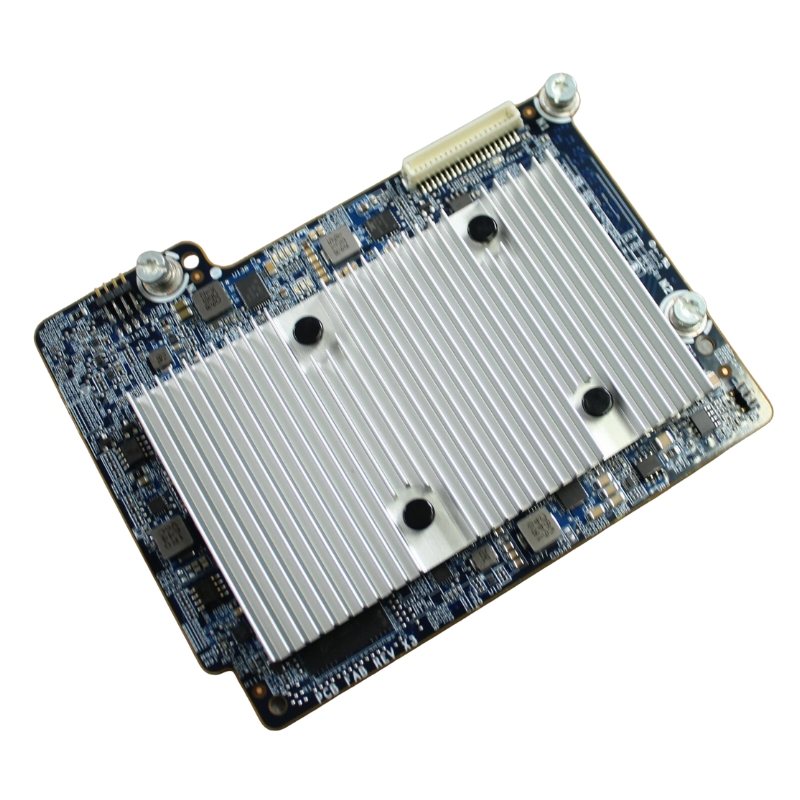
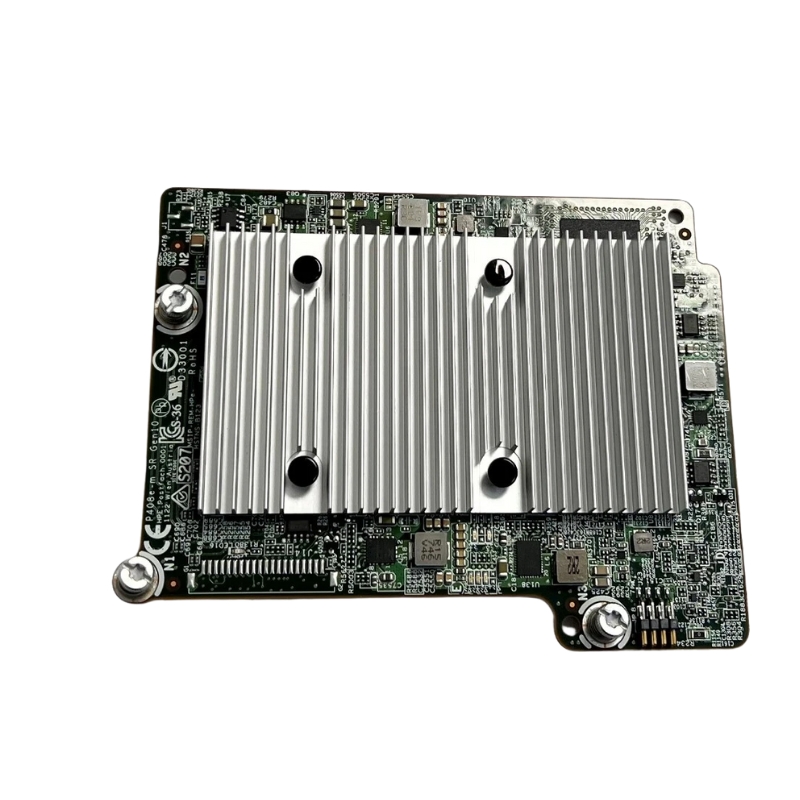
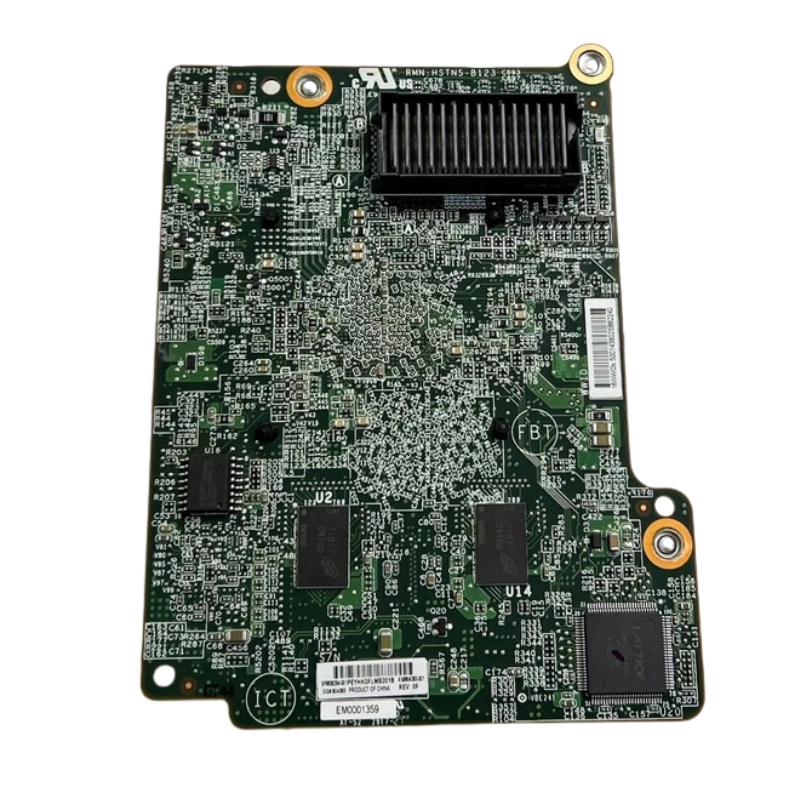
HPE 726874-001 Smart Array P741m 4GB Controller. New (System) Pull with 1 year replacement warranty
The HPE RAID Controller Card is a reliable choice for organizations looking to optimize their data storage architecture. Built with enterprise-grade quality, this refurbished unit is in excellent condition and delivers strong performance for demanding workloads. Fully tested to be in perfect working order, it ensures durability and stability for mission-critical applications.
Incorporating the HPE RAID Controller Card into your system helps manage storage with efficiency while reducing latency. It supports large-scale applications where quick and secure data access is vital, making it suitable for virtualization, data-intensive tasks, and storage consolidation.
With the HPE RAID Controller Card 804381-B21 / 836264-001, businesses can achieve enhanced storage performance, flexible RAID support, and long-term reliability. Ideal for high-performance servers, this solution balances cost-effectiveness with trusted HPE technology to ensure your infrastructure runs at maximum efficiency.
The HPE 726874-001 Smart Array P741m 4GB Controller is a server-class RAID controller engineered to deliver enterprise-grade storage performance, high availability, and advanced data protection for HPE ProLiant rack and tower servers. Designed for data centers, virtualization hosts, and I/O-intensive applications, this controller combines hardware acceleration, dynamic caching, and broad RAID support to reduce latency and improve throughput across SATA and SAS disk arrays.
The P741m is purpose-built for modern storage workloads, featuring a dedicated RAID-on-Chip (RoC) with integrated processors that offload parity calculations and disk management tasks from the host CPU. The architecture permits sustained I/O performance under mixed read/write workloads and supports multiple logical drives per physical disk group.
The on-board 4GB cache accelerates read/write operations and optimizes random I/O. Depending on the configuration purchased, cache protection is commonly implemented using either a battery-backed write cache (BBWC) or a flash-backed write cache (FBWC)/CacheVault module, which safeguards cached data in the event of power loss. Policies such as write-back and write-through are configurable to balance performance and data integrity.
Connectivity is delivered via a PCIe 3.0 host connection (x8), offering the bandwidth required for modern NVMe-adjacent architectures and dense SAS arrays. The P741m handles 12Gb/s SAS native devices while maintaining compatibility with 6Gb/s SATA drives, making it suitable for mixed storage tiers (HDD + SSD).
Extensive RAID support ensures flexible deployment models—single-disk mirrored configurations for fault tolerance, RAID 5/6 for capacity-efficient redundancy, and nested RAID (10/50/60) for performance and resiliency in large arrays. The controller includes online RAID level migration and Online Capacity Expansion (OCE), allowing administrators to grow and reconfigure arrays without downtime.
HPE qualifies the P741m for use with specific lines of HPE ProLiant servers (rack and tower platforms). Always consult HPE's compatibility matrix for exact supported chassis, backplane configurations, and firmware versions to ensure full interoperability — especially when mixing drive types or using third-party backplanes.
This controller is designed to work with direct-attach drive backplanes and SAS expanders. When planning deployments, match drive carrier types, backplane cabling, and expander firmware to the controller to avoid performance or recognition issues. For large-scale arrays, use qualified SAS expanders that support the aggregated link speeds the P741m expects.
Keeping firmware and drivers up to date is essential for stability and security. HPE releases firmware updates that often include performance enhancements, bug fixes, and new feature enablement. Use HPE Service Pack for ProLiant (SPP) or HPE Support Center to obtain validated firmware bundles and driver releases for supported OS platforms.
In typical mixed workloads, the P741m delivers high IOPS for random read/write scenarios and excellent sequential throughput when paired with SSDs or hybrid arrays. Performance scales depending on cache mode, drive type (SAS SSD vs. SATA HDD), and RAID level. RAID 10 generally yields best write performance, while RAID 5/6 provide better storage efficiency at a slight write-cost penalty.
Optimizing RAID stripe sizes, logical drive alignment, and OS-level queue depths can materially affect application performance. For databases and virtualization hosts, align filesystem block sizes and VM virtual disk settings with underlying RAID stripe configurations to reduce read-modify-write overhead.
The P741m is especially well-suited for VMware ESXi and Microsoft Hyper-V environments where multiple virtual machines generate concurrent I/O. The robust cache and RAID options enable consistent response times for consolidation use cases and VDI deployments.
Transactional databases benefit from low-latency reads and cached writes; pairing the controller with enterprise-grade SAS SSDs or mixed SSD/HDD arrays achieves predictable throughput and resilience.
For file servers, application stacks, and backup targets, the P741m offers dependable RAID protection and large-capacity scaling when combined with high-density HDDs and SAS expanders.
The Smart Storage Administrator provides a GUI and CLI interface for provisioning, monitoring, and diagnosing the controller and its logical drives. Tasks such as building arrays, configuring cache policies, scheduling patrol reads, and replacing failed drives are available through SSA.
Deep integration with HPE Integrated Lights-Out (iLO) allows remote monitoring and alerting via the server management plane. Hardware events, predictive failure warnings, and drive health telemetry can be surfaced in centralized management consoles and event logs.
Use SNMP traps and the controller’s eventing features to feed alerts into monitoring systems (e.g., Nagios, Zabbix, SolarWinds). Timely notification of degraded RAID states or predictive drive failures minimizes downtime.
The P741m’s cache protection options prevent data loss from power failures, while firmware robustness and RAID redundancy guard against silent data corruption and disk failure. Regular firmware updates are important to mitigate against vulnerabilities and improve resiliency.
While the controller itself focuses on RAID and caching, whole-disk encryption (SEDs) and OS-level encryption solutions can be used in tandem to meet regulatory requirements (e.g., GDPR, HIPAA). Verify compatibility of SEDs with HPE arrays and management tools prior to deployment.
Compared to entry-level controllers, the P741m offers higher cache capacity, expanded RAID options, and superior performance for I/O-heavy workloads. Against HPE’s highest-end Smart Array models, differences typically include onboard cache size, support for hardware RAID accelerators, and additional management or encryption features — choose based on workload IOPS, capacity needs, and budget.


 Contact Us
 Information
 Catalog
 Solid State Drives (SSD)
 Network Switches
 Hard Disk Drives
 HBA & Controllers
 PC & Servers
 PC & Server Memory
 CPU & Processors
 Network Routers
 Power Supplies
 Tape Drives & Libraries
 Network Devices
 Computer & Network Cables