(7% discount is applied at checkout)
Cart is empty
Your go-to destination for cutting-edge server products
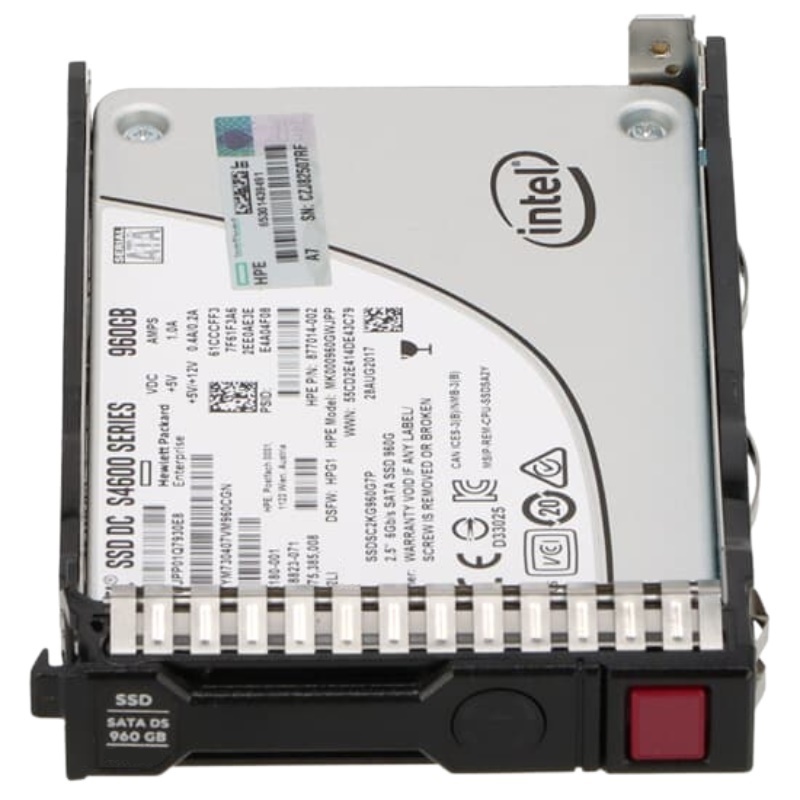


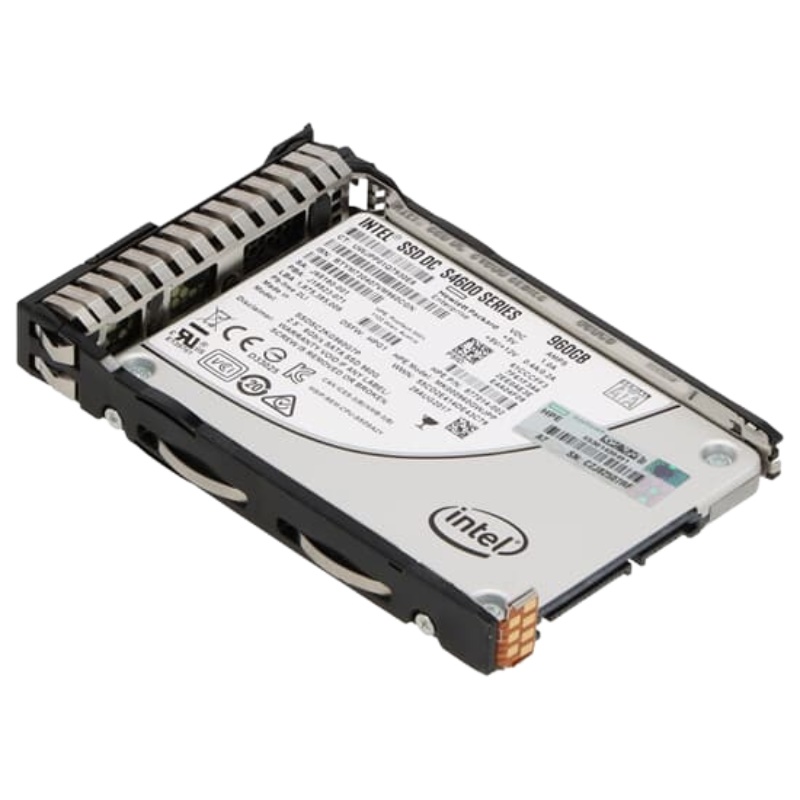
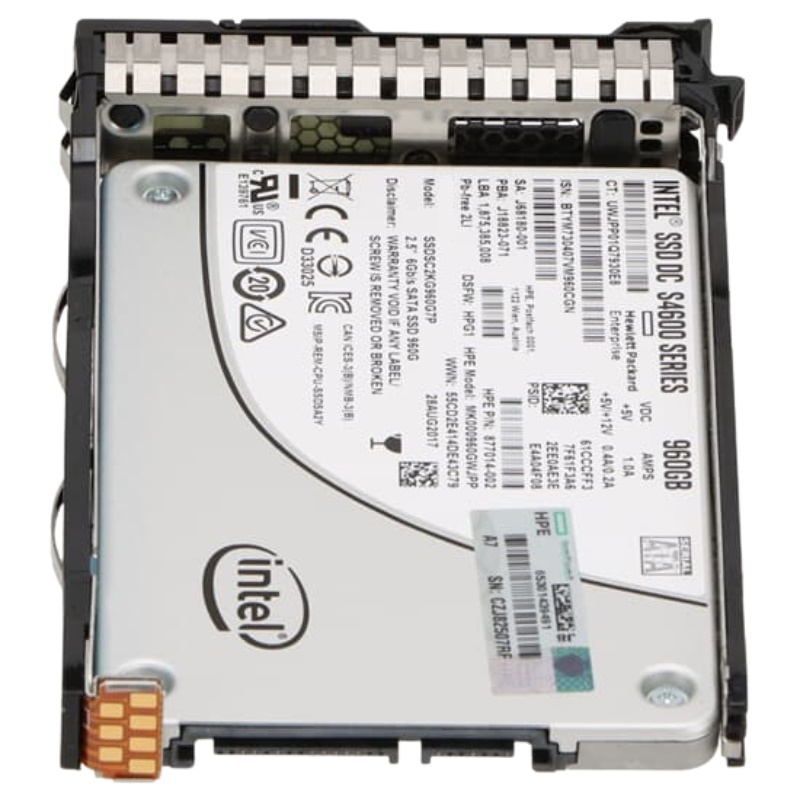
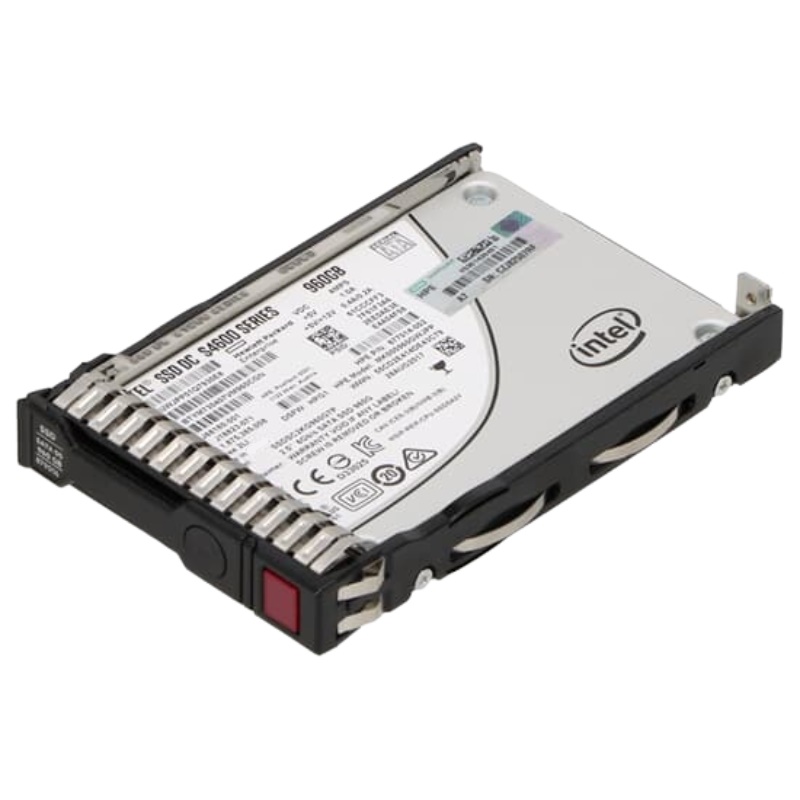
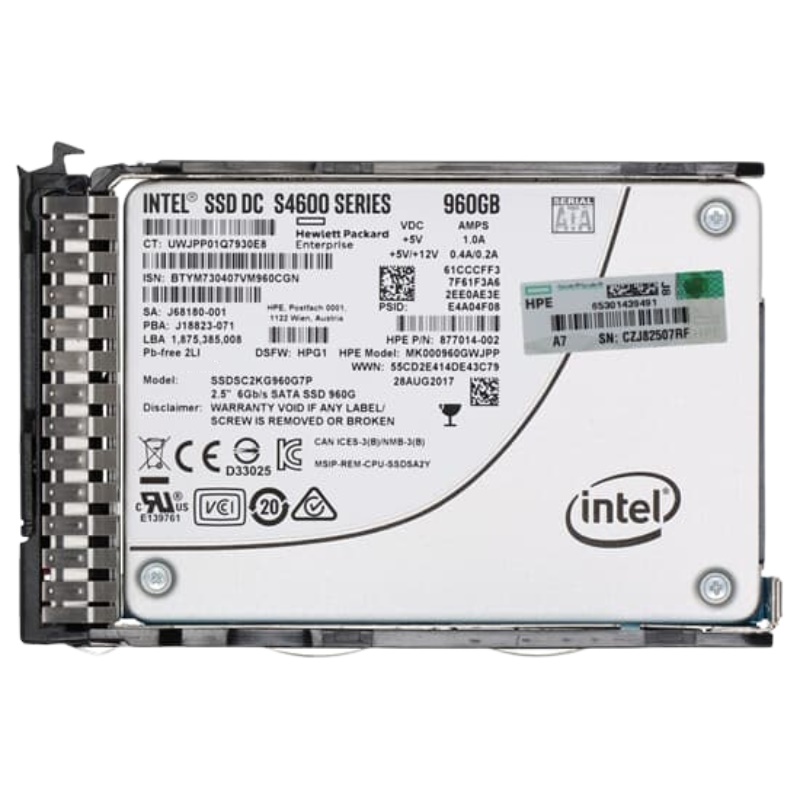
HPE 734528-001 960GB MLC SATA-6GBPS SFF Smart Carrier Value Endurance Internal Solid State Drive. Excellent Refurbished with 1 Year Replacement Warranty
The HPE 734528-001 delivers exceptional performance and reliability with its 960GB storage capacity, making it ideal for data-intensive environments and enterprise-grade applications.
Built with Multi-Level Cell (MLC) flash memory, this SSD balances endurance and cost-efficiency, offering dependable performance for read/write operations across various workloads.
Engineered with sustainability in mind, this internal SSD supports environmentally friendly operations, contributing to greener IT infrastructure.
The HPE 734528-001 960GB MLC SATA-6GBPS SFF Smart Carrier Value Endurance Internal Solid State Drive sits squarely in the enterprise-class server storage category designed for organizations that require a balance of capacity, endurance, and predictable performance. This category focuses on small form factor (SFF) SATA SSDs that use multi-level cell (MLC) NAND, present a 960GB capacity point, and are offered in a Smart Carrier that simplifies installation, hot-swap readiness (where platform supports it), and serviceability in HPE server chassis. These drives are targeted at read-intensive workloads and mixed-transaction environments common to virtualization hosts, boot/system volumes, database index storage, caching tiers, and application acceleration layers.
Drives in this category adopt the small form factor (SFF) layout and adhere to the SATA 6.0 Gb/s (SATA-III) interface standard. The SFF factor is ideal for dense server environments where drive bay count and space utilization matter. The Smart Carrier design — a characteristic HPE tray or caddy — enables straightforward insertion into supported HPE chassis and often includes indicators or latch mechanisms that assist technicians during maintenance windows.
The use of MLC (multi-level cell) NAND signals a design trade-off that favors higher endurance and longer service life compared to TLC alternatives while delivering a competitive cost-per-gigabyte relative to SLC. Paired with a controller tuned for enterprise performance consistency, these SSDs target value endurance applications: workloads that require reliable write endurance over the drive’s lifetime without the premium cost of the highest-endurance enterprise NVMe parts.
The 960GB capacity point is significant for administrators who need near-terabyte storage but prefer the cost, compatibility, and proven reliability of SATA drives. In RAID arrays or as standalone volumes, 960GB leaves room for system overhead, partitions for OS and applications, and efficient use as read caches or database index stores.
Typical performance metrics for drives in this category include sequential read/write throughput (expressed in MB/s), random IOPS at 4K reads/writes, and latency figures under both steady-state and burst conditions. While SATA 6Gb/s creates a theoretical cap, firmware and controller optimization determine real-world sustained throughput, particularly under mixed read/write patterns that enterprise applications commonly generate.
The category tagline “Value Endurance” means these SSDs deliver a carefully balanced warranty and endurance rating that fits many enterprise needs without the expense of the ultra-high-endurance drives. Organizations that experience heavy reads with moderate writes — such as web servers, content delivery nodes, and read-mostly databases — will find the endurance model well-matched to their life-cycle planning and replacement schedules.
HPE’s Smart Carrier concept emphasizes tool-less installation, standardized trays, and compatibility across supported HPE servers. Smart Carriers simplify drive identification, hot-swap capability in compatible bays, and reduce mean-time-to-repair (MTTR) during field maintenance.
Firmware tuned for enterprise reliability manages wear leveling, power-loss protection schemes (where implemented), and error correction. This reduces the risk of unexpected data degradation and helps drives in this category meet the mean time between failures (MTBF) and annualized failure rates (AFR) expected by IT teams.
These SSDs typically expose SMART attributes and vendor-specific telemetry that integrate with HPE system management tools. Administrators can monitor drive health, remaining life, and performance trends to plan replacements proactively and avoid unplanned downtime.
The 960GB SFF SATA SSD is a popular choice for hosting operating system volumes and hypervisor roots. The fast random reads and reduced latency improve boot times, VM provisioning, and update operations for virtualization platforms.
For relational and NoSQL databases, using this class of SSD for indexes, metadata, and read-mostly tables provides excellent improvement in query response times without the cost of top-tier flash solutions.
In tiered storage architectures, these drives commonly serve as an intermediate cache or as a persistent layer on edge compute nodes where space and thermal envelopes are constrained but performance improvements are still required.
Virtual Desktop Infrastructure (VDI) workloads that have many read bursts and moderate write traffic benefit from the balance of performance and endurance offered by MLC-based SATA drives, especially when combined with host-level caching and deduplication.
Drives in this category are optimized for HPE ProLiant servers and specified chassis that accept SFF SATA drives with a Smart Carrier. Compatibility checks must include server model, firmware levels, and RAID controller support — particularly when drives are added to existing RAID arrays or when migrating OS volumes.
When deployed behind hardware RAID controllers, confirm controller firmware supports SSD features such as TRIM/UNMAP and that the controller’s write cache and battery-backup policies align with SSD power-loss characteristics. Some legacy RAID controllers may limit peak performance or hide SMART attributes, so consult HPE documentation when designing arrays.
Modern server OSs and hypervisors (e.g., VMware ESXi, Microsoft Windows Server, various Linux distributions) support SATA SSDs natively. Still, administrators should validate driver versions and management tools to ensure full visibility into drive health metrics and to harness vendor-specific firmware update paths.
Compared to TLC SATA drives, MLC-based SSDs generally offer higher write endurance and better sustained performance. Compared to NVMe drives, SATA MLC SFF SSDs have lower nominal latency and throughput ceilings, but they offer broader compatibility with older server architectures where NVMe lanes or backplanes are not available. For organizations prioritizing compatibility and predictable lifetime endurance, MLC SATA remains a strong option.
Drives marketed as Value Endurance occupy a middle ground: more durable than consumer or entry-level enterprise SSDs but less costly than extreme endurance parts designed for heavy write workloads (e.g., logging arrays, high-frequency analytics). Selecting the correct endurance class requires mapping your workload’s daily writes (DWPD or TBW) to the drive’s endurance rating.


 Contact Us
 Information
 Catalog
 Solid State Drives (SSD)
 Network Switches
 Hard Disk Drives
 HBA & Controllers
 PC & Servers
 PC & Server Memory
 CPU & Processors
 Network Routers
 Power Supplies
 Tape Drives & Libraries
 Network Devices
 Computer & Network Cables