(7% discount is applied at checkout)
Cart is empty
Your go-to destination for cutting-edge server products
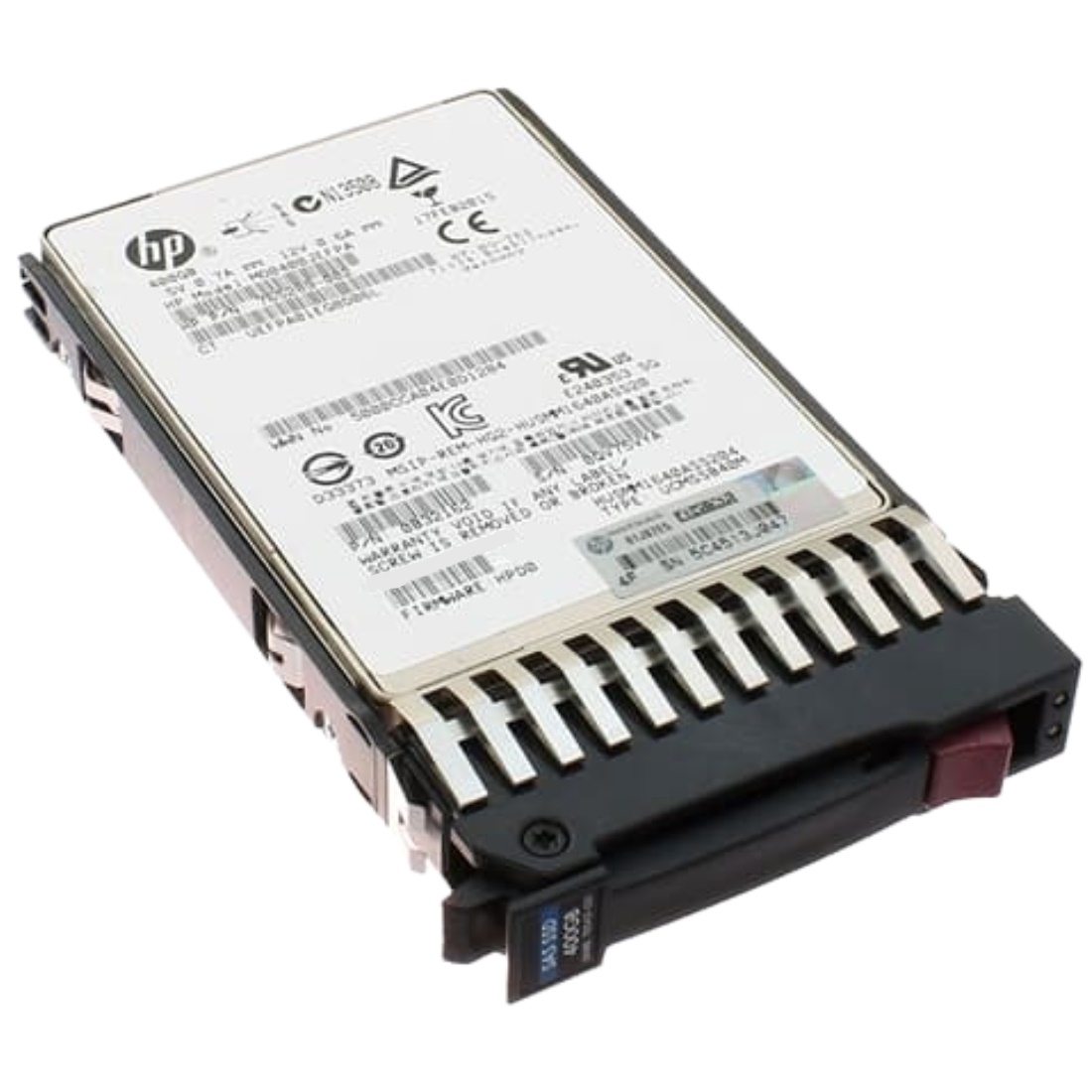


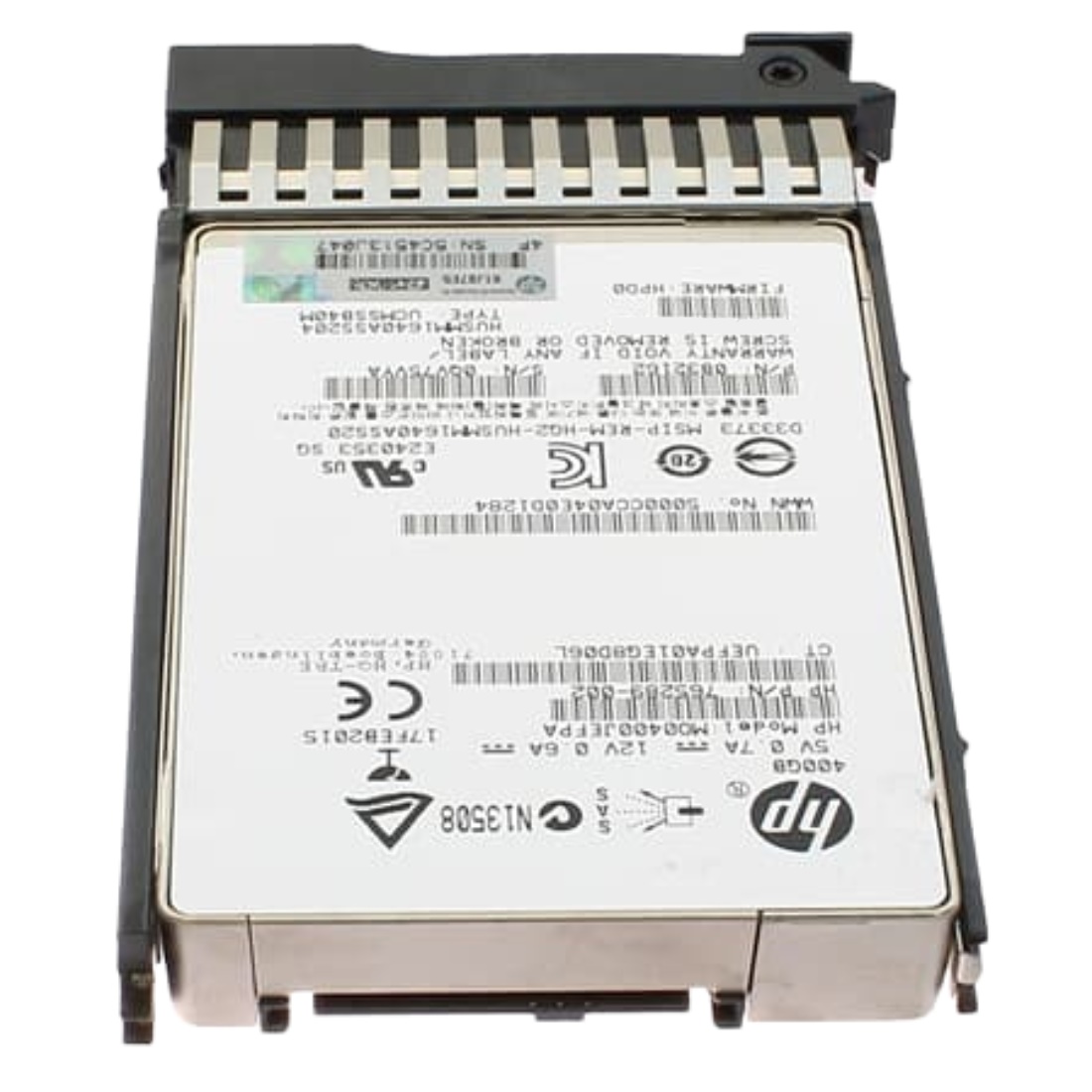
HPE 741134-002 400GB SAS 12GBPS Mainstream Endurance MLC Hot-Swap SFF Internal Solid State Drive. Excellent Refurbished with 1 year replacement warranty
The HPE 741134-002 400GB SAS 12GBPS Mainstream Endurance MLC Hot-Swap SFF Internal Solid State Drive represents a robust storage solution designed specifically for enterprise environments where reliability, speed, and endurance are critical.
The HPE 741134-002 400GB SAS 12GBPS Mainstream Endurance MLC Hot-Swap SFF Internal Solid State Drive represents a robust storage solution designed specifically for enterprise environments where reliability, speed, and endurance are critical. This solid-state drive (SSD) combines cutting-edge SAS (Serial Attached SCSI) technology with mainstream endurance Multi-Level Cell (MLC) NAND flash to provide a balanced combination of performance and durability.
Built to fit Small Form Factor (SFF) bays, this hot-swappable internal SSD integrates seamlessly into server infrastructure, allowing for easy upgrades or replacements without requiring system downtime. With a 12Gbps SAS interface, it ensures rapid data transfer rates and low latency, catering to demanding workloads such as database management, virtualization, and cloud computing.
The use of mainstream endurance MLC NAND technology distinguishes this SSD from consumer-grade drives by providing significantly improved write cycle endurance and reliability. Enterprise environments frequently subject storage devices to heavy and continuous write workloads, which can degrade the NAND cells over time. The HPE 741134-002 mitigates this by using MLC flash optimized for endurance, ensuring longer lifespan and consistent performance.
Endurance is often measured in drive writes per day (DWPD) or terabytes written (TBW), and the mainstream endurance classification means this drive is engineered to handle several DWPDs over its warranty period. This makes it suitable for applications such as transactional databases, email servers, virtual machine hosting, and other environments where write operations are frequent.
This endurance also benefits from advanced wear leveling and error correction algorithms embedded in the SSD's firmware, which help maintain data integrity and prevent premature failure of the flash memory cells.
The HPE 741134-002 provides high I/O performance characterized by low latency and consistent throughput. Thanks to its SAS 12Gbps interface, it supports fast sequential read and write speeds alongside robust random I/O performance, essential for transactional workloads and mixed-use cases.
This SSD is particularly well-suited for environments that require rapid access to frequently used data, such as virtualization infrastructures where multiple virtual machines operate simultaneously. It also excels in database servers where read/write speed can significantly impact application performance.
Beyond virtualization and databases, this drive's endurance and speed make it a strong candidate for caching layers within storage architectures, content delivery systems, and high-frequency trading platforms where milliseconds matter.
Designed specifically for HPE ProLiant servers and storage arrays, the 741134-002 SSD integrates effortlessly with HPE's system management tools and firmware. This compatibility enables seamless monitoring of drive health, firmware updates, and diagnostics through HPE Integrated Lights-Out (iLO) and other management interfaces.
The drive's hot-swappable design further enhances maintainability by allowing IT administrators to quickly replace faulty or outdated drives without needing to power down the server. This capability reduces downtime and operational disruptions in enterprise data centers.
Moreover, the drive is built to meet stringent enterprise-grade standards for power consumption, thermal performance, and vibration tolerance, ensuring reliable operation within data center environments that often have challenging physical conditions.
Security is paramount in enterprise storage, and the HPE 741134-002 addresses this with support for hardware-based encryption features. This SSD supports self-encrypting drive (SED) technology, allowing data to be automatically encrypted and decrypted without impacting drive performance.
This hardware encryption complies with widely recognized security standards, ensuring that sensitive data stored on the drive is protected from unauthorized access even if the drive is removed or stolen. Additionally, the drive supports secure erase functions, which allow data to be completely and securely wiped when drives are repurposed or retired.
Integration with HPE’s security frameworks provides administrators with the ability to enforce encryption policies centrally, simplifying compliance with regulations such as GDPR and HIPAA.
Operating at full load for extended periods requires efficient thermal management to prevent overheating and maintain drive longevity. The HPE 741134-002 is engineered with thermal sensors and firmware algorithms that monitor and manage temperature in real-time.
When the drive detects elevated temperatures, it can adjust performance parameters to reduce heat output or alert administrators to potential cooling issues. This proactive approach helps prevent thermal throttling and extends the overall reliability of the device.
Despite its high-performance capabilities, the HPE 741134-002 maintains an energy-efficient profile, contributing to reduced data center power and cooling costs. The drive incorporates power-saving modes and efficient NAND flash technology to minimize consumption during idle and active states.
These energy efficiency features align with growing industry demands for sustainable IT infrastructure, helping organizations reduce their environmental footprint while maintaining enterprise-grade performance.
The HPE 741134-002 is part of a broader category of SAS internal SSDs utilizing mainstream endurance MLC NAND, specifically designed to address the demands of enterprise data centers where both performance and reliability are critical. This subcategory blends the SAS interface's enterprise-grade attributes with NAND flash memory optimized for endurance and consistency.
Within this category, drives typically range in capacities from a few hundred gigabytes up to multiple terabytes, enabling flexible deployment across a variety of workloads. The MLC NAND technology provides a significant endurance advantage compared to TLC-based SSDs, making these drives preferable for write-intensive applications.
These drives cater to customers requiring a balance of cost and performance without compromising on the reliability expected in 24/7 operational environments.
A key defining feature of this subcategory is the use of the SAS interface rather than SATA. SAS offers several advantages in an enterprise setting, including dual-port access for redundancy, higher throughput capabilities, and enhanced error correction mechanisms.
SAS drives provide a more robust and scalable solution for data centers by allowing multiple initiators to access storage devices concurrently and supporting full-duplex communication. These capabilities result in increased reliability and availability, essential for mission-critical systems.
Moreover, SAS supports features such as command queuing and advanced error recovery, further optimizing performance and uptime in heavy-duty workloads.
Mainstream endurance MLC SSDs in this category are designed to offer moderate to high write endurance levels, typically rated between three to five drive writes per day (DWPD) over the warranty period. This endurance level positions them well for a broad range of enterprise workloads without the premium cost of ultra-endurance SLC drives.
Write performance in these SSDs is optimized through firmware enhancements and over-provisioning, which help distribute writes evenly across the NAND cells and reduce write amplification. This results in sustained performance even under continuous write-heavy operations.
In addition, many of these drives feature power-loss protection capacitors that ensure data integrity by allowing pending writes to be flushed to NAND in case of unexpected power failures.
Hot-swap functionality is a critical feature for this SSD subcategory, enabling drives to be removed or replaced without shutting down the server. This capability enhances system availability by eliminating the need for scheduled downtime during maintenance or upgrades.
The hot-swap design is complemented by robust connectors and firmware features that support safe removal and insertion, ensuring that no data corruption occurs during these operations. For administrators, this means faster response times to hardware failures and reduced impact on business continuity.
This feature is especially important in environments running critical applications such as financial services, healthcare systems, and cloud service providers.
The small form factor (SFF) design of these SAS SSDs offers multiple advantages in high-density storage environments. By fitting into 2.5-inch bays, these drives enable higher storage density per rack unit, optimizing space utilization in data centers.
This compact size allows data center operators to build scalable storage arrays without sacrificing performance or endurance. It also facilitates easier handling during installation and maintenance.
The SFF form factor aligns well with modern server designs that prioritize compactness and efficiency, making these SSDs a preferred choice for scalable enterprise storage solutions.
Mainstream endurance SAS SSDs are widely adopted across various industries requiring a balance of performance, endurance, and cost-efficiency. Common use cases include online transaction processing (OLTP) databases, virtualization hosts, big data analytics platforms, and email servers.
Industries such as finance, healthcare, telecommunications, and government rely on these drives to support mission-critical workloads where data availability and speed are paramount. Their endurance profile and reliability also make them well-suited for mixed workload environments where both read-intensive and write-intensive tasks coexist.
Enterprises benefit from the scalability, manageability, and security features these SSDs offer, enabling them to build future-proof storage infrastructures.
The SAS internal SSD category featuring mainstream endurance MLC NAND is continuously evolving to meet increasing enterprise demands. Upcoming developments include higher capacity models, improved NAND flash technologies, and enhanced firmware algorithms that further extend endurance and performance.
Emerging trends also point to tighter integration with software-defined storage (SDS) solutions, enabling greater flexibility and efficiency in managing large-scale data environments.
Moreover, as data security becomes even more critical, future SSDs are expected to offer more advanced encryption and secure management features, ensuring compliance with evolving regulatory standards.


 Contact Us
 Information
 Catalog
 Solid State Drives (SSD)
 Network Switches
 Hard Disk Drives
 HBA & Controllers
 PC & Servers
 PC & Server Memory
 CPU & Processors
 Network Routers
 Power Supplies
 Tape Drives & Libraries
 Network Devices
 Computer & Network Cables