(7% discount is applied at checkout)
Cart is empty
Your go-to destination for cutting-edge server products
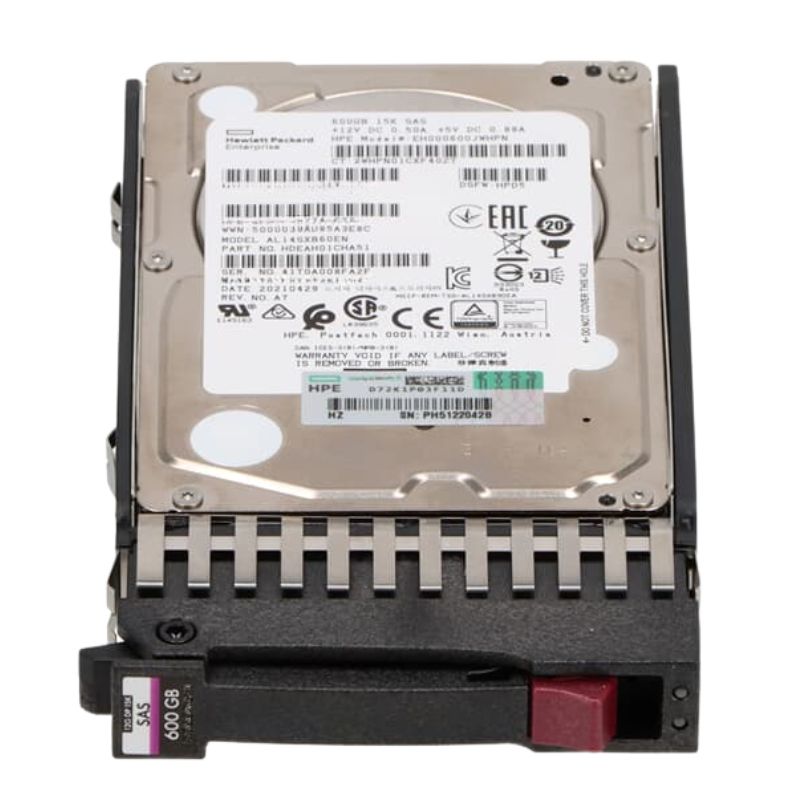


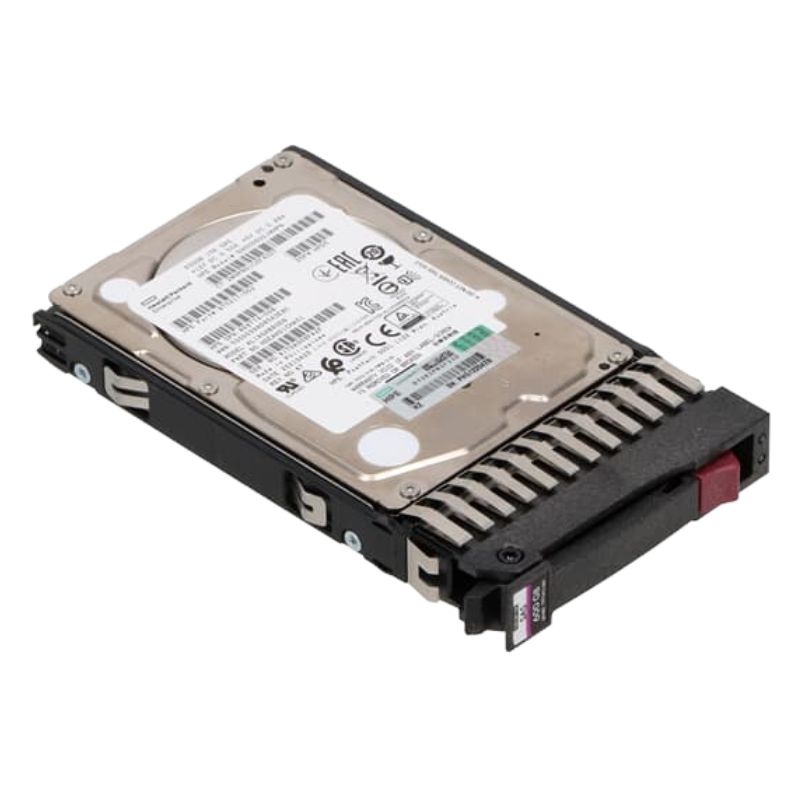
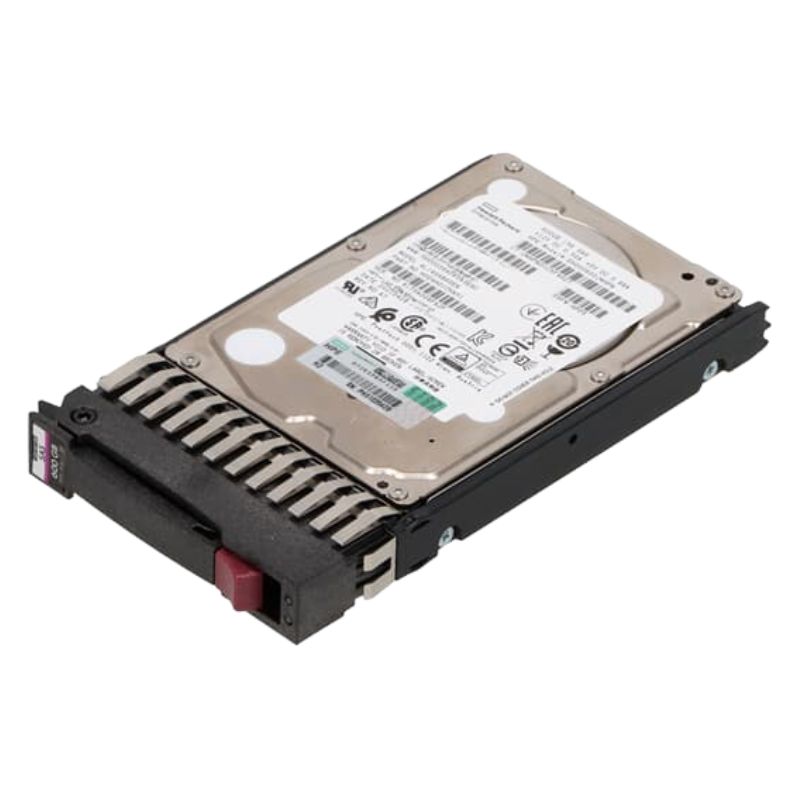
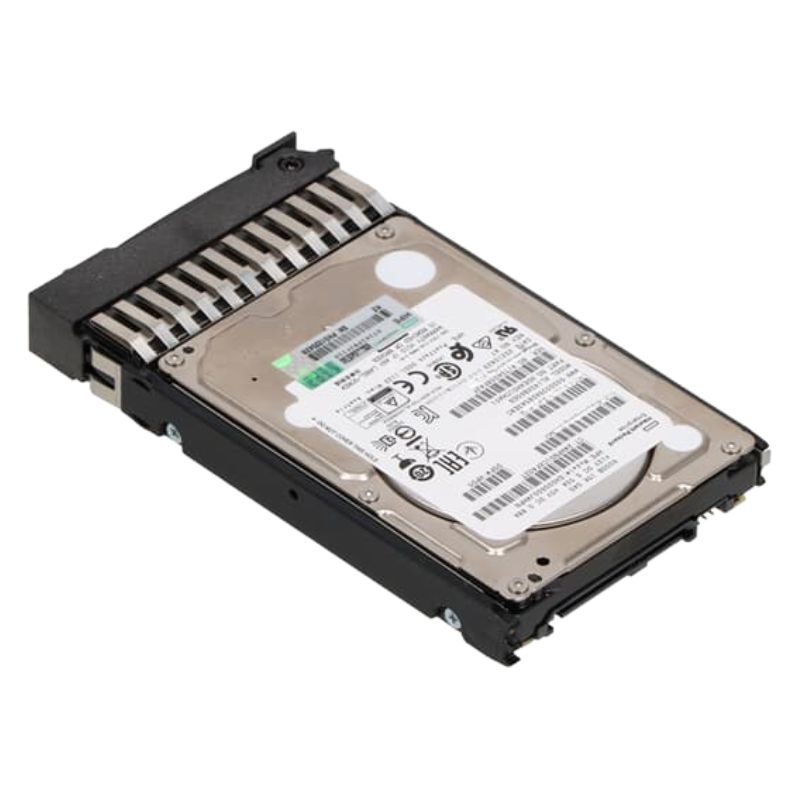
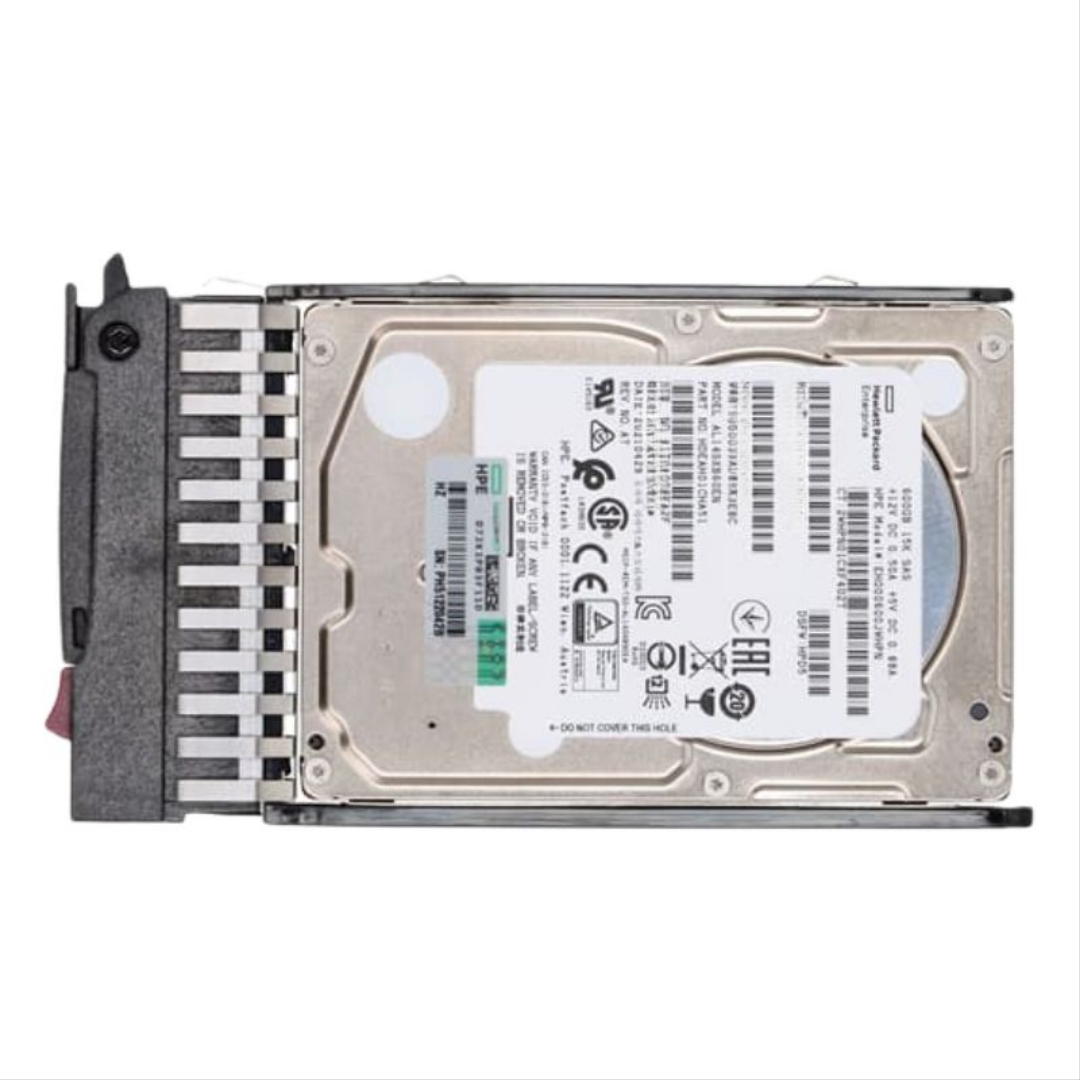
HPE 759221-005 600GB 15K RPM SAS 12GBPS Hot-Pluggable Dual Ports SFF 2.5 Inch Enterprise Hard Disk Drive with Smart Carrier. Excellent Refurbished with 1-Year Replacement Warranty
The HPE 759221-005 600GB 15K RPM SAS 12GBPS 2.5-Inch Enterprise Hard Disk Drive with Smart Carrier is designed to deliver superior performance, reliability, and hot-pluggable convenience. Engineered for mission-critical applications, it ensures fast data access, dependable storage, and seamless scalability.
This drive comes in a compact SFF 2.5-inch format, making it ideal for dense server and storage environments that require optimized space utilization.
The HPE 759221-005 600GB SAS 12GBPS HDD provides businesses with dependable storage technology. Its 15K RPM speed ensures fast read/write cycles, while the hot-pluggable dual-port SAS interface enables uninterrupted operation and redundancy.
The HPE 759221-005 600GB 15K RPM SAS 12Gbps hot-pluggable dual-port SFF 2.5-inch enterprise hard disk drive with Smart Carrier belongs to a family of storage devices designed specifically for demanding data center workloads. Engineered for consistent high I/O throughput, low latency, and operational reliability, this drive is a natural fit for mission-critical applications such as database servers, virtualization hosts, transaction processing systems, high-performance computing clusters, and other environments where storage performance directly affects application responsiveness and user experience. The drive’s 15,000 RPM spindle speed combined with a 12Gbps SAS interface and dual-port architecture delivers a balance of sequential and random performance that remains valuable when latency and consistency matter more than raw capacity.
The high spindle speed of 15,000 revolutions per minute translates into reduced seek times and lower rotational latency compared with 7.2K or 10K RPM drives. For workloads dominated by small random reads and writes — such as OLTP databases, virtualization with many small VMs, or metadata operations — shorter access times mean higher IOPS and a more predictable latency distribution. While solid-state drives offer superior absolute latency and throughput, a 15K enterprise SAS drive remains cost-effective for certain I/O patterns and provides consistent service for mixed workloads where predictable mechanical performance is sufficient.
The 12Gbps SAS link doubles the per-lane throughput over 6Gbps SAS and improves the headroom for sustained transfers, cache flushes, and multi-initiator environments. Equally important is the drive’s dual-port capability: two independent SAS ports allow simultaneous connections to different controllers or redundant paths through a SAN fabric. Dual-port functionality enables multipathing for high availability and failover, which reduces the risk of a single-path failure causing storage inaccessibility. Environments that use redundant HBA / controller configurations will benefit from improved uptime and more robust maintenance windows.
The SFF 2.5-inch form factor supports higher drive density per rack unit compared with 3.5-inch drives. In blade chassis, dense servers, and modern high-density arrays, the 2.5-inch format allows organizations to increase total spindles per chassis — a key lever to scale aggregate IOPS and parallelism. Higher spindle counts reduce per-IO contention and can improve effective throughput for mixed and random workloads while providing a smaller physical footprint for the same usable performance tier.
The integrated Smart Carrier simplifies installation and replacement operations. Designed to work seamlessly with HPE servers and storage enclosures, the carrier offers secure drive retention, clear labeling, and a tactile interface for hot-swap operations. For technicians performing maintenance in noisy, fast-paced data centers, the Smart Carrier reduces the chance of mis-insertion and speeds up replacements during failover or scheduled upgrades. Clear markings and carrier features also support automation and visual audits during inventory and asset tracking activities.
Hot-pluggability paired with the Smart Carrier design reduces downtime during drive swaps. Administrators can remove and insert drives without powering down the system, preserving service continuity for surviving volumes. The carrier design often includes mechanisms to prevent accidental removal and provides a consistent mechanical interface across multiple HPE platforms, which leads to faster technician training and reduced MTTR across the fleet.
One of the primary advantages of choosing an HPE-branded or HPE-validated drive is compatibility with a wide range of HPE servers, storage enclosures, and management tools. HPE firmware, controllers, and management suites such as HPE Integrated Lights-Out (iLO) and HPE OneView can detect, monitor, and manage these drives natively. This compatibility streamlines firmware updates, predictive failure alerts, and integration into monitoring dashboards, reducing operational friction and ensuring consistent firmware and protocol stacks across devices.
While optimized for HPE platforms, the SAS protocol and standard SFF physical size mean these drives are often interoperable with other enterprise storage arrays and servers that adhere to SAS specifications. However, administrators should check firmware compatibility matrices, drive carrier requirements, and any vendor-specific features before deployment in non-HPE systems to avoid unexpected behavior or unsupported configurations.
Use cases that benefit most from 15K SAS drives include transactional databases where latency influences throughput, virtualization platforms with many small VMs placing random IOPS pressure on storage, boot volumes and operating system disks where fast seek times speed up host operations, and mixed-read content delivery systems where consistent response time is required. For sequential throughput-heavy workloads or archival storage where capacity per dollar is paramount, lower-RPM drives or flash tiers may present more economical alternatives.
In modern storage architectures, 15K SAS drives frequently occupy a performance tier that complements flash and high-capacity SATA tiers. Intelligent tiering and caching policies place hot data on SSDs for the lowest latency while using 15K SAS drives for warm working sets that still require low latency but not the cost of all-flash. This hybrid approach balances cost, capacity, and performance, and HPE metadata tools can automate placement for predictable response times and improved overall cost efficiency.
At 600GB per drive, planners must consider spindle count to achieve desired usable capacity and IOPS. Increasing spindles typically increases aggregated IOPS and throughput while distributing risk across more physical drives in a RAID group. Storage architects should model the target RAID level’s overhead, rebuild times, and parity distribution to ensure chosen configurations meet service level objectives. RAID rebuilds can be resource-intensive; therefore, selecting appropriate RAID levels and spare strategies is critical for maintaining performance during failures.
Smaller capacity drives can reduce the time required for a RAID rebuild compared with larger HDDs, and 2.5-inch drives often deliver faster seek characteristics that speed rebuild read/write throughput. Combined with proactive monitoring and spare pool strategies, 600GB 15K drives can offer a favorable trade-off: faster rebuilds and lower exposure windows at the expense of higher per-GB cost versus high-capacity nearline drives. For environments where rebuild time and exposure to double-disk failures must be minimized, a greater number of smaller high-speed spindles may be preferable.
Modern enterprise drives report advanced SMART metrics and telemetry that feed into storage management systems. These health indicators include reallocated sector counts, read/write error rates, temperature readings, and other drive-specific counters. Integrating these signals into proactive maintenance workflows permits scheduled replacements before catastrophic failure, which reduces unplanned downtime. The HPE ecosystem often surfaces these metrics in management consoles, enabling policies that trigger asset lifecycle actions automatically.
Firmware management is a core part of sustaining storage reliability and security. Administrators should maintain a firmware update policy that balances stability with security patches and performance enhancements. HPE-validated firmware bundles are tested across platform matrices to minimize regressions. Adopting a staged rollout strategy for firmware updates, combined with pre-deployment checks and validation in non-production environments, reduces the risk of unexpected compatibility issues.


 Contact Us
 Information
 Catalog
 Solid State Drives (SSD)
 Network Switches
 Hard Disk Drives
 HBA & Controllers
 PC & Servers
 PC & Server Memory
 CPU & Processors
 Network Routers
 Power Supplies
 Tape Drives & Libraries
 Network Devices
 Computer & Network Cables