(7% discount is applied at checkout)
Cart is empty
Your go-to destination for cutting-edge server products
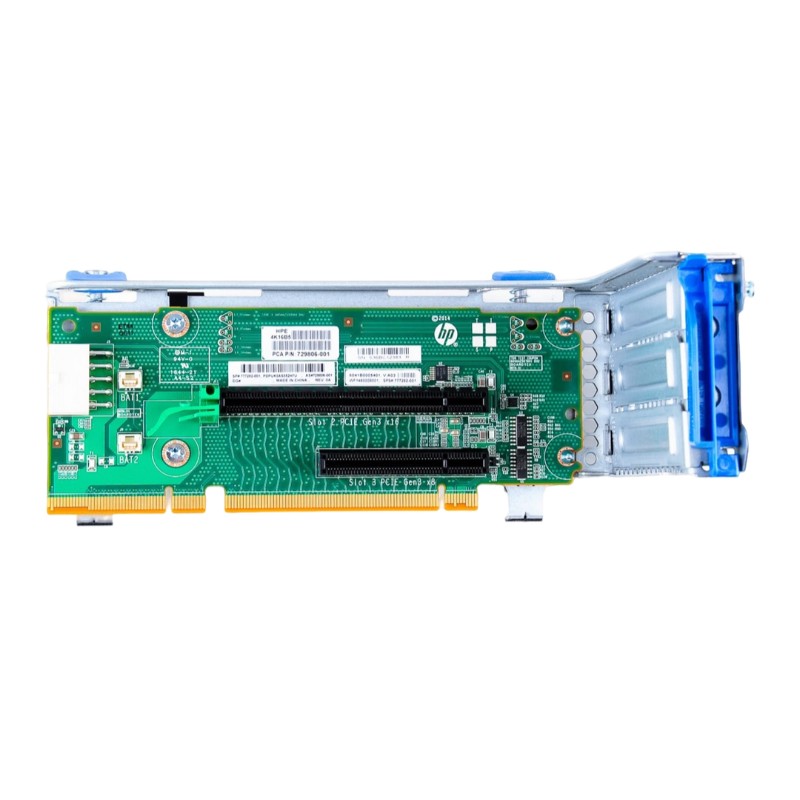


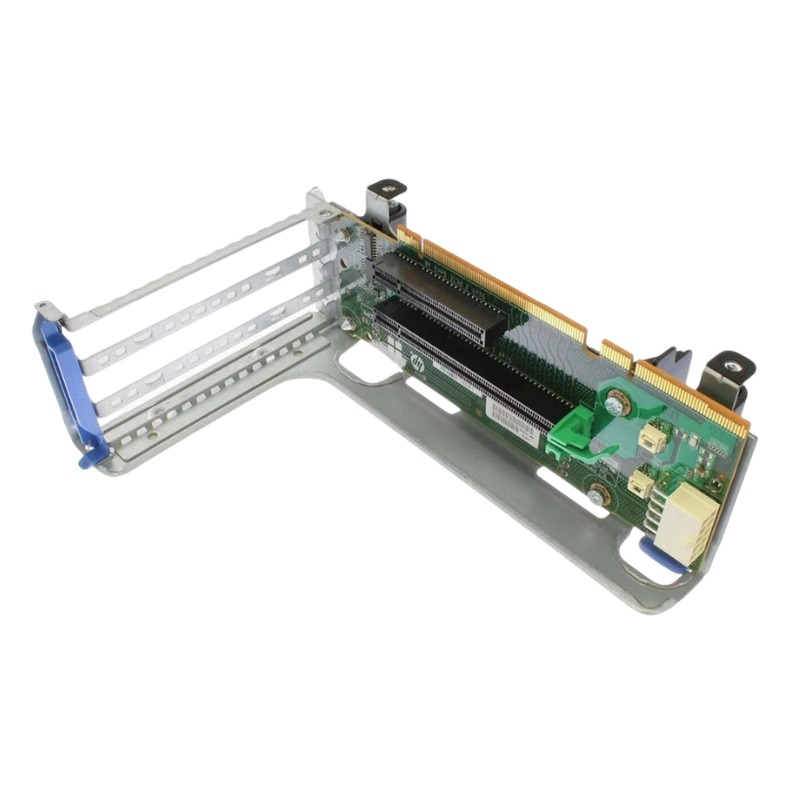
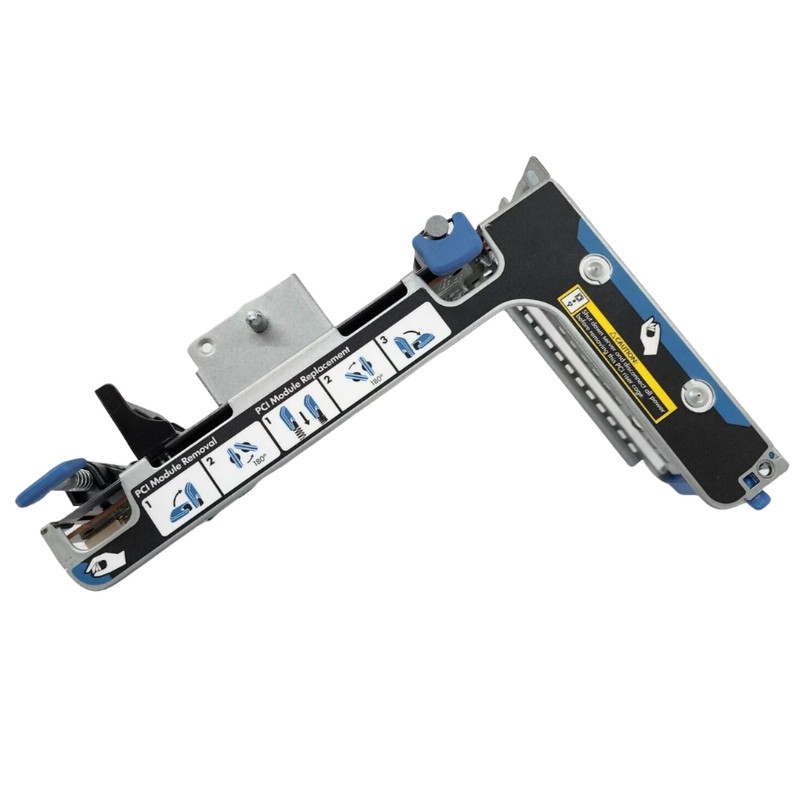
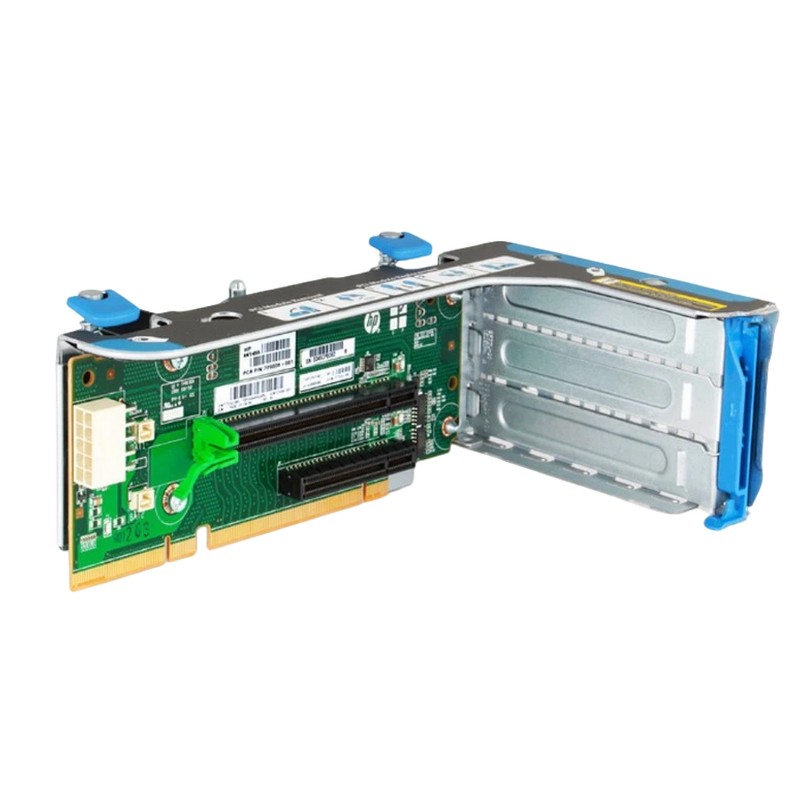
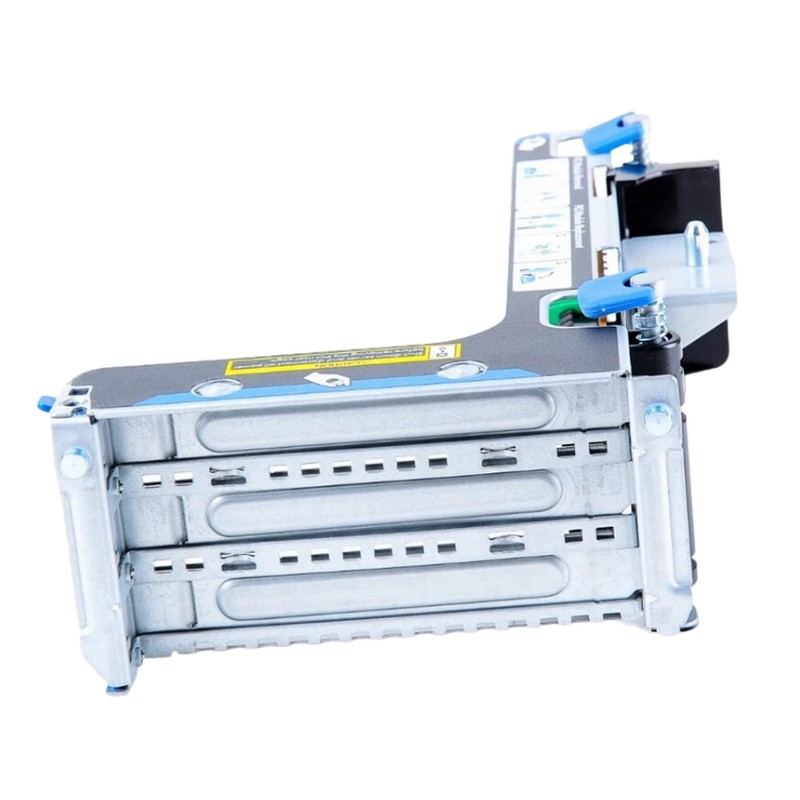
HPE 777282-001 2-Slots Primary Optional PCI-Express Riser Cage Assembly for ProLiant DL380 Gen9. Excellent Refurbished with 1 Year Replacement Warranty
This page provides an in-depth examination of the technical attributes and part number identification for the genuine HP hardware component.
Designed for enterprise-grade server platforms, the 777282-001 HPE 2-Slots Primary Optional PCI-Express Riser Kit Assembly for ProLiant DL380 Gen9 represents a targeted hardware accessory category aimed at data centers, virtualization hosts, and high-performance compute nodes that require controlled expansion of I/O capacity. This category focuses on riser assemblies that allow administrators to add PCIe devices such as network interface cards, storage controllers, RAID adapters, and other accelerators while preserving the mechanical and thermal integrity of the DL380 Gen9 chassis. Each paragraph in this section aims to explain the technical, operational, and procurement characteristics that define the riser kit category and how it fits into broader upgrade and lifecycle management strategies.
The riser kit is engineered specifically for the ProLiant DL380 Gen9 chassis, ensuring a precise mechanical fit and secure mounting. The 2-slots primary riser layout provides two full-length or half-length PCIe card positions depending on the deployed hardware configuration. The physical dimensions, mounting points, and cable clearance are matched to HPE factory tolerances so that the riser assembly integrates without obstructing airflow or other internal components. This compatibility minimizes the risk of vibration, misalignment, and contact with hot zones inside the server.
At the heart of the riser category are the electrical traces, connectors, and signal integrity design that route PCI-Express lanes from the server's system board to peripheral cards. The 777282-001 riser supports PCIe lanes in accordance with the DL380 Gen9 platform architecture, maintaining lane mapping and compliance with HPE's firmware and BIOS-level resource enumeration. Attention to impedance control, connector quality, and grounding ensures that high-throughput devices such as 10GbE/25GbE NICs and NVMe controllers achieve reliable link training and sustained bandwidth under load.
High-density server environments demand careful thermal design. The riser kit category emphasizes unobstructed airflow channels and low-profile card retention to maintain the DL380 Gen9's cooling performance. Materials and surface finishes are selected to reduce hotspots and to be resilient under continuous operation. When populated with full-power add-in cards, the riser and its associated card guides help direct chassis airflow across card heatsinks to preserve optimal operating temperatures and prolong component lifespan.
Compatibility is the defining criterion of this category. The 777282-001 riser kit is compatible with standard DL380 Gen9 server SKUs that support optional riser configurations. It is important to confirm the server's factory configuration and any pre-installed riser to avoid mechanical or electrical conflicts. HPE field service guides and parts lookup tools can be used to match chassis serial numbers and firmware revisions with the correct riser assembly to guarantee fit and functionality.
Common deployments include adding dual-port network adaptors for redundant network paths in virtualization clusters, installing RAID or HBA controllers for direct-attach storage, deploying GPU or accelerator cards in compute nodes where supported, and adding specialized I/O like converged network adapters for storage over Ethernet. The 2-slot riser is particularly suited to scenarios where a balance of expansion and density is required without moving to larger chassis or external expansion enclosures.
High-availability environments place a premium on component reliability and predictable behavior under load. Because riser assemblies are passive conduits for critical I/O, their durability, contact quality, and mechanical retention directly affect mean time between failure metrics. Administrators should source genuine or OEM-equivalent riser kits, follow HPE installation best practices, and verify compatibility with the server’s BIOS and firmware to avoid unexpected device enumeration or card failures during service events.
Signal integrity considerations are crucial for applications that demand consistent throughput, such as database servers and virtualization hosts. The 777282-001 design adheres to strict PCB layout practices that reduce crosstalk and maintain lane-to-lane performance. Under heavy I/O patterns the riser should not introduce notable latency or packet loss; administrators can confirm end-to-end performance through benchmarking tools and vendor-provided diagnostics.
After installation, verify BIOS settings and slide through HPE's system utilities to ensure the riser and any attached cards are properly recognized. Firmware and driver updates for the server chipset and add-in cards can prevent resource conflicts and unlock performance features. Where relevant, update the system ROM or iLO firmware to versions recommended by HPE for DL380 Gen9 riser support.
Periodic inspections should include visual checks for loose fasteners, dust accumulation on connectors and card edges, and signs of wear or burn marks which could indicate overheating. Use non-static brushes and compressed air in short bursts while the server is powered down to remove dust. Ensure that the reassembly restores original airflow channels and that all retention clips are engaged to prevent card movement during operation.
Data center administrators typically include riser kits as part of a spare parts strategy to minimize downtime. Keep serial-numbered spares for fleet models with similar configurations and track part numbers such as 777282-001 for procurement efficiency. Document the server configurations that require the riser and integrate replacement steps into runbooks so that on-call engineers can perform swaps quickly and accurately.
Riser kits are internal components that can affect data access if they facilitate the addition of unauthorized network or storage controllers. Implement physical security controls that limit chassis access to authorized personnel and document any riser changes through change control systems. For highly regulated environments, record part swaps and maintain tamper-evident seals when appropriate to ensure auditability.
Supply chain assurance becomes critical when purchasing replacement riser kits. Validate firmware and hardware provenance and prefer channels that support traceability. Firmware compatibility with the platform should be confirmed to avoid introducing firmware-level vulnerabilities or resource conflicts. In environments subject to compliance frameworks, retain documentation of part authenticity and supplier accreditation.
The riser category supports a wide range of add-in cards. Network cards include 1GbE through 25/40GbE adaptors, storage controllers range from SAS HBA to NVMe adapters, and accelerator cards can include VPUs or specialized compute offload devices where the chassis power and cooling allow. When planning expansion, review card height, length, and power draw to ensure the riser and chassis support the device without thermal or electrical overcommitment.
While the 777282-001 is purpose-built for Gen9 systems, consider the overall expansion roadmap for compute and storage. If future workloads may demand more PCIe lanes or additional cards, evaluate whether adding an external expansion chassis or upgrading to a different server family is more cost-effective than saturating the DL380 Gen9’s riser capacity. Balance short-term needs with long-term platform strategies to maximize return on investment.
When populating riser slots, account for the server’s thermal envelope and power budget. Add-in cards increase heat generation and power draw; plan for rated rack cooling and ensure the power supply configuration supports peak card consumption. Consider high-availability power supplies and redundant power paths if cards are critical to production workloads.
Although risers are internal components, their attached cards may require external cabling for network or storage connectivity. Plan cable routing to avoid airflow obstruction and maintain serviceability. Use proper strain relief and label connections to facilitate future maintenance and reduce the risk of accidental disconnection during service events.
Within the broader category of DL380 Gen9 risers, there are multiple configurations that trade off slot count for spacing, lane allocation, or integrated mezzanine support. The 2-slots primary riser balances expansion with density and is often preferred where two high-performance cards are required without sacrificing front-to-back airflow. Alternate risers may provide more slots at the cost of card proximity or may be designed for mezzanine-only setups that offer different flexibility.
Decisions to upgrade the entire server platform versus adding riser-based expansion depend on projected workload growth, performance bottlenecks, and total cost of ownership. For modest increases in I/O capability, a riser kit is a cost-effective strategy. For dramatic increases in network bandwidth, storage capacity, or accelerator requirements, consider newer platforms with native PCIe Gen3/Gen4 lane counts and improved thermal headroom.
For storage-heavy workloads, deploying an HBA or RAID controller in the riser slots allows direct connection to SAS storage backplanes or external JBODs. Match controller firmware and driver versions to storage array firmware and perform sustained I/O testing to validate latency and throughput under production-like loads. Monitor SMART and controller health metrics after deployment to ensure long-term reliability.


 Contact Us
 Information
 Catalog
 Solid State Drives (SSD)
 Network Switches
 Hard Disk Drives
 HBA & Controllers
 PC & Servers
 PC & Server Memory
 CPU & Processors
 Network Routers
 Power Supplies
 Tape Drives & Libraries
 Network Devices
 Computer & Network Cables