(7% discount is applied at checkout)
Cart is empty
Your go-to destination for cutting-edge server products
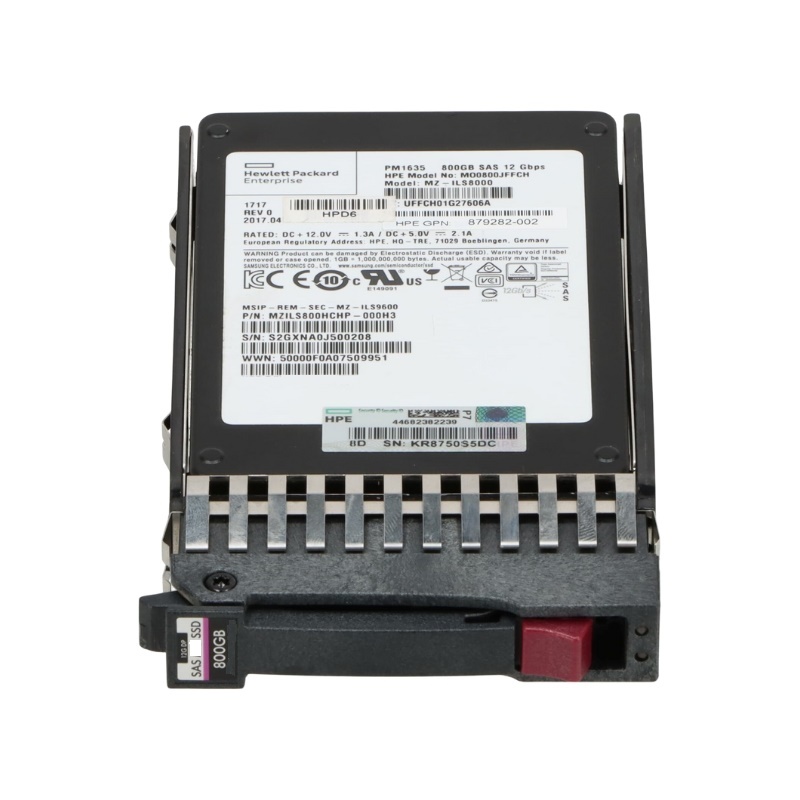


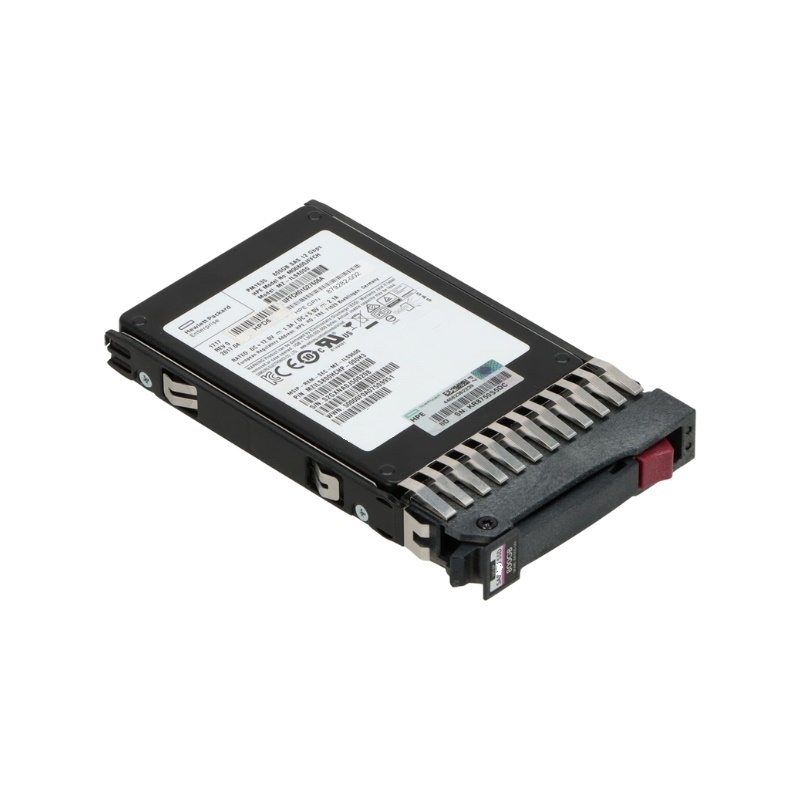
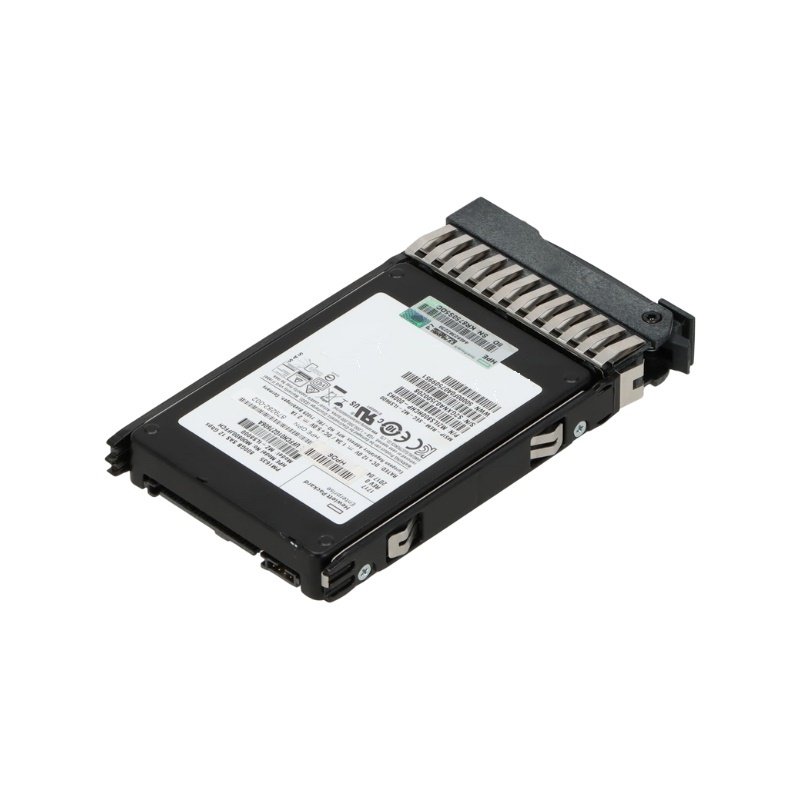
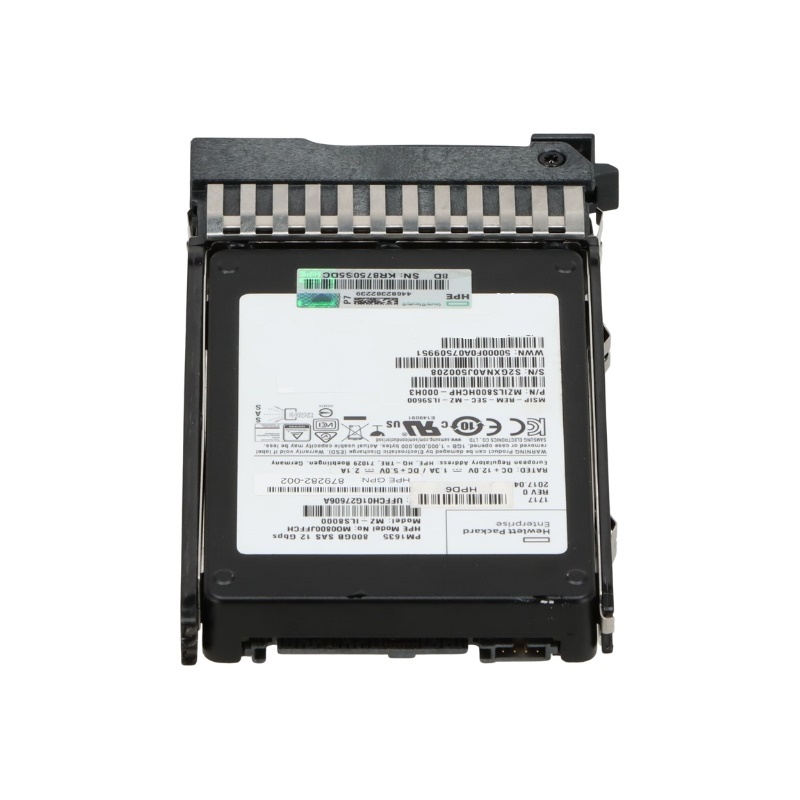
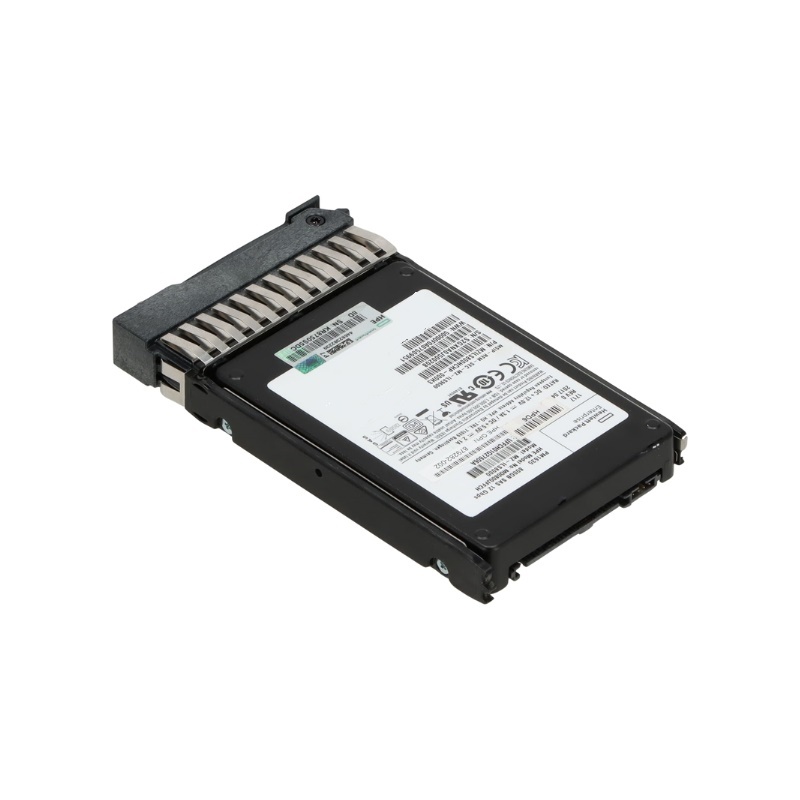
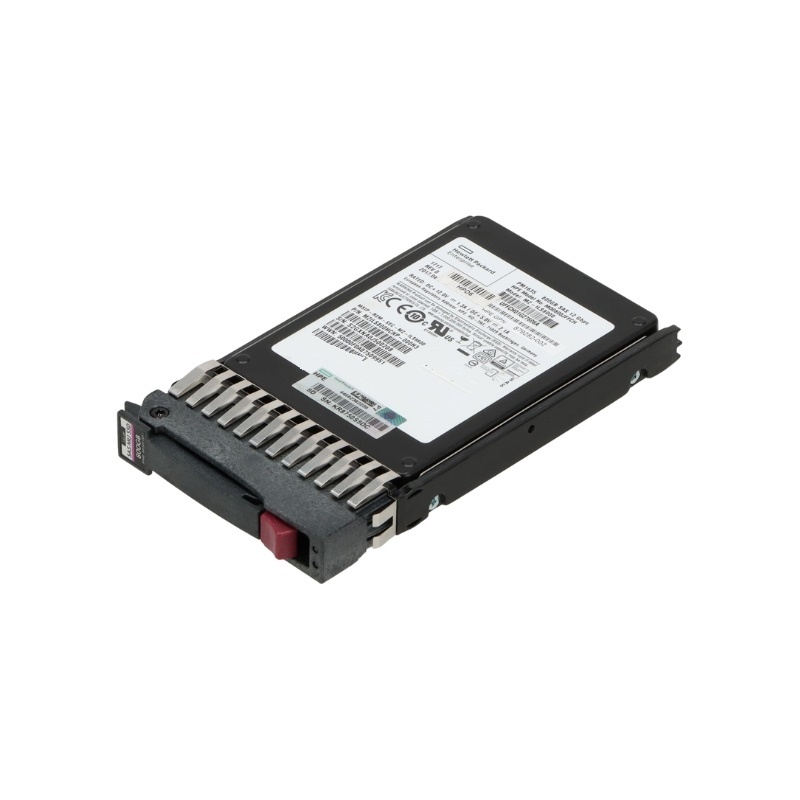
HPE 779172-B21 800GB SAS 12GBPS Mainstream SFF SC Solid State Drive. New (System) Pull with 1 Year Replacement Warranty
| SKU/MPN | Warranty | Price | Condition | You save |
|---|---|---|---|---|
| 779172-B21 | 1 Year Warranty | $190.00 | Excellent Refurbished | You save: $66.50 (26%) |
| 779172-B21 | 1 Year Warranty | $622.00 | New (System) Pull | You save: $217.70 (26%) |
The HPE 779172-B21 is a high-performance 800GB SAS 12Gbps Small Form Factor Solid State Drive engineered for enterprise-grade storage environments. Designed to deliver reliability and speed, this mainstream SFF SC SSD is ideal for data-intensive workloads.
The HPE 779172-B21 800GB SAS 12Gbps Mainstream SFF SC SSD represents a class of enterprise-grade solid state drives designed for demanding datacenter workloads that require low latency, predictable performance, and high reliability. This category focuses on short form factor (SFF) 2.5" SAS (Serial Attached SCSI) SSDs at 12Gb/s interface speed, targeted at mainstream server storage deployments where balanced cost, endurance, and performance are required. The description below expands the category into technical capabilities, deployment scenarios, performance characteristics, compatibility considerations, management and firmware features, and buying guidance intended to help procurement teams, system integrators, and IT administrators make well-informed purchasing decisions.
This category is ideal for enterprise IT teams operating HPE ProLiant and HPE Synergy platforms, managed service providers, and organizations running mixed workloads including virtualization (VMware, Hyper-V), database applications (OLTP/OLAP), VDI, caching, and hot-tier storage. Mainstream SAS SSDs like the HPE 779172-B21 strike a balance between cost-efficiency and enterprise resilience — making them the go-to choice when an organization needs better performance than HDDs and SATA SSDs but without the premium cost of ultra-high-end endurance NVMe drives.
The 12Gbps SAS interface provides higher bandwidth and more robust error handling compared with older interfaces. SAS’s dual-port architecture (when supported) enables multi-path connectivity for redundancy and improved availability. For mainstream enterprise environments, SAS 12Gb/s ensures sustained throughput for I/O-intensive tasks such as database commits, virtual machine boot storms, and mixed random read/write workloads.
The SFF 2.5" profile is widely used in modern rack servers and storage arrays because it enables higher drive density per chassis compared to 3.5" drives. Organizations deploying dense compute nodes or blade servers benefit from SFF SSDs: more drives per server bay translates to higher usable IOPS per rack unit and more flexible tiering and caching options within the same chassis footprint.
Mainstream SSDs aim to deliver a practical balance between endurance (TBW / DWPD), latency, and cost per GB. These drives are engineered to handle mixed workloads over typical enterprise duty cycles while keeping acquisition and replacement costs manageable. For many organizations, mainstream 800GB SAS SSDs deliver the right trade-off: strong day-to-day performance for active datasets without the higher price of extreme endurance or performance SKUs.
At 800GB usable capacity, this drive is positioned as a mid-capacity mainstream SSD. It’s well-suited for hot data pools, metadata and log storage, transaction logs, and as a caching tier in hybrid HDD/SSD arrays. Because of its moderate capacity, it frequently appears in pools that emphasize performance per spindle rather than raw capacity density.
SAS 12Gb/s enables high sequential throughput and solid random IOPS for enterprise workloads. While specific IOPS figures depend on drive firmware, workload pattern, queue depth, and host platform, mainstream SAS SSDs typically offer dramatic gains in random read/write latency compared to HDDs — often reducing latency from milliseconds to sub-millisecond range. This translates directly into faster database transactions, improved VM responsiveness, and better end-user experience for latency-sensitive applications.
Mainstream SSDs typically advertise endurance targets that align with enterprise multitier practices — sufficient for VDI, virtual machine images, and database indices, but not necessarily engineered for extremely write-heavy logging at the scale of persistent write caches. When evaluating endurance, review metrics such as DWPD (Drive Writes Per Day) and TBW (Total Bytes Written) as published by the vendor. In addition, enterprise SAS SSDs include power-loss protection features and error-correcting code (ECC) to preserve data integrity under adverse conditions.
Enterprise-class drives often include capacitors or onboard buffers that enable the drive to flush volatile write caches to non-volatile media in the event of sudden power loss. This reduces the risk of metadata corruption and incomplete writes — an essential feature for transactional workloads.
SFF enterprise SSDs are designed to operate within standard server airflow and temperature ranges. However, cumulative thermal load must be considered when densely populating chassis with many drives. SAS SSDs generally have a controlled power draw profile that permits high-density deployments, but administrators should verify the server’s cooling capabilities and drive carrier specifications to avoid thermal throttling and to maintain predictable performance.
Drives in this category are typically validated for HPE platforms and may be sold under HPE part numbers for guaranteed compatibility. Using HPE-validated drives simplifies firmware management, ensures correct carrier fit, and often unlocks vendor support. When integrating drives into HPE systems, confirm compatibility with the specific server model, RAID controller or HBA (Host Bus Adapter), and any array software (Smart Array, RAID firmware) you are running.
SAS SSDs rely on host controllers and firmware to unlock full feature sets — for example, native command queuing (NCQ), TRIM support (when applicable), and vendor-specific telemetry. For best results, pair the drives with controllers that support 12Gb/s SAS link speeds and enterprise features. Additionally, maintain up-to-date firmware to benefit from bug fixes, performance improvements, and interoperability patches.
SAS is broadly backward compatible: a 12Gb/s SAS SSD can operate in 6Gb/s SAS environments (with reduced bandwidth) if the controller supports cross-rate negotiation. This makes deployment flexible across mixed legacy and modern infrastructures — although overall performance will be limited by the slowest link in the path.
Virtualized environments benefit strongly from the low latency and high random IOPS characteristics of SAS SSDs. Use an 800GB mainstream SSD to store VM boot images, frequently accessed OS files, and small hot datasets. When deployed as part of an SSD tier or cache, these drives significantly improve VM startup times and reduce storage-related CPU waits.
Databases with mixed read/write patterns (e.g., transactional systems) see reduced transaction latency when indexes and frequently accessed tables are placed on SAS SSDs. For larger databases, a combination of SSD tiers for hot indexes and HDD tiers for cold archival data is a cost-effective pattern.
In hybrid arrays, mainstream SAS SSDs act as the performance tier — caching or storing hot blocks while spinning disks provide bulk capacity. Automated tiering policies (in HPE and third-party arrays) identify hot data and migrate it into the SSD tier to maintain optimal performance for active workloads.
For workloads that require many small random reads (e.g., metadata servers, small object stores), SSDs reduce latency and improve overall throughput. The 800GB capacity often aligns well with metadata and cache datasets where capacity requirements are moderate but performance needs are high.
Enterprise SAS SSDs typically expose SMART attributes and vendor telemetry. Monitoring systems (using tools like HPE OneView, iLO, or third-party monitoring stacks) should ingest drive health metrics — including spare block counts, media errors, temperature, and percent life used — to proactively flag drives approaching end-of-life.
Regular firmware updates are essential for maintaining security, performance characteristics, and reliability. When purchasing HPE-branded drives, check HPE’s firmware release notes and apply updates consistent with your change management procedures. Note the vendor support lifecycle and EOL (end-of-life) notices when planning long-term procurement and refresh cycles.
When deploying SSDs in RAID arrays, consider RAID level trade-offs: RAID-10 offers performance and redundancy but at higher capacity cost; RAID-6 provides better storage efficiency and fault tolerance but with a write-performance penalty. Check controller write cache policies and ensure power-loss protection and battery backup (or capacitor-backed cache) are in place on RAID controllers to preserve write integrity.
Map workloads to drive characteristics. Use SAS SSDs for I/O-bound components, and keep large sequential archival tasks on high-capacity HDDs. Consider logical tiering so small, random-read-dominant files stay in SSD pools while bulk media and infrequently accessed files remain on HDDs.
Enterprise SSDs perform optimally when host software and controllers make effective use of queue depth and multi-threaded I/O. Benchmarks should measure performance across a range of queue depths that match the target workload (low queue depths for single-threaded transactional workloads; higher queue depths for batch or parallel workloads).
Over-provisioning helps maintain consistent performance by leaving spare area for internal drive management, wear leveling, and garbage collection. Depending on the vendor, a portion of the nominal capacity may already be reserved; in some use cases, administrators can increase over-provisioning at the filesystem or controller level to improve sustained write performance.
Many enterprise SSDs support hardware-based encryption to enable secure data-at-rest without impacting performance. If encryption is required for regulatory compliance, confirm whether the drive supports self-encrypting drive (SED) standards and how key management is integrated into your environment (e.g., HPE Secure Encryption, KMIP-compatible key managers).
Proper secure erase procedures and drive sanitization are critical during decommissioning or repurposing. Follow vendor-recommended secure erase commands and ensure traceable sanitization for compliance with data protection policies.
Compared to HDDs, SAS SSDs deliver orders-of-magnitude improvements in random IOPS and sub-millisecond latency. HDDs still outperform on cost per TB for cold storage and large sequential workloads, but SSDs are the clear choice when responsiveness and I/O density are priorities.
SATA SSDs can be more cost-effective for read-heavy or light-duty workloads, but they lack many enterprise features of SAS (dual-port redundancy, stronger command sets, better error recovery). For server-grade reliability and high-availability setups, SAS remains the preferred interface.
NVMe drives deliver lower latency and higher parallelism using PCIe lanes, but they typically require NVMe-capable controllers and can carry a price premium. SAS SSDs remain relevant in environments where controllers and infrastructure are SAS-centric, or where mixed SAS/NVMe infrastructures are not yet adopted. For organizations moving toward NVMe, SAS SSDs still represent a solid transitional option in mixed infrastructures.


 Contact Us
 Information
 Catalog
 Solid State Drives (SSD)
 Network Switches
 Hard Disk Drives
 HBA & Controllers
 PC & Servers
 PC & Server Memory
 CPU & Processors
 Network Routers
 Power Supplies
 Tape Drives & Libraries
 Network Devices
 Computer & Network Cables