(7% discount is applied at checkout)
Cart is empty
Your go-to destination for cutting-edge server products
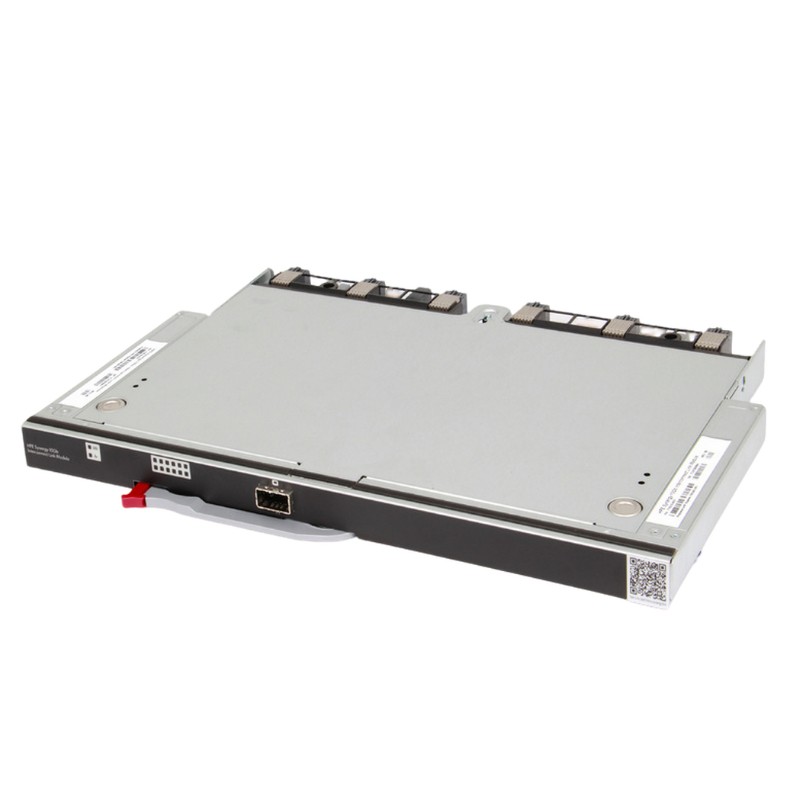


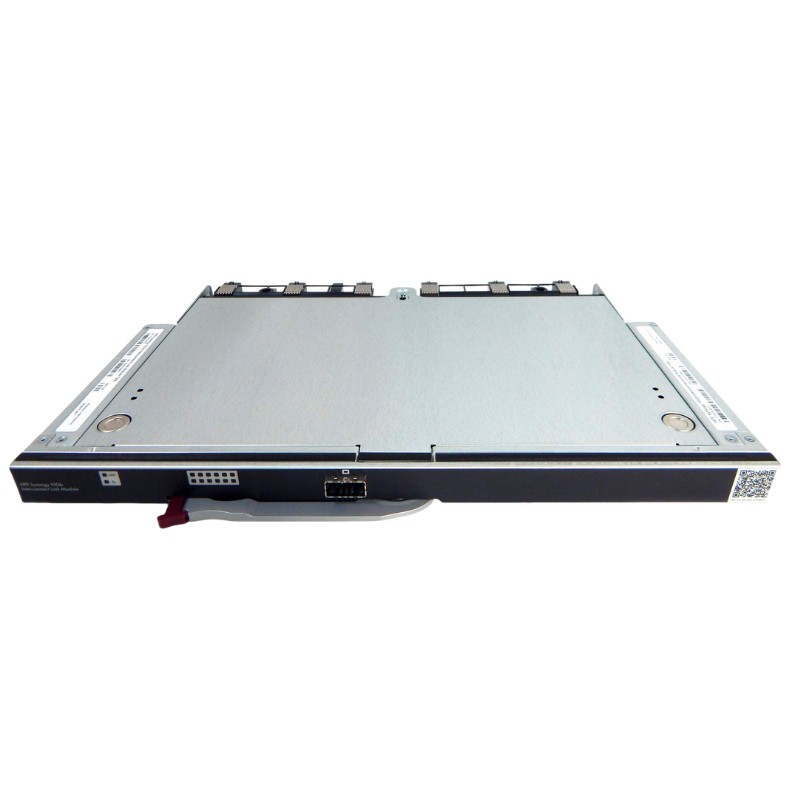
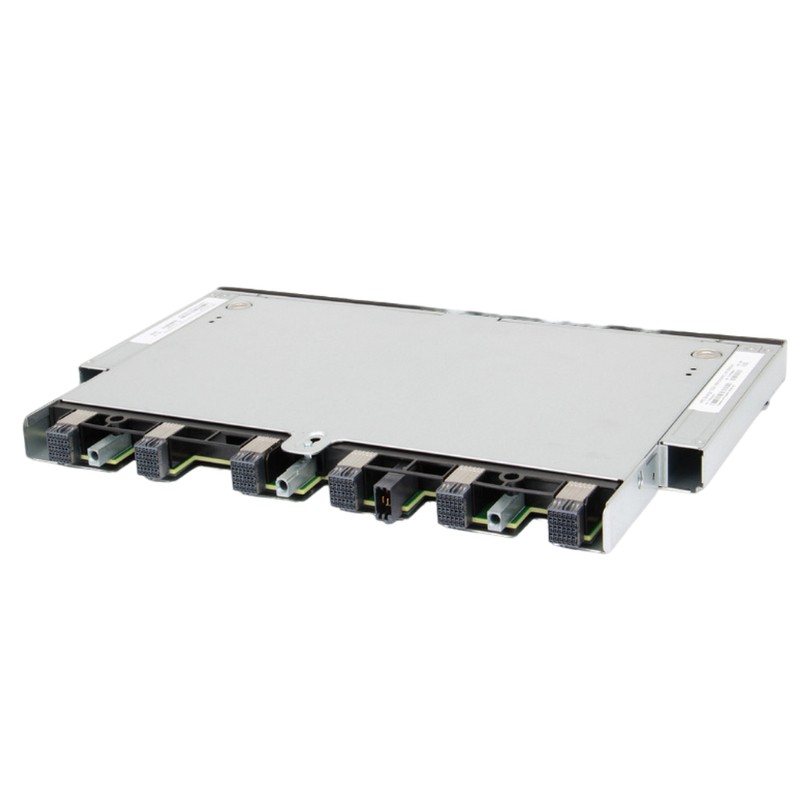
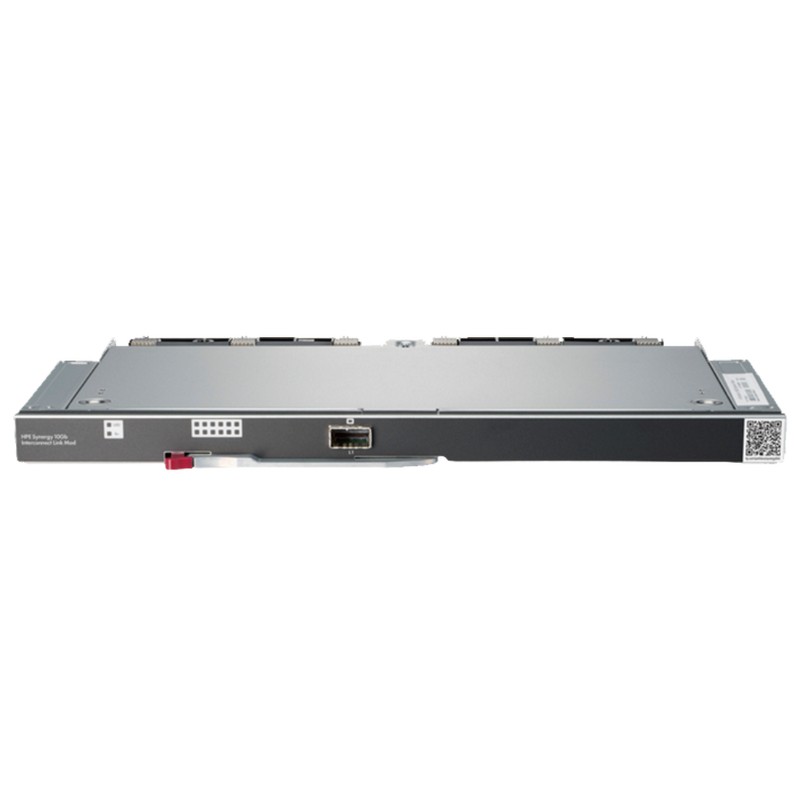
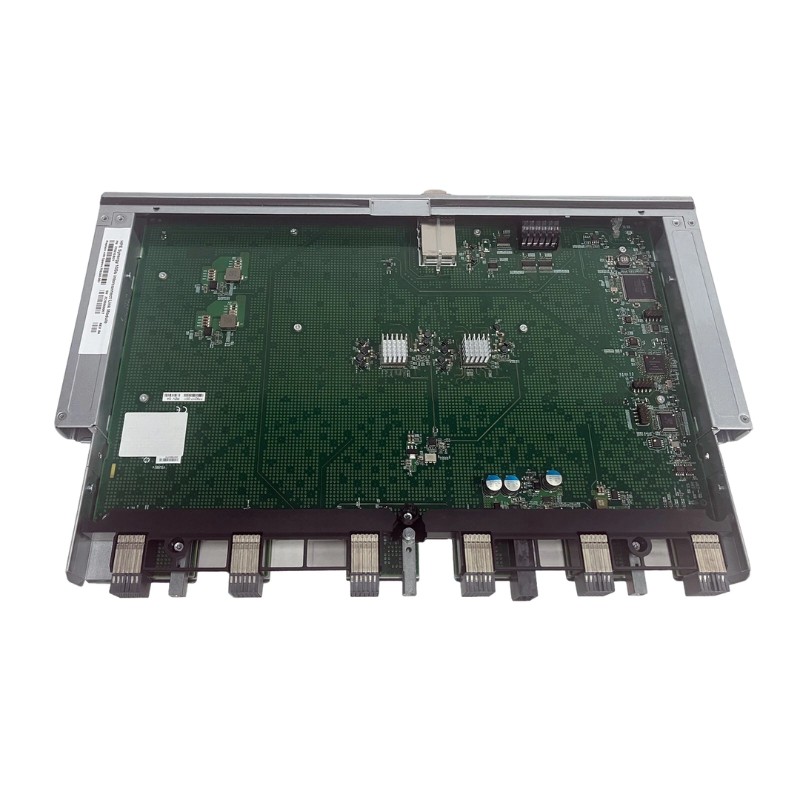
HPE 779215-B21 Synergy 10 Gigabit Ethernet 10GBase-X Compliant Interconnect Link Optical Fiber Expansion Module. New Sealed with 1-Year Replacement Warranty
This HPE expansion module, identified by manufacturer part number 779215-B21, is engineered to augment network capabilities. It serves as a high-performance peripheral designed for integration into compatible systems, delivering enhanced connectivity and data transfer solutions.
The 779215-B21 HPE Synergy 10 Gigabit Ethernet 10GBase-X Compliant Interconnect Link Optical Fiber Expansion Module represents a targeted solution for organizations that require high-bandwidth, low-latency connectivity within composable infrastructure environments. Designed specifically for the HPE Synergy platform, this expansion module provides a fiber-optic interconnect option that aligns with enterprise-class requirements for throughput, reliability, and future-ready data center design. Emphasis on modularity, compatibility, and standards compliance makes this module an ideal choice for converged and composable architectures where predictable performance and simplified management are essential.
The expansion module adheres to 10GBase-X standards, supporting optical 10 Gigabit Ethernet signaling suitable for both short-reach multimode and long-reach single-mode fiber deployments depending on the transceivers used. The module accepts industry-standard optical transceivers (SFP+ form factor) and is designed to operate with a wide range of SFP+ optics such as SR (Short Reach), LR (Long Reach), and other 10GBase-X variants, enabling flexible reach from a few meters inside racks up to tens of kilometers across metropolitan links.
With port density optimized for Synergy interconnect fabrics, the 779215-B21 supports aggregated 10GbE lanes that provide predictable throughput for east-west and north-south traffic patterns. Each port offers full-duplex 10 Gbps performance, while the module’s architecture minimizes latency and jitter to support latency-sensitive applications including database replication, high-frequency data services, and real-time analytics. Link aggregation and LACP capabilities allow administrators to combine multiple 10GbE links for higher bandwidth and redundancy.
Engineered specifically for HPE Synergy frames, the 779215-B21 integrates seamlessly with Synergy interconnect modules and the HPE Synergy Composer management plane. Compatibility extends to Synergy compute modules and the overall Fabric Composer workflows, enabling unified deployment of networking policies and simple orchestration of complex network topologies. Firmware and driver compatibility are maintained through HPE’s regular updates, and the module is validated to work within supported Synergy configurations.
Operating at 10 Gbps per link, the expansion module is optimized for workloads that require high throughput and consistent latency characteristics. This makes it suitable for east-west traffic between compute nodes, cluster communication for distributed applications, and storage traffic when connecting to SAN gateways or converged storage arrays. The module supports line-rate forwarding at 10G speeds, enabling predictable performance for virtualized workloads and containerized applications that drive significant intra-cluster communication. When deployed with appropriate SFP+ optics and OM3/OM4 fiber, administrators can expect minimal packet loss and robust error performance under heavy load, provided the broader network is engineered to match the module’s capabilities.
As a purpose-built module for the HPE Synergy platform, the 779215-B21 integrates with the Synergy Composer and the management fabric to simplify provisioning and lifecycle operations. Integration enables administrators to discover and manage interconnect resources alongside compute and storage resources within the same management plane. Compatibility extends to HPE Synergy frames and interconnect bays, and the module is typically used in conjunction with Synergy interconnect and pass-through modules to create flexible fabric topologies. Ensuring firmware parity with Synergy management components and validating supported transceiver lists helps maintain interoperability and unlocks the platform’s composability features.
Although the module is engineered to provide high-speed links to support dense compute environments, port density planning remains an important architectural choice. Proper capacity planning ensures adequate uplink bandwidth to aggregation layers and prevents potential bottlenecks at peak utilization. Scalability considerations include provisioning spare ports for future growth, analyzing current traffic patterns to size uplinks, and considering link aggregation technologies to combine multiple 10G links for increased throughput or link-level redundancy. Deploying the module in multiple Synergy frames can also enable scaling of fabric capacity in parallel with compute expansion.
The optical fiber expansion module adheres to the physical and thermal design constraints of the Synergy frame. Rack and chassis airflow, ambient temperature ranges, and power provisioning must be respected to maintain long-term reliability. Because fiber optics produce less heat per bit compared to some copper alternatives, this module supports high-density configurations without imposing excessive thermal loads. Nonetheless, operators should align installation with HPE-recommended environmental guidelines for Synergy systems, keeping cable management and airflow unobstructed to protect performance and serviceability.
Network fabric security is a crucial aspect of any deployment. While the expansion module itself provides physical links, access controls at the network and management layers prevent unauthorized configuration changes. Best practices include isolating management traffic, enforcing role-based access control in Synergy management interfaces, and segmenting tenant or application traffic using VLANs or software-defined networking constructs. Physical security of fiber runs and patch panels is also important to reduce the risk of unauthorized interception or accidental disconnection.
When optimizing Synergy deployments for virtualized workloads, careful design of the network fabric ensures that compute nodes have sufficient bandwidth to support vMotion, storage I/O, and management traffic. Segregating traffic types using dedicated fabrics or VLANs prevents resource contention. Deploying the 779215-B21 with redundant uplinks and link aggregation can mitigate link failure risk and provide the headroom necessary for bursty traffic typical of cloud-native workloads. Pairing this module with appropriate QoS policies at aggregation layers can preserve latency-sensitive traffic characteristics.
Integrating the 779215-B21 within the HPE Synergy framework can contribute to operational efficiency and reduced total cost of ownership through simplified management, reduced cabling complexity, and the ability to repurpose resources via the composable infrastructure model. The modular nature of Synergy and the standardization on SFP+ optics allow organizations to upgrade, replace, or expand connectivity without wholesale chassis replacement. Over time, the ability to reuse fiber plant and compatible optics across refresh cycles helps amortize infrastructure investments and maintain flexibility for evolving application demands.
By centralizing management tasks in the Synergy Composer and consolidating physical interconnects with a standard optical module, IT teams can reduce the number of unique hardware types to manage. This consolidation streamlines inventory, reduces the complexity of firmware management, and simplifies training for network and systems administrators. The predictability of standardized 10G fiber links makes troubleshooting and capacity planning more straightforward compared to heterogeneous, ad hoc cabling environments.
Although higher-speed options are available in the market, 10GBase-X retains relevance due to its cost-effectiveness, broad ecosystem support, and wide compatibility with existing optical fiber plants. Planning for future upgrades involves reserving physical space and patching capacity, considering modular optics that can be swapped for higher-speed transceivers if the platform supports it, and evaluating how aggregated 10G links can bridge toward 25G, 40G, or 100G over time. Thoughtful design decisions during initial deployment extend the usable lifetime of the infrastructure and reduce disruptive upgrades.
HPE and its partners offer a variety of lifecycle and professional services that can assist with initial deployment, migration planning, and ongoing maintenance. Engaging certified services for cabling audits, optical inventory assessment, and fabric topology validation provides a faster, lower-risk path to production readiness. Technical assistance for compatibility questions, firmware guidance, and best practice implementation can be especially valuable in complex multi-vendor environments where optical transceivers and aggregation switches must align.
Selecting the correct transceiver type is crucial. Short-reach SR optics are ideal for duplex multimode links inside the data center, while LR optics provide single-mode long-distance connectivity. For specialized needs, such as extended reach, CWDM/DWDM compatibility, or enhanced diagnostics, the module supports a variety of vendor-compliant transceivers. Administrators should balance cost, reach, and compatibility when selecting optics to maximize both performance and return on investment.
As enterprises migrate workloads to virtualized environments and private clouds, the 779215-B21 ensures that network performance keeps pace. Virtual machine (VM) density increases intra-host and inter-host traffic; 10GbE links mitigate bottlenecks and reduce hypervisor-level contention. When combined with HPE Synergy’s composable infrastructure model, the module supports rapid provisioning of network resources for ephemeral workloads and micro-segmentation strategies.
Storage protocols like iSCSI and NFS benefit from higher bandwidth and low latency offered by 10GbE optics. The module enables converged fabric designs where storage, compute, and management traffic can traverse the same physical links while being logically segregated through VLANs and quality-of-service (QoS) mechanisms. This reduces cabling complexity and allows for flexible topologies including shared storage clusters, hyper-converged solutions, and backup/replication links.
Compute clusters running data-intensive jobs rely on predictable, high-throughput networking. The 779215-B21 is well-suited for HPC clusters and analytics platforms that require consistent low-latency connections for large data shuffles, parallel processing tasks, and distributed storage access. Coupled with RDMA-capable fabrics and optimized transport, the expansion module helps minimize CPU overhead and maximizes effective data transfer rates.


 Contact Us
 Information
 Catalog
 Solid State Drives (SSD)
 Network Switches
 Hard Disk Drives
 HBA & Controllers
 PC & Servers
 PC & Server Memory
 CPU & Processors
 Network Routers
 Power Supplies
 Tape Drives & Libraries
 Network Devices
 Computer & Network Cables