(7% discount is applied at checkout)
Cart is empty
Your go-to destination for cutting-edge server products
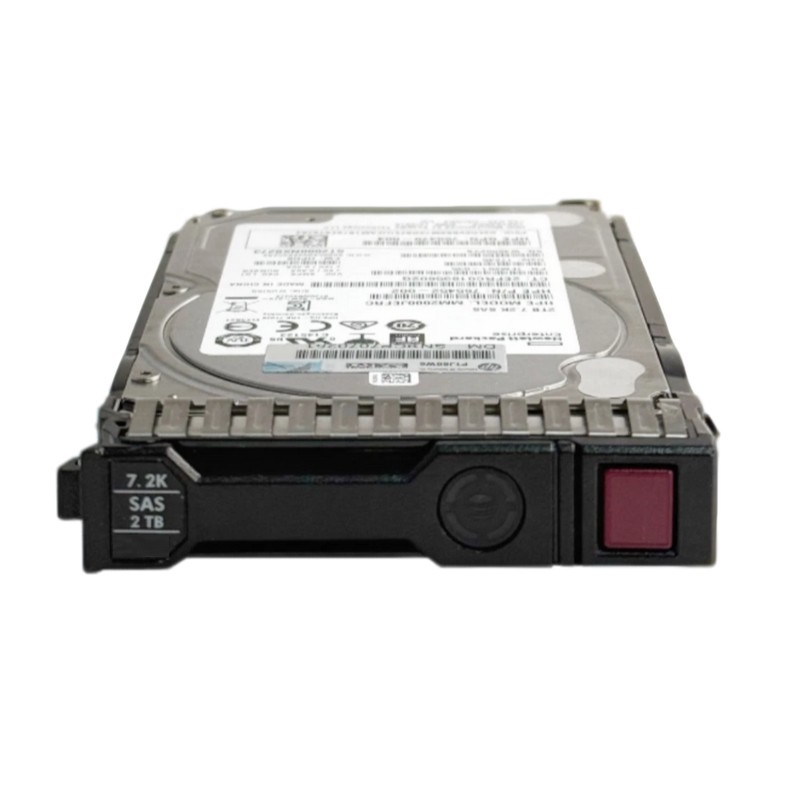


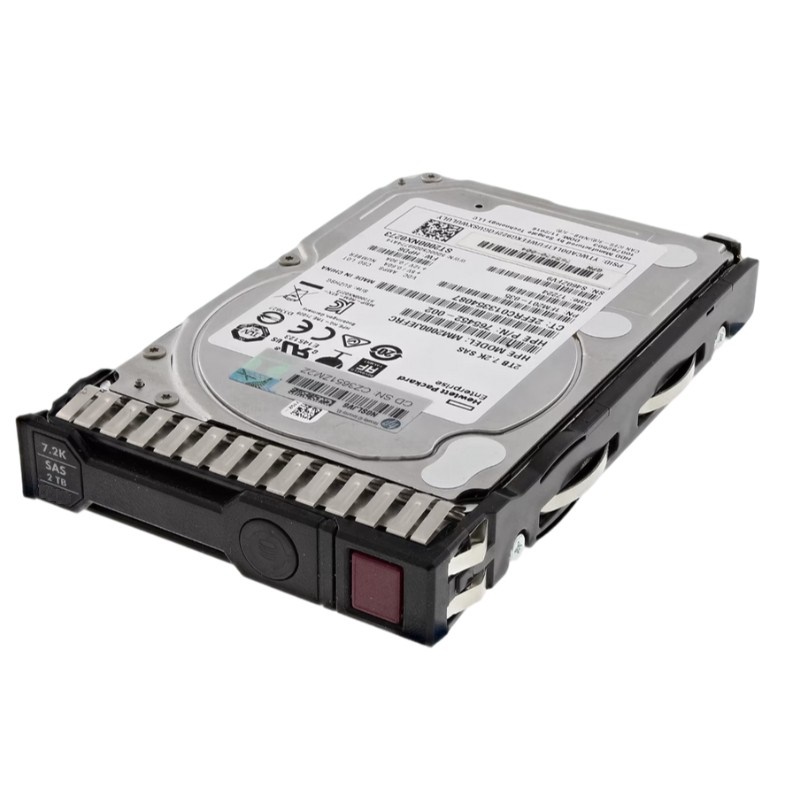
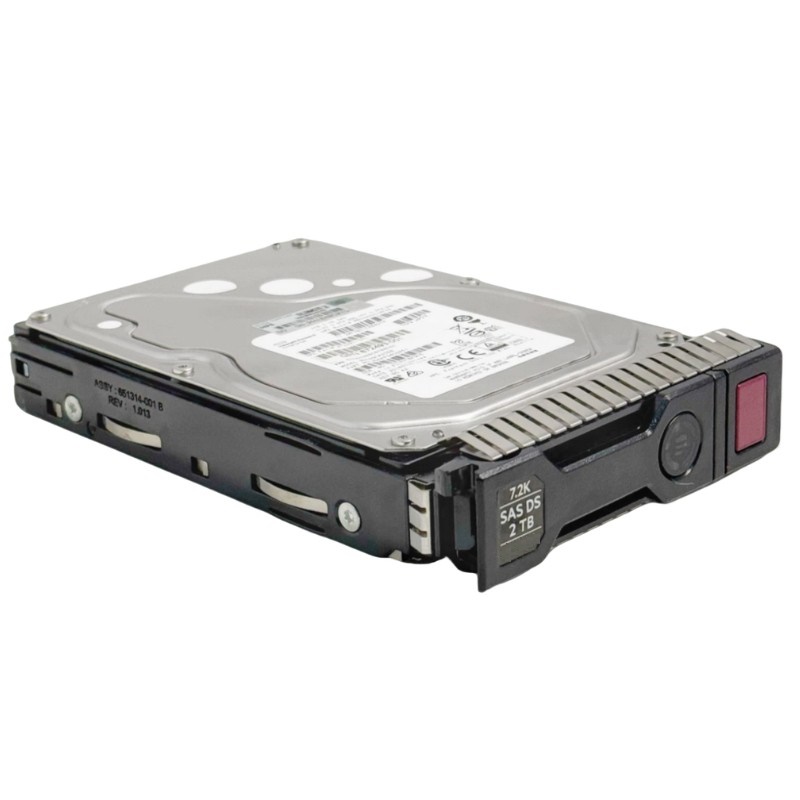
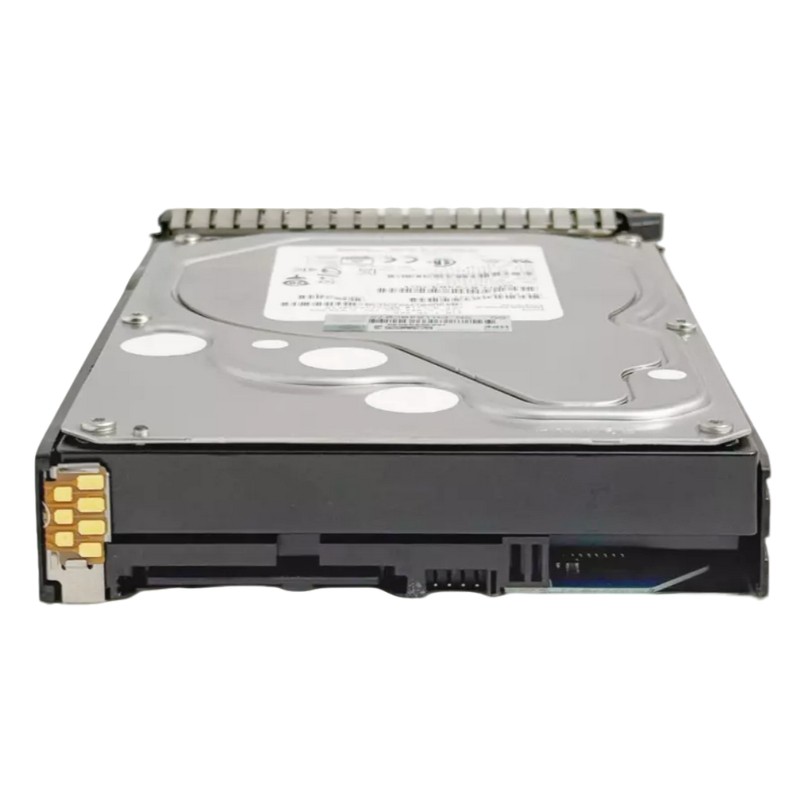
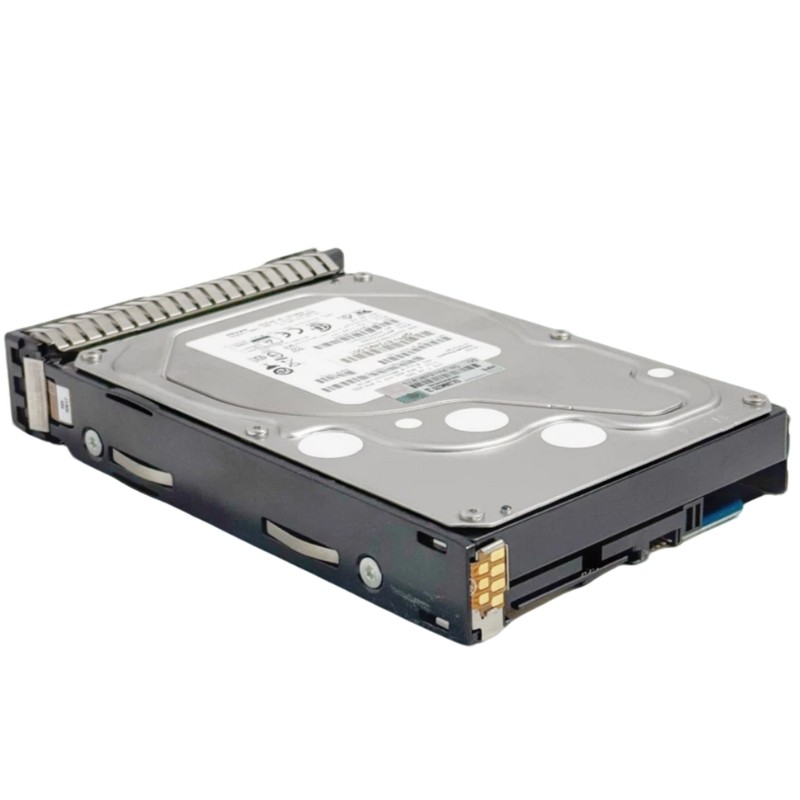
HPE 779249-001 2TB SAS 12GBPS 7.2K RPM 3.5-inch Internal Hard Disk Drive. Factory-Sealed New in Original Box (FSB) with 3 Years Warranty
This unit is an internal hard drive manufactured by HP, carrying the specific 779249-001. It is engineered for integration into compatible enterprise-grade systems and servers.
The 779249-001 HPE 2TB SAS 12Gbps 7.2K RPM 3.5-inch Internal Hard Disk Drive represents a reliable, enterprise-grade storage option designed for data centers, servers, and high-availability systems. Built to meet rigorous performance and durability standards, this drive blends generous capacity with robust interface speed and mechanical reliability. The following description explores the product category, its common use cases, technical attributes, compatibility considerations, performance tuning tips, deployment scenarios, and lifecycle management best practices, offering merchants and IT decision-makers a comprehensive resource for optimizing storage infrastructure.
Designed with enterprise workloads in mind, the drive offers features such as rotational vibration tolerance, advanced error recovery controls, and manufacturing quality processes that cater to 24/7 operation. The mechanical assembly and firmware are tailored for multi-drive enclosures and RAID arrays, minimizing the impact of vibration and heat when operating in dense storage environments. These engineering considerations translate into improved uptime and a lower total cost of ownership for businesses running mission-critical applications.
Typical applications for the 779249-001 2TB 7.2K RPM SAS drive include primary and secondary storage for virtualization hosts, database data files with moderate random I/O, large-capacity log stores, archival of frequently accessed files, and capacity tiers within software-defined storage platforms. It is also commonly deployed in backup appliances and nearline storage pools where a balance of capacity and access performance is required without paying the premium associated with all-flash arrays.
The nominal 779249-001 2TB capacity in a 3.5-inch form factor addresses workloads where physical density and ease of handling are important. The larger platter area relative to 2.5-inch drives typically enables cost-effective cost-per-terabyte metrics, making 3.5-inch SAS HDDs attractive for midline storage tiers. Administrators can combine multiple drives in RAID groups to achieve both capacity and redundancy objectives.
The 12-gigabit per second Serial Attached SCSI (SAS) interface provides a reliable, full-duplex link designed for enterprise storage stacks. SAS offers features like dual-port connectivity for path redundancy, advanced error detection, and enterprise-oriented command queuing. The higher link speed compared to older 6Gbps variants supports improved sequential throughput, which benefits large file transfers and streaming workloads often found in backup and media workflows.
At 7,200 revolutions per minute, the drive achieves a practical balance between random read/write latency, sequential throughput, and power consumption. While not matching the low latency of NVMe SSDs, a 7.2K RPM SAS drive will typically deliver steady sequential throughput in the hundreds of megabytes per second and consistent random I/O performance for mixed read/write workloads. Because of its predictable behavior, it remains suitable for capacity-oriented server roles and storage tiers where latency sensitivity is moderate.
Enterprise HDDs are usually rated with metrics such as mean time between failures (MTBF) and workload rating (TB/year). Though exact numbers vary by manufacturer and model revision, drives in this class are engineered for multi-petabyte annual workloads and constant operation. HPE-branded units integrate firmware tuning and quality control measures aligned with HPE support channels, enabling customers to leverage warranty and replacement services through authorized HPE programs.
When selecting the 779249-001 drive, confirm compatibility with the target HPE server model or storage enclosure. Modern HPE ProLiant servers and HPE Smart Array controllers are typically compatible with 12Gbps SAS devices, but firmware and controller driver versions can affect drive behavior. Dual-port SAS features may be leveraged in SAN topologies or high-availability configurations to ensure uninterrupted access in the event of a path failure.
Physical compatibility includes matching the drive to the correct hot-swap caddy and ensuring the enclosure's backplane supports 3.5-inch SAS devices. HPE hot-swap carriers often include integrated indicators, retention mechanisms, and airflow guides that help maintain operating temperature thresholds. Using non-HPE carriers can work but may forfeit some convenience features such as integrated LEDs or firmware-based drive health telemetry in HPE management utilities.
Firmware versions influence performance characteristics and error-handling behavior. HPE often distributes curated firmware bundles that pair server BIOS, controller firmware, and drive firmware for optimal interoperability. Leveraging HPE’s support portal and management suites helps administrators maintain an up-to-date firmware posture and access diagnostic tools that interpret drive SMART attributes and predictive failure analysis.
Choosing the right RAID level depends on the balance between redundancy, capacity efficiency, and performance. RAID configurations like RAID 6 or RAID 10 are common for enterprise deployments: RAID 6 offers improved capacity efficiency and double-drive failure protection suitable for high-capacity arrays, while RAID 10 delivers higher write performance and lower rebuild complexity at the expense of usable capacity. Sufficient spare capacity and hot spares should be provisioned to accelerate rebuild operations and reduce exposure to additional drive failures during degraded modes.
Pairing mechanical drives with cache layers—either controller cache, read/write SSD caches, or NVMe tiering—can dramatically improve responsiveness for hot data. Deploying automatic tiering within a software-defined stack ensures that the most frequently accessed blocks are promoted to faster media, while the 779249-001 2TB SAS drives serve as cost-efficient cold or warm tiers. Appropriately sized cache and well-tuned caching policies reduce the burden on HDDs and improve overall system throughput.
Enterprise drives generate heat during operation and can be susceptible to thermal-induced performance variation. Ensure chassis airflow pathways are unobstructed and that drives are installed in slots consistent with the server vendor’s thermal design. Some systems allow administrators to monitor drive temperature via management interfaces; improving data center cooling and avoiding hot-aisle contamination are simple yet effective actions to extend drive longevity.
In hyperconverged infrastructures, 2TB 7.2K RPM SAS drives are frequently used as capacity disks in hybrid node profiles. They supply the bulk storage while flash devices handle caching and sensitive metadata. Designers should account for rebuild times, which increase with drive capacity, and mitigate risk through appropriate redundancy zoning and parity planning. Balancing node count with drive capacity and redundancy selections helps achieve service-level objectives for resiliency and capacity growth.
These drives are equally applicable in SAN arrays and NAS heads where density and throughput matter. In SAN environments, leveraging multipath connectivity and array-level features such as thin provisioning, snapshots, and replication is common. In NAS deployments, optimizing access patterns and ensuring the NAS controller’s cache is sufficient to mask HDD latency will improve user-facing file access performance.
2TB SAS drives are often chosen for backup targets and nearline archives where write-once/read-infrequently patterns dominate. Their cost-to-capacity ratio and enterprise reliability make them suitable for long-term retention appliances and deduplication systems. Proper lifecycle management, including scheduled integrity checks and media refresh planning, reduces the chance of silent failures affecting restore operations.
Data security during decommissioning is critical. Drives that leave the data center must be sanitized following organizational policies and regulatory obligations. Overwriting, cryptographic erasure, or physical destruction are valid techniques depending on sensitivity. For drives being redeployed, a full firmware reset and validation of SMART attributes are recommended to ensure future reliability.
Compared to higher-RPM drives, the 7.2K RPM class offers better capacity per cost but higher latency and lower random IOPS. Workloads that demand low-latency transactional performance—such as high-frequency trading or heavy OLTP databases—benefit more from 10K or 15K RPM drives and, increasingly, from SSDs. For mixed workloads where sequential throughput and capacity matter more than microsecond latency, 7.2K RPM drives remain a favorable option.
Solid-state drives provide vastly superior random I/O performance and lower latency, but at a higher cost per gigabyte. NVMe SSDs particularly excel for high-concurrency, low-latency demands. Hybrid approaches that combine NVMe or SSD caching with 2TB SAS capacity disks often deliver an excellent balance of performance and cost. Carefully evaluating workload profiles, such as read/write ratio and queue depth, will inform whether an HDD-only approach is feasible or if flash augmentation is necessary.


 Contact Us
 Information
 Catalog
 Solid State Drives (SSD)
 Network Switches
 Hard Disk Drives
 HBA & Controllers
 PC & Servers
 PC & Server Memory
 CPU & Processors
 Network Routers
 Power Supplies
 Tape Drives & Libraries
 Network Devices
 Computer & Network Cables