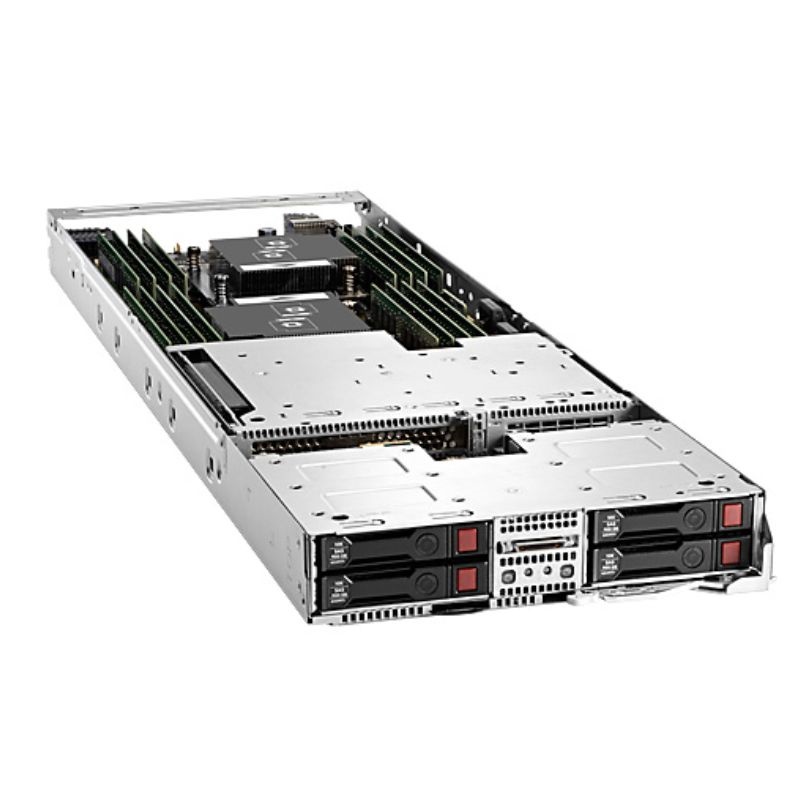
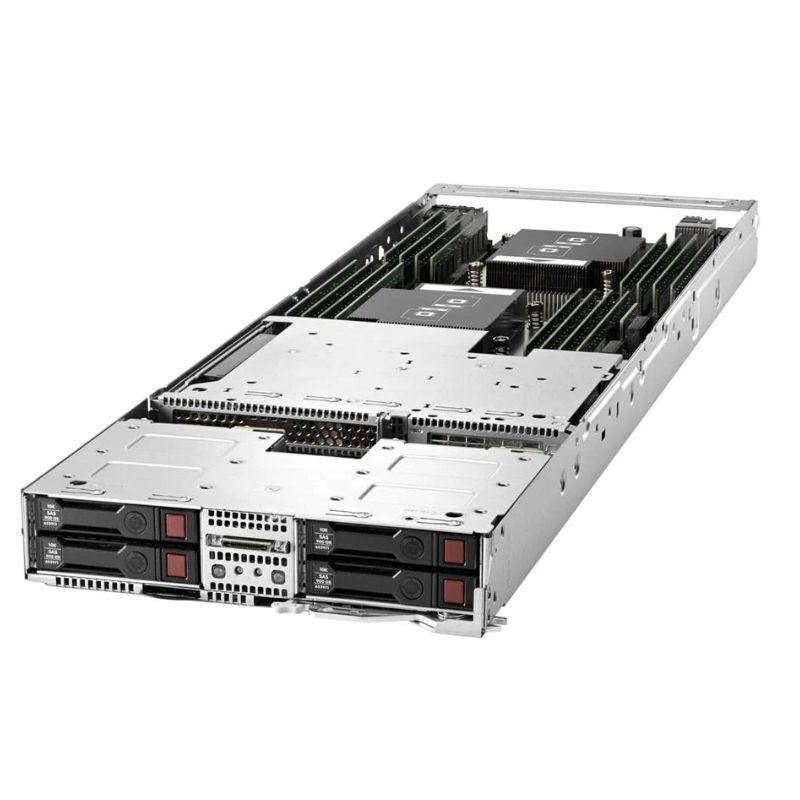
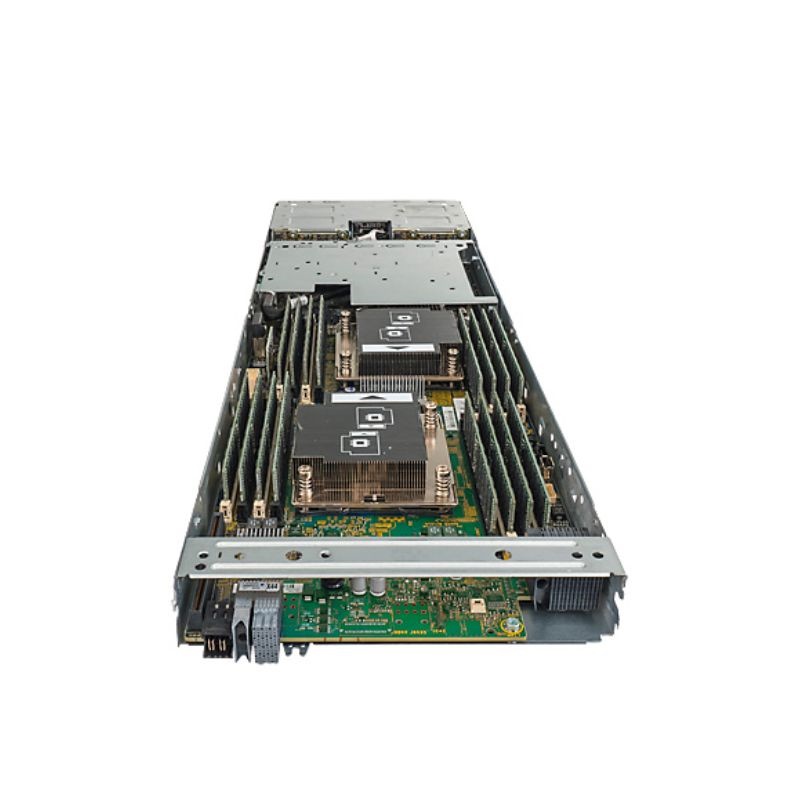
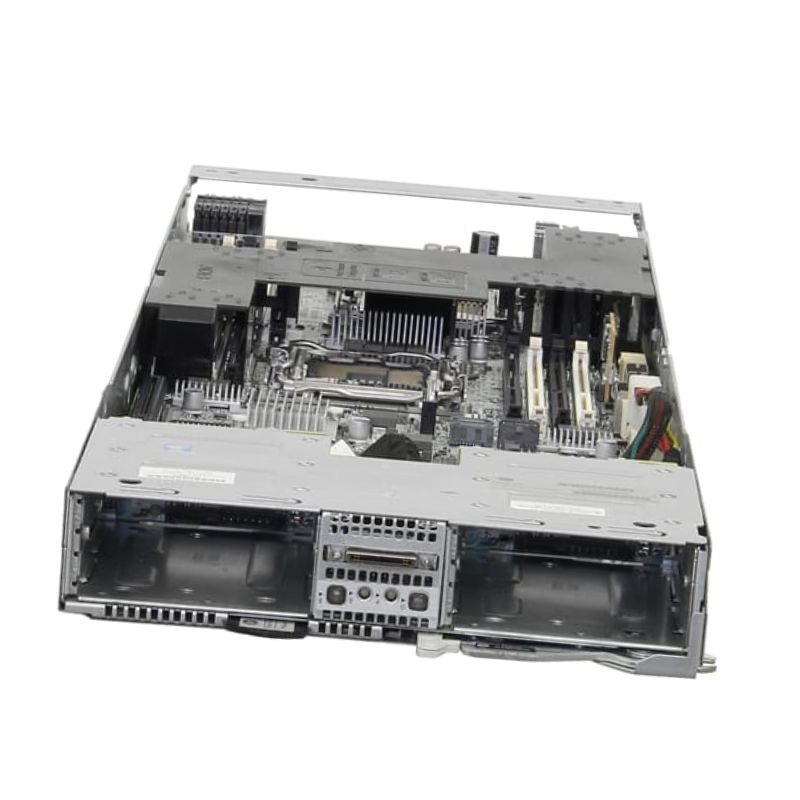
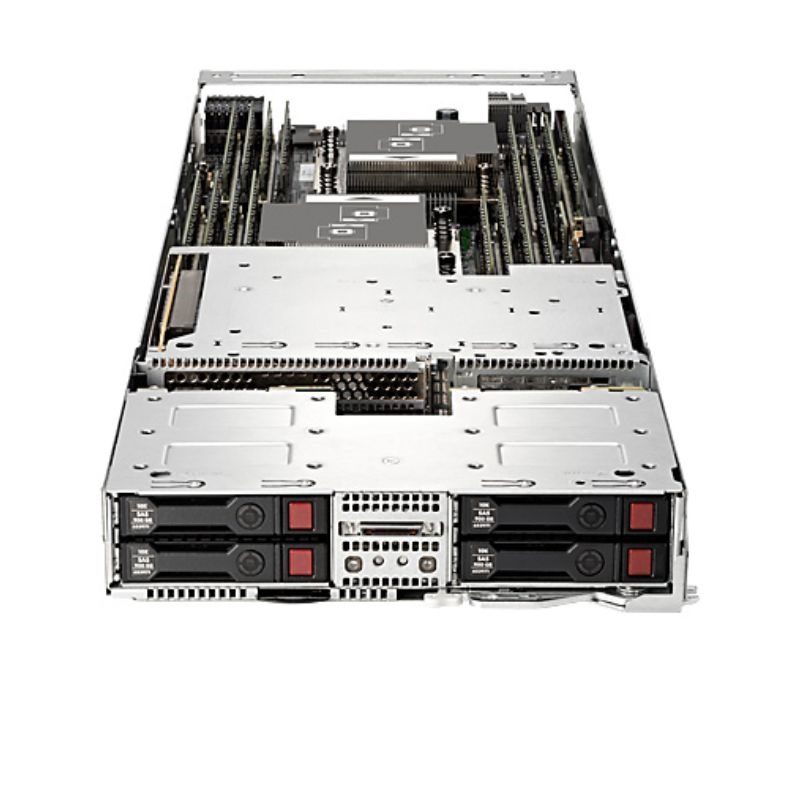
Product Outline of HPE 789917-B21 ProLiant XL230a Server Chassis
The HPE 789917-B21 ProLiant XL230a Single-width 2P 1.0m Rear-cabled CTO Server Chassis is engineered
for data-intensive environments, offering a reliable foundation for high-performance computing.
Designed by Hewlett Packard Enterprise, this chassis provides efficiency, scalability, and robust
compatibility to meet demanding business workloads.
General Product Information
- Brand: Hewlett Packard Enterprise (HPE)
- Part Number: 789917-B21
- Category: ProLiant Server Chassis
- Form Factor: Single-width, 2P design
- Cabling: Rear-cabled, optimized for clean deployments
Performance and Scalability Advantages
With the ProLiant XL230a architecture, businesses can maximize computing density while maintaining
flexibility for future upgrades. The dual-processor support ensures fast data handling and
parallel processing, making it ideal for cloud computing, virtualization, and enterprise-level
applications.
Key Benefits
- Enhanced system density to reduce data center footprint
- 2P dual-socket capability for balanced performance
- Efficient rear cabling for neat rack management
- Flexible CTO configuration for tailored deployments
- Compatibility with HPE server ecosystem and management tools
Design and Build Quality
The HPE XL230a chassis is crafted with high-grade materials and engineered for 24/7 workloads.
The single-width form factor optimizes space usage without compromising airflow or thermal
performance. The 1.0m rear-cabled design allows straightforward integration into HPE Apollo
and other modular infrastructures.
Structural Highlights
- Durable chassis designed for long-term usage
- Compact footprint for optimized rack density
- Rear-cabled layout ensures clean installations
- Enhanced cooling and airflow efficiency
Thermal Efficiency
Effective heat dissipation mechanisms minimize the risk of thermal bottlenecks. The airflow
design maintains consistent cooling even during high-demand operations, reducing maintenance
requirements and increasing hardware reliability.
Application Scenarios
The HPE 789917-B21 ProLiant XL230a chassis is versatile, supporting a wide range of workloads.
Its modular CTO structure makes it suitable for enterprises, research institutions, and
cloud service providers aiming for agility and optimized cost efficiency.
Use Cases
- Enterprise data centers requiring scalable compute nodes
- Cloud service providers deploying virtual environments
- High-performance computing clusters (HPC)
- Research and scientific simulations
- AI, big data, and analytics platforms
Integration and Compatibility
Designed to align seamlessly with HPE Apollo systems and ProLiant infrastructure, this chassis
offers robust integration. The rear-cabled approach streamlines cable management, while HPE’s
Intelligent Provisioning ensures smooth setup and management.
Connectivity Features
- Optimized cabling at the rear for accessibility
- Compatibility with HPE iLO management software
- Support for advanced networking and storage expansion
Reliability and Management
Reliability is at the core of the HPE 789917-B21 chassis. With strong management tools,
monitoring features, and firmware updates, IT administrators can maintain system stability
and reduce downtime.
Management Tools
- HPE Integrated Lights-Out (iLO) for remote management
- Automated firmware and driver updates
- Health monitoring and predictive analytics
- Customizable alerts for proactive system care
Benefit of HPE 789917-B21 XL230a Chassis
Business Value
For enterprises requiring a balance between density, performance, and manageability,
the HPE XL230a server chassis provides a dependable solution. Its CTO model ensures
flexibility, allowing businesses to adapt configurations to their unique operational
needs.
Summary of Key Features
- ProLiant XL230a architecture with dual-processor support
- Space-saving single-width chassis design
- Efficient rear-cabled setup for streamlined integration
- Scalability for enterprise, HPC, and cloud environments
- Enhanced cooling and thermal efficiency
Overview & Core Positioning of HPE 789917-B21 Server ProLiant XL230a
The HPE 789917-B21 Server ProLiant XL230a Single-width 2P 1.0m Rear-cabled CTO Chassis is engineered for dense, high-performance data center environments that demand optimized compute-per-rack capacity, efficient cooling, and easy serviceability. Designed as a configurable (CTO) chassis, this model provides system integrators and enterprise purchasers the flexibility to select CPUs, memory, storage and I/O options to match workload requirements—from high-throughput web services and virtualization to HPC, bare-metal hosting and edge-cloud deployments.
Key Features & Selling Points
- Single-width 2-Processor (2P) form factor: Maximizes rack density by offering two CPU sockets in a narrow, single-wide node—ideal for multi-node chassis and high-density racks.
- 1.0m rear-cabled design: Back-of-rack cabling simplifies front access for service and improves airflow routing for efficient thermal management.
- CTO (Configure To Order): Full configurability lets you optimize CPU model (various Intel/AMD compatible SKUs), RAM capacity and speed, boot/storage devices, and mezzanine/networking cards to suit specific workloads.
- Enterprise manageability: Integrates with HPE management tools (iLO, OneView) for remote monitoring, firmware orchestration and automation of OS deployments.
- Designed for multi-node enclosures: Compatible with HPE’s dense chassis ecosystems, enabling cluster-style deployments or appliance-style rollouts.
Technical Specifications (Configurable Elements)
Processor & Compute
- Supports dual-socket configurations (2P) — choose from supported Intel Xeon or AMD EPYC family processors (check current HPE compatibility matrix for the exact supported SKUs and microcode revisions).
- Optimized for multi-threaded server workloads: virtualization, container platforms, big data analytics and scale-out databases.
Memory & Expansion
- High-density DIMM population possible — supports multiple DIMM slots per CPU for large memory footprints (ideal for database caches, in-memory analytics and virtualization hosts).
- Memory configuration options include standard and HPE-qualified RDIMMs or LRDIMMs with varied speed ratings—select depending on latency vs. capacity needs.
Storage Options
- Front-access or sled-mounted storage choices depending on the multi-node chassis layout — options include NVMe, SAS, and SATA boot and data drives.
- Supports high-performance NVMe for latency-sensitive workloads and SAS/SATA for capacity or archival tiers.
- Flexible boot options: USB, SD, small SATA boot drives or dedicated enterprise SSDs for OS and hypervisor deployment.
I/O, Networking & Mezzanine Cards
- Rear-cabled design allows mezzanine and PCIe expansion cards to interface through shared backplane or rear connectors—useful for high port-count NICs, RDMA/InfiniBand, or storage accelerators.
- Configurable LOM (LAN on Motherboard) and optional Ethernet/FCoE/InfiniBand adapters provide flexible networking topologies from L2/L3 to storage fabrics.
Power & Cooling
- Optimized chassis cooling path for single-width node density—rear-cabled topology helps maintain uniform airflow across nodes and simplifies intake/exhaust routing at rack level.
- Supports redundant power supplies when used in supported multi-node enclosures—power sizing should match CPU and NVMe configurations.
Target Use Cases
High-Density Compute Clusters
The XL230a is ideal when compute density per rack is a priority. Universities, research labs and enterprises building HPC clusters can populate racks with multiple single-width nodes to reach high core counts and memory density without requiring a large footprint.
Cloud & Hyperscale Hosting
Service providers and cloud builders benefit from the CTO capability and narrow node width—enabling them to tailor each node for customer-specific workloads while maximizing rack-level throughput and minimizing per-instance space cost.
Virtualization & VDI Hosts
Dual-socket capacity combined with large memory configurations make this chassis a good fit for virtualization hosts or VDI farms—where memory-to-core ratios and I/O throughput determine user density.
Edge Data Centers & Telco Infrastructure
Compact single-width nodes are attractive in edge locations with space constraints. The rear-cabled 1.0m design eases cabling management in remote sites and telecom huts while providing enterprise-grade remote management tools for minimal on-site intervention.
Deployment & Integration Guidance
Rack Planning & Airflow Considerations
- Because the XL230a emphasizes density, plan rack airflow carefully—ensure unobstructed front-to-back flow and avoid mixing hot and cold aisles in the same rack bay.
- Consider blanking panels for empty slots in multi-node chassis to prevent recirculation and maintain consistent inlet temperatures.
- If nested inside shared enclosures, verify backplane clearance and cable routing to avoid airflow disruption from bundled rear cables.
Power Budgeting & Redundancy
- Calculate full-load power draw based on chosen CPUs, populated DIMMs, NVMe count and any accelerator cards. HPE’s configurator provides PSU sizing guidance; ensure overhead for peak states.
- Design for N+1 or 2N redundancy at the rack level if service continuity is critical—this may mean using redundant PDUs and distributing node power feeds.
Management & Automation
Use HPE iLO and OneView for firmware baseline management, remote console, scriptable server provisioning and integration with configuration management tools (Ansible, Terraform). For larger deployments, orchestration can be automated with HPE OneView’s API to handle stateful rolling updates and hardware inventory tracking.
Storage & Network Architecture Patterns
NVMe-First Architectures
For latency-sensitive applications (databases, caching layers), configure nodes with NVMe drives to take advantage of low I/O latency. Pair NVMe with high-throughput networking (25/40/100GbE or RoCE) to avoid network bottlenecks.
Tiered Storage Approaches
A common design uses NVMe for hot data, SAS SSDs for warm data, and SATA for cold data. The XL230a supports mixed storage media, allowing each node to be tuned for a desired storage performance profile.
High-Bandwidth Networking
Leverage mezzanine slots for offloading and fabric connectivity. RDMA-capable NICs (RoCE/InfiniBand) reduce CPU overhead for distributed storage and compute clusters, boosting performance for MPI workloads and high-performance databases.
Configuration To Order (CTO) — Options & Best Practices
Choosing Processors
- Select processors with a balance between core count and clock speed depending on workload—many scale-out apps prefer more cores while single-threaded workloads may favor higher frequency models.
- Consider thermal design power (TDP) and its impact on cooling and PSU selection—higher-core SKUs often increase cooling requirements.
Memory Selection
- For virtualization and in-memory databases, prioritize capacity (LRDIMMs where supported). For latency-sensitive workloads, RDIMMs with higher frequency DIMMs may be preferable.
- Follow HPE’s memory population guidelines for optimized interleaving and performance.
Storage & Boot Options
- Choose NVMe for boot + data when quick OS and application responsiveness are required. For resilience, implement mirrored boot devices or use iLO remote boot options.
- Consider local hardware RAID vs. software-defined storage — the XL230a supports both approaches depending on controller/module choices.
Networking & Acceleration
- Include NICs designed for your cluster fabric (25GbE for modern clouds; 100GbE for heavy east-west traffic; InfiniBand for HPC).
- GPU or FPGA acceleration cards can be added in appropriate configurations for AI workloads—confirm chassis and thermal compatibility before finalizing the CTO build.
Comparative Analysis
Density vs. Power Efficiency
Compared to traditional 2U dual-socket servers, the XL230a offers higher node density and superior compute-per-rack metrics. This makes it particularly advantageous where space is at a premium and per-rack power/cooling is well-managed.
Configurability vs. Appliance Models
Unlike fixed-appliance servers, a CTO XL230a enables tailoring of CPU, memory and storage—useful for mixed-tenant environments or when consolidating several workload types on a single hardware platform.
Purchasing, Licensing & Lifecycle Considerations
Volume Procurement & BOM Optimization
When ordering at scale, define a standardized bill of materials (BOM) that balances CPU/memory tiers and storage profiles across nodes. Standardization simplifies spares, reduces firmware variation, and lowers long-term support complexity.
Lifecycle Planning & Refresh Strategy
Plan hardware refresh cycles around 3–5 year windows for production servers depending on workload sensitivity—monitor TCO metrics like power consumption, performance-per-dollar and support costs to determine refresh timing.
Spare Parts & Field Replaceable Units (FRUs)
Maintain a small inventory of critical FRUs—hot-swap drive trays, power supplies, and common mezzanine cards—to minimize downtime during hardware failures.
Migration & Migration Tools
Workload Migration Approaches
- Use hypervisor-level live migration for VM mobility when possible to reduce downtime.
- For bare-metal or database workloads, consider replication-based migrations and rolling cutovers to new XL230a nodes.
- Leverage HPE OneView and system provisioning tools to automate OS and agent deployment on new hardware.
Compatibility Checks
Before migrating critical applications, validate BIOS/firmware compatibility and driver support for target OS versions. Test storage stack latency and throughput under synthetic and production-like loads to ensure parity or improvement.
Actionable Next Steps for Procurement & Pilot
Pilot Checklist
- Select two representative workload profiles (e.g., virtualization host & database host) to test on the XL230a.
- Configure a small pilot cluster with identical CTO builds to validate power draw, cooling, and performance characteristics.
- Validate management scripts, firmware update procedures and spare parts logistics during the pilot phase.
Ordering Tips
- Lock down firmware and OS driver bundles before placing production orders to ensure consistency across nodes.
- Consider including HPE Care Pack coverage and a small FRU kit with initial shipments.
- Document cable maps and labeling schema to simplify rack-scale deployments and future troubleshooting.





 Contact Us
 Information
 Catalog
 Solid State Drives (SSD)
 Network Switches
 Hard Disk Drives
 HBA & Controllers
 PC & Servers
 PC & Server Memory
 CPU & Processors
 Network Routers
 Power Supplies
 Tape Drives & Libraries
 Network Devices
 Computer & Network Cables