(7% discount is applied at checkout)
Cart is empty
Your go-to destination for cutting-edge server products
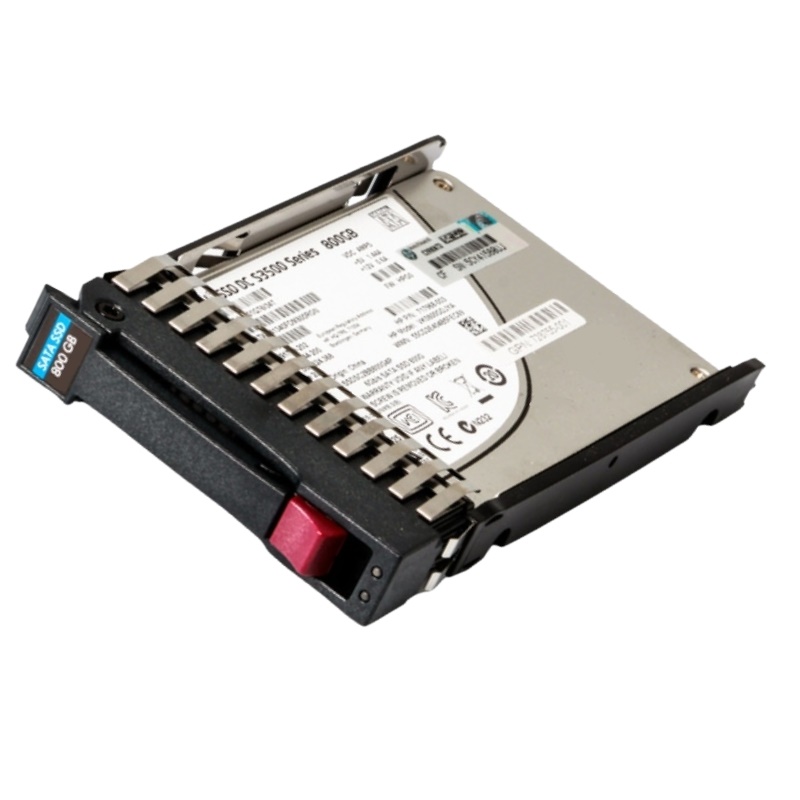


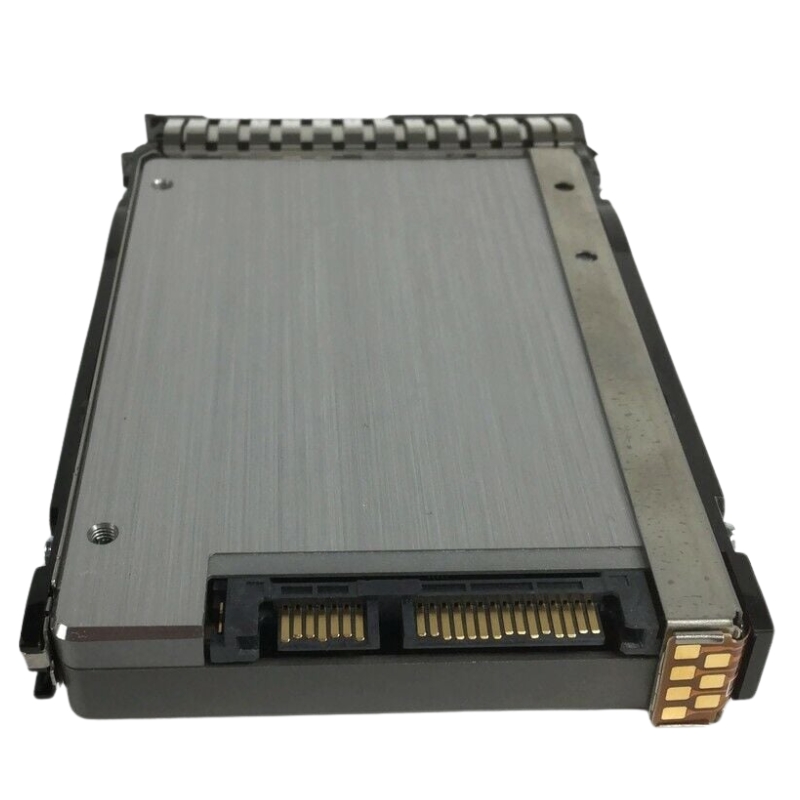
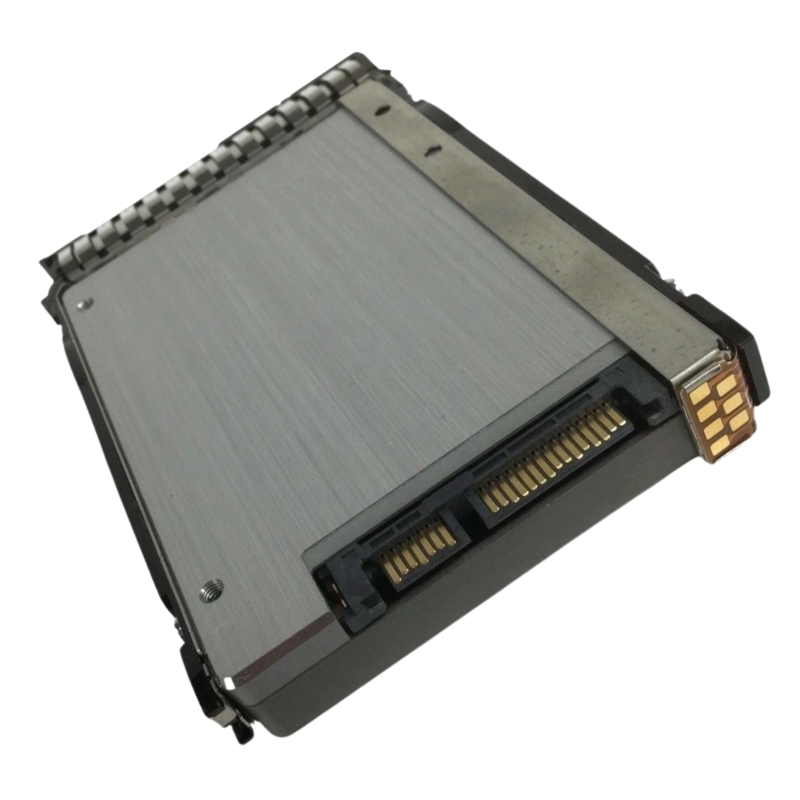
HPE 691860-B21 800GB SATA-6GBPS 3.5inch Multi Level Cell Enterprise Value SSD. Excellent Refurbished with 1 year replacement warranty
The HPE 691860-B21 is a high-performance 800GB solid-state drive (SSD) engineered for enterprise workloads. Designed for HPE ProLiant Gen8 and Gen9 servers, this 3.5-inch LFF SATA SSD offers mainstream endurance and reliable performance for critical data storage applications.
The HPE 691860-B21 800GB 3.5-inch Large Form Factor (LFF) Multi-Level Cell (MLC) Mainstream Endurance SATA-6GBPS Smart Carrier (SC) Enterprise Solid State Drive sits at the intersection of legacy server compatibility and modern performance expectations. This category is focused on enterprise-grade SATA SSDs designed for HPE ProLiant Gen8 and Gen9 platforms, providing data centers and IT teams with durable, cost-effective storage solutions that prioritize predictable throughput, strong latency characteristics, and trusted integration with HPE server firmware and management stacks. The emphasis in this category is on mainstream endurance profiles suitable for mixed workloads: read-heavy applications supplemented by periodic writes, log storage, virtualization boot pools, and capacity-tier flash where cost-per-gigabyte and platform compatibility are equally important.
At the core of the 691860-B21 category is a robust hardware design optimized for rack and tower ProLiant systems. The 3.5-inch form factor caters to servers and storage enclosures that still use LFF bays, enabling higher-capacity SSD deployments without requiring chassis or backplane redesigns. The use of MLC flash provides a balance between cost, endurance, and performance: by storing two bits per cell, MLC achieves higher write endurance and better write amplification metrics than denser TLC alternatives, while remaining more affordable than SLC-based enterprise flash. The SATA 6Gb/s interface ensures broad compatibility and straightforward integration, allowing system administrators to replace or augment legacy HDD-based pools with flash without retooling storage fabrics or controllers.
Smart Carrier (SC) integration is a defining attribute in this category: the drive ships mounted in an HPE smart carrier tray that supplies the server with S.M.A.R.T. telemetry, device identification, and hot-swap capabilities. This carrier supports HPE iLO and Onboard Administrator reporting, which simplifies hardware lifecycle management and predictive replacement workflows. Because these SSDs are qualified for ProLiant Gen8 and Gen9 servers, buyers benefit from validated firmware compatibility, tested thermal envelopes, and HPE-sanctioned failure modes that reduce integration risk when these SSDs are installed in production fleets.
Within this category, the 800GB capacity point occupies an attractive middle ground: sufficient raw capacity for boot volumes, database logs, and tiered caching, while remaining economically viable for large-scale deployments. Mainstream endurance classification indicates the drive is intended for environments with moderate write intensity — enterprise use cases that demand consistent performance but do not require the extreme write durability of write-intensive models. Performance characteristics for typical Gen8/Gen9 configurations will include predictable random read IOPS, acceptable random write performance under sustained workloads, and low-latency behavior for small-block operations. These drives are well-suited for mixed transactional loads, virtual machine boot storms, and storage tiers that require responsiveness more than maximal write DWPD values.
A central selling point of enterprise-grade SATA SSDs in this category is latency consistency. While peak IOPS figures are often cited, the real-world value is in sustained latency at useful queue depths. The HPE 691860-B21 drives are engineered to minimize long-tail latency spikes through firmware-managed garbage collection, reserved over-provisioning, and thermal throttling guards that preserve overall I/O predictability. For applications that are sensitive to latency jitter — such as transaction processing systems, database front-ends, and interactive virtual desktop infrastructures — the consistent response characteristics of these mainstream endurance MLC drives translate directly to improved application performance and a smoother user experience.
Reliability in this product category is delivered via multiple layers. The MLC NAND implementation is paired with enterprise firmware that emphasizes wear-leveling, error correction (ECC), and end-to-end data protection. Over-provisioning ensures spare block availability to maintain steady write performance across the drive lifespan. SMART reporting and HPE device diagnostics provide early-warning indicators of degradation, while integration with HPE system management allows administrators to set proactive replacement thresholds. Endurance is communicated through DWPD (Drive Writes Per Day) metrics aligned with mainstream use; these figures are conservative and appropriate for mixed-use workloads, balancing lifetime write capacity against acquisition cost.
Data integrity mechanisms include robust ECC, CRC checks on data paths, and power-loss protection strategies where supported by the drive's design and server backplane. When combined with HPE server features such as redundant power supplies and controlled shutdowns, the drives in this category provide trustworthy behavior in demanding enterprise settings. Administrators concerned with long-term data fidelity will find relevant telemetry available through HPE management tools, enabling maintenance windows to be scheduled before critical thresholds are reached.
Use cases for the HPE 691860-B21 category range from boot and OS volumes to capacity-tier flash pools and caching layers. These drives excel as system volume disks where fast boot times and low-latency system interactions reduce operational friction. In virtualization environments, they serve as excellent boot-store targets for hypervisor images or as caching devices that accelerate HDD-backed capacity pools. For databases, these SSDs are frequently used for log volumes or read-optimized datasets where steady read performance reduces query latency.
Edge and remote office deployments benefit from the 3.5-inch form factor and mainstream endurance profile, where environmental constraints and cost sensitivities make MLC an attractive choice. Backup and archival workflows may leverage these drives as staging layers ahead of tape or object storage, speeding initial ingest and verification steps without exposing the organization to undue write endurance risk. Distributed file systems and scale-out storage clusters can use the drives for metadata stores or high-traffic index shards where consistent random read performance is essential.
Compatibility is a hallmark of this category. Drives are validated for HPE ProLiant Gen8 and Gen9 servers, assuring administrators that firmware, SMART attributes, and server firmware hooks (such as iLO reporting) behave as expected. The smart carrier supports drive identification and hot-swap behavior that matches HPE's hardware policies, reducing surprises during maintenance or replacements. Furthermore, HPE's support ecosystem typically includes these SKUs in firmware and driver compatibility matrices, simplifying procurement and lifecycle planning for organizations that standardize on HPE hardware.
Because enterprise SSD behavior is tightly coupled to firmware, the category emphasizes drives with accessible firmware update pathways. HPE supplies firmware bundles and update utilities that allow system administrators to apply validated updates in-batch via iLO or System Management tools. Proper firmware hygiene is crucial to ensure that latency, endurance management, and error handling remain within vendor expectations. Administrators should follow HPE guidance on update sequencing and pre-update validation; these steps are especially important in clusters or storage arrays where a single drive firmware update could change performance characteristics across many nodes.
3.5-inch LFF drives have specific thermal envelopes; therefore, this category includes guidance on airflow and rack-level cooling to prevent thermal throttling. The smart carrier collects operational temperature data that feeds into server fans and thermal policies. Drives feature power management modes aligned with SATA specifications, offering idle power reduction and active power management. In large deployments, cumulative power and cooling budgets should account for SSDs operating under sustained workloads, where drive power can be higher than during idle states. For energy-conscious operations, administrators may tune power profiles at the server or RAID-controller level while balancing performance demands.
In modern heterogeneous storage architectures, the HPE 691860-B21 category often serves as a middle tier between ultra-fast NVMe or SAS SSDs and high-capacity HDD arrays. This tiering strategy lets organizations cost-effectively accelerate hot data access while keeping cold capacity on magnetic media. Automated tiering engines and caching layers can detect frequently accessed blocks and promote them to these SATA SSDs for faster response times. Because the drives are mainstream endurance MLC, they are appropriate for data that benefits from quick reads but that does not experience extreme write amplification.
Hybrid arrays commonly employ SATA SSDs like the HPE 691860-B21 for read caches, metadata acceleration, and transient workloads during peak periods. By leveraging the smart carrier telemetry, arrays can manage wear-leveling at the cluster level, ensuring a balanced distribution of writes across a pool and prolonging overall array life. Cache promotion algorithms benefit from the drive's low latency and predictable throughput, providing rapid microsecond-scale improvements for hot datasets. Administrators should consider cache sizing and eviction policies that align with the endurance profile to prevent premature wear from heavy write churn.
Backup strategies that include SSD-based staging benefit from the quick ingest rates and immediate random access offered by these drives. Snapshot creation and verification are faster when stored on low-latency media, enabling tighter recovery point objectives during scheduled backups. However, because snapshots can lead to increased write activity, storage architects should ensure that snapshot retention policies and consolidation windows are tuned to avoid unnecessary write amplification on the SSD tier. Pairing SATA SSDs with protective RAID levels and HPE array intelligence provides a robust framework for both performance and resilience.


 Contact Us
 Information
 Catalog
 Solid State Drives (SSD)
 Network Switches
 Hard Disk Drives
 HBA & Controllers
 PC & Servers
 PC & Server Memory
 CPU & Processors
 Network Routers
 Power Supplies
 Tape Drives & Libraries
 Network Devices
 Computer & Network Cables