(7% discount is applied at checkout)
Cart is empty
Your go-to destination for cutting-edge server products
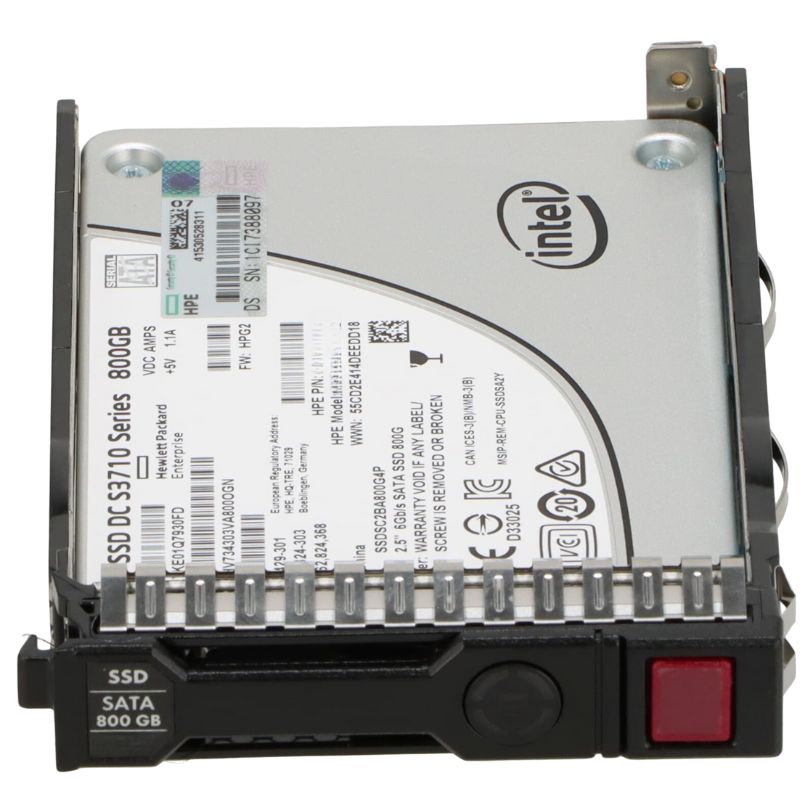


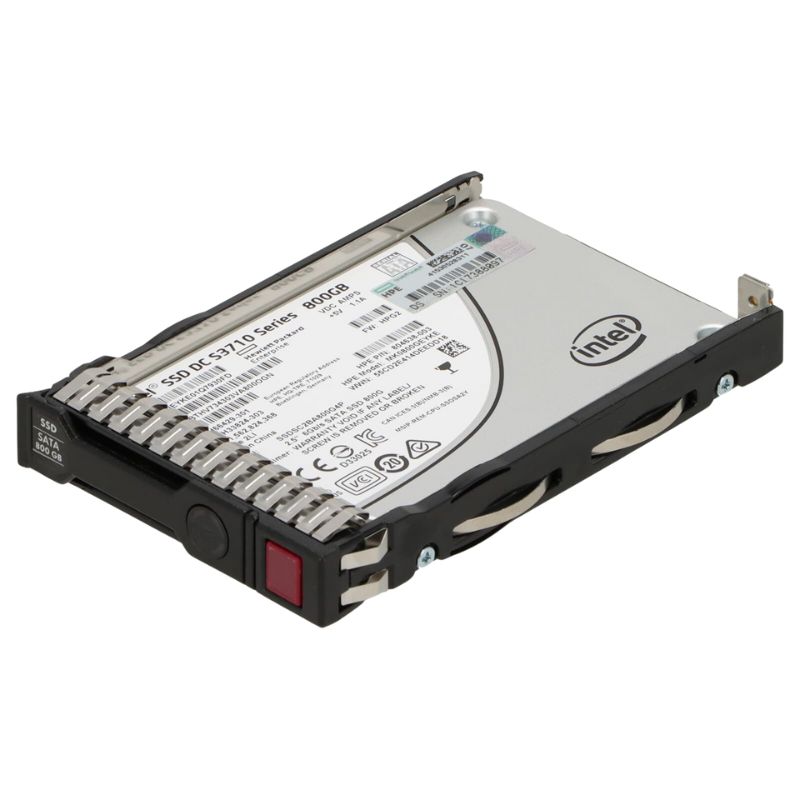
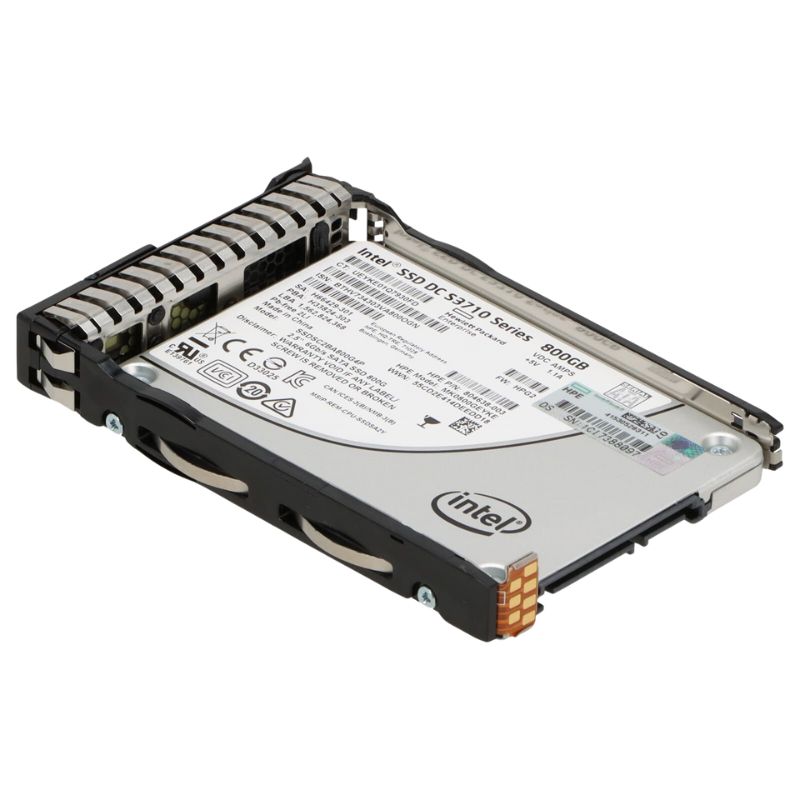
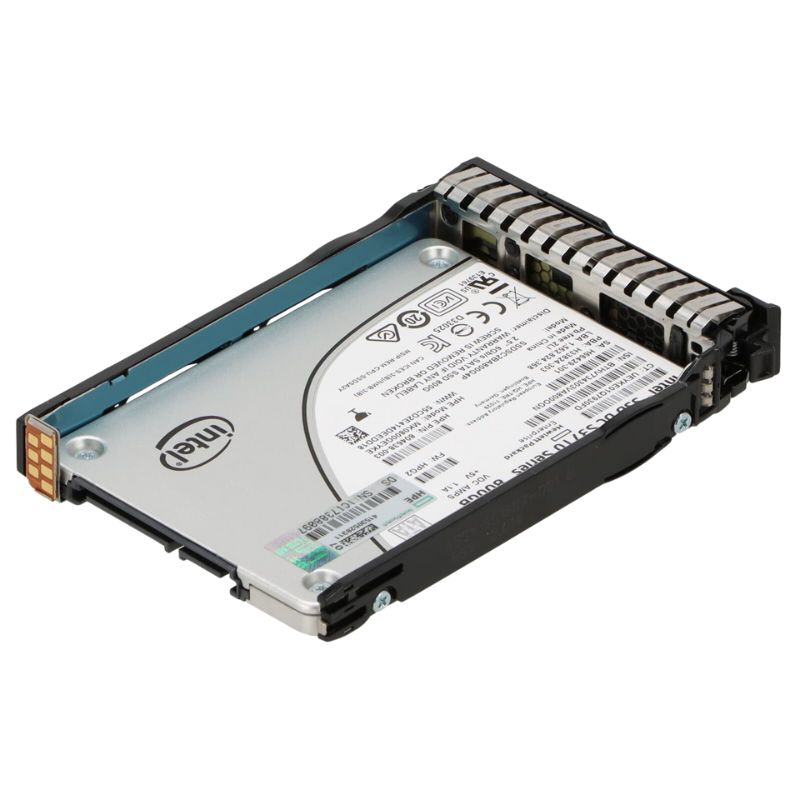
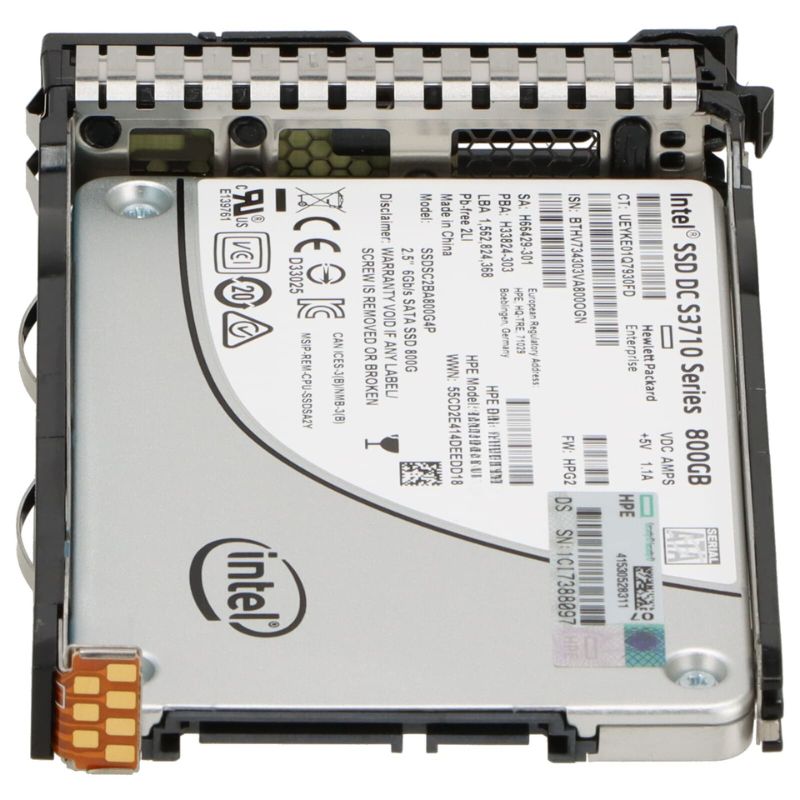
HPE 804599-B21 800GB SATA-6GBPS SC Read-Intensive SFF Hot-Swap SC VE Solid State Drive. Excellent Refurbished with 1 year replacement warranty
The HPE 804599-B21 800GB SATA-6GBPS SC Read-Intensive SFF hot-swap solid state drive represents a purpose-built storage solution engineered for enterprise-class read-heavy workloads. Designed to meet the demands of virtualization environments, database read caches, content delivery nodes, and large-scale read-dominant architectures, this SFF (small form factor) drive combines HPE-quality engineering with consistent SATA 6Gbps interface throughput. The model designation "804599-B21" and the "SC VE G8 G9" compatibility notes indicate that this drive has been validated to work with multiple HPE ProLiant server generations and server controllers, making it an attractive, low-friction upgrade or spare part for administrators managing mixed-generation HPE fleets. As a read-intensive class SSD, it prioritizes high sustained read performance, low latency access patterns, and predictable behavior under sustained read workloads, while still offering adequate write tolerance to support cache refresh cycles and routine administrative writes.
At the heart of the HPE 804599-B21 is a controller and NAND configuration tuned for low-latency read operations. The SATA 6Gbps interface provides backward compatibility and broad host controller support while remaining a cost-efficient choice versus higher-cost NVMe alternatives. Internally, the drive leverages enterprise-grade NAND and firmware features such as over-provisioning, wear-leveling, error correction algorithms, power-loss protection mechanisms (where applicable for the family), and background garbage collection that collectively preserve throughput and longevity. The small form factor enables high-density server and storage array deployments where rack space and drive bay capacity are critical factors. Hot-swap capability allows drives to be replaced or serviced without powering down servers, ensuring continuous operations in data centers that cannot tolerate downtime. The combination of read-optimized NAND mapping and controller-level caching strategies enhances random read IOPS and sequential read throughput while maintaining consistent latency under mixed read-heavy workloads.
Performance with an enterprise read-intensive SSD is measured across several axes: sustained sequential read bandwidth, random read IOPS, read latency percentiles, and sustained mixed-workload resilience. The HPE 804599-B21 targets consistent sequential read rates within the practical bounds of the SATA 6Gbps interface and delivers strong random read IOPS for small block sizes commonly used by virtualization and database workloads. In practical deployments, performance is influenced by server controller type, RAID configuration, host queue depth, and firmware versions. When deployed as a caching device or as part of a tiered storage architecture, the drive’s fast read response helps accelerate application-level operations by reducing disk seek times and improving cache hit rates at the hypervisor or application layer. Administrators should evaluate performance using representative workloads and measure both steady-state and transient behavior to ensure that the drive meets application SLAs for latency and throughput.
Latency is a critical metric for read-heavy applications. The HPE 804599-B21 is tuned to maintain low average latency and tight tail latency distributions across sustained read operations. IOPS performance scales with controller and host settings, and read IOPS are typically significantly higher than write IOPS for read-intensive SSDs due to the NAND management optimizations employed. Sustained throughput for sequential reads will remain bound by the SATA 6Gbps transport, host controller overhead, and storage stack configuration; nevertheless, administrators can expect predictable bandwidth for large reads and high IOPS for small, random reads—important for multi-tenant virtualization scenarios and high-concurrency database front-ends.
Endurance for a read-intensive SSD differs from that of mixed-use or write-intensive SSDs; manufacturers rate these drives based on a write endurance allowance suitable for caching and system writes rather than heavy sequential write logging. The HPE 804599-B21 provides write endurance sufficient for typical read-dominant usage patterns, and includes enterprise-class error correction and power management features designed to maintain data integrity over long mean time between failures (MTBF). Drive firmware implements advanced error correction codes (ECC), and a combination of background scrubbing, wear-leveling, and bad-block management helps ensure that long-term reliability meets the expectations of enterprise IT operations. Administrators should pair these drives with monitoring tools to track SMART attributes and firmware-reported wear statistics so preemptive replacements can be scheduled before capacity or performance is affected.
Operational safeguards such as power-loss protection are important for preventing data corruption during unexpected power events. While the presence and extent of on-board power-loss protection can vary between drive models, HPE-class SSDs are typically engineered with firmware and hardware mitigations that either complete in-flight operations or gracefully halt without exposing data inconsistencies. For mission-critical deployments, confirm the exact power-loss protection capabilities of the specific drive revision and ensure that server-level enterprise power infrastructure complements the drive’s safeguards. Regular firmware updates from HPE and adherence to recommended storage controller settings further contribute to stable and predictable behavior under adverse conditions.
Compatibility is a major selling point for service parts like the HPE 804599-B21. The "SC VE G8 G9" suffix indicates validation across several ProLiant server generations—specifically the G8 and G9 families—and broad compatibility with HPE Smart Array controllers that accept SATA-based SFF drives. The small form factor ensures these SSDs fit into dense compute nodes and storage chassis, while hot-swap trays and sleds let data center technicians replace drives without powering down servers. This minimizes planned downtime and streamlines maintenance windows. Additionally, because these drives conform to standard SATA and SFF physical specifications, they can often be used in third-party enclosures that meet the same mechanical and electrical requirements, although warranty and support may then depend on HPE policies and the hosting environment.
Read-intensive SSDs like the HPE 804599-B21 excel in specific application classes. Virtual desktop infrastructure (VDI) caches, read-mostly database indexes, content delivery caches, boot and OS images in stateless server pools, and search index nodes are prime use cases where read performance, density, and cost-efficiency converge. They also work well as an intermediate tier in hybrid storage architectures where hot data is directed to flash and colder data resides on high-capacity HDDs. In large-scale web applications and microservices deployments, these drives can serve as local caches that reduce network round-trips to centralized storage, thereby improving response times and reducing back-end load. When architecting these solutions, consider workload characteristics such as read/write ratio, block size distribution, and required endurance so the chosen SSD class aligns with expected lifetime and operational cost targets.
When integrating the HPE 804599-B21 into RAID arrays and storage subsystems, administrators should tune RAID levels, stripe sizes, and caching policies to complement the drive’s read-centric behavior. RAID configurations that require frequent parity writes or large rebuild operations may accentuate write activity during maintenance; therefore, planning and selecting RAID levels that balance redundancy with rebuild performance and write amplification is essential. In hardware RAID systems, the controller’s write-back and write-through policy settings can drastically change observed write behavior and should be selected according to application SLAs. In software-defined storage environments, aligning replication, erasure coding, and caching layers with the SSD’s capabilities ensures predictable performance and efficient resource utilization.
Power consumption and thermal output are essential operational parameters for drive selection. The SFF form factor and enterprise-grade components of the HPE 804599-B21 are designed to operate within typical datacenter thermal envelopes, but density and rack-level airflow must be considered. Drives installed in high-density compute nodes or blade enclosures may experience higher ambient temperatures, which can affect NAND endurance and performance throttling behavior. Observing manufacturer-specified operating temperature ranges and employing active cooling strategies where necessary help avoid thermal-induced performance degradation. Additionally, power draw during sustained operations contributes to overall rack power budgeting, so administrators should include SSD power profiles in capacity planning and PUE calculations.


 Contact Us
 Information
 Catalog
 Solid State Drives (SSD)
 Network Switches
 Hard Disk Drives
 HBA & Controllers
 PC & Servers
 PC & Server Memory
 CPU & Processors
 Network Routers
 Power Supplies
 Tape Drives & Libraries
 Network Devices
 Computer & Network Cables