(7% discount is applied at checkout)
Cart is empty
Your go-to destination for cutting-edge server products
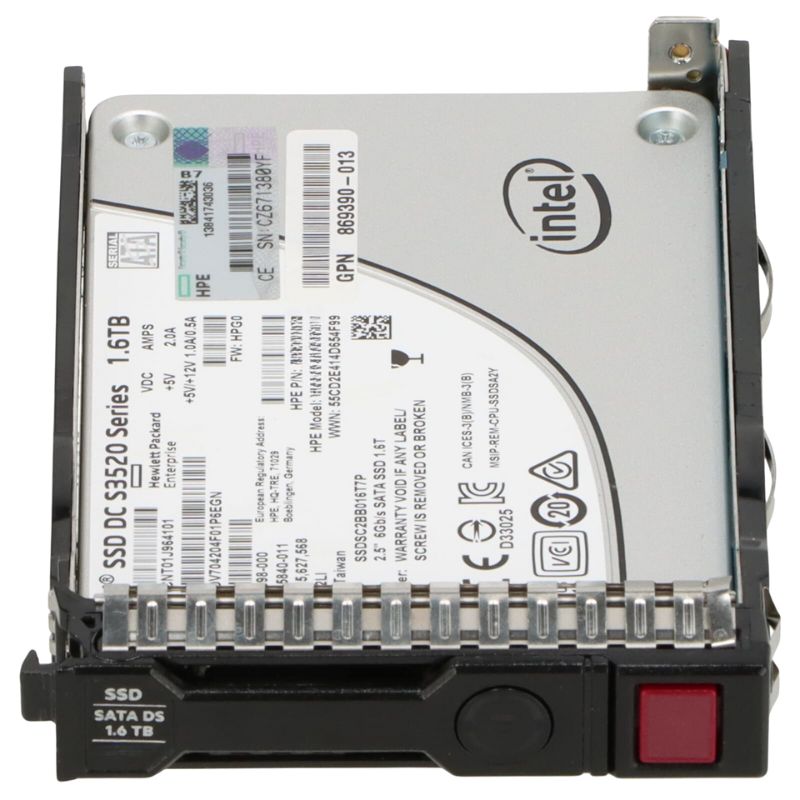


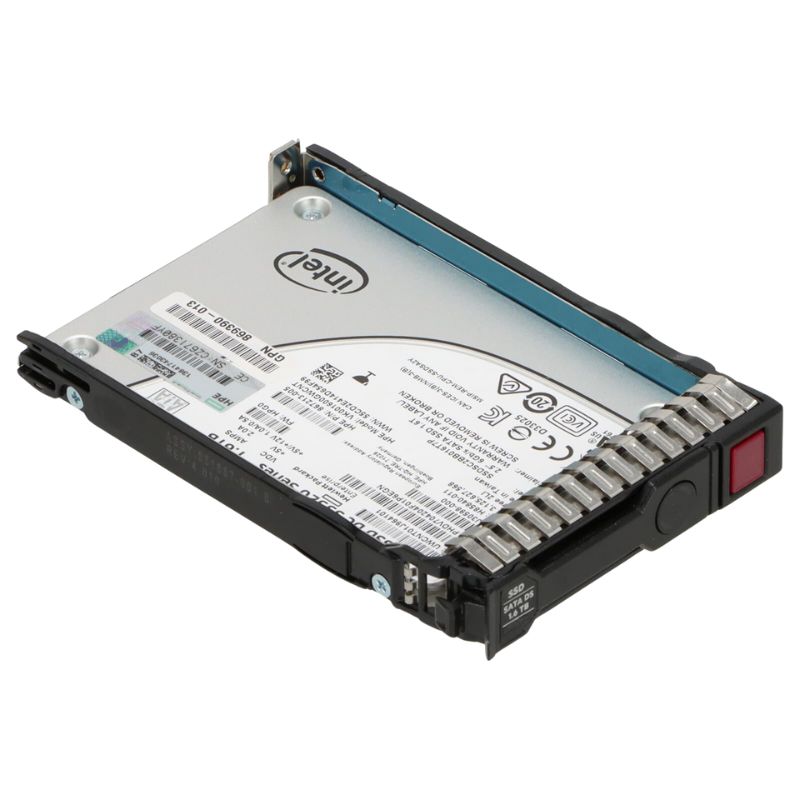
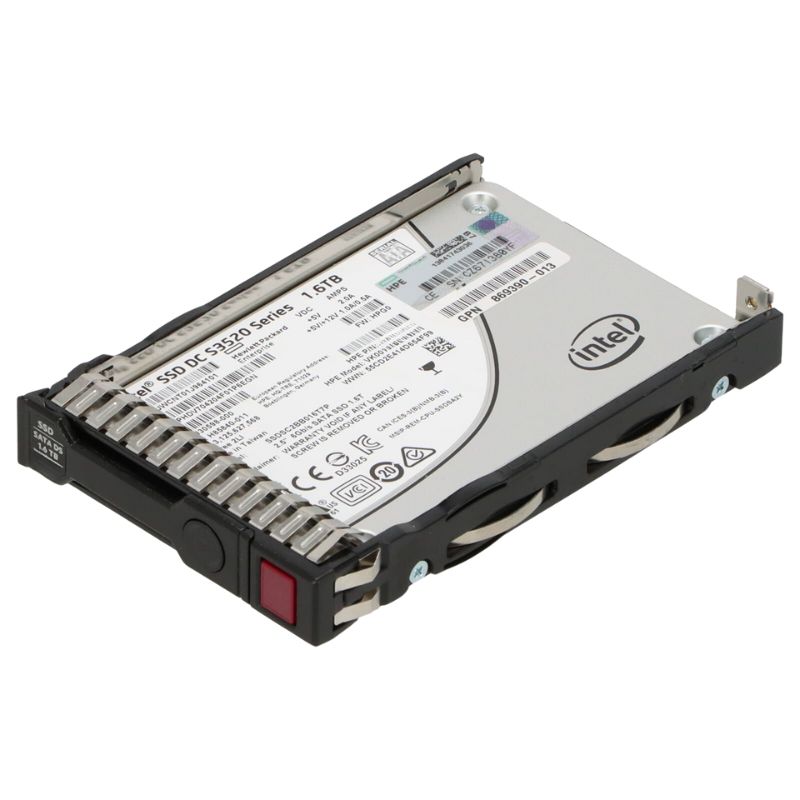
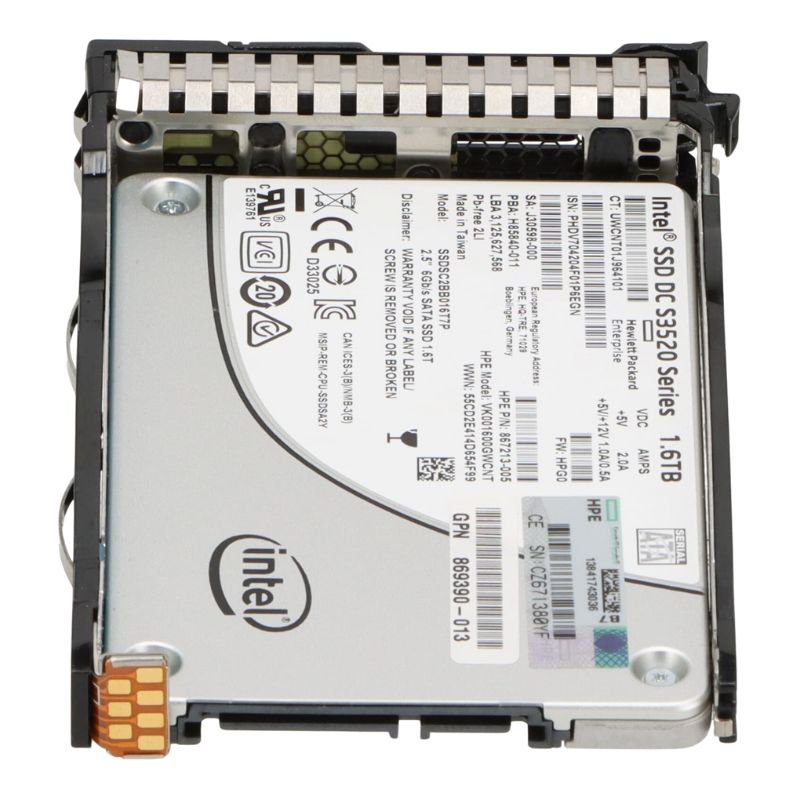
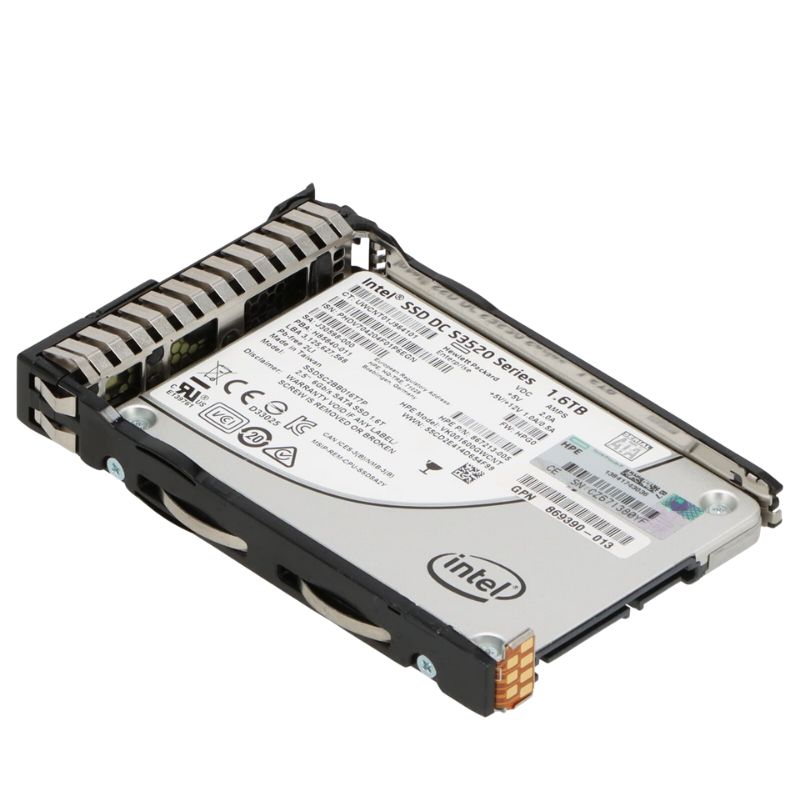
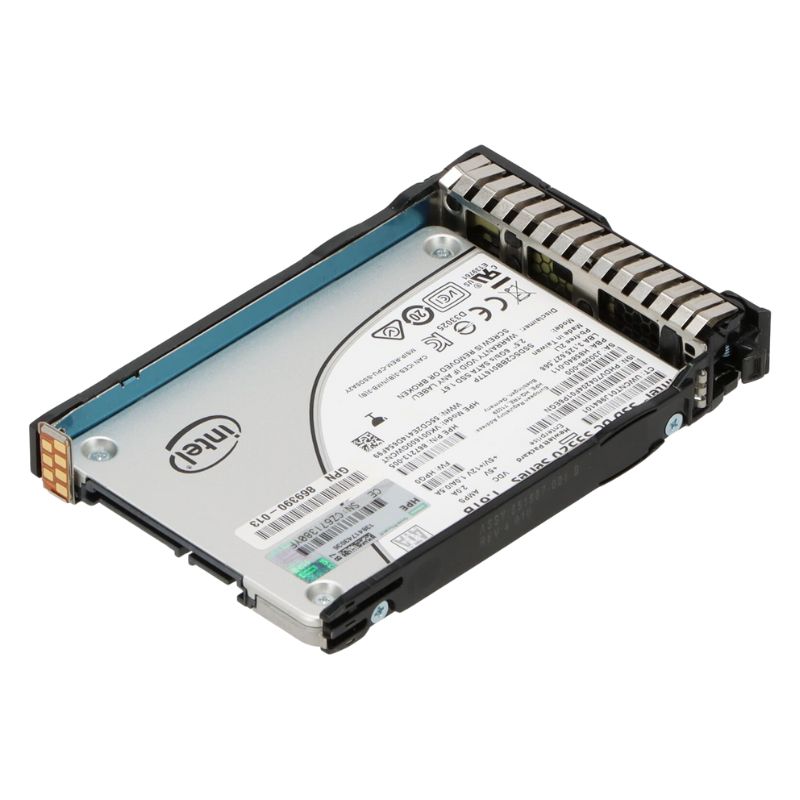
HPE 804605-B21 1.6TB SFF SATA-6GBPS SC Read-Intensive MLC PLP Hot-Swap Solid State Drive. Excellent Refurbished with 1 year replacement warranty
The HPE 804605-B21 1.6TB SFF SATA-6GBPS SC Read-Intensive MLC PLP Hot-Swap Solid State Drive represents a focused category of enterprise-grade storage engineered for read-dominant workloads where predictable response times, sustained throughput, and data protection under transient power events are critical. This category centers on the convergence of small form factor density, SATA 6Gb/s interface convenience, multi-level cell flash economics, and power-loss protection circuitry to deliver a storage solution optimized for large-scale virtualization read caches, content delivery, database read replicas, indexing and search nodes, and other environments where reads far outnumber writes. The 1.6TB capacity point balances cost per gigabyte and practical usable capacity in constrained 2.5-inch sleds, while the architecture choices emphasize endurance profiles and firmware tuning that prioritize consistent read performance over long deployments in mixed enterprise fleets.
At the heart of this drive category is the SATA-6Gbps interface, a widely-used standard that enables broad compatibility across generations of servers, storage chassis, and HPE-branded backplanes. The SATA interface provides a mature, reliable transport layer with well-understood command sets and management tools, enabling administrators to integrate these SSDs into existing infrastructure without needing specialized NVMe-capable hardware. The small form factor (SFF) 2.5-inch design maximizes rack density while supporting hot-swap operation, which is essential for minimizing downtime during field replacements and service windows. Multi-level cell (MLC) NAND is selected for a favorable balance between cost and endurance when compared with lower-cost TLC or higher-endurance SLC options. In the read-intensive classification, firmware and over-provisioning levels are tuned so that read latency and sustained throughput remain stable under typical production loads where writes are limited. Power Loss Protection (PLP) circuitry is included to protect in-flight data and metadata during unexpected power events, helping to preserve file system integrity and prevent costly rebuilds or data corruption. Hot-swap capability combined with enterprise SMART telemetry and vendor firmware ensures that drives can be monitored, proactively replaced, and maintained through standard server management consoles and HPE tools.
This category of drives is purpose-built for workloads that skew heavily toward reads. Examples include read cache layers in hyperconverged systems, content distribution and streaming infrastructure where files are served more often than altered, analytical query nodes that execute many reads against indexed data, and search platforms performing frequent lookups. The drives deliver low read latencies and consistent IOPS for random and sequential reading patterns, while write performance is intentionally de-emphasized to improve longevity and provide a predictable service profile for read-dominant tasks. For organizations that need a mix of read and write activity, these drives still perform admirably for metadata updates, small transactional writes, and background maintenance operations, but architects should evaluate write-heavy services against mixed-use or write-optimized SSD families. The 1.6TB capacity gives a sweet spot for caching large data sets while reducing the number of drives required to achieve target working set sizes, simplifying management and lowering system-level power consumption and thermal footprint.
Enterprise deployments demand drives that remain dependable over time, and this category answers that need through a combination of NAND selection, firmware endurance management, and protective hardware features. MLC NAND used here typically offers higher program/erase cycle ratings than the densest consumer-grade flash, making it suitable for sustained service life on read-centric systems. Firmware-level wear-leveling algorithms, background garbage collection, and reserved over-provisioning capacity help maintain performance consistency and extend usable life. Power Loss Protection (PLP) is a critical differentiator: capacitors and circuitry provide sufficient energy to flush volatile caches and ensure metadata structures are correctly written to NAND in the event of sudden power loss. This reduces the risk of degraded RAID arrays, unclean shutdowns, and long rebuild operations which can impact overall data center availability. Additionally, enterprise SSDs in this category typically expose SMART attributes and vendor-specific health metrics to server management systems so operators can track endurance consumption, error rates, and other signals to plan replacements proactively rather than reactively.
The 2.5-inch small form factor (SFF) provides a compact footprint that fits dense compute and storage enclosures, blade servers, and converged infrastructure appliances. This geometric profile optimizes rack-level utilization where data center real estate is a primary constraint. Hot-swap sled designs enable safe removal and insertion without powering down systems, a capability particularly valuable for clustered services and storage arrays. Thermals and airflow design are important when populating dense arrays; enterprise-grade SSDs in this category often include thermal throttling and monitoring to protect the drive from overheating while maintaining predictable performance under variable cooling conditions. Administrators should follow HPE's recommended slot population and airflow guidelines to avoid thermal-induced performance throttling or shortened device life.
These HPE-branded SSDs integrate tightly with HPE server platforms and management software. While the SATA interface ensures wide physical compatibility, HPE firmware validation and testing guarantee interoperability with HPE's system firmware, RAID controllers, and server management suites. Integration with HPE Integrated Lights-Out (iLO) and array management utilities enables remote monitoring, firmware updates, and diagnostic reporting. This makes it straightforward for administrators to include the drives in standard firmware baselines, apply drive-level updates without disrupting operations, and leverage vendor-specific health indicators for fleet-wide reporting. Using HPE management tools, teams can set predictive replacement thresholds, aggregate SMART alerts across large deployments, and automate parts of lifecycle management to reduce manual oversight and improve mean time to resolution for hardware issues.
Architects and IT teams will find this SSD category useful in several recurring deployment patterns. In hyperconverged infrastructures, these drives are often used as read cache layers that accelerate virtual machine boot storms and common read patterns across many VMs. In search and analytics clusters, they serve as storage for indexed shards that require rapid query response. Content delivery networks and streaming servers use these drives for hot content storage where small random reads and moderate sequential reads dominate. Storage tiering strategies may place these devices in the warm tier—between the fastest NVMe layers and bulk HDD tiers—delivering strong read performance while containing costs. Backup staging and deduplication appliances can also leverage read-optimized SSDs to accelerate read operations during restore and dedupe processes. Across all these patterns, the drive’s hot-swap capability and standardized SATA connectivity simplify operations, reduce the need for specialized hardware, and speed field servicing.
Compared to NVMe/PCIe SSDs, the SATA-6Gbps read-intensive MLC drives provide a cost-effective balance: lower per-unit cost, wider legacy compatibility, and simpler integration at the expense of peak latency and bandwidth. Against write-optimized enterprise SSDs, the read-intensive family offers better price-per-gigabyte and longevity for read-heavy workloads but will not achieve the same sustained write throughput or drive endurance under heavy write stress. When compared with TLC or QLC-based drives, MLC-based products generally provide improved endurance characteristics and more predictable performance under mixed workloads. The decision matrix for choosing this category should consider workload read/write ratios, existing server backplane capabilities, budget constraints, and desired lifecycle management practices. Where backward compatibility and cost-efficiency matter most, this drive family often provides the best compromise without requiring a wholesale architecture change.
Capacity planning must account for usable capacity after RAID overhead, filesystem usage, and potential over-provisioning reserved by the drive’s firmware. The 1.6TB nominal capacity enables higher effective usable space per sled compared to smaller capacities, reducing the total number of drives needed to reach a target usable pool. This translates into savings in power, cooling, and controller port consumption. Cost-efficiency should be measured beyond raw purchase price: the total cost of ownership includes power draw, serviceability, replacement cadence, and administrative overhead. Drives that reduce the number of spindles, fit more cache per node, or simplify storage tiers can materially lower operational costs. When modeling TCO, include expected drive life cycles, projected endurance burn rate under your workload, and the economic impact of downtime or rebuilds. The read-intense MLC drives can often push cost-per-IO down for read-heavy applications while maintaining a manageable replacement schedule.
Consider a virtual desktop infrastructure (VDI) deployment experiencing slow boot storms and sluggish application launch times: deploying a tier of read-optimized 1.6TB SATA SSDs as read cache devices can dramatically reduce cold-cache latency and smooth user experiences during mass login events. In an analytics cluster where indexed queries drive business insights, replacing HDD-backed index storage with read-intensive SSDs reduces query times and enables higher concurrency for analysts. For content publishers with large media libraries, these drives serve hot files quickly without incurring the cost of all-NVMe storage while still providing sub-millisecond read responses for end-users. In each scenario, the trade-offs between cost, compatibility, and performance align the drive category to tangible operational improvements and predictable capacity planning strategies.
For category pages and product listings, optimizing descriptions around specific search intents—such as “1.6TB enterprise SATA SFF SSD,” “read-intensive enterprise SSD with PLP,” and “HPE 1.6TB MLC hot-swap drive”—will improve discoverability for IT buyers researching storage solutions. Include technical keywords naturally throughout headings and body text, incorporate capacity and interface terms, and surface common use cases and benefits prominently. Structured content with meaningful subheadings (as shown here) helps both users and search engines quickly parse the page, while long-form, detailed descriptions provide the depth required by procurement teams evaluating enterprise purchases. Ensure meta descriptions, product attributes, and schema markup reflect the drive’s characteristics to enhance rich snippets and product search results on major search engines.


 Contact Us
 Information
 Catalog
 Solid State Drives (SSD)
 Network Switches
 Hard Disk Drives
 HBA & Controllers
 PC & Servers
 PC & Server Memory
 CPU & Processors
 Network Routers
 Power Supplies
 Tape Drives & Libraries
 Network Devices
 Computer & Network Cables