(7% discount is applied at checkout)
Cart is empty
Your go-to destination for cutting-edge server products
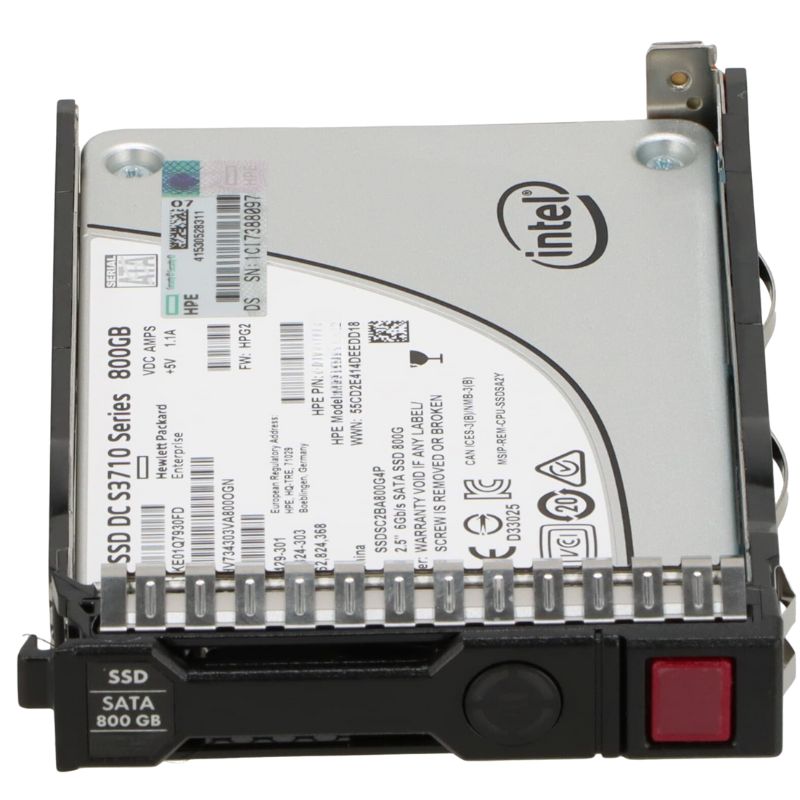


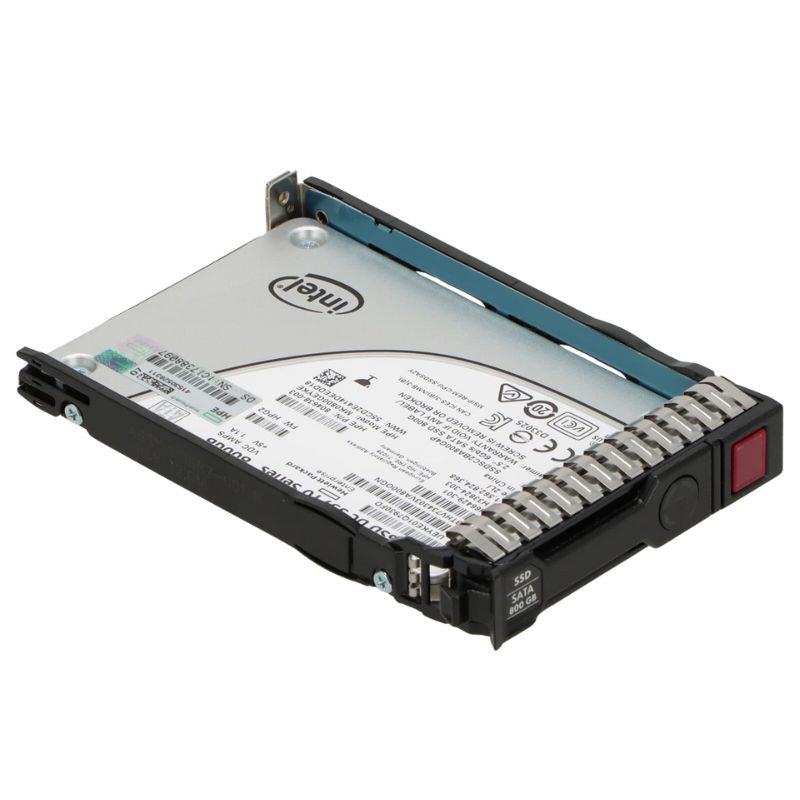
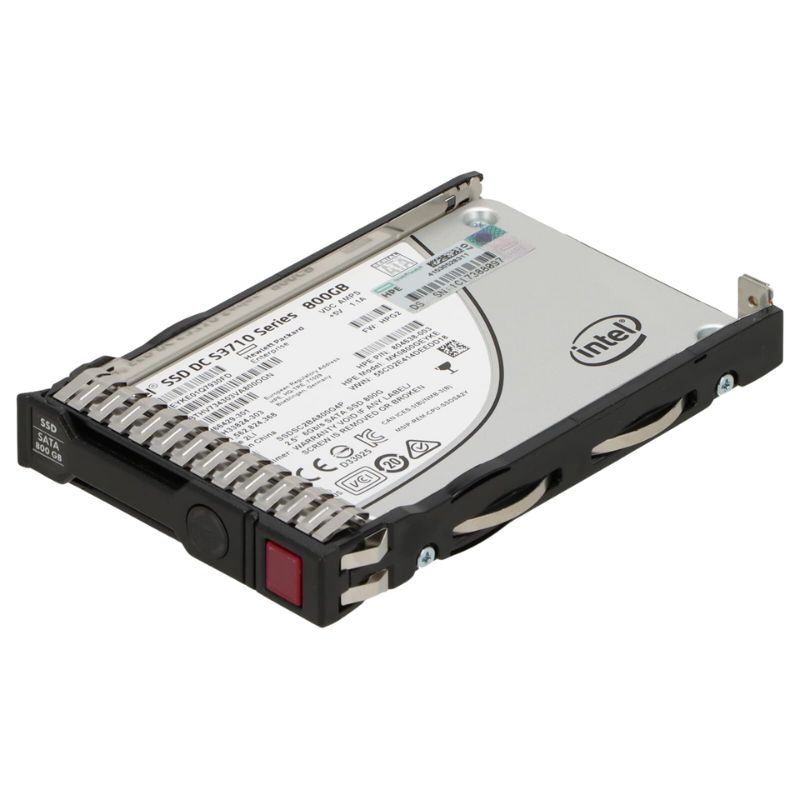
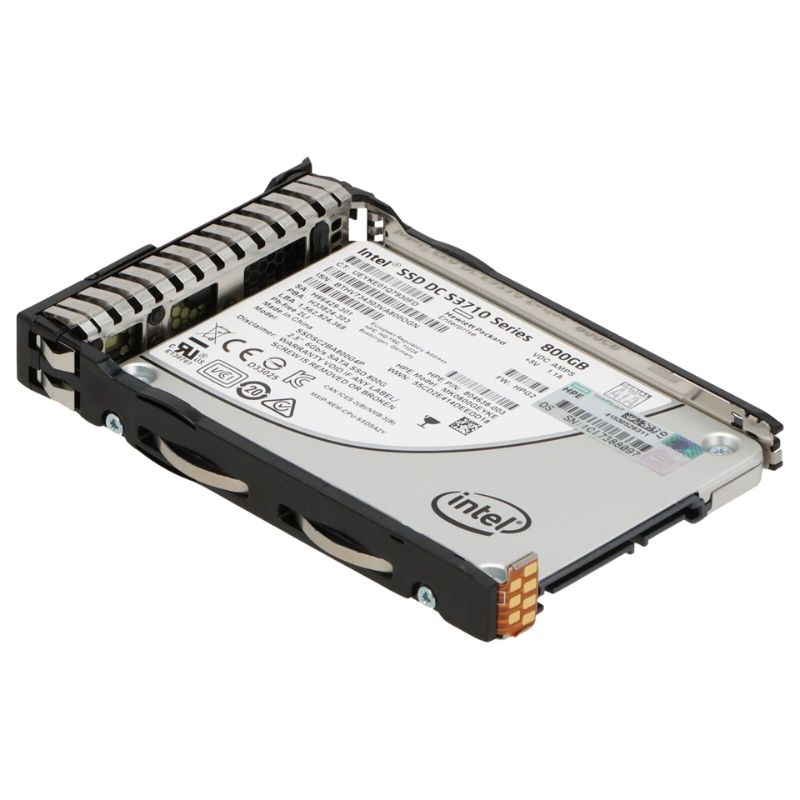
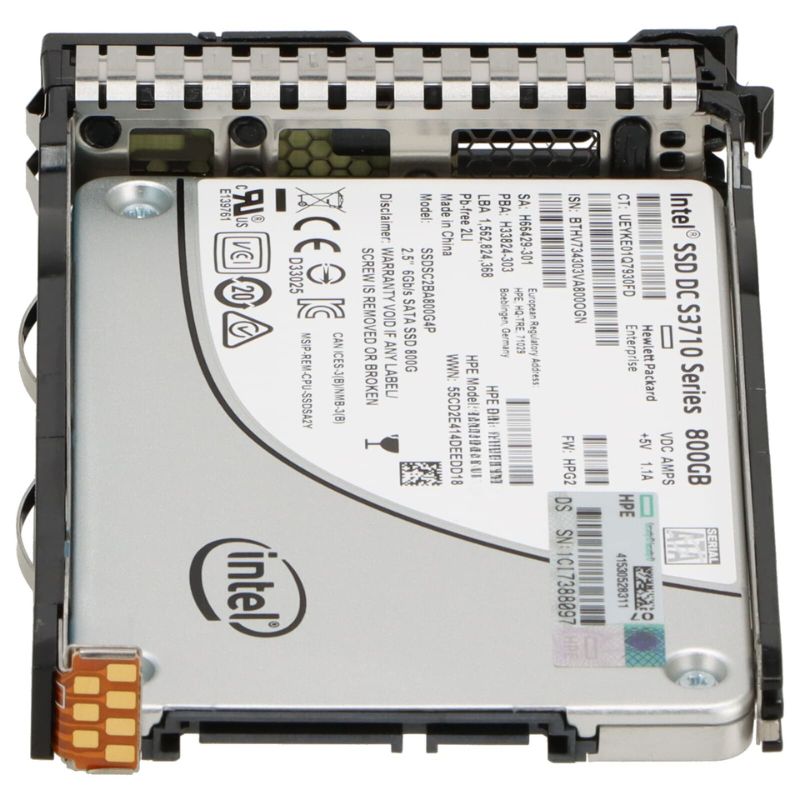
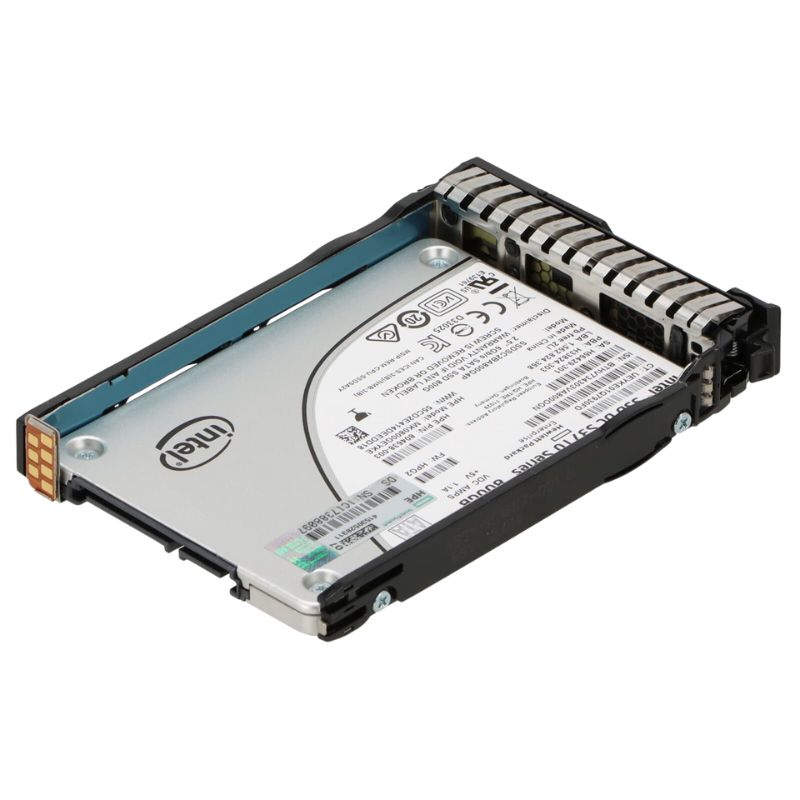
HPE 804625-B21 Value 3d TLC Read Intensive 800GB SATA 6GBPS SSD. New Sealed in Box (NIB) with 3 years Warranty
The HPE 804625-B21 800GB SATA-6GBPS Mixed Use-2 SFF SC Solid State Drive represents a focused balance between cost-efficiency and enterprise-grade endurance, explicitly designed for modern server landscapes where mixed workload performance and sustained reliability are both required. This category entry examines the drive’s role within HPE’s storage portfolio, clarifies the practical meaning of Mixed Use-2 endurance classification, and situates the 800GB SFF SC SATA SSD among the options for accelerating database operations, virtualization layers, read/write hybrid applications, and tiered storage strategies. The HPE 804625-B21 is optimized for deployment in compact SFF (small form factor) servers, blade enclosures, and storage-dense arrays where the 2.5-inch short (SC) profile and SATA-6Gbps interface provide straightforward compatibility with legacy and current HPE ProLiant systems.
The core technical identity of the HPE 804625-B21 is defined by its 800GB capacity, SATA-6GBPS (SATA III) interface, and Mixed Use-2 endurance rating. SATA-6Gbps continues to be a robust choice for many enterprise and edge applications, offering wide compatibility with existing server controllers and enabling hot-swap readiness in HPE-certified chassis. The SFF SC form factor denotes a 2.5-inch short height drive engineered to fit high-density server bays. Internally, this SSD leverages enterprise-grade NAND and controller firmware tuned to deliver stable I/O under mixed read/write patterns typical of virtualization hosts, mail servers, and transactional systems. HPE’s factory validation and firmware optimization help ensure that the SSD behaves predictably under HPE Smart Array controllers and platform management tools, maintaining predictable performance and easier integration into existing monitoring workflows.
“Mixed Use-2” is a practical endurance class indicating the drive is engineered to tolerate a higher level of write activity than read-intensive models, but it is not in the highest tier reserved for heavy mixed or write-intensive enterprise SSDs. Mixed Use-2 drives are intended for environments with a measurable amount of sustained writes combined with reads—typical of multi-tenant virtualization, database caching, logging, and application servers where the workload oscillates between reads and writes rather than being predominantly read-heavy. The 800GB capacity offers a balance between usable storage and endurance; capacity decisions influence Write Amplification and over-provisioning strategies, factors that in turn affect the drive’s lifespan. Administrators deploying these drives should plan for realistic write workloads, apply appropriate RAID and tiering strategies, and leverage HPE firmware and monitoring to manage endurance over the lifespan of the hardware.
Performance for HPE 804625-B21 devices centers around consistent low-latency responses and steady throughput in SATA-limited environments. While NVMe alternatives offer higher raw bandwidth, SATA-6Gbps SSDs still deliver substantial performance improvements over spinning media, particularly in IOPS-sensitive operations. The drive’s controller firmware typically focuses on optimizing small-block random I/O mixed patterns and maintaining predictable latency under queue depth typical of server workloads. For database index operations, metadata-heavy tasks, and small-file transactions common to web and application servers, this SSD class helps reduce request latency and improves transaction consistency compared to HDD tiers. When architecting storage stacks, administrators should consider queue depth, controller settings, and the benefit of caching layers to maximize the drive’s effective throughput within the SATA interface ceiling.
The small form factor (SFF) SC design is a strategic choice for data centers pursuing higher drive counts per chassis. The 2.5-inch short profile reduces wasted physical space while enabling more flexible drive bay designs in dense server platforms. In blade systems or compact rack servers, the SFF SC drive allows administrators to increase parallelism—more spindles or SSDs per node—without significantly altering thermal or power planning. The smaller physical footprint also facilitates easier replacement and lower mechanical strain during hot-swap operations. HPE’s mechanical and electrical spec adherence ensures that 804625-B21 drives fit cleanly into ProLiant and HPE-certified enclosures with the expected hot-plug behavior and drive LED signaling for status and diagnostics.
Compatibility is a critical factor for enterprise procurement and lifecycle management. The HPE 804625-B21 SSD is validated against HPE ProLiant servers and storage arrays, meaning firmware revisions, SMART attributes, and TRIM/discard behaviors are tested to align with HPE management software and RAID controllers. Integration with HPE iLO and system health monitoring enables proactive reporting of drive health, predictive failure analysis, and firmware update paths that are safer to deploy in production. For organizations already invested in HPE’s ecosystem, choosing drives from the same OEM reduces the complexity of support escalations and simplifies future warranty claims. Ensuring that drives are enrolled in HPE’s firmware update channels can also secure performance improvements and bug fixes without the risk of cross-vendor incompatibilities.
Enterprise SSDs such as the HPE 804625-B21 include multiple layers of data protection and reliability-focused features. On the hardware level, advanced ECC (error-correcting code) and wear-leveling routines help maintain data integrity across NAND cells. Firmware-level power-loss protection strategies are common in enterprise SSDs; these mitigate the risk of partial writes and metadata corruption during unexpected power events, which is particularly important in RAID and multi-drive configurations. SMART telemetry, background scan routines, and end-to-end data path protection are additional mechanisms that increase confidence in long-term deployment. Administrators should monitor SMART attributes exposed by the drive to detect rising media error rates or wear indicators and plan drive replacements before user-impacting failures occur.
The HPE 804625-B21 shines in a variety of deployment scenarios. In virtualization hosts, the drive can be used as local datastore backing for guest OS disks where mixed I/O patterns are expected. Application servers running containerized microservices often require consistent small-block I/O performance; mixed-use SSDs reduce latency spikes and improve concurrency. For read-heavy but moderately write-involved cache tiers, the Mixed Use-2 rating provides an attractive compromise between cost and durability. Additionally, the drive is suited as a tier within a hybrid storage architecture where SSDs operate as an intermediate cache between NVMe front-end caches and bulk HDD capacity. Edge and remote-office servers, where resilience and compactness are priorities, can leverage the SFF profile for efficient space utilization without sacrificing reliability.
Comparing the HPE 804625-B21 to read-intensive SATA drives highlights trade-offs between endurance and cost; read-intensive drives deliver higher capacity-per-dollar for workloads dominated by reads but will prematurely wear under sustained writes. Conversely, NVMe SSDs provide superior latency and throughput and are preferable for top-tier database workloads or heavy parallel I/O. However, NVMe’s higher cost and sometimes more complex integration requirements mean SATA Mixed Use-2 SSDs remain compelling for many common enterprise workloads where NVMe’s advantages are unnecessary. When making procurement decisions, IT architects should analyze workload IOPS profiles, latency sensitivity, capacity requirement, and budget constraints. In many cases, deploying a mix—NVMe for performance-critical tiers and Mixed Use SATA for general-purpose datastore—produces the best total cost of ownership.
Software-defined storage platforms commonly rely on predictable individual drive performance to achieve consistent cluster behavior. The HPE 804625-B21 works well within SDS frameworks when used as a storage tier designed for mixed workloads. Its predictable latency and endurance profile can be used to create storage classes within policy-based orchestration systems, enabling automated data placement across tiers. In hybrid cloud strategies, these drives can act as on-premises accelerators for workloads that require low-latency local processing with the option to tier colder data to cloud object storage. Consistent telemetry and monitoring interfaces that expose health and performance metrics aid in integrating these drives into centralized observability and orchestration stacks.


 Contact Us
 Information
 Catalog
 Solid State Drives (SSD)
 Network Switches
 Hard Disk Drives
 HBA & Controllers
 PC & Servers
 PC & Server Memory
 CPU & Processors
 Network Routers
 Power Supplies
 Tape Drives & Libraries
 Network Devices
 Computer & Network Cables