(7% discount is applied at checkout)
Cart is empty
Your go-to destination for cutting-edge server products


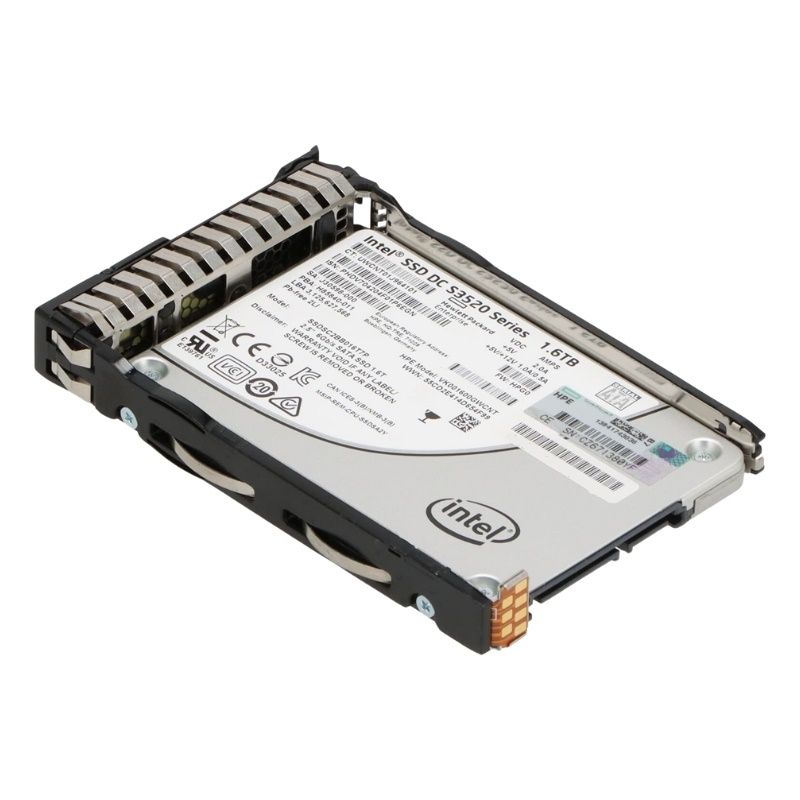
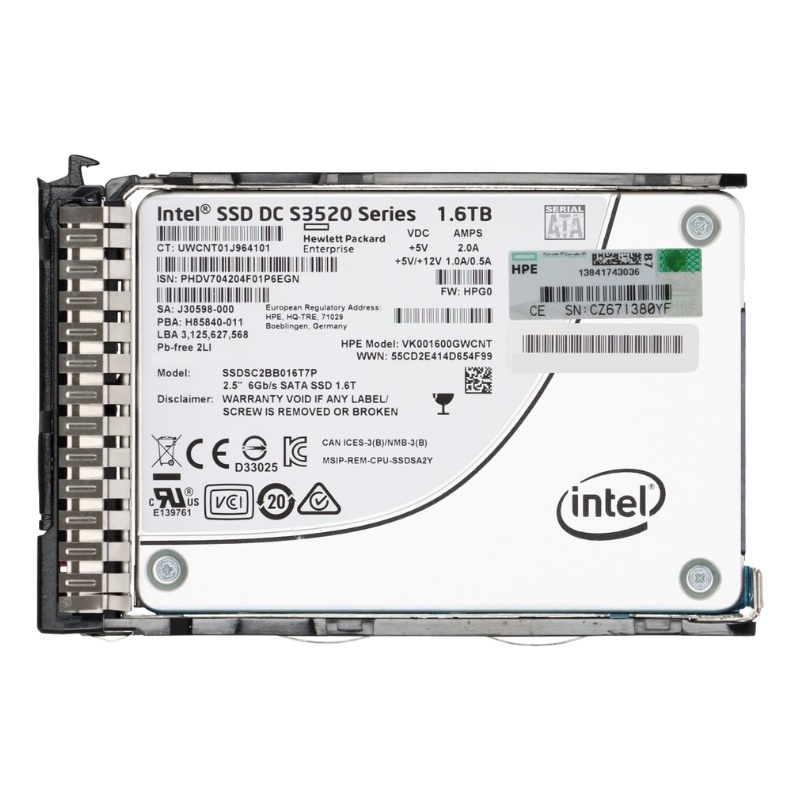
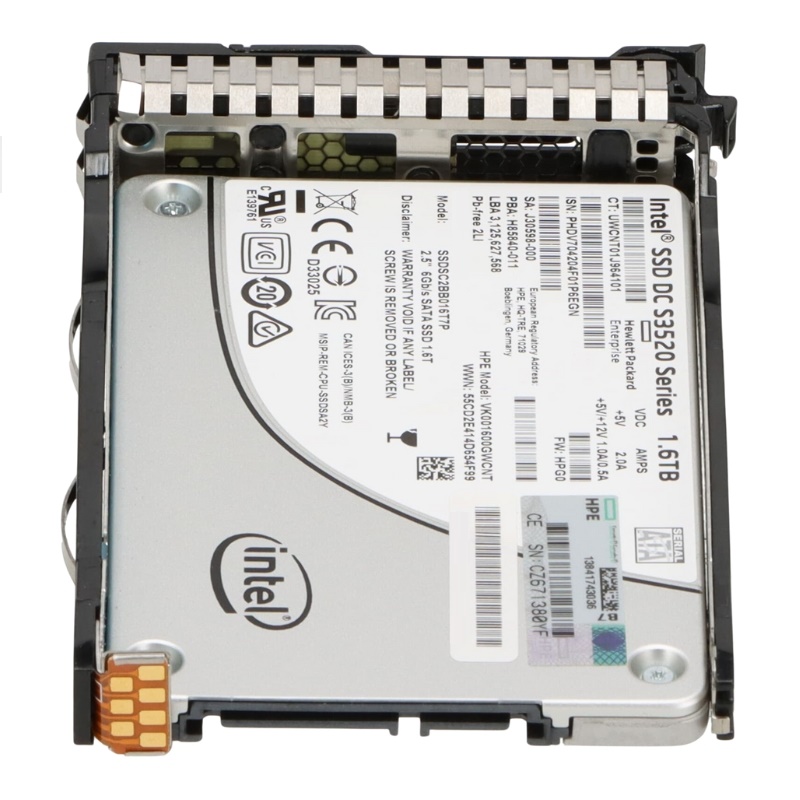
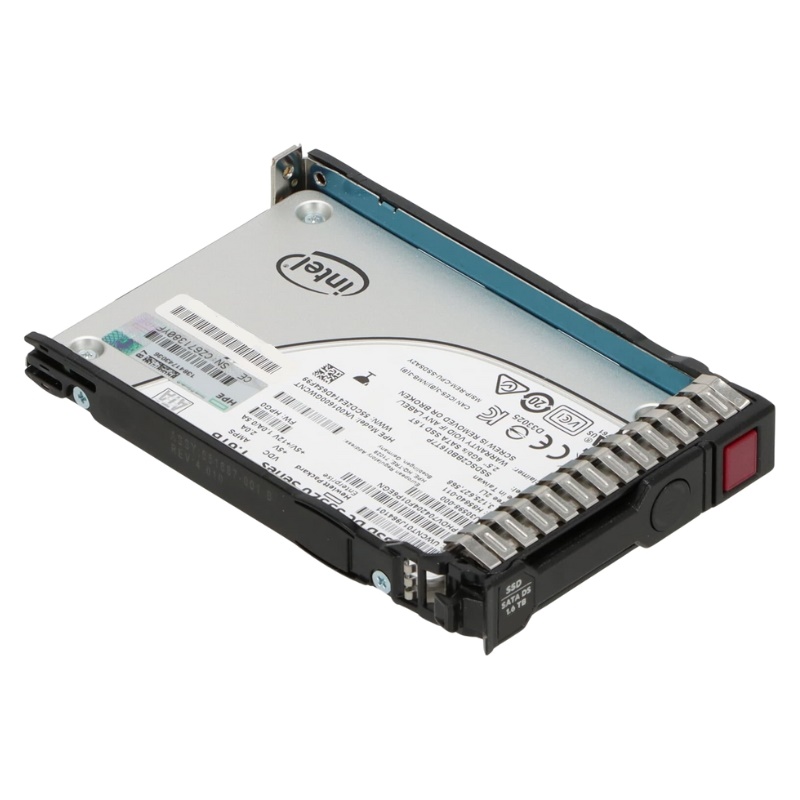
HPE 804631-B21 1.6TB SATA 6GBPS SC Mixed Use Solid State Drive. Excellent Refurbished with 1 year replacement warranty
The HPE 804631-B21 1.6TB SATA-6GBPS Mixed Use-2 SFF SC Solid State Drive is positioned as a robust, high-density storage building block for modern enterprise environments that demand balanced performance, endurance, and cost-efficiency. Designed in a small form factor to fit dense server bays and storage arrays, this Mixed Use-2 class drive targets mixed read/write workloads where predictable latency, consistent IOPS, and sustained throughput are essential for database servers, virtualization hosts, email systems, and tiered storage pools. The 1.6TB capacity offers an attractive middle ground between cost per gigabyte and usable capacity per bay, enabling IT teams to increase usable flash capacity without sacrificing rack density or raising cooling and power budgets dramatically. As an HPE part, the drive integrates with HPE ProLiant and HPE storage enclosures, ensuring firmware-level compatibility, support for HPE Smart Carrier or sleds, and the ability to take advantage of HPE firmware updates and support services when the drive is used in supported HPE platforms.
At 1.6TB of usable capacity, the drive offers ample space for application data, logs, and cache tiers. The SATA-6GBPS interface (SATA III) provides broad compatibility with legacy and modern server controllers, enabling plug-and-play replacement and upgrade paths in environments where SAS controllers are not required. The SFF designation indicates a 2.5-inch small form factor that is ideal for high-density blade servers and rack-mounted 1U/2U systems. The SC notation, as implemented on HPE parts, ensures mechanical and firmware compatibility with HPE carriers and sleds, simplifying installation and serviceability in HPE-specific chassis designs.
The Mixed Use-2 classification places the drive in a category optimized for a balanced workload profile where both read and write operations occur regularly. This makes the drive suitable for mixed application scenarios such as virtual desktop infrastructure, small to medium-sized databases, transactional applications, and multi-tier caching layers. In practice, administrators should expect strong random read performance to accelerate application load and query response times, together with resilient random write handling to support transactional durability and frequent updates. Sequential throughput at SATA-6GBPS remains efficient for bulk data movements, backups, and storage tiering operations that occasionally move large contiguous blocks of data. Latency metrics for enterprise-grade mixed-use SSDs are typically orders of magnitude lower than spinning disks, yielding faster response times and improving consolidation ratios on virtualization hosts.
Endurance in Mixed Use-2 SSDs is engineered to balance write endurance and cost. The 1.6TB HPE drive is expected to deliver sustained DWPD (Drive Writes Per Day) rates suitable for mixed workloads common in enterprise deployments. HPE-qualified firmware and quality-control processes contribute to enterprise-level mean time between failures and reduced risk of unplanned downtime. Additionally, the drive commonly includes power-loss protection features, background garbage collection, and wear-leveling algorithms designed to preserve performance consistency as the drive ages. For data center architects, the endurance profile permits inclusion of these drives in tiers that receive moderate write pressure while relying on higher-endurance drives only where sustained high write workloads are present.
One of the most compelling aspects of the 804631-B21 part is its compatibility within the HPE ecosystem. When deployed in HPE ProLiant servers, BL series blades, or HPE storage enclosures that accept SFF drives, the product benefits from HPE-validated firmware, diagnostic integration, and the ability to be managed by HPE OneView, iLO, or similar HPE management tools. This tight integration reduces the administrative overhead of firmware regressions and ensures that system-level telemetry properly reflects the drive's health metrics. HPE-specific features such as predictive failure alerts, integration with HPE support contracts, and streamlined RMA processes make this drive attractive to organizations that prioritize consistent vendor support and lifecycle management.
Virtualization is a natural fit for the 1.6TB Mixed Use-2 SSD. The low-latency profile and strong random IOPS enable higher VM density per host and reduce virtual machine boot storms and storage-latency-induced performance variability. For desktop virtualization and mixed application consolidation, the drive allows IT teams to provision fast local storage for hot VM tiers while preserving budget for higher endurance or NVMe drives in the hottest cache layers. The SFF form factor supports dense server configurations, offering the physical density required to scale virtualized clusters without reducing available front-panel bays for additional storage.
Transactional databases that require fast random reads and consistent random writes can leverage these Mixed Use-2 drives as a primary storage tier or as an intermediate cache layer. The 1.6TB capacity is useful for storing working sets, indexes, or log files that require low-latency persistence. By placing active indices and hot tables on SSD tiers such as this HPE drive, database administrators can reduce query latency and offload read-heavy workloads from spinning disks or slower tiers. For hybrid storage designs, this drive is an efficient building block for creating an automated tiering strategy where frequently accessed data remains on SSD while colder data is migrated to higher-capacity, lower-cost HDD tiers.
The 2.5-inch small form factor is a key advantage for dense server deployments. SFF drives pack more capacity per rack U when compared to larger form factor drives and contribute to reduced space consumption in data centers. Their lower spindle count and compact electronics often translate into lower power consumption per gigabyte and reduced cooling requirements, which helps data center operators manage operational expenses. Drive sleds or carriers in HPE chassis are designed to optimize airflow around SFF drives, so when planning for large arrays of these SSDs, architects should consider front-to-back airflow patterns and the impact of increased flash density on chassis cooling designs.
NVMe drives offer significantly higher raw performance and lower latency but at a higher cost per gigabyte and, in some cases, higher power consumption. The HPE 804631-B21 SATA-6GBPS Mixed Use-2 drive occupies a pragmatic middle ground: it is more performant and reliable than HDDs for mixed workloads while being more cost-effective at capacity than many NVMe options. For many organizations, a hybrid architecture combining NVMe for the hottest tiers and SATA mixed-use SSDs for the warm tiers provides an optimal balance of performance, capacity, and cost. The SATA interface also eases migrations in environments where controller backplanes or legacy software stacks cannot be rapidly modernized to NVMe.


 Contact Us
 Information
 Catalog
 Solid State Drives (SSD)
 Network Switches
 Hard Disk Drives
 HBA & Controllers
 PC & Servers
 PC & Server Memory
 CPU & Processors
 Network Routers
 Power Supplies
 Tape Drives & Libraries
 Network Devices
 Computer & Network Cables