(7% discount is applied at checkout)
Cart is empty
Your go-to destination for cutting-edge server products


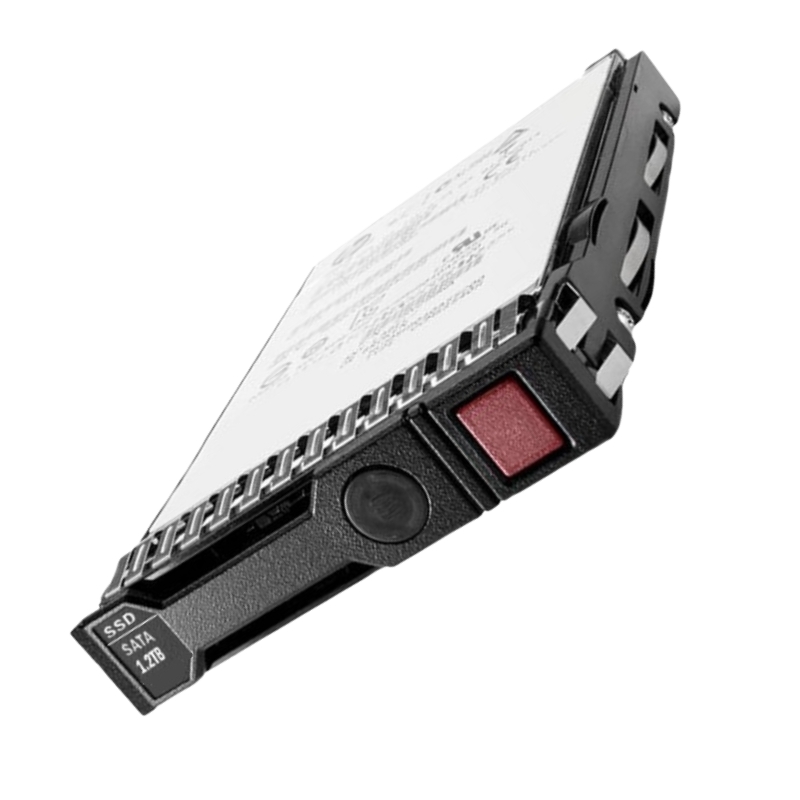
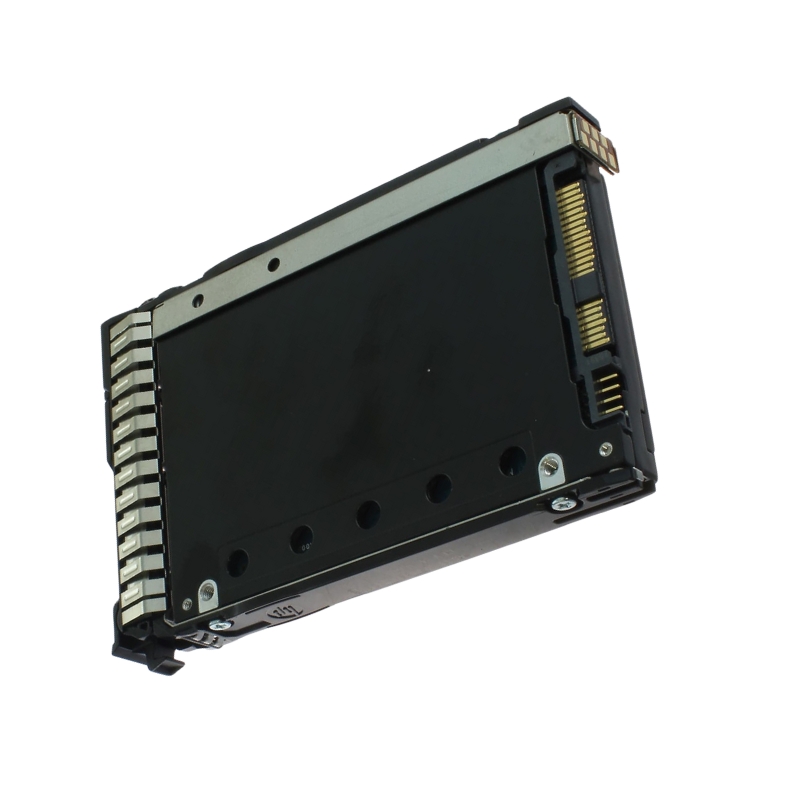
HPE 804677-B21 1.2TB SATA 6GBPS SSD Write Intensive SC SFF Hot Plug. Excellent Refurbished with 1 year replacement warranty
The 804677-B21 HPE 1.2TB SATA 6Gb/s SSD WI SC SFF HP series represents a targeted class of enterprise-grade solid-state drives engineered to meet the demanding needs of storage-intensive applications. Positioned within HPE's portfolio for small form factor (SFF) server environments, these drives combine high-density capacity with SATA 6Gb/s interface performance and write-intensive endurance characteristics. Buyers researching storage upgrades, data center refresh projects, or server consolidation initiatives will find the category focused on reliability, predictable latency, and sustained write throughput—qualities that matter when workloads include heavy logging, caching, or transactional databases.
The category emphasizes SATA 6Gb/s connectivity, a widely supported and cost-effective interface that provides compatibility across a broad range of HPE ProLiant and compatible server platforms. SATA 6Gb/s enables sustained sequential operations and consistent random I/O responses for mixed workloads, helping administrators extract predictable performance without the complexity sometimes associated with newer interfaces. The 1.2TB capacity point strikes a balance between cost per gigabyte and usable density for tiered storage strategies, offering a practical option for hot tiers or mixed-usage tiers where write endurance and consistent performance are prioritized over raw top-line throughput.
A defining feature of this category is the write-intensive endurance specification. Drives designated WI are manufactured and validated to tolerate higher total bytes written (TBW) over the product lifetime compared with consumer or read-centric enterprise models. This endurance profile makes them suitable for applications that impose continuous write pressure: database commit logs, real-time analytics ingestion, virtualization swap activity, and write-heavy caching layers. The WI label signals that the drive vendor optimized flash management algorithms, over-provisioning, and firmware to maintain predictable performance under repeated write cycles.
The SFF design is tailored to dense server platforms and blade chassis where drive bay real estate is constrained but capacity needs remain significant. Small form factor SSDs reduce the physical footprint while enabling modern server designs to host more storage devices per chassis, increasing aggregate throughput and capacity without proportionally raising power or cooling requirements. For enterprises aiming to densify storage or maximize the storage-to-rack-unit ratio, SFF SSDs in the 1.2TB range provide a practical path to achieve higher usable capacity within existing hardware constraints.
When evaluating the 804677-B21 category for deployment, purchasers should examine both steady-state performance figures and real-world latency behavior. Enterprise administrators often prioritize tail latency—how the drive performs under congested conditions—over peak sequential numbers. Drives built for write-intensive workloads typically deliver a more consistent I/O response curve and maintain lower variability under sustained writes. This steadiness reduces application-level timeouts, improves database commit reliability, and generally produces a smoother user experience for end-users depending on transactional systems.
Different applications value throughput or IOPS differently. Large sequential transfers, such as media streaming or bulk backups, benefit from throughput-focused metrics, whereas database operations and virtual machine storage often hinge on IOPS and low random access latency. The 1.2TB SATA WI class sits in a middle ground: capable of delivering respectable sequential throughput thanks to the 6Gb/s interface, yet tuned for higher endurance and consistent small-block random performance that favors transactional services. Matching the drive’s performance profile to the workload type ensures the investment yields tangible operational improvements.
For write-heavy services, the ability to remain performant under prolonged stress is critical. Drives in this category incorporate firmware strategies like wear leveling, background garbage collection, and intelligent over-provisioning to sustain write speed across the drive’s lifespan. Administrators replacing older rotating media or mixed-tier arrays will notice reduced variability in response times and a smaller probability of write-induced performance cliffs. This consistency is particularly valuable for clustered database nodes and scale-out file systems where one troubled storage node can degrade cluster-wide performance.
Enterprises selecting HPE-labeled storage components often do so for the vendor-validated reliability and compatibility they provide. The 804677-B21 family is typically accompanied by enterprise-focused features such as power-loss data protection, advanced error-correcting code (ECC) handling, and SMART monitoring capabilities. These features help protect in-flight data during unexpected power events, detect and correct bit errors, and provide administrators with health telemetry to schedule proactive maintenance before failures manifest as data loss or downtime.
Power-loss protection mechanisms aim to prevent data corruption by ensuring that data buffered in volatile caches is safely committed to non-volatile flash in the event of power interruption. In enterprise deployments where uptime and data integrity are non-negotiable, these mechanisms increase confidence that sudden outages will not leave filesystems or databases in inconsistent states. Because write-caching strategies can alter perceived performance, administrators should review how these drives interact with server-level cache configurations and RAID controllers to achieve the intended balance of speed and safety.
SMART metrics and vendor-specific telemetry are essential tools for data center teams practicing predictive maintenance. By tracking indicators such as reallocated sector counts, wear-leveling statistics, and program/erase cycle averages, operators can forecast drive retirement timelines and plan non-disruptive replacements. Integration with existing monitoring stacks or HPE’s management utilities allows storage teams to set alerts, automate inventory updates, and avoid unexpected drive failures during critical business hours.
One advantage of selecting HPE-branded or HPE-qualified drives is the compatibility validation across HPE ProLiant server families and configured RAID controllers. Compatibility reduces the operational friction of firmware mismatches and controller incompatibilities that can occur when mixing unsupported third-party components. For environments that require vendor support or warranty coverage, maintaining a bill of materials with validated HPE components often simplifies support escalations and reduces mean time to resolution in the event of drive-related incidents.
Firmware plays a pivotal role in storage behavior. HPE-tested firmware images for drives in this category often contain optimizations and safeguards tailored to HPE controllers and backplanes. Certified configurations ensure that drive firmware communicates correctly with host controllers and that power management states are aligned to the server’s thermal and power profiles. When possible, organizations should deploy the recommended firmware baseline to benefit from performance enhancements and resolved interoperability issues.
The SFF form factor combined with HPE-compatible carriers typically supports hot-swap serviceability—allowing drives to be replaced without powering down the host. Hot-swap capability reduces maintenance windows and simplifies in-situ replacements for failing components. Clear labeling, predictable carrier behavior, and documented replacement procedures help technicians perform drive swaps safely and efficiently, minimizing the impact on dependent applications.
This category of SSDs fits a variety of deployment scenarios across modern data centers. Common use cases include primary storage for write-heavy databases, local scratch and cache volumes for compute nodes, boot volumes with high update frequency, and mixed-use tiers within hybrid storage arrays. The drives are also a suitable choice for virtualization hosts where numerous virtual machines generate sustained small-block writes and I/O spikes. By placing the right workloads on these drives, administrators can extract greater lifetime value and better ROI compared with using lower-endurance or consumer-class alternatives.
Transactional databases demand low-latency random writes and predictable commit times. WI-class SSDs provide the endurance and write consistency that database administrators look for when tuning performance and planning maintenance. The reduced variability in write latency helps database engines maintain steady transaction throughput and reduces the likelihood of timeouts or latency-related contention.
Virtual desktop infrastructure (VDI) and consolidated virtualization hosts create patterns of bursty, small-block write I/O. Drives tuned for write endurance accommodate these patterns by resisting premature wear and maintaining stable throughput during spikes. Using the 1.2TB SFF drives to host frequently-sleeping virtual machines, swap files, and ephemeral storage can dramatically improve user experience, particularly during login storms or patching windows.
In space- or power-constrained environments—such as edge compute nodes or branch office servers—the SFF drives’ small footprint and efficiency become advantages. The robust endurance profile reduces the need for frequent onsite maintenance and helps remote devices operate reliably over extended intervals. For organizations managing fleets of remote servers, predictable drive lifetime reduces spare-part complexity and helps standardize replacement cycles.
Choosing the optimal drive capacity requires balancing usable storage needs against endurance constraints. Larger-capacity SSDs often provide improved endurance in TBW terms because the same workload spreads across more physical NAND cells, but they also increase the financial outlay per unit. The 1.2TB capacity is frequently chosen because it delivers a useful capacity-to-endurance ratio: enough storage for hot datasets without incurring the steeper cost of the highest-capacity enterprise drives.
Understanding how the 804677-B21 category compares with other storage options helps teams architect balanced storage tiers. Compared to consumer SATA SSDs, enterprise WI drives deliver higher endurance, better telemetry, and enterprise-focused features such as power-loss protection. Versus NVMe or SAS drives, SATA 6Gb/s units tend to be less expensive and simpler to deploy but have lower peak throughput and higher I/O latency ceilings. The right choice depends on whether the priority is raw performance, latency-sensitive scale, or predictable endurance at a competitive price point.
NVMe brings superior latency and parallelism, but it also requires compatible host hardware and may carry a higher price tag. For many established server fleets and mixed-vendor environments, SATA remains a pragmatic option: widely supported, easier to integrate, and sufficient for workloads that value write endurance and consistent performance over ultra-low latency. Where existing infrastructure relies on SATA backplanes or certified HPE controllers, the 1.2TB SATA WI drives offer a low-friction upgrade path with measurable benefits.
SAS drives provide additional features such as dual-port connectivity and often higher sustained throughput, but they also come with higher acquisition costs and processing overhead. When dual-host access or multi-path failover is required, SAS or NVMe-oF alternatives might be more appropriate. Conversely, for single-host application volumes where endurance and cost-efficiency are primary, SATA WI drives remain an attractive middle ground.
To maximize the lifespan and performance of drives in this category, operators should apply several best practices. Maintain up-to-date firmware consistent with HPE recommendations, monitor SMART metrics and vendor telemetry, and configure over-provisioning where supported to preserve endurance. When using RAID, select RAID levels that complement the workload characteristics and consider RAID controller write-back cache behavior in conjunction with the drive’s power-loss protection strategy. Finally, plan for replacement thresholds that prioritize preemptive swap-out to avoid mid-cycle failures.
Before mass deployment, validate the drives in a controlled test environment that mirrors production workloads. Confirm that firmware revisions are in alignment with HPE compatibility lists and that controller firmware recognizes the drive health attributes properly. Running burn-in tests reflective of real operating patterns helps reveal compatibility quirks and ensures the drives behave as expected under sustained writes.
Even with high-quality enterprise drives, robust backup and redundancy practices remain essential. Regular backups, snapshotting strategies, and multi-node replication reduce the operational impact of any single component failure. Drives in the WI category should be integrated into a broader data protection plan that includes periodic verification of recovery procedures and offsite replication when required by business continuity policies.


 Contact Us
 Information
 Catalog
 Solid State Drives (SSD)
 Network Switches
 Hard Disk Drives
 HBA & Controllers
 PC & Servers
 PC & Server Memory
 CPU & Processors
 Network Routers
 Power Supplies
 Tape Drives & Libraries
 Network Devices
 Computer & Network Cables