(7% discount is applied at checkout)
Cart is empty
Your go-to destination for cutting-edge server products
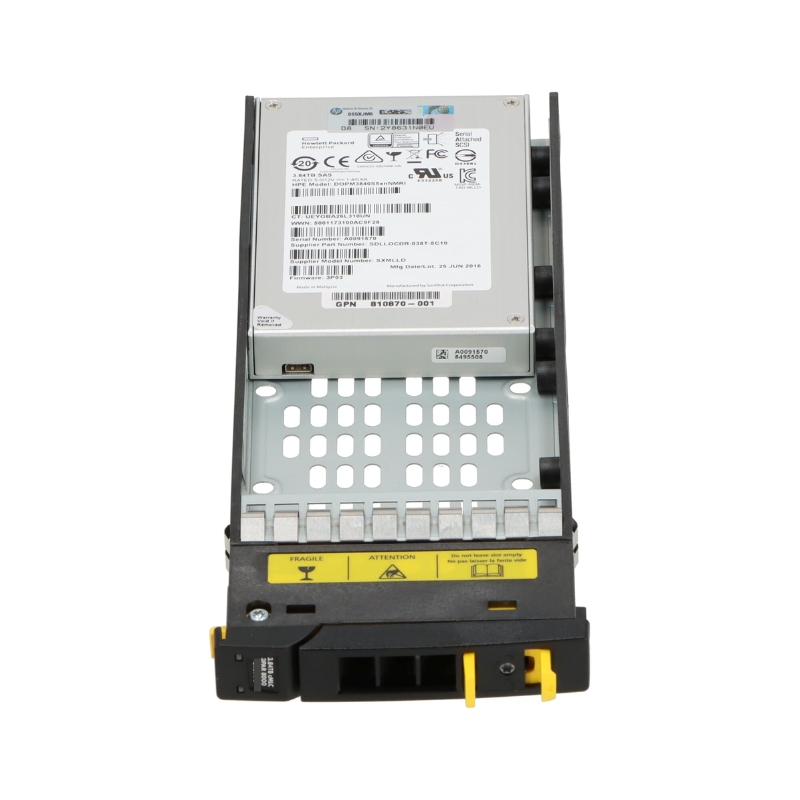


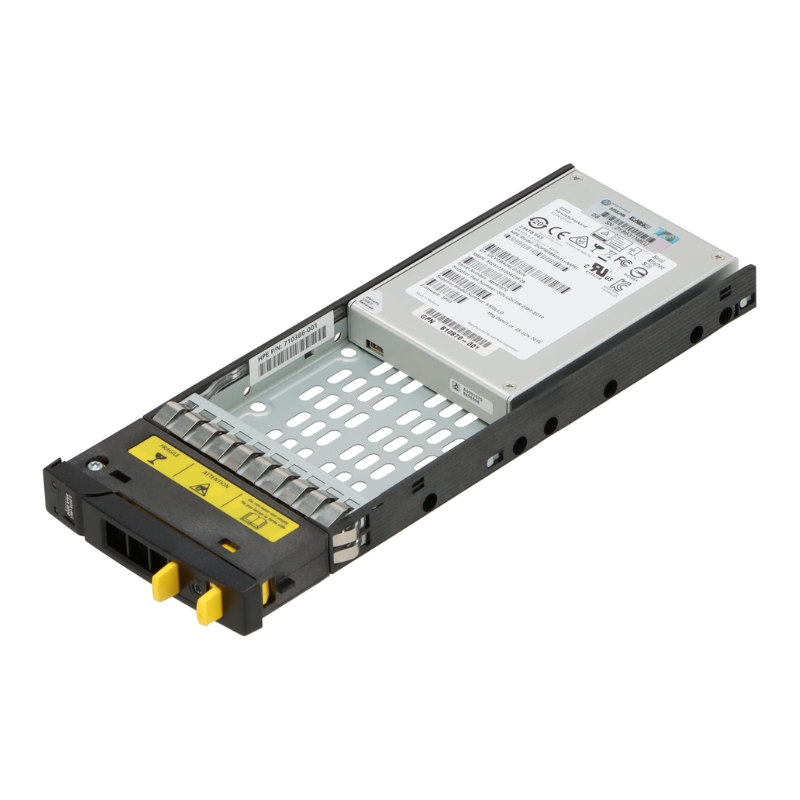
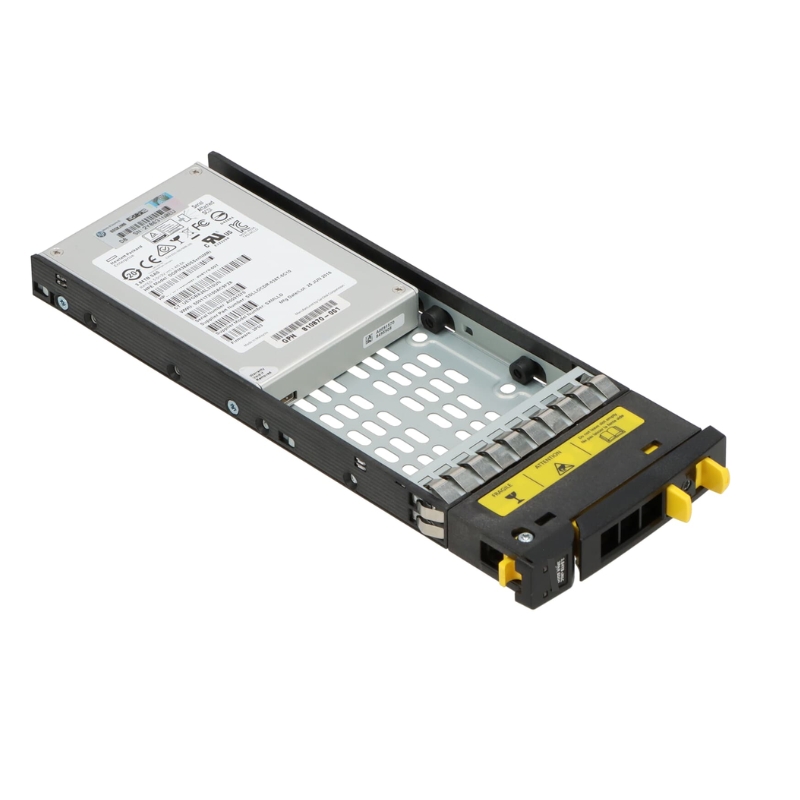
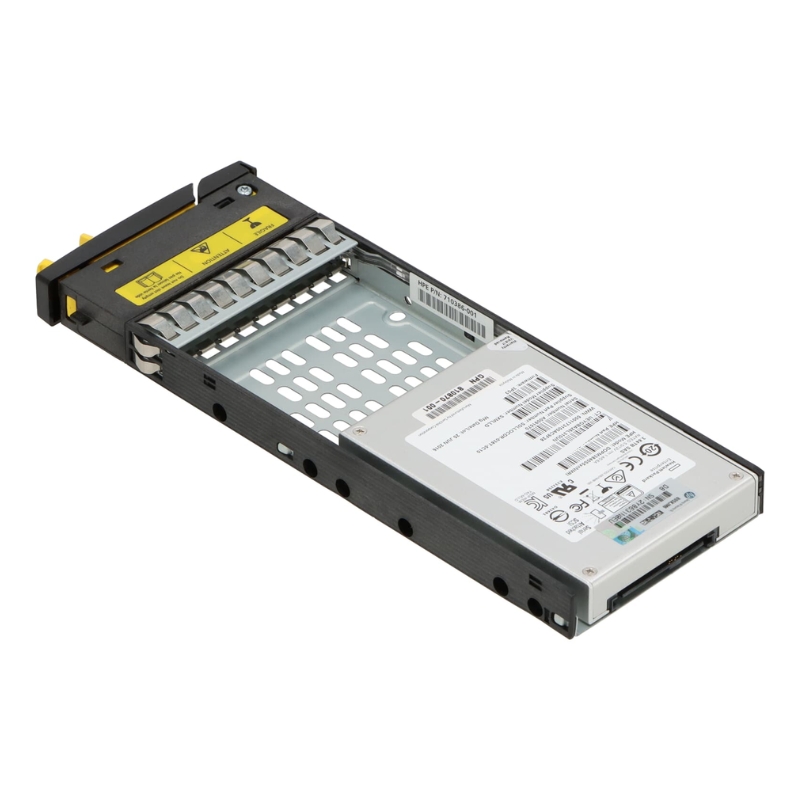
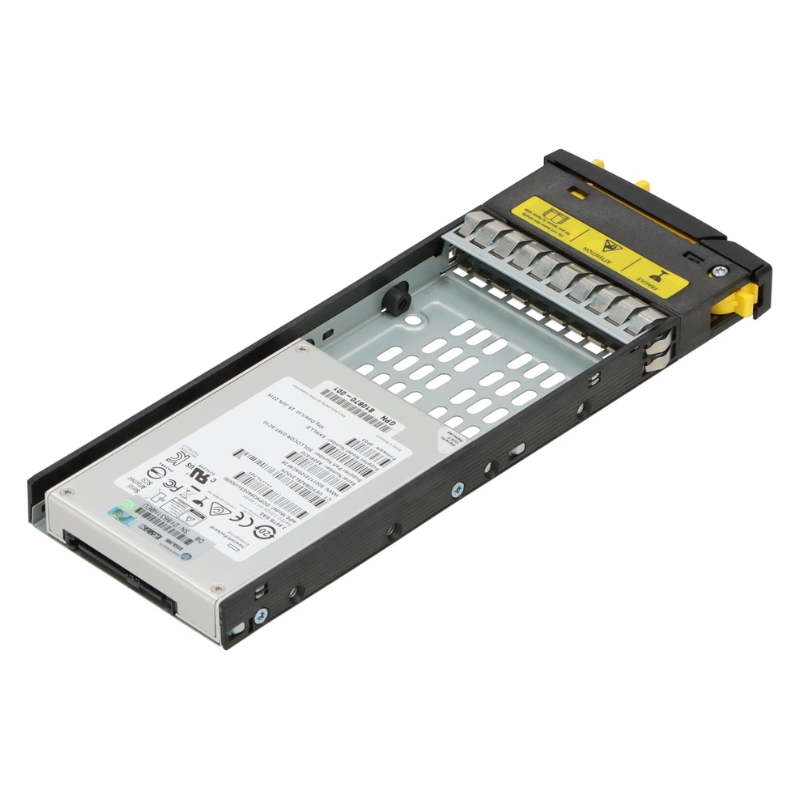
HPE 810773-001 3.84TB Solid State Drive 3PAR StoreServ 8000 SAS 6GBPS. Excellent Refurbished with 1 year replacement warranty
Details of HPE 810773-001 SSD Drive
The 810773-001 HPE 3PAR StoreServ 8000 SAS 6Gbps 3.84TB SSD is an enterprise-class 2.5-inch SFF solid state drive designed and qualified for use in HPE 3PAR StoreServ 8000 storage arrays. This category centers on a high-capacity SAS SSD that balances sustained throughput and low latency for mixed workload consolidation, virtualization, and latency-sensitive database and VDI environments. The drive is available under HPE part number 810773-001 and is commonly referenced by internal drive model codes such as DOPM3840S5xnNMRI and related HPE spare numbers; it ships as a hot-swap tray-compatible 2.5-inch SFF module optimized for the 3PAR platform.
This SSD is built in the small form factor 2.5-inch (SFF) tray used across HPE 3PAR StoreServ 8000 enclosures and is designed for hot-swap replacement and tray-level management common to HPE arrays. The drive employs a Serial Attached SCSI (SAS) interface at 6 Gb/s (SAS-2) for compatibility with the 3PAR controller backplane, ensuring robust enterprise connectivity and native array-level management features. Physically, the 2.5-inch SFF form factor allows denser drive population per chassis bay compared with 3.5-inch drives while providing the mechanical and thermal controls expected in enterprise racks. :contentReference[oaicite:1]{index=1}
The 810773-001 model provides 3.84 terabytes of raw SSD capacity. It typically uses multi-level cell NAND that HPE and refurbishers often describe as CMLC (consumer multi-level cell) or enterprise-optimized MLC variants depending on the original production run and firmware used for the 3PAR platform. This capacity point was engineered to fit use cases that require large-density flash tiers within a 3PAR array, offering a compromise between cost per GB and sustained write endurance. When planning an array build or expansion, the 3.84TB capacity enables both high-density all-flash nodes and hybrid nodes where SSDs provide caching and tiering benefits.
The drive's SAS interface operates at 6Gb/s, which is the platform-native speed for many legacy 3PAR 8000 controllers and provides predictable performance under sustained enterprise loads. While newer drives may adopt 12Gb/s interfaces, the 6Gb/s SAS specification on this drive ensures compatibility with the entire 3PAR 8000 family without controller or backplane negotiation issues. Performance characteristics of the drive are tuned for I/O profiles common in virtualization, database transactions, and mixed read/write patterns where low latency and consistent IOPS are crucial. Field listing and OEM documentation emphasize sustained throughput and predictable latency as key differentiators for drives certified into the 3PAR ecosystem.
Because the 810773-001 is an HPE-qualified component for 3PAR StoreServ, it participates in array-level features such as thin provisioning, zero-detection, adaptive optimization tiering, and integrated RAID. When installed in a 3PAR node, the drive benefits from the storage system's firmware intelligence — including background scrubbing, wear-leveling coordination with the array, and drive-level health telemetry forwarded to HPE management consoles. These integrations help administrators maximize performance and predictability while simplifying drive lifecycle management from firmware updates to spare handling. HPE's documentation and parts database list the drive in the approved drive families for the 3PAR 8000 series, indicating full compatibility and support pathways.
This category is ideal for data centers targeting consolidation of mixed workloads: virtual machine farms, latency-sensitive OLTP databases, and high-density caching layers. The 3.84TB capacity allows architects to reduce the number of drives required for a given flash tier, which can lower the total number of spindles and overhead for cooling and power. In all-flash 3PAR deployments, these drives can act as primary data carriers, while in hybrid deployments they serve as hot tiers or dedicated acceleration layers for I/O-intensive datasets. The SAS interface and HPE certification make them a predictable choice for enterprises that require vendor-validated configurations for support and warranty coverage.
For optimal results with 3PAR arrays, administrators should align drive firmware versions with HPE recommended releases, distribute hot data across multiple SSDs to avoid localized wear amplification, and configure thin provisioning and adaptive optimization tiers to ensure that the SSD layer receives the right mix of block sizes. Proper array layout, including parity group sizing and concatenation choices, impacts how SSDs are used by the controller's striping algorithms; administrators must follow HPE guidance for RAID/RAID-like configurations to ensure consistent I/O and fault tolerance. Monitoring array telemetry for sustained write patterns and reported spare pool usage helps avoid unexpected performance degradation due to NAND wear or background rebuilds.
The canonical HPE part number is 810773-001. Vendors and third-party listings commonly reference related internal or option PNs such as K2P91B, K2P91A, DOPM3840S5xnNMRI, and preferred spare 873101-001. Systems engineers and procurement specialists should verify the exact part/option number when ordering spares, as different firmware revisions, vendor labels, or tray assemblies may exist for drives that are functionally similar. HPE PartSurfer and official 3PAR parts documentation list 810773-001 as the approved 3.84TB SAS SSD for the StoreServ 8000 family, which ensures proper matching with the array controllers.
Retail channels for this category include both brand-new and refurbished units. Some suppliers offer refurbished 810773-001 drives with short-term warranties suitable for budget-conscious refresh projects, while authorized HPE channels may supply new units with HPE-backed coverage. Product listings often indicate condition and warranty length; buyers should confirm whether a drive marked as refurbished has been reconditioned to HPE specifications and whether documentation such as a certificate of refurbishment or burn-in test results is available. For production workloads carrying critical SLAs, an OEM-sourced or HPE-certified new unit is typically recommended to preserve full support entitlements.
When installing multiple 3.84TB SSDs in a dense 3PAR chassis, plan for cumulative thermal output and power draw. SSDs produce less heat than spinning media per GB, but high-density flash tiers still require monitoring of chassis inlet temperatures and airflow. HPE 3PAR enclosures have defined airflow paths and cooling policies; adhering to HPE's service manual guidance when populating drive bays prevents thermal throttling and preserves NAND health. Power provisioning in the rack should consider peak drive activity during rebuilds or background garbage-collection events, which can temporarily increase draw across the array. Appropriate rack-level cooling and power redundancy reduce the risk of thermal-induced performance throttling. :contentReference[oaicite:9]{index=9}
HPE 3PAR StoreServ platforms forward drive-level SMART-like telemetry to array management tools, enabling administrators to monitor wear indicators, temperature, and media errors. This telemetry supports predictive maintenance models: drives flagged for declining health can be proactively placed in spare pools and replaced before failure. Organizations should integrate 3PAR monitoring with their broader observability stacks so that alerts and dashboards correlate drive health with application performance. Proactive replacement policies that consider endurance metrics and recorded write amplification will extend array lifetime and avoid emergency rebuild scenarios.
Installing the 810773-001 SSD follows HPE 3PAR StoreServ standard procedures: insert the drive into the appropriate 2.5-inch SFF bay tray, confirm tray latching, and monitor array logs for drive recognition and initial sync behavior. The drives are designed for hot-swap replacement; however, administrators should ensure the array is in a healthy state and that replacement procedures match the HPE recommended steps for spare assignment or online replacement. When removing drives from an array, it is essential to follow the controller's guidance to avoid unintended performance degradation; when inserting spares, verify automatic rebuild behavior and allow the array to complete background tasks before subjecting the newly populated tier to heavy production loads.
Firmware compatibility between drives and 3PAR controllers is a core aspect of maintaining supported configurations. HPE publishes advisories and compatibility matrices that identify which firmware versions and part numbers are supported together; administrators should review those resources prior to mass firmware updates. In some cases, drive firmware in secondhand channels may differ from factory settings — verifying and updating firmware in controlled windows reduces the chance of array interruptions. When purchasing drives through third-party channels, request documentation of firmware state and certification that firmware was not altered in ways that would break 3PAR compatibility.
Organizations concerned with secure decommissioning should consider validated data-erasure processes for SSD media. HPE arrays provide secure erase and sanitization options at the array level, and certified refurbishers often provide proof-of-erasure. When returning drives for warranty or resale, ensure that secure erase steps meet corporate compliance or regulatory standards for data handling. Proper EOL disposal also accounts for environmental and reuse pathways, as certified refurbishers may recondition drives for secondary markets while providing traceable sanitization. When drives are removed from production, maintain documentation that specifies the sanitization mechanism used, the date of erasure, and any chain-of-custody required by your compliance posture.
Common issues reported in the field include drive firmware mismatches, temperature warnings when chassis airflow is obstructed, and occasional media errors that are typically captured by the 3PAR health monitoring stack. When a drive reports errors, administrators should follow HPE troubleshooting guides to capture diagnostic logs, check for known advisories, and initiate support cases if the drive is under warranty. Remedial steps often include validating the tray seating, cross-checking backplane connectors, completing firmware parity checks, and if necessary, arranging for a hot-swap replacement and array-initiated rebuild. For third-party refurbished drives, ensure the supplier provides tested diagnostic data before integrating units into production arrays.
Incorporate expected endurance metrics and projected write volumes into capacity planning for a 3PAR array populated with 3.84TB SSDs. Tracking daily and monthly write rates per logical volume enables realistic projections of when drives will approach wear thresholds. Implement tiering policies so that the SSD tier hosts write-intensive hot data while cooler blocks migrate to lower-cost tiers. Forecasting should also consider likely firmware update windows, spare pool sizes sufficient to cover rebuilds, and procurement lead times — especially if sourcing OEM new drives with longer shipment cycles or refurbished units with variable availability.


 Contact Us
 Information
 Catalog
 Solid State Drives (SSD)
 Network Switches
 Hard Disk Drives
 HBA & Controllers
 PC & Servers
 PC & Server Memory
 CPU & Processors
 Network Routers
 Power Supplies
 Tape Drives & Libraries
 Network Devices
 Computer & Network Cables