(7% discount is applied at checkout)
Cart is empty
Your go-to destination for cutting-edge server products
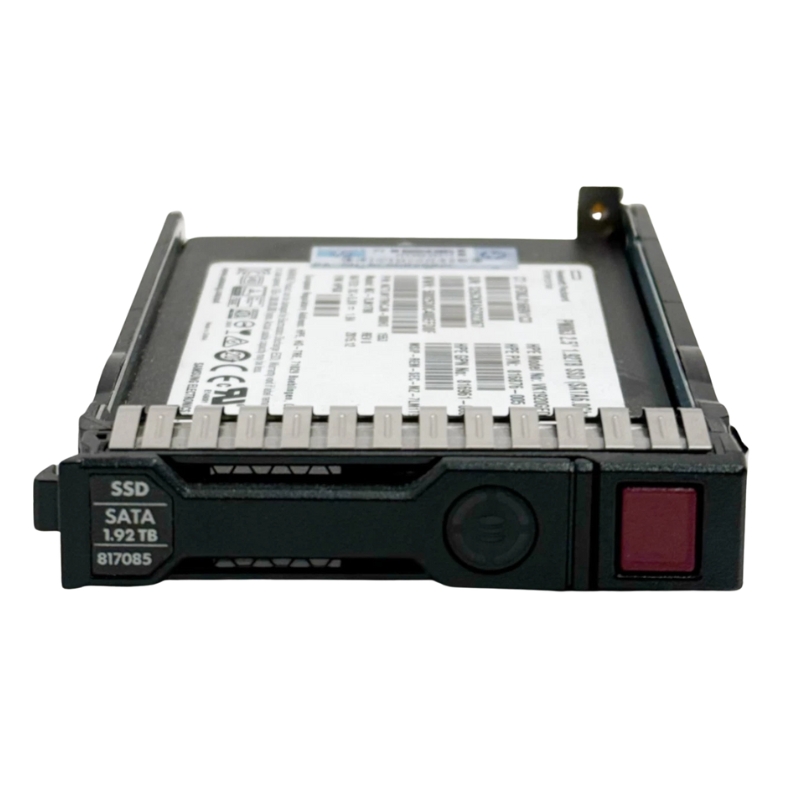


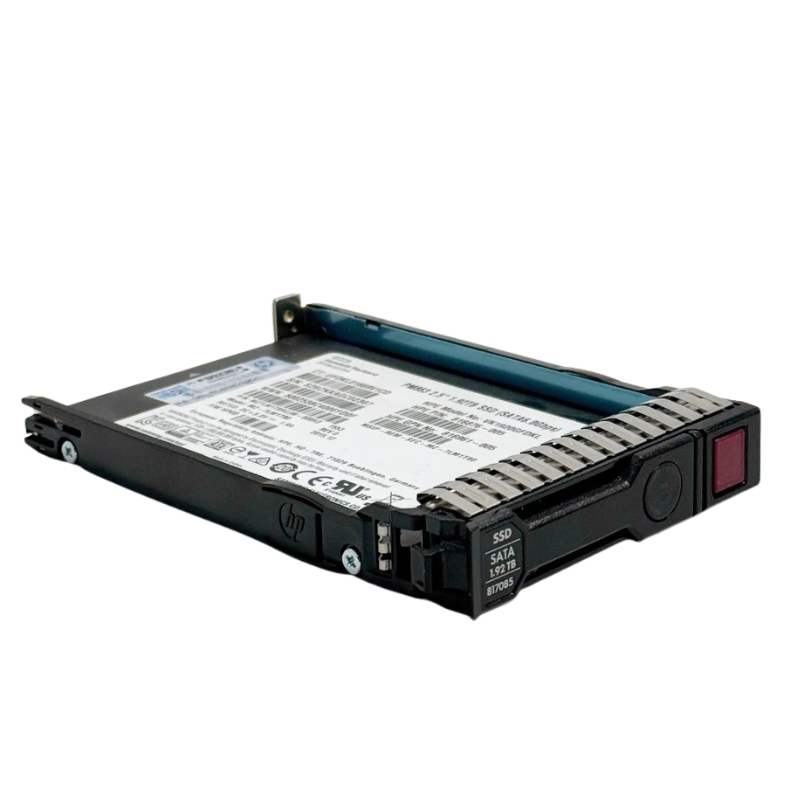
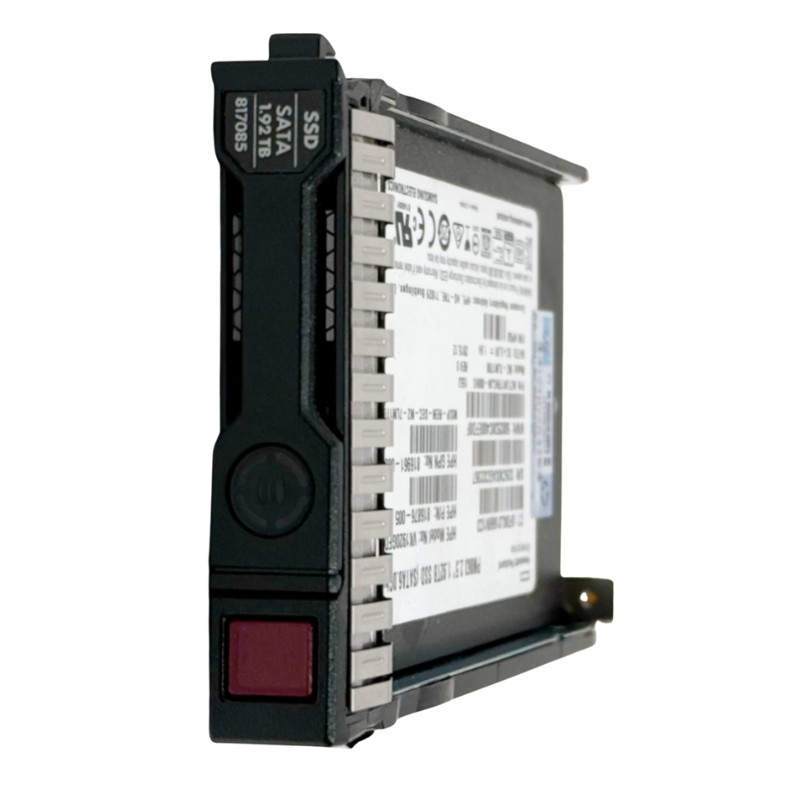
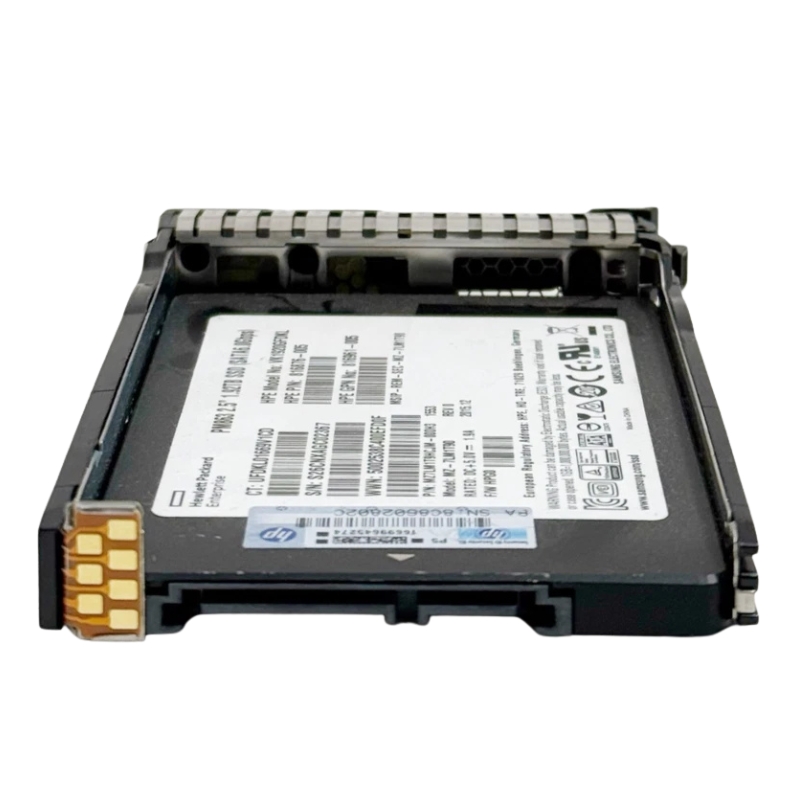
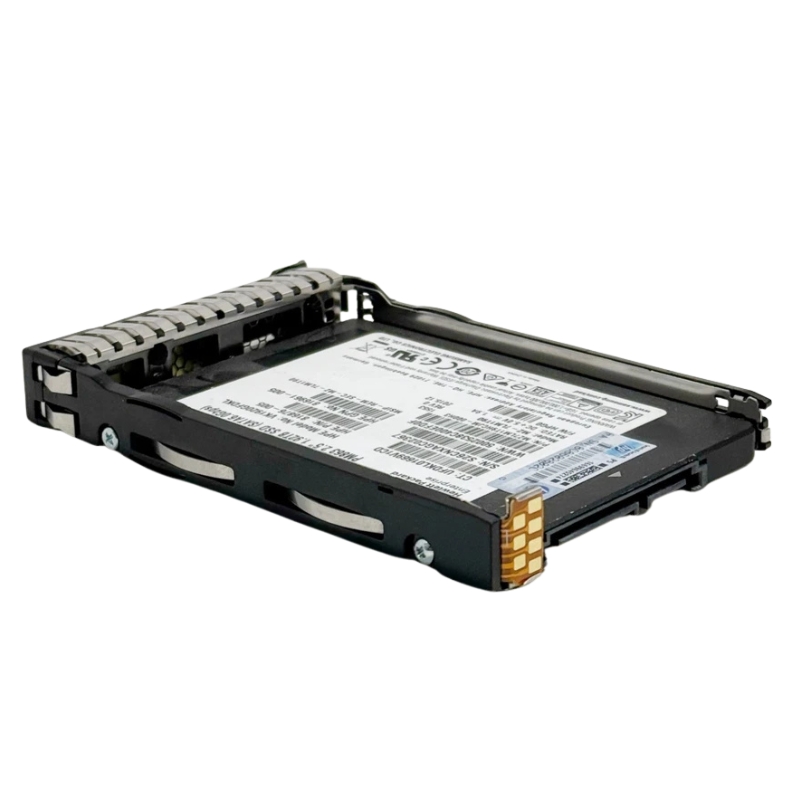
HPE 817085-B21 1.92TB SATA 6GBPS RI Small Form Factor Solid-State Drive. New Factory-Sealed Spare with 1 Year Replacement Warranty
The HPE 817085-B21 is a high-quality enterprise Solid-State Drive (SSD) engineered for superior data access, stability, and endurance. Featuring a 1.92TB capacity and a SATA 6GBPS interface, this compact 2.5-inch drive provides an exceptional balance between speed, reliability, and efficiency, making it ideal for demanding read-intensive workloads.
The HPE 817085-B21 SSD enhances system responsiveness, ensuring consistent read performance for enterprise environments such as virtualization, analytics, and cloud computing. Designed with efficiency in mind, it delivers rapid access speeds, sustained data throughput, and minimal latency under read-intensive workloads.
Engineered for enterprise infrastructure, this drive utilizes Triple-Level Cell (TLC) NAND flash technology to balance endurance, speed, and efficiency. Its compact Small Form Factor (SFF) makes it suitable for dense server environments where space optimization is essential.
The HPE 817085-B21 1.92TB SATA SSD is designed for seamless integration with a wide range of HPE ProLiant servers across multiple generations. This compatibility ensures reliable performance, simplified deployment, and reduced maintenance overheads.
The drive includes multiple safety features to ensure uninterrupted operation and protect critical business data. With Power Loss Protection (PLP), it secures data even during unexpected outages, minimizing potential loss and maintaining consistent performance across power fluctuations.
The HPE 817085-B21 1.92TB SATA 6Gbps Read-Intensive (RI) Small Form Factor solid-state drive is designed for enterprise environments that need a balanced combination of capacity, cost-efficiency, and consistent read performance. Engineered to fit modern 2.5-inch drive bays and server trays, this HPE-branded SSD targets mixed-storage infrastructures such as boot volumes, read-heavy virtual desktop infrastructure, content delivery caches, archive indexing, and large-scale read-centric databases. As a SATA 6Gbps interface device in a small form factor, the drive offers compatibility with a broad range of HPE ProLiant servers, storage arrays and third-party hardware that accept 2.5-inch SATA SSDs, making it a flexible choice for storage architects who prioritize predictable read throughput and reliability over the ultra-high write endurance required by write-intensive workloads.
At its core, the HPE 817085-B21 is a 1.92 terabyte SSD that communicates using the SATA III 6.0 Gbps protocol. The "RI" designation emphasizes its optimization for read-intensive workloads, meaning firmware and flash management are tuned to extend life and maintain performance primarily for workloads dominated by read operations. The small form factor specification refers to the 2.5-inch footprint that is compatible with standard SFF drive carriers used in rack, tower, and blade servers. For IT procurement teams, this model sits in the mid-tier SSD category: higher capacity and lower cost per gigabyte than pure NVMe options, but with better random read performance, lower latencies, and greater reliability than traditional spinning disks for read-oriented workloads.
The HPE 817085-B21 delivers consistent read performance characteristic of SATA SSD technology with predictable I/O latency for random and sequential reads. Read-optimized firmware, internal caching algorithms, and wear-leveling strategies aim to preserve performance over the drive's lifetime when used in the targeted read-intensive scenarios. Because this model is tuned for read-heavy workloads, enterprise architects can expect steady-state behavior where read latency remains low during prolonged periods of activity. For deployments where high sustained writes are common, such as databases with heavy logging or large-scale write caches, administrators should assess endurance metrics and consider write-optimized alternatives. When used within its intended workload profile, the HPE 817085-B21 offers strong value by delivering enterprise-class features and a large capacity without the higher cost of NVMe SSDs.
Compatibility is a central advantage of the HPE 817085-B21 due to its SATA 6Gbps interface and 2.5-inch SFF form factor. It is compatible with HPE ProLiant Gen9/Gen10 and later platforms that accept SATA-based SFF drives, and it integrates cleanly into existing HPE drive carriers and sleds. The drive can also be used in many non-HPE systems that expose the standard SATA interface and accept 2.5-inch drives, which makes it a practical option for heterogeneous data centers. System integrators should verify firmware compatibility and hardware RAID controller support when mixing drive generations or when integrating into complex storage arrays. In many environments, HPE’s ecosystem support provides firmware updates, health monitoring through iLO and array management tools, and compatibility guidance that simplifies lifecycle maintenance and reduces integration risk.
Physically, the small form factor design allows higher drive density in server chassis and storage enclosures, enabling organizations to consolidate storage while maintaining low power draw and efficient thermal characteristics. The 2.5-inch footprint makes the drive suitable for high-density blade servers and dense rack systems where space is a premium. Administrators should ensure that drive carriers are properly seated, caddies and connectors are free of debris, and firmware revisions are applied where required by HPE to enable features such as drive health reporting and secure erase functions. Proper airflow and thermal monitoring are also recommended to maintain long-term reliability of SSDs operating in tightly packed server environments.
HPE designs its enterprise SSDs with a range of features that improve reliability, monitoring, and lifecycle management. The 817085-B21 typically supports SMART attributes for predictive failure analysis, thermal throttling to protect from overheating, power-loss protection mechanisms (depending on exact product revision), and firmware-level garbage collection to maintain consistent performance. These manageability features, when combined with HPE’s system-level telemetry via Integrated Lights-Out (iLO) or storage management frameworks, enable administrators to proactively manage drive health, schedule maintenance, and simplify replacements without disrupting service. Because the drive is targeted at enterprise customers, HPE often backs it with warranty and support options that align with server maintenance contracts and parts replacement programs, reducing operational risk for production deployments.
Endurance is a critical aspect of SSD selection. The HPE 817085-B21’s read-intensive classification indicates that while it offers ample capacity and strong read performance, its write endurance ratings will be lower than write-intensive drives engineered for heavy sustained writing. For organizations, this means calculating expected drive write volume over time, comparing it to the drive’s terabytes written (TBW) specification or drive writes per day (DWPD) rating, and ensuring that the deployment aligns with those endurance constraints. Lifecycle planning should include monitoring write amplification metrics, scheduling firmware updates recommended by HPE, and using SMART telemetry to detect early signs of deterioration. When drives approach their endurance limits, predictable replacement policies minimize impact on availability and performance.
The HPE 817085-B21 is particularly well-suited for workloads where read performance dominates and capacity is necessary. Ideal use cases include server boot drives, content distribution caches, virtual desktop infrastructure images that are largely read-driven, analytics environments where datasets are read frequently but updated less often, and tiered storage systems where hot read data is promoted to SSD for quick access. In object storage frontends or metadata servers where reads are common and writes are comparatively light, the drive strikes a favorable balance between cost and performance. Conversely, OLTP databases with extreme write loads or intensive logging patterns may require higher endurance models or NVMe alternatives to meet durability and latency targets.
Successful deployment of the HPE 817085-B21 requires careful planning around RAID configuration, over-provisioning, firmware management, and monitoring. For RAID protected arrays, administrators should select levels that match their availability and performance needs, balancing rebuild times against capacity and redundancy. Over-provisioning the drive through firmware or host-based settings can improve write performance and endurance by reserving a portion of flash for garbage collection and wear-leveling activities. Firmware updates should be applied during maintenance windows and coordinated with HPE support when necessary to ensure compatibility with server BIOS and controller firmware. Monitoring drive health with HPE tools and setting automated alerts on SMART thresholds prevents surprise failures and simplifies replacement workflows.
When used in RAID, the HPE 817085-B21 benefits from configurations that minimize rebuild stress and avoid prolonged degraded states. Software and hardware RAID controllers each have trade-offs, and drive-aware controller algorithms can impact rebuild speed and thermal behavior. For caching purposes, the drive is excellent in read-cache roles where frequently accessed content is served directly from SSD, reducing load on slower spinning disks. It also functions well as an intermediate tier in multi-tier storage architectures, where hot datasets are migrated to SSDs for low-latency access while colder blocks remain on HDDs. Proper cache sizing ensures consistent hit rates and prevents unnecessary write amplification on the SSD layer by avoiding excessive cache churn.
Power consumption and thermal management are practical considerations for dense SSD deployments. The HPE 817085-B21 typically draws significantly less power than equivalent capacity HDDs and NVMe SSDs, but cumulative power in densely populated enclosures can still be substantial. Rack power budgets should account for the number of drives and associated controllers, and cooling systems should maintain adequate airflow across drive bays to prevent thermal throttling. Environmental specifications such as operating temperature ranges, shock and vibration tolerances, and humidity limits must be observed to maintain warranty coverage. Enterprises deploying a large number of SFF SSDs should validate chassis airflow patterns and consider using drive carriers that optimize airflow and thermal dissipation.


 Contact Us
 Information
 Catalog
 Solid State Drives (SSD)
 Network Switches
 Hard Disk Drives
 HBA & Controllers
 PC & Servers
 PC & Server Memory
 CPU & Processors
 Network Routers
 Power Supplies
 Tape Drives & Libraries
 Network Devices
 Computer & Network Cables