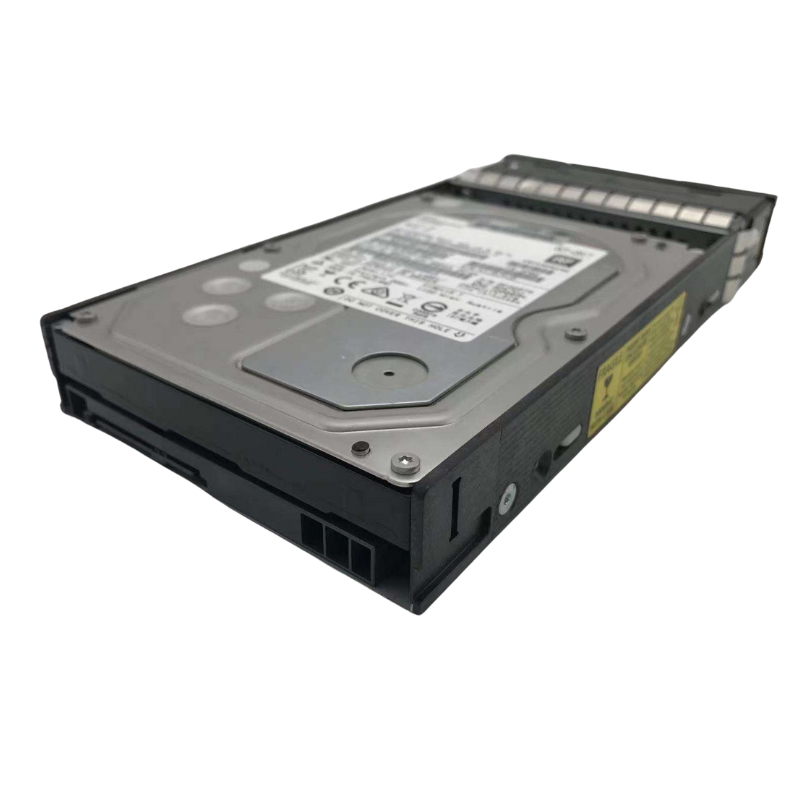
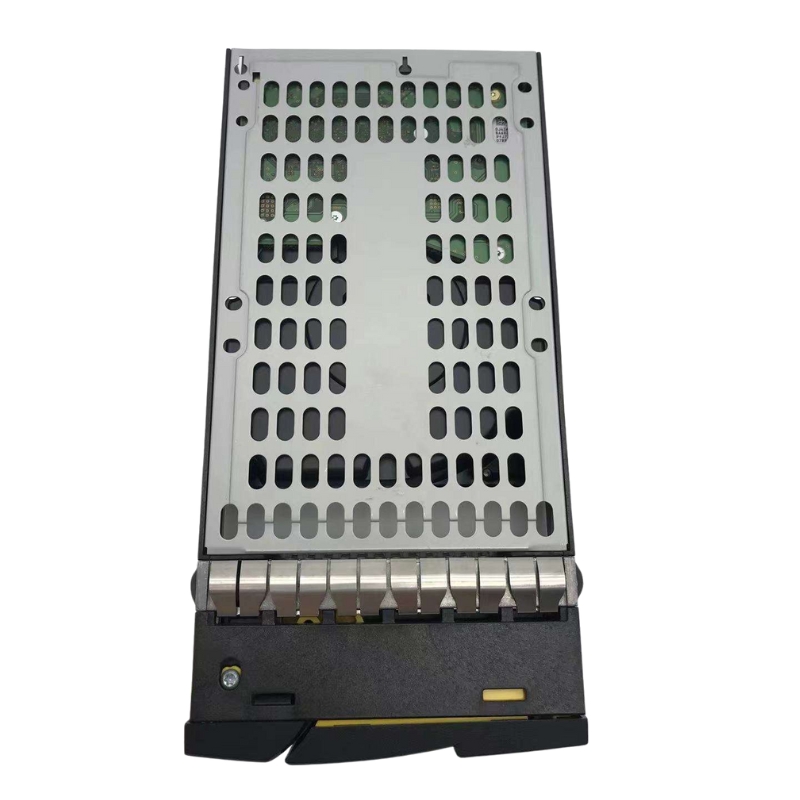
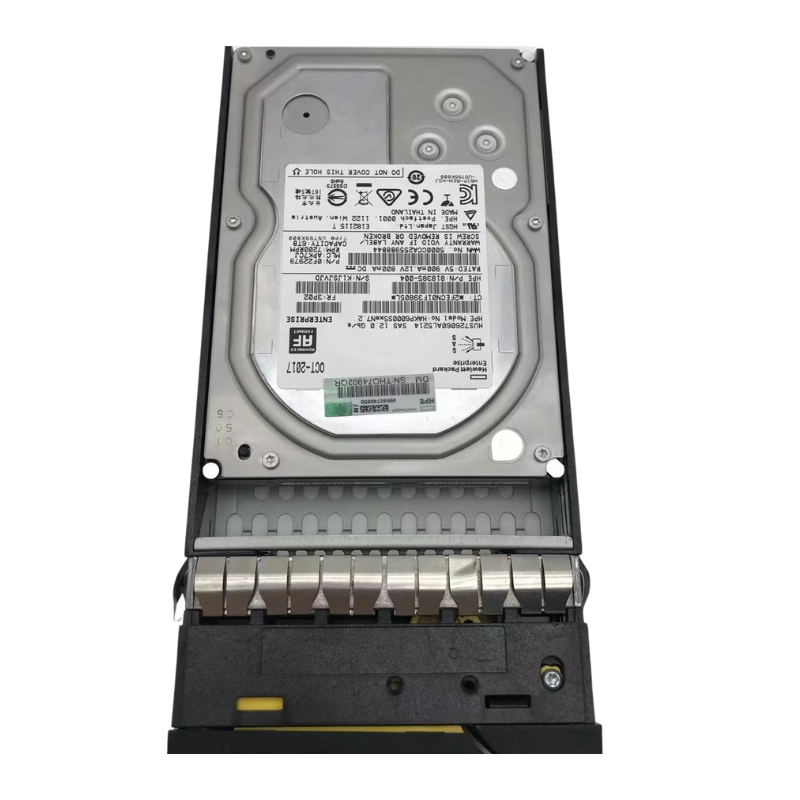
The HPE 826014-001 is a high-capacity, enterprise-grade 3.5-inch hard disk drive (HDD) engineered for HPE 3PAR arrays and compatible storage platforms.
With a 6TB capacity, 7200 RPM spindle speed and a robust 6 Gb/s SAS interface, this drive delivers dependable performance for mixed workloads, archival storage and large-scale virtualization environments.
Key Benefits & Value
- Scalable storage: 6 terabytes of formatted capacity to consolidate datasets and reduce drive counts.
- Reliable enterprise design: purpose-built for 24/7 datacenter operation and HPE certified systems.
- Balanced performance: 7200 RPM rotational speed provides a good mix of throughput and energy efficiency for tier-2 storage tiers.
- High-bandwidth interface: 6 Gb/s SAS supports sustained sequential transfer and multi-path redundancy.
- Eco-conscious build: designed with energy-efficiency considerations to lower operational power draw.
Technical Specifications (At-a-glance)
- Manufacturer / Part Number: HPE 826014-001
- Form Factor: 3.5-inch (standard enterprise)
- Capacity: 6TB (six terabytes)
- Rotation Speed: 7200 RPM (revolutions per minute)
- Interface: SAS — Serial Attached SCSI
- Interface Speed: 6 Gb/s
- Drive Type: Internal / Hot-pluggable in supported enclosures
- Assembly Required: Yes (mounting in drive bay / shelf)
- Eco Friendly: Energy-aware design and materials
Drive Interface & Compatibility
Featuring a 6 Gb/s SAS interface, the 826014-001 integrates seamlessly with HPE 3PAR 8000-series arrays and many enterprise-class controllers that support 6Gb/s Serial Attached SCSI. The SAS link provides:
- High reliability and error detection
- Multi-path support for failover and load balancing
- Backwards compatibility with 3 Gb/s SAS/legacy systems in many environments
Performance Characteristics
This drive is optimized for sustained throughput and capacity-centric workflows. Typical use cases include secondary storage, backup targets, archive pools and capacity tiers within hybrid storage arrays.
- Sustained transfer: Designed for long sequential reads/writes with consistent bandwidth.
- Random I/O: Suitable for moderate random workloads—pair with SSD tiers for high IOPS needs.
- Latency profile: Typical of 7200 RPM enterprise HDDs — predictable latency for tiered storage strategies.
Ideal Use Cases
Enterprise Storage Tiers
- Bulk capacity shelves and archive volumes
- Secondary tiers in hybrid arrays (hot data on SSDs, colder data on HDDs)
- Backup and snapshot repositories
- Large sequential workloads like media asset storage and cold video libraries
Virtualization & Datacenters
When combined with caching layers or SSD acceleration, the HPE 826014-001 helps lower total cost of ownership by reducing the number of drives required to reach target capacities while maintaining acceptable performance for VM sprawl and read-heavy workloads.
Installation & Assembly Notes
The drive ships as an internal enterprise HDD and typically requires mounting into a compatible 3.5-inch drive bay, sled or carrier. Follow these guidelines for smooth deployment:
- Confirm firmware compatibility with your HPE storage array — use HPE Support Portal for validated firmware images.
- Install in matched pairs or groups based on your RAID/erasure coding configuration to maintain redundancy.
- Verify drive bay backplane supports 6 Gb/s SAS links and proper SAS cabling where applicable.
- Observe anti-static precautions and proper torque when securing drive carriers.
Related Accessories & Add-ons
- 3.5" drive carriers and sleds for HPE chassis
- SAS cables and SAS expanders for multi-bay deployments
- Firmware update packages and HPE support contracts
For bulk procurement, configuration guidance or firmware verification, contact your HPE reseller or authorized service provider to ensure the HPE 826014-001 is the right match for your storage architecture.
Overview of HPE 826014-001 6TB 3PAR 8000 7.2K RPM SAS 6Gbps 3.5-Inch HDD
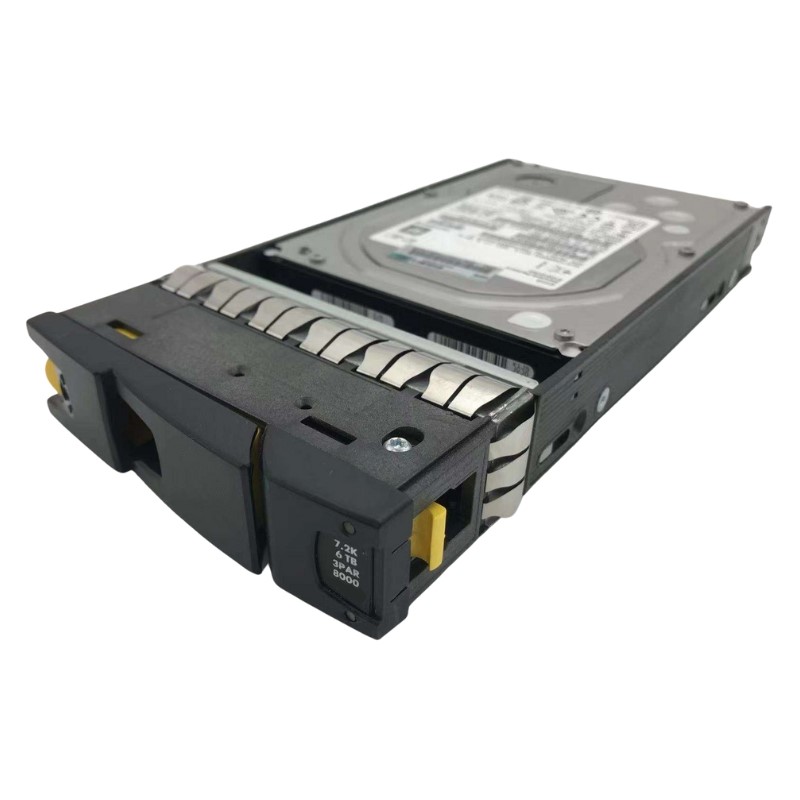
The HPE 826014-001 is a purpose-built enterprise-class hard disk drive designed for HPE 3PAR 8000-series storage systems and other compatible arrays. At 6TB capacity, 7,200 RPM rotational speed, and a 6Gbps SAS interface in a 3.5-inch form factor, this drive blends high-capacity magnetic storage with proven reliability and enterprise-grade features. Ideal for mixed workload tiers where cost-per-gigabyte and large-capacity sequential throughput matter, the 826014-001 is frequently deployed in data centers for archival pools, secondary tiers, capacity-optimized volumes, and read-heavy virtualized environments.
Core specifications and hardware characteristics
The technical backbone of the HPE 826014-001 centers on a stable mechanical design tuned for enterprise service cycles. The most important hardware attributes that administrators and procurement teams evaluate include:
- Capacity: 6,000 GB (6TB) of raw storage per drive, enabling dense capacity aggregates.
- Interface: 6 Gigabits per second (6Gbps) Serial Attached SCSI (SAS) for reliable, low-latency host connectivity.
- Form factor: Standard 3.5-inch (SFF/LFF designation varies by vendor literature) compatible with most enterprise chassis designed for 3.5" drives.
- Rotational speed: 7,200 revolutions per minute (RPM), balancing sequential throughput and reasonable latency for HDD media.
- Workload suitability: Optimized for capacity tiers and bulk storage; acceptable for read-dominant mixed workloads.
- Reliability metrics: Designed to meet enterprise mean time between failures (MTBF) and workload rating expectations for storage arrays.
- Compatibility: Validated for HPE 3PAR 8000-series systems and other HPE storage enclosures requiring the specific firmware/part revision.
Performance profile and real-world throughput
The performance characteristics of the 826014-001 are shaped primarily by rotational speed, platter density, and SAS bus capabilities. Typical behavior observed in storage arrays includes high sustained sequential throughput and modest random IOPS compared to SSDs. In practical terms:
- Sequential throughput: Strong at multi-MB/s sustained reads and writes depending on RAID stripe width and controller caching.
- Random IOPS: Lower compared to 10K/15K RPM SAS drives or NVMe/SSD; adequate for large-block read/writes and sequential-heavy use.
- Latency: Optimized for HDD characteristics — predictable but higher than flash; best used where latency is not the gating factor.
In modern 3PAR architectures, data is frequently tiered. When the 826014-001 is placed in the capacity tier, controllers and caching layers (read cache, flash tiering) compensate for random-access limitations, delivering a balanced experience for enterprise workloads while keeping total cost of ownership (TCO) lower.
Integration with HPE 3PAR 8000-series arrays
The 3PAR platform implements advanced data services — thin provisioning, deduplication, adaptive caching, and automated tiering — that extend the utility of higher-capacity HDDs. Specific benefits when pairing HPE 826014-001 drives with 3PAR 8000 include:
- Thin provisioning: Allows logical capacities to exceed raw physical capacity, improving utilization of 6TB spindles.
- Adaptive tiering: Moves hot blocks to higher-performance tiers (SSDs/NVMe) while keeping cold data on 6TB drives.
- RAID and mesh architecture optimizations: Enables better rebuild times and resiliency via strategic parity and distribution.
- Firmware interoperability: Vendor-validated firmware reduces the risk of incompatibility and ensures predictable behavior under array management software.
Best-practice deployment patterns
To extract maximum value from a fleet of HPE 826014-001 drives, storage architects typically follow these patterns:
- Use as capacity/nearline pool: Group drives into large RAID sets allocated for cold or warm datasets.
- Combine with SSD tier: Deploy hybrid arrays where flash handles random I/O and HDDs provide bulk capacity.
- Striping and parity settings: Choose stripe width and RAID types that balance rebuild time, usable capacity, and performance.
- Monitoring and lifecycle planning: Track SMART attributes and array telemetry to schedule replacements before failure impacts availability.
Reliability, durability, and enterprise-grade attributes
Reliability metrics and enterprise-grade engineering are central to HPE’s positioning for this drive. While specific MTBF figures and workload ratings vary by manufacturer documentation and firmware version, the product class emphasizes:
- Strict manufacturing tolerances and validation for 24/7 operation.
- Robust vibration tolerance for multi-drive enclosures found in dense 3PAR bays.
- SMART telemetry and predictive failure indicators to support proactive maintenance.
- Compatibility with HPE diagnostics and support tools for streamlined support cases.
Environmental and physical considerations
Operating and storage conditions for enterprise HDDs are essential for life span and performance. Key considerations for the HPE 826014-001 include:
- Operating temperature ranges: Maintain data-center-grade ambient temperatures per HPE guidance to prevent thermal stress.
- Shock and vibration: Ensure drive carriers and chassis dampening meet multi-drive vibration specifications.
- Power cycles and rotational wear: Avoid excessive power cycling to minimize mechanical wear across the drive's service life.
- Airflow and cooling: Proper front-to-back airflow patterns in the rack minimize hot spots around 3.5-inch densified shelves.
Firmware and compatibility checklist
Before installing or purchasing replacement units, verify:
- HPE part number (826014-001) matches the array compatibility list and firmware family supported by the target 3PAR 8000 firmware level.
- Array OS version recognizes the drive; cross-check through release notes or HPE support matrices.
- Physical caddy and connector pinout conform to chassis expectations (i.e., SAS backplane layout).
- Vendor-provided firmware updates are applied according to maintenance windows and validation procedures.
Use cases and workload suitability
The 826014-001 shines in several clearly defined roles within data center environments. Understanding where it performs best helps architects make cost-effective tiering decisions:
Primary use cases
- Mass storage and archives: Large datasets such as historical logs, compliance archives, and multimedia repositories where capacity takes precedence over ultra-low latency.
- Backup and secondary storage: Targets for backup systems and replica volumes that require predictable throughput for restore operations.
- Content delivery and media processing: Sequential streaming workloads such as video streaming, transcoding pools, and large file hosting.
- Virtual machine bulk storage: Hosts for bulk VM images where random read/write bursts are smoothed by hypervisor caching and array-level flash.
Not recommended for
- Low-latency transactional databases where sub-millisecond random I/O is essential unless paired with aggressive caching.
- High-IOPS flash-first tiers; SSDs/NVMe should be the primary tier for unpredictable random workloads.
Capacity planning and RAID considerations
When designing with 6TB drives, capacity planning and RAID selection materially influence usable space, rebuild time, and resiliency. Enterprise architects should evaluate:
- Usable capacity calculation: Account for parity overhead, hot spare allocation, and thin provisioning.
- RAID type tradeoffs: Choose between RAID-6-style dual parity for higher resiliency versus RAID-5-style single parity for more usable capacity but lower tolerance to multiple failures.
- Rebuild impact: Understand that rebuilds on high-capacity drives can take many hours; faster rebuild strategies (background scrubbing, priority throttles) are important.
Design tips to reduce rebuild risk
- Keep spare capacity and hot spares distributed across failure domains.
- Use smaller RAID groups to limit rebuild blast radius when possible.
- Pair HDD tiers with SSD cache to minimize array load during degraded operations.
Procurement, compatibility, and purchasing guidance
When acquiring HPE 826014-001 drives, follow procurement best practices to ensure longevity and supportability:
- Buy from authorized HPE distributors or certified channel partners to guarantee authentic parts and valid warranty coverage.
- Request drive firmware and compatibility declaration if the drives will be used in mission-critical production arrays.
- Confirm return material authorization (RMA) procedures and cross-shipping options for rapid failure replacement.
- Consider buying in matched sets for capacity pools to avoid cross-manufacturer firmware or performance anomalies.
New vs refurbished drives: tradeoffs
Savings from refurbished or recertified drives can be attractive but come with considerations:
- Warranty and lifecycle: Refurbished units may carry shorter or different warranty terms.
- Operational risk: Drives with unknown service histories may have reduced remaining life.
- Compatibility checks: Ensure refurbished units use recommended firmware and meet the array’s compatibility list.
Security, compliance, and data protection options
Security-conscious organizations often require features such as encryption, secure erase, and auditability. When deploying high-capacity drives:
- At-rest encryption: Some arrays support self-encrypting drives (SED) or software-based encryption integrated at the array level; confirm if the HPE 826014-001 SKU supports SED.
- Secure wipe: Use vendor-approved methods for secure decommissioning to meet compliance requirements.
- Audit logs: Maintain asset and change logs for drive insertion/removal events to satisfy governance and auditing needs.
Backup strategies and disaster recovery
Even with resilient arrays, treat bulk HDD pools as part of a broader backup and DR strategy:
- Implement regular backups with off-site copies or immutable storage targets to protect against logical corruption.
- Use replication features in 3PAR systems for synchronous/asynchronous copies depending on RPO/RTO needs.
- Test restores periodically to confirm recoverability from drives in the capacity tier.
Compatibility matrix and cross-reference guidance
Compatibility is key when mixing drives or updating arrays. Always consult HPE's official compatibility matrix for model-to-array validation. Areas to verify:
- Array OS and firmware versions that list 826014-001 as a supported part number.
- Interoperability with drive carriers, backplanes, and midplanes in older chassis models.
- Physical bay and caddy differences between 2.5" and 3.5" sleds to ensure correct physical fitment.
Cross-manufacturer considerations
If considering non-HPE-labeled but mechanically identical drives, be cautious. Differences in firmware, vendor microcode, or drive identification strings may cause the array to:
- Reject the drive, place it in a compatibility hold, or downgrade certain SMART reporting features.
- Limit supportability; HPE support may require HPE-labeled parts for official RMA handling.
Comparison with other HPE drive SKUs and alternatives
When selecting drives for a storage build, compare the 826014-001 against alternatives to decide on tradeoffs:
- Higher-RPM SAS drives (10K/15K): Offer better random IOPS at higher cost and lower capacity per spindle.
- Nearline SAS and higher-capacity HDDs: Offer even greater capacity per spindle but sometimes trade off in performance or vibration tolerance.
- SSD/NVMe: Provide orders-of-magnitude increases in IOPS and latency improvements but at higher $/GB.
The 826014-001 typically sits in the sweet spot for capacity-focused tiers where $/GB matters most while remaining fully supported by HPE array feature sets.
Economic and lifecycle considerations
Total cost of ownership (TCO) calculations should include:
- Purchase price per drive and incremental cost of spare units.
- Power and cooling costs given rotational and spindle characteristics (aggregate watts per bay).
- Administration overhead for rebuild operations and the cost impact of degraded performance during rebuilds.
- Expected service life and replacement cadence derived from workload rating and SMART telemetry.





 Contact Us
 Information
 Catalog
 Solid State Drives (SSD)
 Network Switches
 Hard Disk Drives
 HBA & Controllers
 PC & Servers
 PC & Server Memory
 CPU & Processors
 Network Routers
 Power Supplies
 Tape Drives & Libraries
 Network Devices
 Computer & Network Cables