(7% discount is applied at checkout)
Cart is empty
Your go-to destination for cutting-edge server products


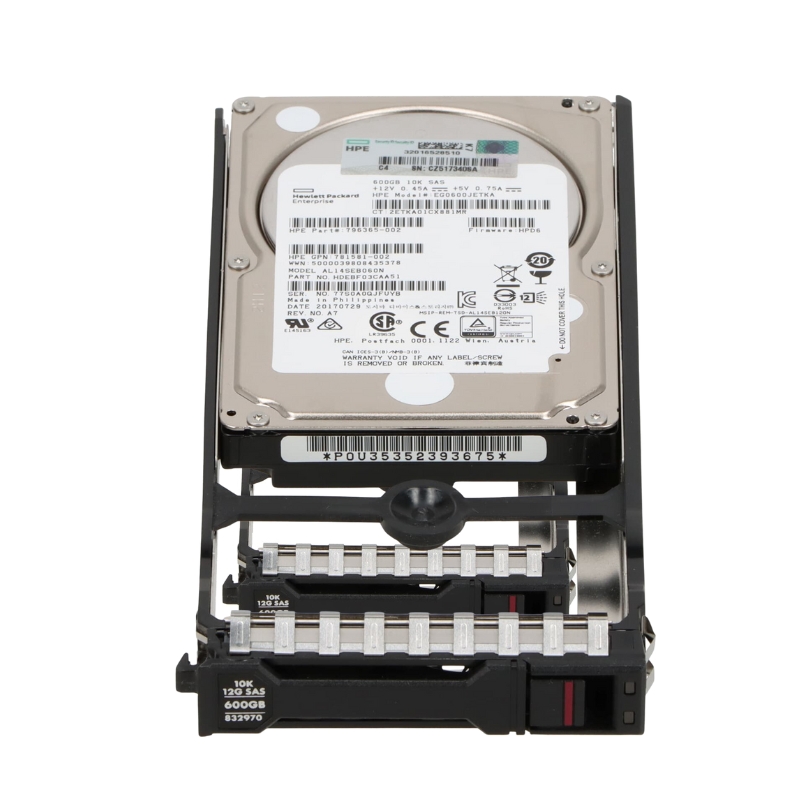
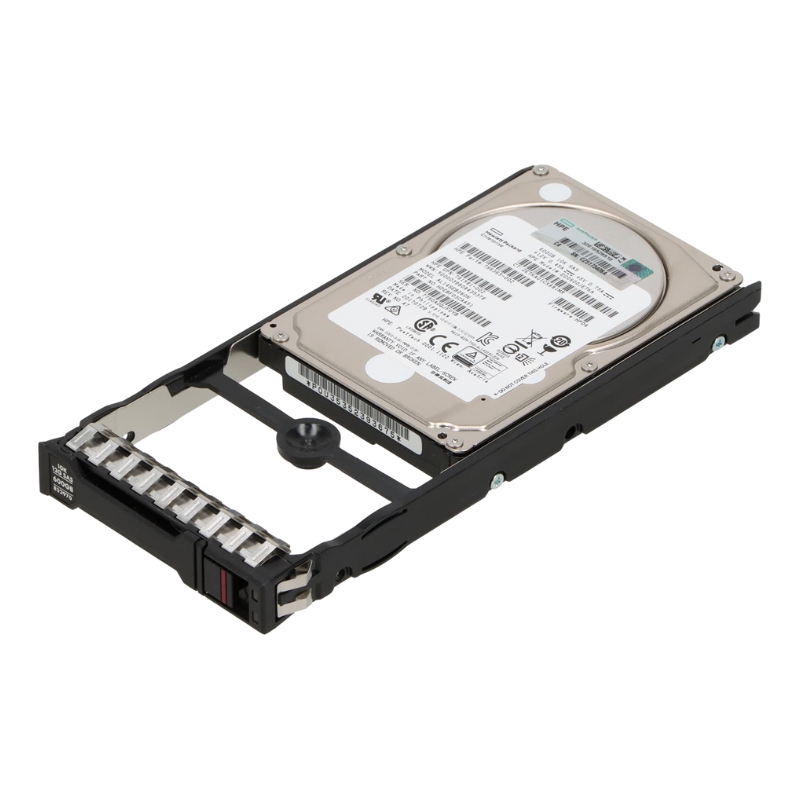
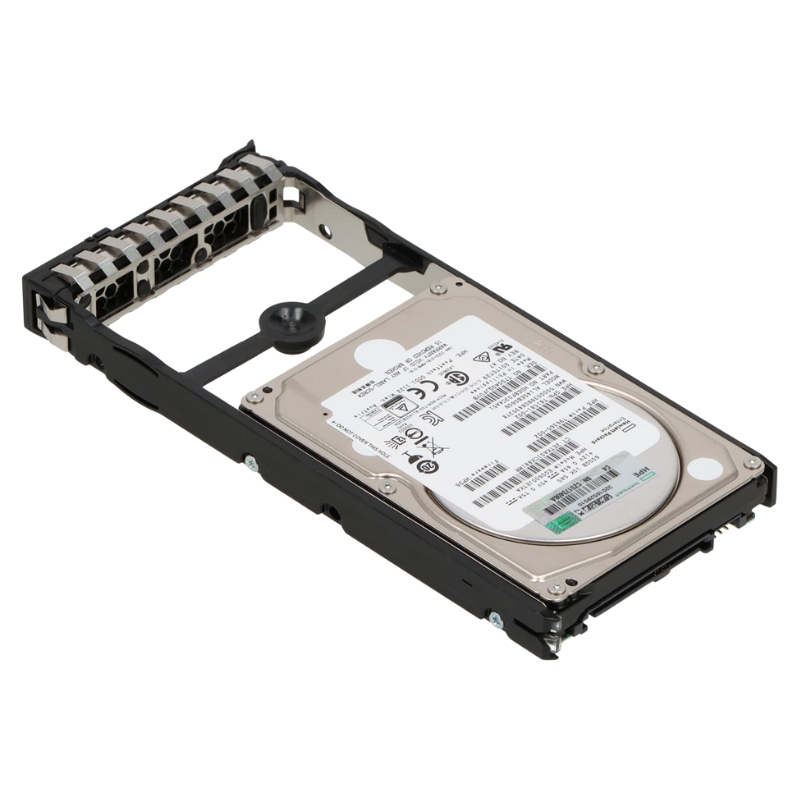
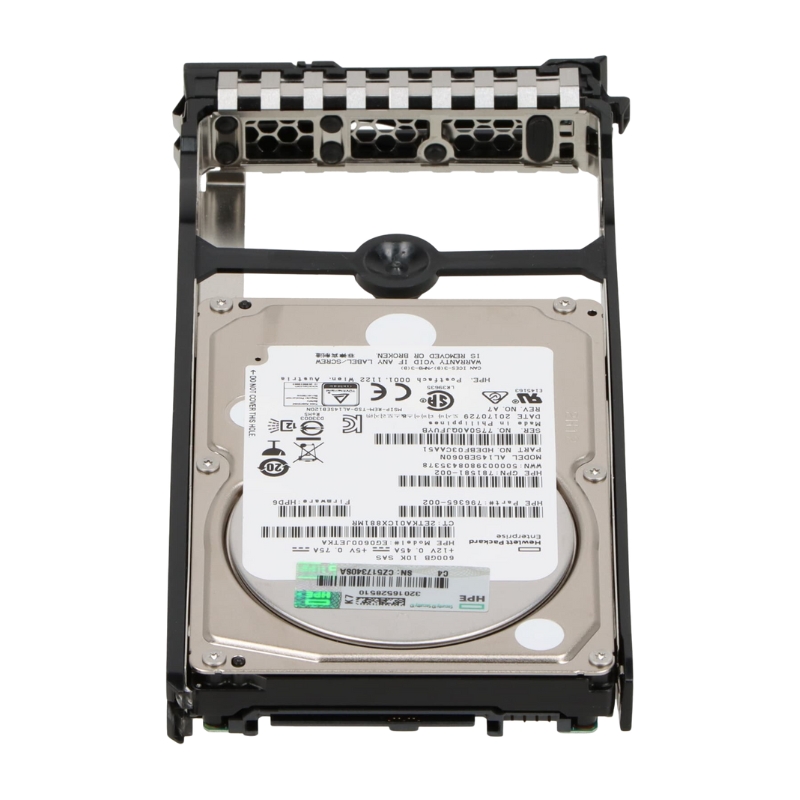
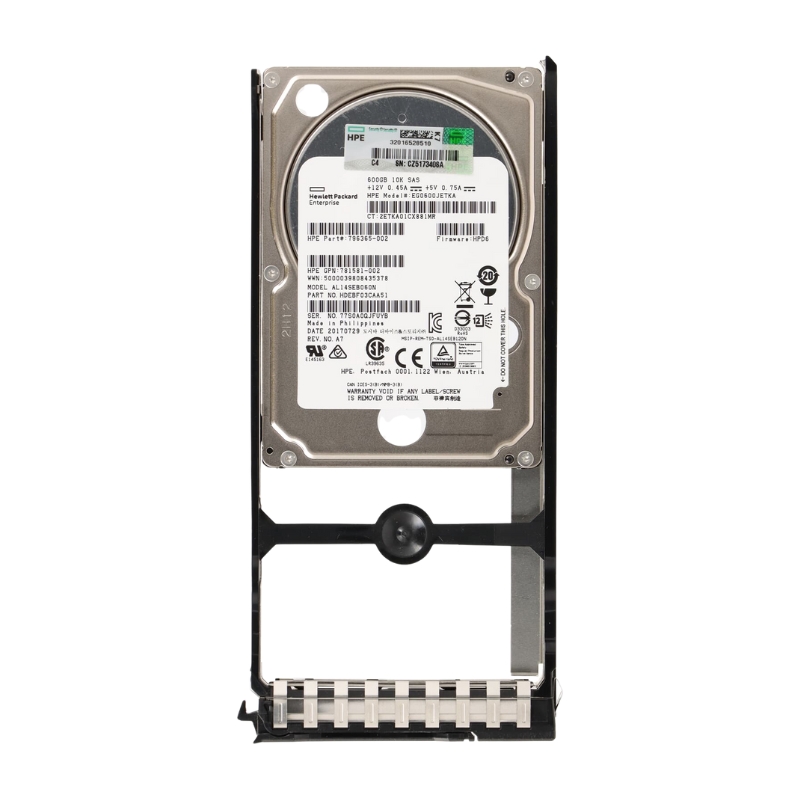
HPE 832970-001 600GB 10K RPM SAS 12GBPS SFF 2.5-inch Enterprise Hard Disk Drive. Excellent Refurbished with 1 year replacement warranty
The HPE 832970-001 is a high-performance enterprise-class hard disk drive engineered for mission-critical storage arrays and virtualization platforms such as the StoreVirtual 3000. With a 600GB capacity, 10,000 RPM spindle speed and a 12Gb/s SAS interface, this 2.5-inch SFF (small form factor) drive delivers a balanced mix of throughput, low latency and reliability for data centers and business storage solutions.
This HPE drive is compatible with a wide range of HPE ProLiant servers, storage enclosures and StoreVirtual 3000 series devices. It is ideal for:
Enterprise drives like the HPE 832970-001 are built to sustained operation with features that improve uptime and simplify maintenance. Typical benefits include high mean time between failures (MTBF), vibration tolerance for multi-drive enclosures, and firmware optimized for RAID/SAS controllers.
The drive is labelled as eco-friendly, reflecting manufacturing and operational choices that reduce energy consumption and environmental impact when compared to older generation drives. Lower power draw per GB and optimized idle/power states help lower data center TCO and cooling requirements.
The HPE 832970-001 600GB 10,000 RPM SAS 12Gb/s SFF (2.5-inch) enterprise hard disk drive is engineered for mission-critical storage environments that demand a balance of high-performance throughput, low latency, and enterprise-grade reliability. This category encompasses enterprise-class SAS drives designed for rack and blade servers, storage arrays, and converged infrastructure. It is optimized for I/O-intensive workloads such as virtualization, databases, transactional applications, OLTP (online transaction processing), and mixed read/write enterprise workloads.
The engineering focus for this class of hard drives centers on predictable performance under sustained load, robust error-handling, and integration features that enterprise IT teams require. Design benefits include:
Enterprise 600GB 10K SAS drives are optimized for random read/write operations and are commonly measured across several axes:
In practical deployments, a single 600GB 10K SAS drive will not match SSD-level IOPS, but when configured in RAID or with intelligent caching, it contributes to an aggregate performance profile that meets or exceeds many software-defined storage requirements. IT architects often benchmark arrays with mixed drive populations to tune cache ratios, RAID levels, and hot-spare strategies for maximum resiliency and performance.
SAS drives commonly support dual-port connectivity, enabling multipath IO (MPIO) and redundant fabric topologies. In enterprise environments, this means:
Drives in this category are built to deliver high mean time between failures (MTBF), enterprise-grade error recovery, and firmware features designed to maintain data integrity under stress. Important reliability features include:
In multi-drive arrays, consistent drive behavior and reliable rebuild performance are essential. Rebuild time is impacted by drive capacity and array load; 600GB drives balance rebuild time and usable capacity, reducing exposure windows compared with very high-capacity archival drives. Coupled with RAID 6 or erasure coding, these drives contribute to a resilient storage layer when combined with good backup and snapshot practices.
HPE-certified drives like the 832970-001 are designed with serviceability in mind: hot-swap-ready trays, clear LED indicators, and vendor support entitlements. Common failure modes—mechanical wear, read/write head degradation, electronics faults—are mitigated by:
The HPE 832970-001 part number denotes drives that are tested and validated within HPE server and storage ecosystems. Purchasing validated parts reduces integration risk, ensures correct firmware compatibility, and frequently unlocks HPE support coverage for combined hardware stacks. Common compatible systems include:
While enterprise SAS drives use industry standards, differences in firmware versions, vendor-specific commands, and HBA/RAID controller firmwares can affect performance and behavior. If deploying these drives in mixed-vendor environments, validate with controller firmware releases and run compatibility tests for expected workloads.
The 2.5-inch SFF form factor offers several advantages for dense compute and storage designs:
Virtualized server farms and VDI (virtual desktop infrastructure) environments often have high random I/O demand mixed with bursty access patterns. The 10K RPM SAS drive is an effective component in tiered storage strategies:
OLTP databases and transactional applications require consistent small-block random I/O performance. These drives are a cost-effective choice when paired with caching strategies or when full SSD deployment is not economically justified. For write-heavy transactional logs, consider hybrid architectures that offload very high-write bursts to SSD while storing bulk dataset partitions on 10K drives.
Modern architectures often combine NVMe/SAS SSDs, 10K SAS drives, and high-capacity 7.2K drives within a tiered stack. The 600GB 10K SAS drive occupies a “performance tier” that is more affordable than all-flash and more responsive than slow rotational media—ideal for mid-tier block storage, cache backing, and mixed workload pools.
Selecting the appropriate RAID level depends on the balance between capacity efficiency, rebuild times, and fault tolerance. For enterprise 600GB drives:
Keep drive firmware and controller firmware in sync with vendor recommendations. Regularly ingest SMART telemetry into your monitoring stack and configure alert thresholds for attributes such as reallocated sectors, read/write error rates, and temperature anomalies. Proactive monitoring reduces the risk of unexpected failures and enables planned maintenance windows for replacements.
High-density deployments require careful thermal design. Ensure adequate airflow in chassis, avoid mixing hot and cold aisles without proper management, and account for drive power during both idle and spin-up phases to prevent inrush issues on large arrays.
Compared to 7.2K drives, 10K SAS disks provide significantly improved latency and random IOPS, making them better for active datasets and transactional workloads. However, 7.2K drives usually offer higher capacity at a lower $/GB, so many setups use a mixed approach—10K for active data, 7.2K for cold storage.
SSDs excel in latency and consistent high IOPS. The trade-off is cost per gigabyte and different endurance patterns. The 600GB 10K SAS drive is a compromise: greater performance than slow HDDs at a fraction of the cost of an all-SSD fleet. For mixed workloads, SSDs often serve as a cache tier while 10K drives store warm data.
HPE-branded drives are typically manufactured in facilities with standardized quality systems, and they support data protection practices required by many compliance regimes. For regulated industries, ensure that installation and decommissioning follow your region’s data handling, encryption, and disposal regulations.
If encryption is required at rest, evaluate whether self-encrypting drive (SED) options are available for the model family or whether controller-level encryption and software-based encryption are the preferred approach. For secure disposal, use NIST or equivalent approved wipe methodologies.


 Contact Us
 Information
 Catalog
 Solid State Drives (SSD)
 Network Switches
 Hard Disk Drives
 HBA & Controllers
 PC & Servers
 PC & Server Memory
 CPU & Processors
 Network Routers
 Power Supplies
 Tape Drives & Libraries
 Network Devices
 Computer & Network Cables