(7% discount is applied at checkout)
Cart is empty
Your go-to destination for cutting-edge server products
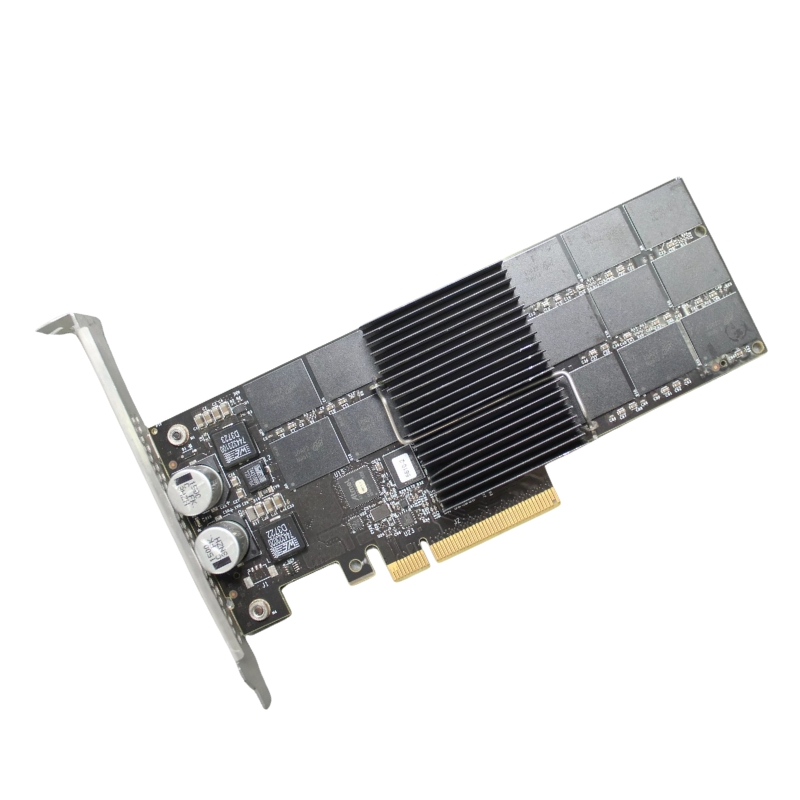


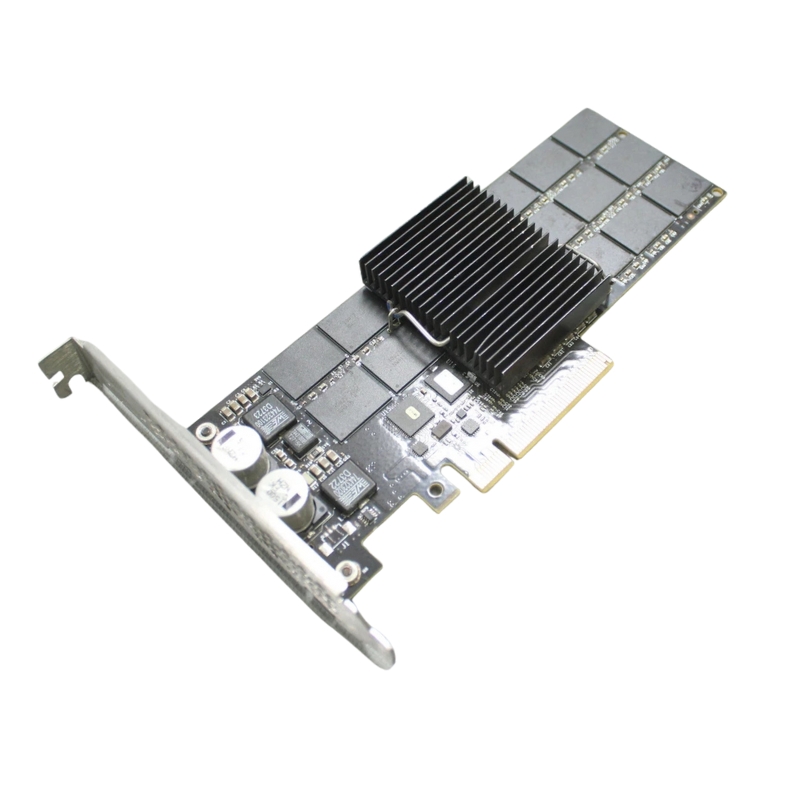
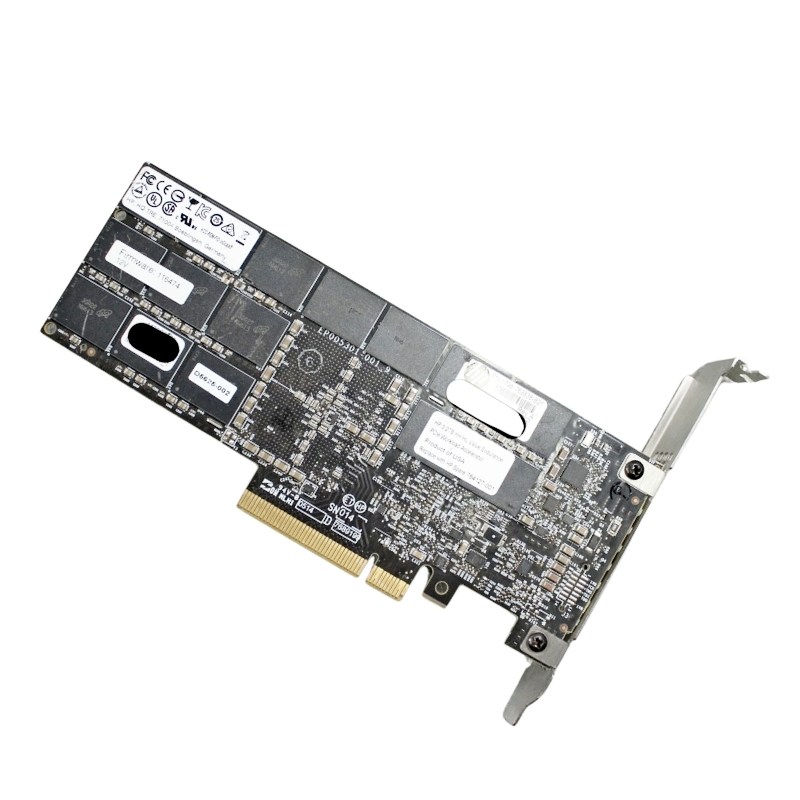
HPE 833585-001 1.6TB PCIE Read Intensive Half Height Half Length SSD. Excellent Refurbished with 1 year Replacement Warranty
The HPE 833585-001 is a high-capacity, performance-optimized solid-state drive engineered for environments requiring dependable read-intensive storage solutions. Designed to fit Half-Height, Half-Length (HHHL) slots, it delivers superior read speeds for data centers, enterprise workloads, and performance-focused infrastructures.
Technical Specifications
This PCIe-based SSD from HPE achieves blazing-fast data throughput, making it suitable for large-scale read-heavy applications. It offers:
Equipped with a PCI Express 2.0 x8 interface, the 833585-001 ensures stable connectivity and enhanced performance:
The compact and efficient Half-Height, Half-Length (HHHL) form factor allows seamless integration into various enterprise chassis formats:
Optimized for environments that demand heavy reading operations and minimal writing. This makes the drive suitable for:
Environmentally responsible and compliant with international standards:
This category encompasses the **HPE 833585‑001 solid-state drives**, specifically engineered for read-heavy workloads. These SSDs deliver high-throughput performance in a compact Half‑Height, Half‑Length (HHHL) PCIe card form, optimized for enterprise servers, storage arrays, virtualization platforms, and data center infrastructure. Here we explore subtypes, technical features, application scenarios, advantages, selection criteria, compatibility, and best practices for deployment.
The 833585‑001 belongs to the **HHHL (Half‑Height, Half‑Length)** class, ideal for systems with restricted PCIe slot real estate. This compact footprint allows installation into servers that cannot accommodate full-length cards or large expansion modules. The smaller size does not reduce capacity or performance, making it an efficient design. Within this category, variants may differ in cooling solutions, heatsinks, or firmware revisions.
These SSDs connect via **PCI Express 2.0 x8 lanes**, leveraging the high-bandwidth, low-latency PCIe bus. Because the device is read-intensive, it’s optimized to minimize latency on read operations and sustain high throughput under heavy read loads. Some related submodels may support updated PCIe generations (e.g. 3.x or 4.x) or alternate signaling enhancements, but all maintain backward compatibility with x8 lanes.
The flagship 833585‑001 SKU offers **1.6TB** of NAND-based storage. In this category, alternative sizes (e.g. 800 GB, 3.2 TB) may exist, but the 1.6TB variant is often a preferred balance of capacity and cost. The “read‑intensive” label means the drive is tuned for high read IOPS and lower write endurance, making it ideal for workloads with more reads than writes.
Because this category emphasizes **read-heavy workloads**, endurance expectations differ from mixed‑use or write-intensive models. These SSDs typically provide moderate write cycle budgets while prioritizing read latency and reliability. Within the subcategory, you’ll find variants with incremental firmware optimizations, error-correction enhancements, or extended error detection for long-lived deployments.
Within this category, the SSDs are engineered to deliver sustained, low-latency read performance under heavy concurrent demand. That makes them particularly well suited for content-serving, index lookups, read caches, web services, and large-scale query systems. The tuning ensures that degradation under read saturation is minimized.
The HHHL footprint is a key differentiator. With constrained rack or server architectures, these cards fit into expansion slots that might not accept longer or double-width modules. Because they retain full bandwidth via eight PCIe lanes, you don’t sacrifice performance despite compact size.
These SSDs are built with enterprise reliability in mind: error correction, firmware stability, thermal controls, and durability matching data center expectations. The modest write endurance aligns with the intended workload profile, reducing the complexity of overprovisioning for write-heavy tasks.
Being part of the HPE ecosystem, drives in the 833585‑001 category typically enjoy broad compatibility with HPE server lines, firmware update tools, and support pipelines. This integration reduces deployment friction and encourages consistent behavior across systems.
While this category is centered on PCIe 2.0 ×8, newer SSD categories may leverage PCIe 3.0, 4.0, or 5.0 to increase bandwidth. However, only certain systems can exploit those gains fully. In many real-world enterprise environments, backward compatibility with PCIe 2.0 provides a stable baseline without forcing a costly platform upgrade.
When databases serve queries with read‑heavy patterns (analytics, reporting, data warehousing), caches or read-accelerator tiers built using 833585‑001 drives can provide dramatic performance improvements. The high IOPS and low latency reduce query lag and improve throughput.
Virtual desktop infrastructures often require many simultaneous read accesses during boot storms or login ramps. The 833585‑001 class SSDs help mitigate I/O bottlenecks by ensuring smooth read access to OS images, user directories, or shared templates.
Business intelligence, search indexes, and OLAP systems often perform many random reads across large datasets. Embedding drives from this category improves lookup speed and query response times, especially for large-scale deployments.
Before purchasing, confirm your server or motherboard supports HHHL PCIe devices and that BIOS/firmware versions are validated for these SSDs. Because many enterprises use HPE-branded hardware, it's important to ensure compatibility using HPE’s device selector tools and firmware repositories. :contentReference[oaicite:2]{index=2}
While these SSDs are high performance and reliable, they should not be treated as infallible. Use RAID or erasure coding in your storage architecture. For read-heavy tiers, mirrored or striped redundancy ensures high availability. Combining with parity or multi-layer redundancy offers further protection.
Leave spare NAND (overprovisioning) to improve write performance and maintain endurance. Though writes are less common in this category, overprovisioning helps maintain background housekeeping and controller overhead. Allocate a margin (e.g. 7–10%) for spare area if firmware configurations allow it.
Within this catalog you might find **new bulk-pack units**, factory-sealed drives, or **refurbished/recertified** 833585‑001 SSDs. Refurbished models are typically tested and validated, but may come with shorter warranties. Example: “833585‑001-RF” refers to a refurbished variant. :contentReference[oaicite:3]{index=3}
Different batches of 833585‑001 drives may ship with distinct firmware builds. Over time, manufacturers introduce microcode updates to boost compatibility, correct rare error modes, or improve error recovery. Be sure to match firmware levels across clusters in critical deployments to maintain consistency and avoid incompatibilities during updates.
Some variants in this category may include enhanced thermal solutions — aluminum plates, fins, or licensed brackets. These help dissipate heat in constrained airflow setups, common in dense server racks. Evaluate such cooling variants if the base card runs near thermal thresholds.
Because of the HHHL shape and PCIe interface, some systems may require **PCIe-to-connector adapters** or **interposers** to bridge or convert pinouts. Ensure the adapter supports full x8 bandwidth and signals, and is validated for the 833585‑001 line.
Because this category is tuned for read-intensive traffic, write endurance is limited compared to write-heavy SSDs. If your deployment includes frequent large writes, logs, or caching, this may push the drive near its endurance limit faster.
Even though the interface is PCIe 2.0 ×8, newer systems may support PCIe 3.0 or 4.0 — but in backward mode, you won’t exploit the full bandwidth headroom. In some cases, mixing with newer-generation SSDs may yield uneven throughput distribution.
In tightly packed servers with limited airflow, HHHL cards may struggle thermally under prolonged loads. Without proper cooling, performance might throttle. Always test under full load to verify thermal margins.
Mismatch of firmware versions across a fleet might lead to subtle failures, mysterious I/O anomalies, or update conflicts. Some third-party controllers may not fully support all features of HPE-branded drives, leading to unanticipated behavior in non‑HPE systems. Some administrators have reported SSD-level failures or firmware edge-mode bugs requiring careful monitoring. :contentReference[oaicite:4]{index=4}
In some benchmark reports, 833585‑001 SSDs demonstrated internal read speeds up to ≈ 2.55 GB/s and write speeds near 1.4 GB/s, with random I/O rates peaking around 205,000 IOPS for reads. :contentReference[oaicite:8]{index=8} These figures are illustrative; actual sustained performance depends heavily on host architecture, queue depth, and thermal headroom.


 Contact Us
 Information
 Catalog
 Solid State Drives (SSD)
 Network Switches
 Hard Disk Drives
 HBA & Controllers
 PC & Servers
 PC & Server Memory
 CPU & Processors
 Network Routers
 Power Supplies
 Tape Drives & Libraries
 Network Devices
 Computer & Network Cables