(7% discount is applied at checkout)
Cart is empty
Your go-to destination for cutting-edge server products
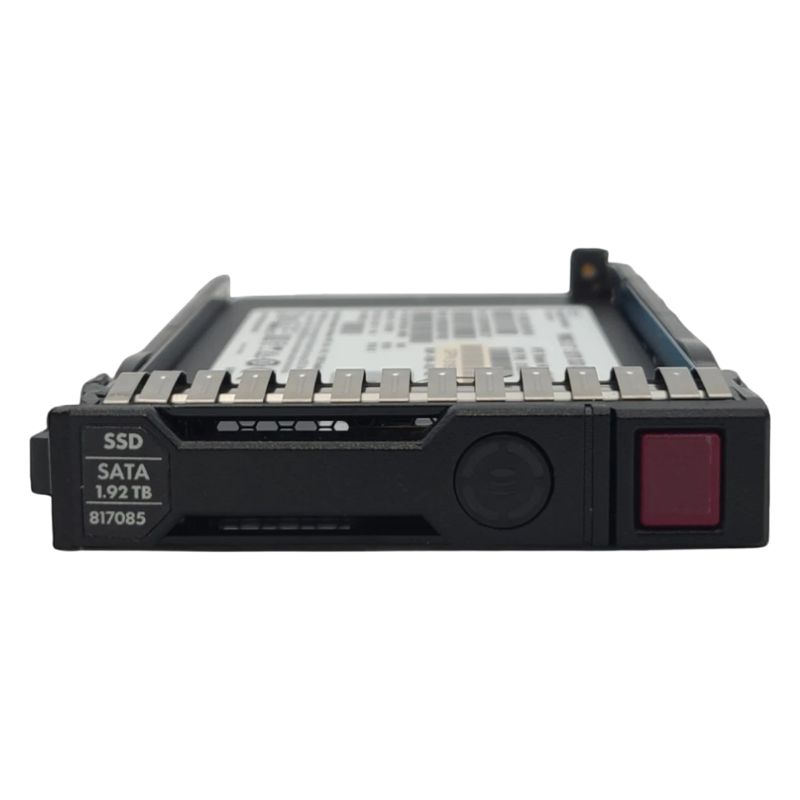


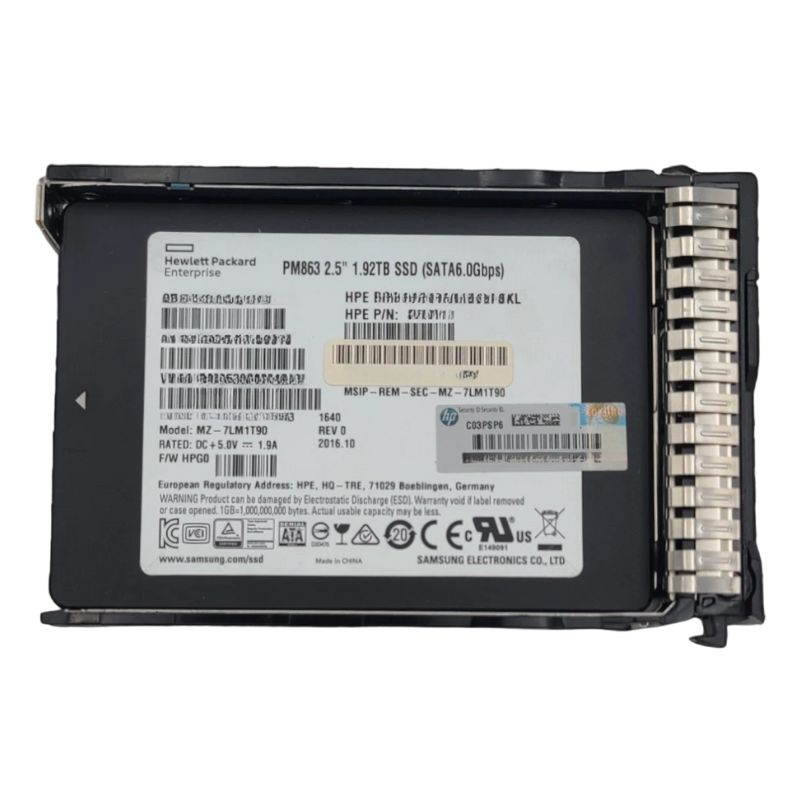
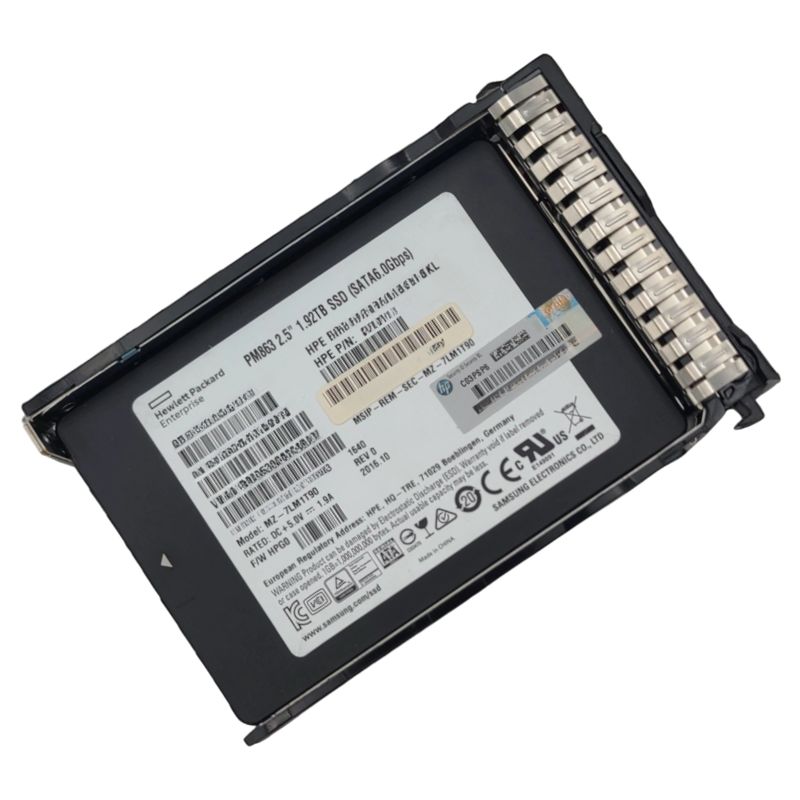
HPE 842505-B21 1.92TB SATA 6GBPS 2.5-Inch Read Intensive SFF TL SPCL Solid State Drive. Excellent Refurbished with 1 year replacement warranty
The HPE 842505-B21 is a high-performance solid state drive designed for enterprise-grade storage solutions. Built for reliability and speed, this 2.5-inch SATA SSD is ideal for read-intensive workloads, delivering exceptional efficiency for data centers and mission-critical applications.
This HPE 842505-B21 SSD provides optimal performance for data-intensive operations with a focus on read-heavy workloads. Key technical specifications include:
The HPE 842505-B21 leverages the SATA interface to ensure compatibility and reliable connectivity with enterprise servers and storage solutions.
The drive is designed to fit into standard 2.5-inch drive bays, making it ideal for rack-mounted servers and storage arrays:
The HPE 842505-B21 SSD delivers the perfect combination of capacity, speed, and endurance. It is designed to meet the demanding needs of modern enterprises, offering enhanced reliability, low latency, and seamless scalability. This SSD ensures your critical applications perform efficiently while minimizing downtime.
Understanding the specification sheet behind the HPE 842505-B21 helps buyers match the drive to workload requirements. The model name communicates the capacity (1.92TB), interface (SATA 6Gb/s), and form factor (2.5-inch SFF). The "Read Intensive" class designates firmware and NAND provisioning tuned to prioritize sustained read throughput and read endurance rather than heavy mixed or write-intensive workloads.
The drive uses a standard SATA 6.0 Gbps host interface — a ubiquitous protocol compatible with many server platforms and storage backplanes. Its 2.5-inch small form factor (SFF) allows dense server configurations and fits most enterprise drive carriers and sleds.
The nominal capacity of 1.92TB provides a balance between per-drive usable space and cost-per-GB. For array or RAID deployments, consider usable capacity after RAID parity — for example, RAID 10 halves raw capacity, while RAID 5 or 6 will reduce usable capacity by parity overhead. For catalog pages, emphasize both raw and approximate usable capacities across common RAID levels to help buyers quickly estimate needs.
Read-intensive SATA SSDs are optimized for high sustained read throughput and consistent random read IOPS with low latency. Typical attributes to highlight:
Endurance for "Read Intensive" SSDs is typically lower TBW (terabytes written) than mixed- or write-intensive classes, because the NAND provisioning and over-provisioning favor read performance. Nevertheless, enterprise-grade components, error-correcting code (ECC), power-loss protection features, and HPE firmware ensure that the drive meets data-centre reliability standards. Important terms to present include MTBF (mean time between failures), backed warranty period, and workload-class endurance rating.
One of the selling points for HPE-branded drives is firmware validation with HPE servers and storage arrays. The HPE 842505-B21 typically ships with server-validated firmware that ensures predictable behavior inside ProLiant platforms, HPE storage controllers, and HPE-branded RAID/HBA configurations. Emphasize compatibility notes and guidance for administrators performing firmware updates.
When listing compatibility and pre-sales filters, include:
The HPE 842505-B21 is best suited for workloads where read operations dominate and where predictable latency and consistent read performance matter. Below are typical deployment scenarios where this SKU provides measurable benefits over HDDs or consumer-grade SSDs.
For virtualization hosts, read-intensive SSDs accelerate VM boot times, reduce I/O wait during login storms, and make read-cache layers more effective in hybrid storage tiers. Use these drives as local boot volumes or as part of a distributed cache tier in hyperconverged systems.
Content-serving platforms with high read-to-write ratios benefit from this class of drive. Examples include web servers, cache layers for CDN nodes, and media streaming servers where rapid access to frequently requested objects reduces application response times.
Large-scale analytics workloads often perform sequential and random read scans over large datasets. Deploying read-optimized SSDs in front of slower HDD tiers dramatically reduces query latency and speeds up analytic window operations.
Use cases such as system boot drives, logging partitions, and read-heavy reference datasets (configuration files, static lookup tables) align with the endurance and performance profile of read-intensive SATA SSDs.
When populating server chassis or storage enclosures with 2.5-inch SSDs, density and thermal characteristics matter. Although SSDs consume less power and generate less heat than HDDs under most workloads, sustained read throughput can produce thermal load; planners should ensure proper airflow and server firmware/BIOS thermal profiles are tuned accordingly.
The 2.5-inch form factor enables higher drive density per server or array chassis. Detail the number of drives per bay and how that scales across a standard rack to help procurement teams calculate full-rack capacity and power draw.
Provide guidance on expected power draw per drive under typical active read workloads, and include notes on recommended airflow direction, ambient temperature limits, and how to interpret server-reported SMART/thermal telemetry.
A clear comparison helps buyers choose the right flash type for their budget and workload. Present the differences in endurance, cost-per-GB, performance characteristics, and typical price points so shoppers can identify trade-offs.
Read-Intensive SSDs like the HPE 842505-B21 provide lower TBW guarantees than write-intensive models but are significantly more durable than consumer NAND products. For write-heavy workloads (large databases, replication targets, or heavy logging), mixed-use or write-intensive enterprise SSDs are recommended instead.
The lower cost-per-GB of read-intensive SATA SSDs compared with write-optimized NVMe or SAS enterprise SSDs makes them attractive for tiered storage strategies. Illustrate total cost of ownership (TCO) comparisons that include power usage, cooling, rack density, and maintenance cycles.
For read-oriented workloads, a well-provisioned SATA read-intensive SSD can deliver superior performance-per-dollar versus an all-HDD configuration and, in many cases, versus more expensive NVMe drives when the workload is strictly read-heavy.
Recommend industry practices for on-site spares and RMA handling:
Enterprise SSDs often include security and data protection features that matter for regulated or security-conscious environments. Highlight any supported features such as ATA security (hardware-based locked drives), secure erase commands, and integration points with host-based encryption solutions.
Improve buyer confidence by linking to authoritative technical resources such as:
Summarize the business value of using the HPE 842505-B21 class of drives: improved application responsiveness, lower latency for read-dominant workloads, increased rack density, and reduced TCO compared with mechanical drives. Emphasize predictable performance, validated system firmware, and HPE support channels as part of the enterprise purchase rationale.
Highlight how read-optimized SSDs enable hybrid tiering strategies — placing hot read data on flash while keeping colder, write-heavy datasets on HDD tiers to optimize costs and performance.
Discuss the operational benefits: faster rebuild times compared with HDDs in many cases, reduced I/O bottlenecks during peak read periods, and lower mechanical failure risk.
On category pages, include recommended complementary items and upgrade paths:


 Contact Us
 Information
 Catalog
 Solid State Drives (SSD)
 Network Switches
 Hard Disk Drives
 HBA & Controllers
 PC & Servers
 PC & Server Memory
 CPU & Processors
 Network Routers
 Power Supplies
 Tape Drives & Libraries
 Network Devices
 Computer & Network Cables