(7% discount is applied at checkout)
Cart is empty
Your go-to destination for cutting-edge server products
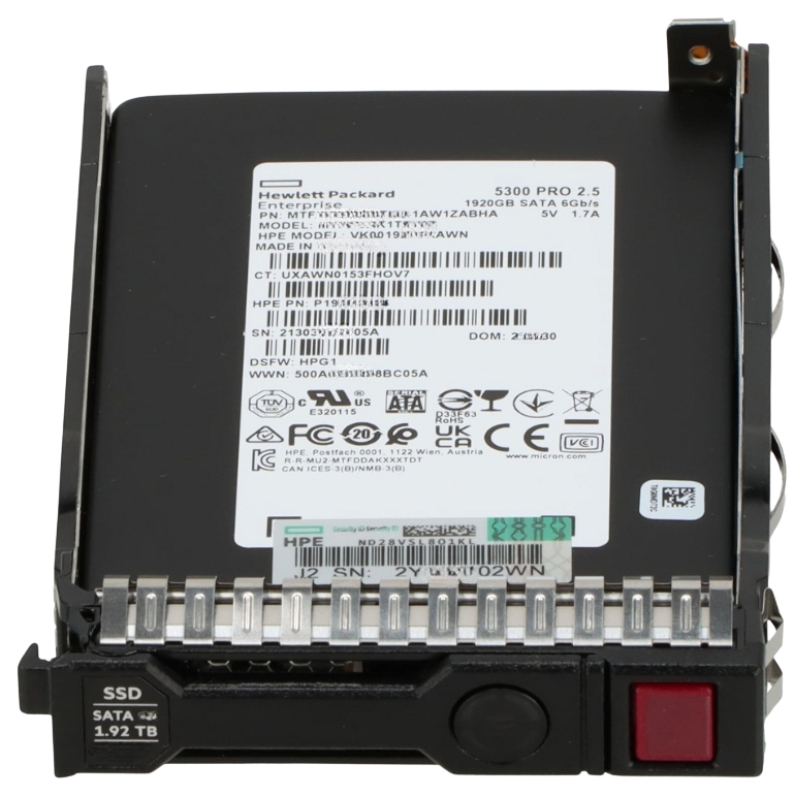


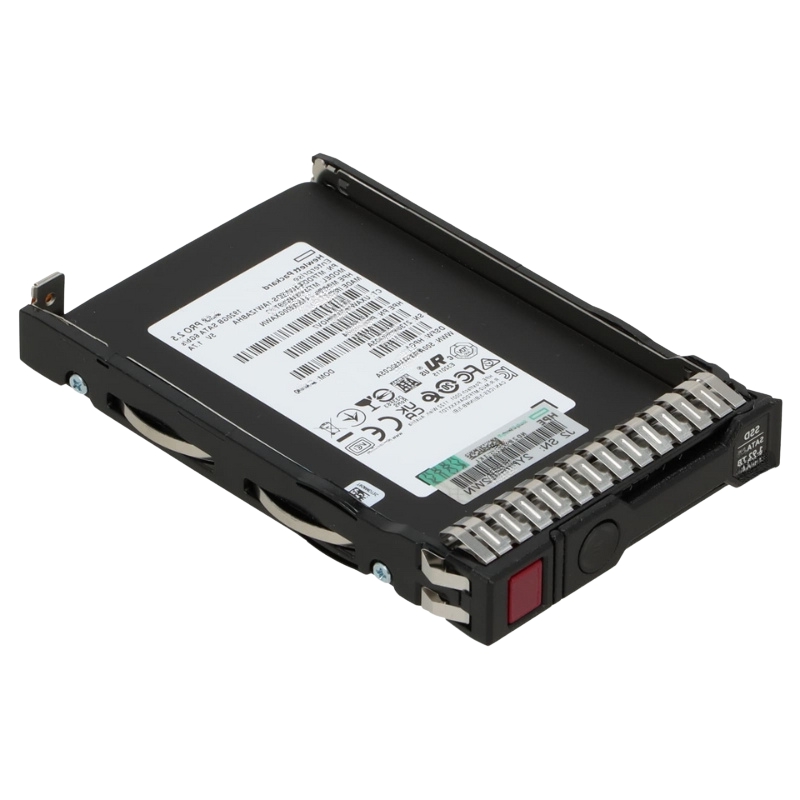
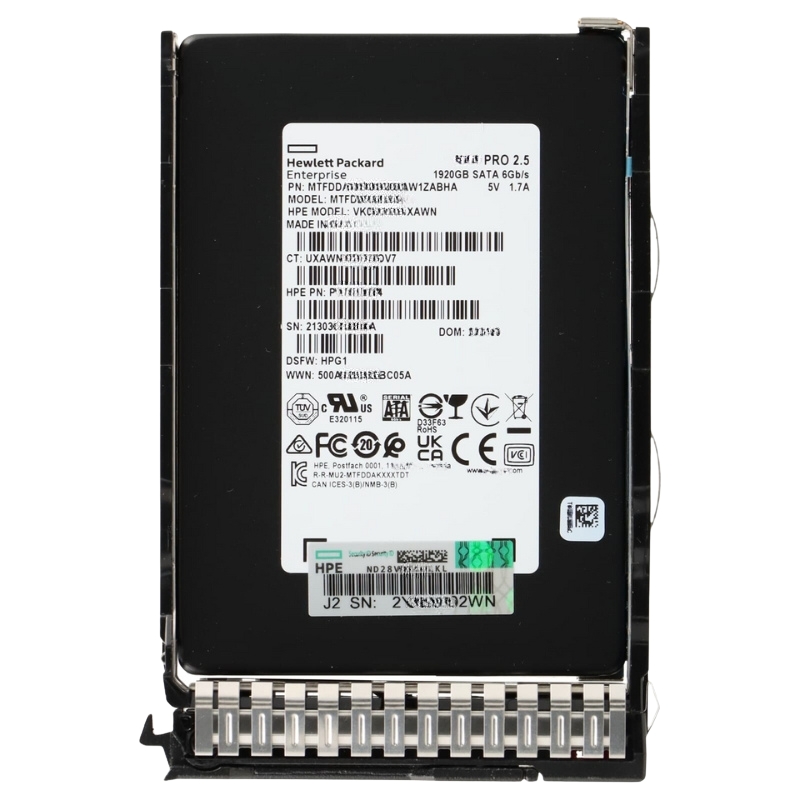
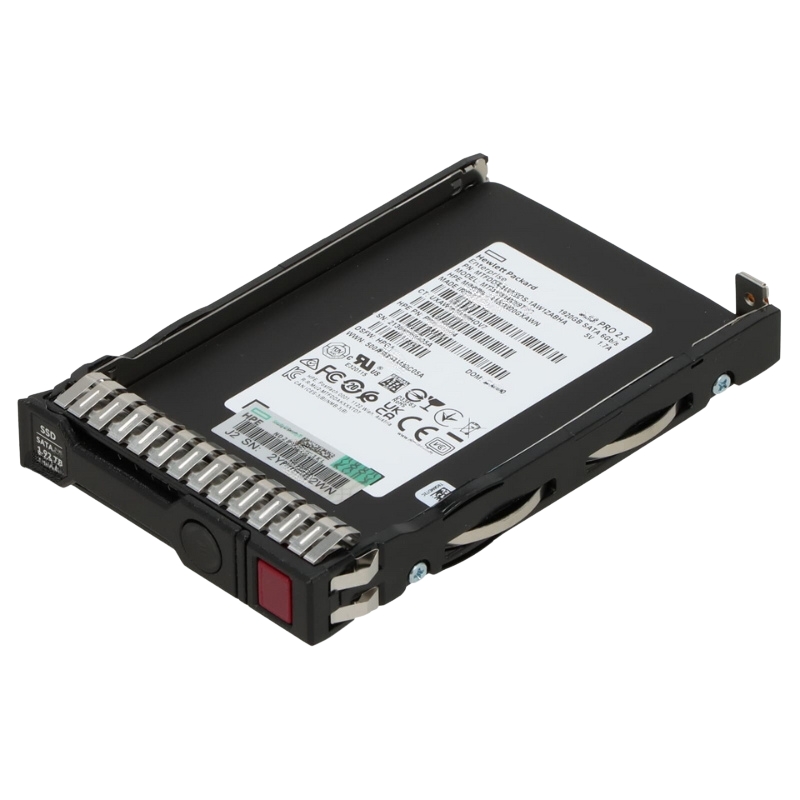
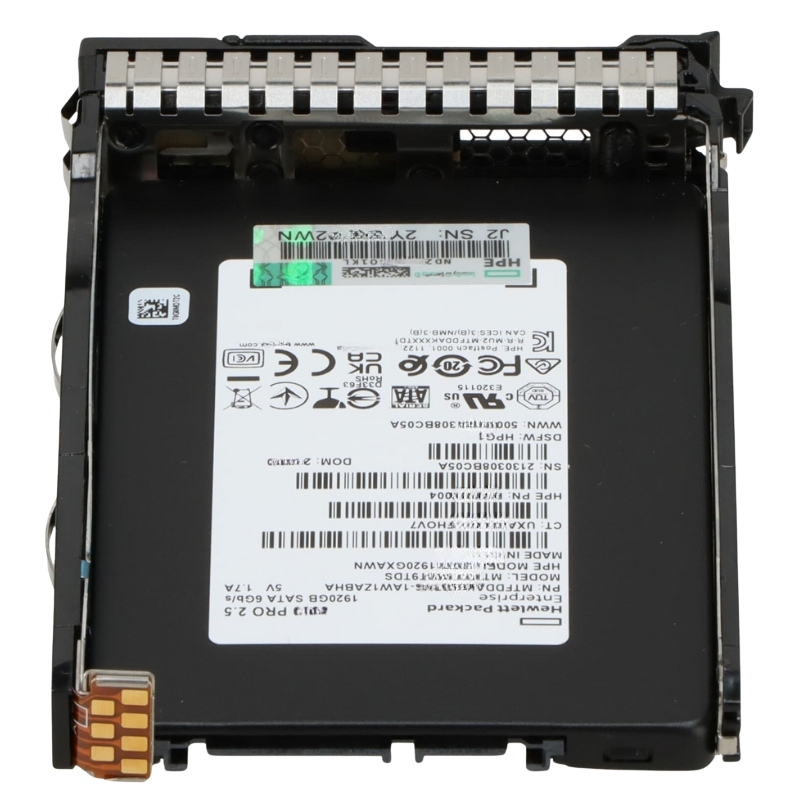
HPE 842507-001 1.92TB SATA 6GBPS RI-3 With Tray SFF SC SSD. Excellent Refurbished with 1 Year Replacement Warranty
The unit is developed and produced by Hewlett Packard Enterprise, a globally recognized leader in enterprise-grade computing solutions. The unique identifier for this specific component is the part number 842507-001, which is also its primary SKU for inventory and ordering purposes.
The HPE 842507-001 1.92TB SATA 6Gbps RI-3 with Tray SFF SC SSD is an enterprise-class solid-state drive engineered to deliver reliable, predictable performance for read-intensive applications. Built on proven NAND flash technology and qualified through Hewlett Packard Enterprise’s rigorous validation program, this Small Form Factor (SFF) Smart Carrier (SC) drive integrates cleanly with HPE ProLiant servers and HPE storage platforms to offer a balanced approach to capacity, efficiency, and total cost of ownership. The RI-3 endurance class is tuned for environments where the majority of operations are reads—think virtualized desktops, web front-ends, data analytics lookups, media streaming catalogs, and general-purpose VM farms—while still maintaining robust write handling for daily operations like OS updates, logging, and metadata changes.
Designed for 2.5-inch drive bays and shipped with the correct HPE tray, the HPE 842507-001 simplifies deployment: slide the Smart Carrier into an HPE hot-swap bay, initialize the drive through your Smart Array controller or HPE Smart Storage Administrator, and the storage is production-ready in minutes. With a native SATA 6Gb/s interface and HPE firmware that aligns with ProLiant best practices, the drive provides consistent latency, advanced error correction, end-to-end data path protection, and a full suite of monitoring telemetry to help administrators maintain fleet-wide health at scale.
Primary Classification and Function
This product is fundamentally categorized as a data storage device, specifically engineered for rapid data access and enhanced reliability.
The following parameters define the operational capacity and interface capabilities of this storage unit.
The device offers a substantial storage volume of 1.92 Terabytes (TB), providing ample space for critical applications, operating systems, and user data. It utilizes the SATA Revision 3.0 interface, also known as SATA 6Gb/s, ensuring broad compatibility with a wide array of server and storage systems.
This SSD is optimally designed for deployment in HPE server platforms and compatible systems, aiming to boost I/O performance, decrease latency, and improve overall system responsiveness compared to traditional hard disk drives (HDDs).
At the core of the HPE 842507-001 is a carefully tuned NAND flash subsystem controlled by enterprise-grade controllers and HPE-validated firmware. The firmware balances wear-leveling, garbage collection, and read caching to prioritize low and consistent read latencies. The 6Gb/s SATA interface is broadly compatible with HPE’s mainstream controllers and backplanes, enabling seamless integration across a wide set of blade and rack server platforms that accept SFF drives.
Read-intensive SSDs like this RI-3 model allocate over-provisioned space to keep garbage collection efficient and to maintain steady I/O under bursty conditions. Over-provisioning also provides room for bad block management as flash cells naturally wear over time. While the endurance budget is more conservative than mixed-use or write-intensive SKUs, the RI-3 class is engineered to easily sustain typical enterprise read-heavy patterns with occasional write spikes, all while keeping write amplification low. The result is predictable performance and longevity aligned to the drive’s intended duty cycle.
Enterprise SSDs are expected to preserve in-flight data during sudden power events. The HPE 842507-001 includes power-loss protection (PLP) mechanisms that help ensure committed data reaches non-volatile storage, reducing the risk of metadata corruption or partial page writes. Combined with end-to-end data path protection, robust ECC schemes, and periodic background scans, the drive provides integrity features beyond consumer-grade SSDs, aligning with data center reliability requirements.
The Small Form Factor Smart Carrier integrates mechanical and electrical design considerations to keep the drive properly cooled within dense chassis. The venting pattern promotes front-to-back airflow, while the latch and handle design support hot-swap serviceability. Front-panel LEDs communicate activity, identification, and fault status, helping technicians quickly validate installation or isolate an issue during maintenance windows.
The SATA 6Gbps interface delivers dependable throughput for read-heavy workloads with streamlined cabling and wide ecosystem support. In HPE environments, the drive is typically managed by Smart Array controllers or host bus adapters that expose advanced features such as RAID configuration, drive firmware management, predictive failure analytics, and secure erase operations. The result is a unified storage experience: drive, carrier, backplane, and controller all validated as a system.
While synthetic benchmarks can vary, real enterprise outcomes depend on queue depth, block size, and workload mix. For the HPE 842507-001, you can expect very strong performance for random and sequential reads, with efficient handling of moderate write bursts such as log commits, VM snapshots, and application patches. Consistency is the emphasis: low, stable latency tends to yield more predictable application behavior compared to spinning media, and the drive’s firmware is optimized to reduce jitter that can impact tail latency.
Modern hypervisors and application stacks benefit from SSDs that maintain sub-millisecond to low-millisecond latencies under varying queue depths. The RI-3 tuning prioritizes fast read response even as the queue depth increases, which is especially valuable for web/API tiers, search indices, and content delivery nodes that issue many parallel read requests.
Large block sequential reads—such as streaming content or backup verification—benefit from the SATA interface’s sustained throughput. Random read patterns—prevalent in VM boot storms or database lookups—exploit the SSD’s parallelism to deliver orders-of-magnitude lower access times than HDDs. For mixed patterns, leveraging RAID striping and controller cache policies can preserve read efficiency while accommodating regular write activity.
HPE classifies enterprise SSDs by intended usage patterns. The RI-3 tag indicates a read-intensive profile with a specific endurance band designed for workloads where reads dominate. This categorization assists capacity planners in matching drives to application behavior, preventing over-spend on high-endurance SKUs for read-heavy roles and avoiding under-sizing write capacity for write-intensive roles.
If your applications exhibit sustained write patterns—continuous logging at high IOPS, write-heavy databases, or high-frequency transactional workloads—consider HPE mixed-use or write-intensive SSD lines for higher DWPD (Drive Writes Per Day). In mixed environments, blending RI-3 drives for read tiers and MU/WI drives for write tiers can optimize both cost and durability.
This product ships as an SFF (2.5-inch) drive mounted in an official HPE Smart Carrier tray. The carrier ensures proper mechanical fit, cooling, and LED signaling within HPE bays. Having the correct tray preinstalled eliminates guesswork, supports hot-plug operations, and preserves the server’s designed airflow. The standardized latch mechanism speeds deployment in large rollouts and reduces human error during maintenance.
In HPE environments, the 842507-001 is typically managed with HPE Smart Array controllers (or compatible HBAs) and administered through tools like HPE Smart Storage Administrator (SSA). These tools streamline RAID creation, secure erase, drive firmware updates, and health monitoring. With consistent telemetry across the fleet, you can standardize firmware baselines, enforce encryption policies where supported by platform, and automate monitoring via iLO integrations and management scripts.
SMART attributes, controller-level diagnostics, and error counters help teams act before failures impact availability. Trend analysis of reallocated sectors, media wearout indicators, and controller-reported anomalies can inform proactive replacement cycles. Pairing this drive with HPE’s management stack lets administrators surface actionable insights in centralized consoles, reducing mean time to repair and minimizing unplanned downtime.
Keeping firmware aligned to HPE’s recommended baselines helps ensure maximum compatibility and stability. Planned maintenance windows are ideal for staged updates, accompanied by recent backups and change management approvals. Post-update validation—verifying RAID states, checking logs, and reviewing latency—confirms the environment remains healthy.
Deploying the HPE 842507-001 effectively means understanding your workload’s I/O profile and matching it to the right RAID level, caching strategy, and capacity layout. Below are patterns that consistently yield strong results.
For read-intensive scenarios, enabling read-ahead or adaptive read caching at the controller can enhance throughput for sequential access patterns. Aligning filesystem or application block sizes to the SSD’s internal page and erase block geometry can reduce write amplification and improve consistency. Test representative workloads to confirm your chosen policies improve tail latency as well as average performance.
Modern operating systems and hypervisors support TRIM/UNMAP to inform the SSD about blocks that are no longer in use. Ensuring these features are enabled allows the drive to reclaim space proactively, keeping garbage collection efficient and write amplification low. For virtualized environments, validate end-to-end UNMAP from guest OS through the hypervisor to the storage device.
The SATA 6Gb/s interface is widely adopted and budget-friendly, making it a pragmatic choice for read-intensive tiers. While SAS and NVMe deliver higher bandwidth and deeper queue capabilities, SATA remains compelling for many front-end, caching, and general VM workloads thanks to its attractive $/TB, sufficient read throughput, and excellent latency enhancements over HDDs. In mixed stacks, NVMe can serve ultra-hot data and write-heavy logs, while SATA SSDs like the HPE 842507-001 can hold warm data and read-mostly layers, yielding an optimal cost-performance balance.
Enterprise deployments often require secure lifecycle handling. While specific feature sets vary by platform and controller pairing, administrators can leverage secure erase functions, role-based access to management utilities, and encryption options at the platform or controller layer. Align your implementation with organizational policies for data retention, privacy, and decommissioning, and document procedures for chain-of-custody when replacing drives.
Before repurposing or retiring a drive, use controller-integrated sanitization features to render stored data unrecoverable. Pair the process with audit logs and asset tracking to maintain compliance with internal and external requirements.
Long-term success with any enterprise SSD depends on well-understood operational rhythms. The following practices help maintain performance and availability across the drive’s lifecycle.
Coordinate SSD firmware updates with OS, hypervisor, and controller updates. Maintain a change calendar, test updates in a staging cluster, and document rollbacks. After patching, run representative load tests to confirm latency, throughput, and error rates remain steady.
Keep on-site spares to meet your organization’s recovery time objectives. Label spares by firmware baseline and intended array type to simplify replacements. For data-bearing failures, ensure sanitization policies are followed before RMA or disposal.
Because the 842507-001 is optimized for reads, tuning focuses on keeping reads hot, minimizing unnecessary writes, and aligning housekeeping operations to low-traffic windows.
Organizations often adopt SSDs incrementally. Migrating hot datasets from HDDs to HPE 842507-001 drives can deliver immediate latency gains without redesigning the entire stack. Begin by profiling workloads to find read-heavy candidates, move them to SSD tiers, and measure improvements in tail latency and throughput. Over time, converge on a tiering strategy where SSDs handle hot and warm data while HDDs retain cold archives or sequential backup targets.
Even when applications are mostly read-heavy, protect data with snapshots, replication, or backup-to-disk jobs. SSDs improve backup verification and restore testing speeds, enabling more frequent drills and faster RTOs. Coordinate snapshot retention with capacity planning to avoid surprise space consumption following long maintenance windows or batch workflows.
The HPE 842507-001 is engineered for HPE ecosystems that utilize SFF bays and SATA backplanes. While platform-specific support details vary, the design intent is straightforward: turn-key insertion into compatible HPE servers and storage units, managed via HPE Smart Array controllers or qualified HBAs. For planning, align server model, backplane type, and controller firmware with your storage policy. Verify any special requirements for secure boot environments, encryption, or specialized hypervisors before large rollouts.
Fast storage doesn’t replace good data protection. Snapshots offer near-instant point-in-time recovery for misconfigurations or logical errors; replication extends resilience across sites; backups provide a last line of defense against ransomware or catastrophic failures. The consistent latency of SSDs accelerates these operations, allowing tighter RPOs and quicker RTOs with fewer production impacts. Organize snapshot retention policies with capacity headroom and schedule off-site replication during non-peak hours.
Run restore drills to verify end-to-end recoverability: boot VMs from snapshots, validate database integrity checks, and time the full restore of representative datasets. SSD-backed test restores complete faster, enabling more frequent assurance cycles.
At scale, small efficiencies add up. Standardize on configuration templates for RAID, cache policies, and monitoring thresholds. Use automation to deploy firmware baselines and to collect SMART and controller health data. Tag drives by role (e.g., “RI-3 read tier”) in inventory systems to simplify replacements and upgrades. Build runbooks for common events—like a predicted drive failure—to shorten response time and reduce errors during nighttime incidents.
Capture lessons learned from performance tests, maintenance windows, and incident postmortems. Keep a living document with recommended queue depth settings, filesystem mount options, and UNMAP schedules for the platforms you run. Consistent onboarding materials for new administrators help preserve best practices across personnel changes.


 Contact Us
 Information
 Catalog
 Solid State Drives (SSD)
 Network Switches
 Hard Disk Drives
 HBA & Controllers
 PC & Servers
 PC & Server Memory
 CPU & Processors
 Network Routers
 Power Supplies
 Tape Drives & Libraries
 Network Devices
 Computer & Network Cables