(7% discount is applied at checkout)
Cart is empty
Your go-to destination for cutting-edge server products
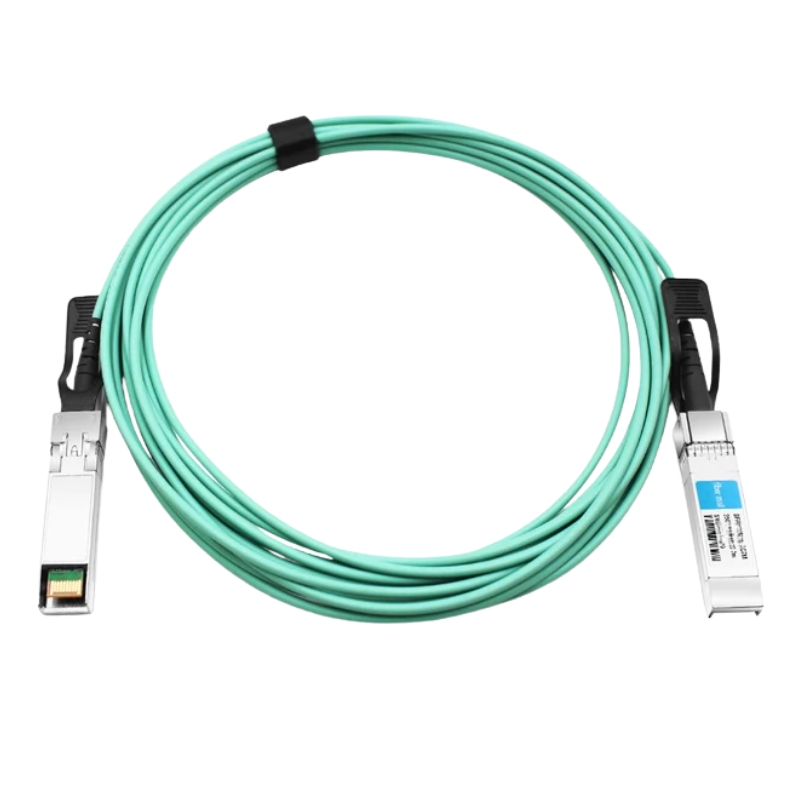


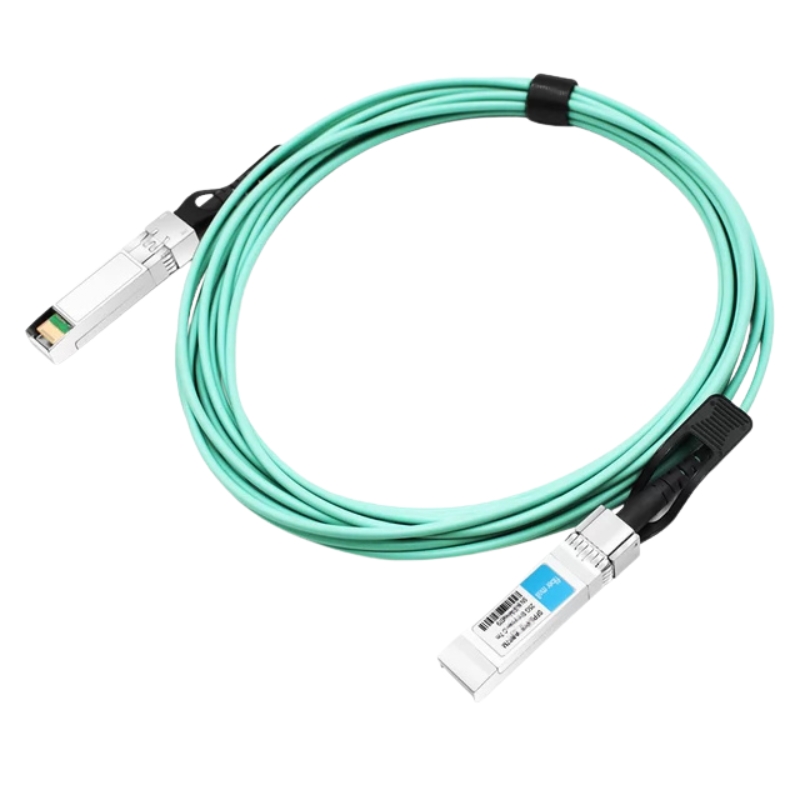
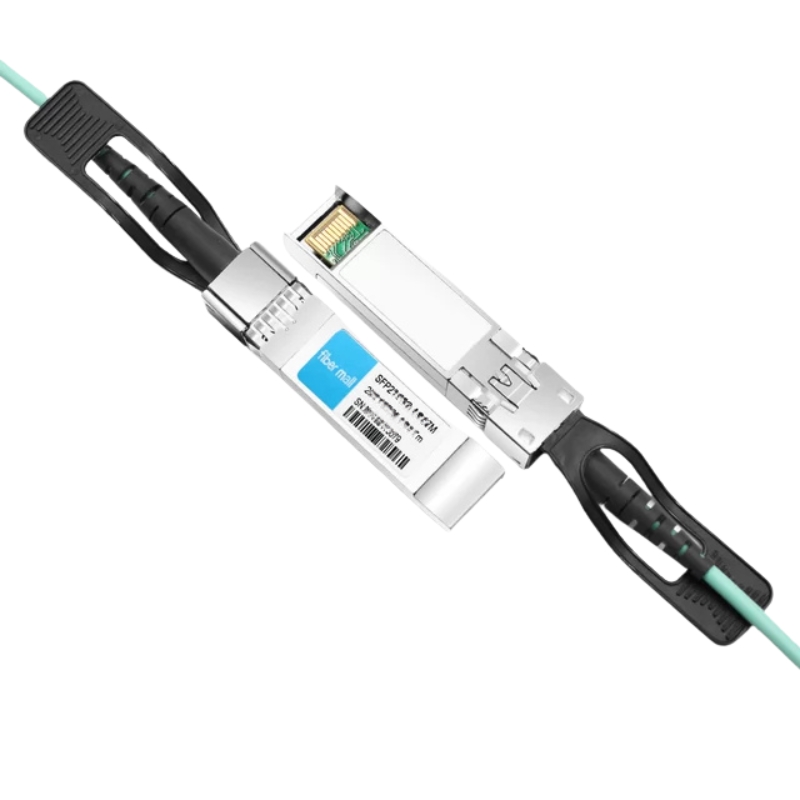
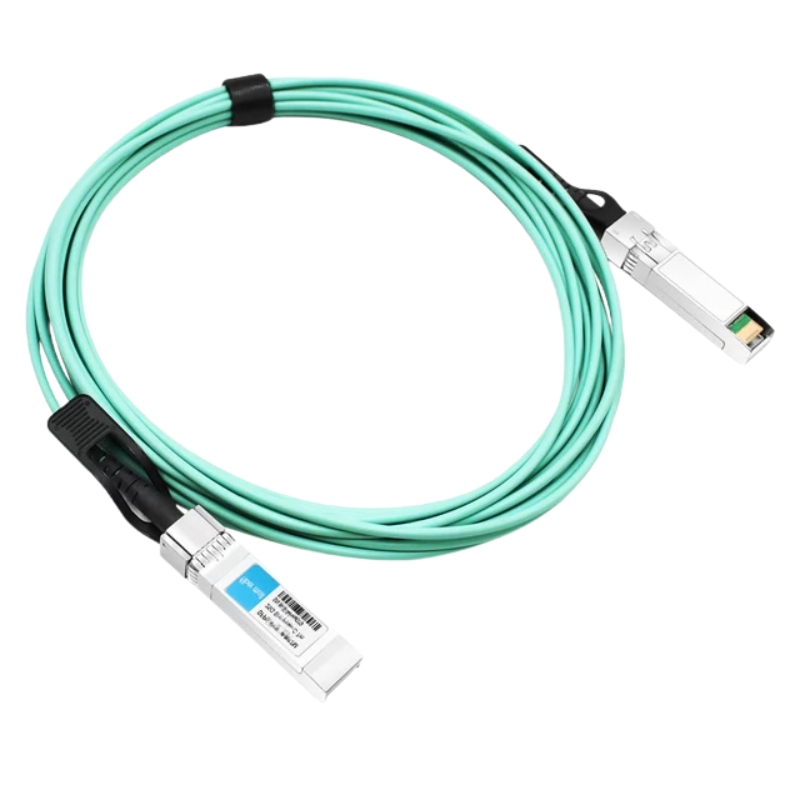
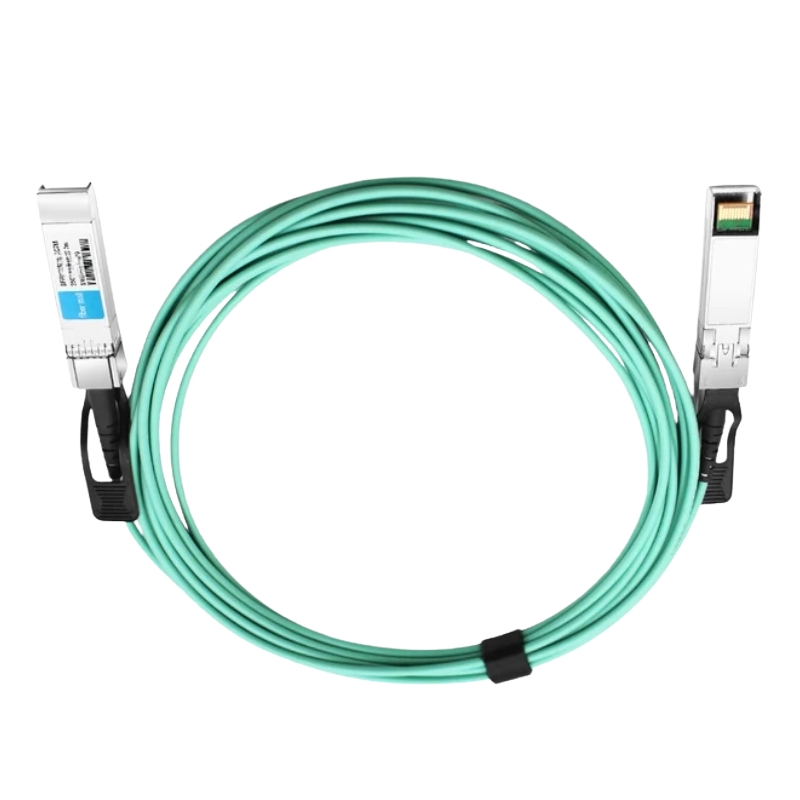
HPE 844485-001 25GbE SFP28 to SFP28 7m Active Optical Cable. Factory-Sealed New in Original Box (FSB) with 3 Years Warranty
The HPE 844485-001 25GbE SFP28 to SFP28 7m Active Optical Cable is a high-performance networking component designed to deliver reliable connectivity and efficient data transfer speeds. This optical cable provides enhanced bandwidth capacity, energy efficiency, and reduced latency for modern data centers and enterprise networks.
This HPE Active Optical Cable is engineered to provide the following benefits:
This active optical cable is suitable for a variety of network environments where dependable high-speed connectivity is crucial. Some of the common use cases include:
The HPE 844485-001 is designed to integrate seamlessly with Hewlett Packard Enterprise servers, storage, and networking hardware. Its compatibility ensures stable performance and long-term reliability.
Selecting this optical cable ensures that enterprises achieve optimal network speed, reliability, and scalability. Its energy-efficient design and compatibility with HPE solutions make it a preferred choice for IT professionals looking for a robust and future-ready networking component.
The HPE 844485-001 25GbE SFP28 to SFP28 Active Optical Cable (AOC) category covers a family of high-performance, factory-terminated optical interconnects designed to link SFP28 ports at 25 Gigabit Ethernet speeds. This category description focuses on product attributes, performance benefits, deployment scenarios, and the practical considerations buyers, network engineers, and procurement teams need to know when selecting AOCs for data center and enterprise networks. Rather than a single-item spec sheet, the category addresses variations, application niches, compatibility considerations, and value propositions that help purchasers compare options, plan cabling architectures, and optimize link performance across top-of-rack, end-of-row, and server-to-switch topologies.
AOCs in the HPE 844485-001 25GbE SFP28 to SFP28 class deliver an attractive combination of performance, ease of use, and operational cost savings for short- to medium-reach links inside racks and across adjacent racks. They are engineered to reduce manual fiber termination and connector handling by bundling the transceivers, fiber, and electronics inside a single factory-tested assembly. The result is a plug-and-play optical solution that reduces installation time and risk of contamination while delivering consistent signal integrity.
Items in this category conform to the SFP28 mechanical and electrical form factor at each end, with an integrated duplex fiber assembly in between. The AOC assembly typically uses an MPO or bundled LC-style duplex arrangement internally and terminates in SFP28 compliant connectors. The cable jacket is usually a flame-retardant, flexible polymer rated for data center environments; bend-insensitive fiber and strain relief features are common to protect the internal fibers and electronics. Because AOCs are active devices, the transceiver electronics at each SFP28 end are pre-attached and typically recognized by the host switch as standard SFP28 ports, which makes them functionally identical to pluggable transceivers from the host OS perspective.
Performance is defined by guaranteed 25Gbps throughput, low bit error rates (BER), and latency characteristics appropriate for loss-sensitive workloads. Since the AOC optics and electronics are factory-matched and tuned, customers benefit from deterministic loss budgets and link margins that simplify capacity planning. Important metrics in the category include supported data rate (25.78125 Gbps line-rate for 25G Ethernet), insertion loss, return loss, supported temperature range, and power dissipation per transceiver end. Buyers should evaluate the listed insertion loss and minimum link margin to validate that the chosen AOC meets the deployment’s resilience targets.
The HPE 844485-001 staged category often references HPE-validated AOCs and HPE-compatible assemblies. When selecting from this category, compatibility with switches, routers, and network interface cards (NICs) is essential. Native HPE-labeled cables provide the highest compatibility assurance with HPE switches and NICs, including firmware-level management, asset tagging, and accurate diagnostic reporting. Third-party compliant AOCs can offer cost savings but may require validation for switch compatibility, link power negotiation, and telemetry.
This category is especially relevant for high-density data center fabrics where many 25GbE links are required for server-to-top-of-rack switch connectivity, spine-leaf architectures, and leaf-to-leaf paths. The low weight, small form factor, and tidy routing of optical fiber make AOCs attractive in hyperconverged environments and cloud-scale operations that demand high port density and minimal airflow disruption. Common use cases include:
Installing AOCs requires careful cable routing to preserve bend radius, protect strain reliefs, and avoid mechanical stress on SFP28 latches. Because the AOC ends are active transceivers, they should be handled like any hot-pluggable optics: keep dust caps in place until insertion, avoid repeated connector insertion cycles that may wear the latch, and allow the optics to reach ambient temperature if moved from cold storage into an operational environment.
AOCs often present diagnostic telemetry via the SFP28 EEPROM so monitoring tools can report optical power, temperature, vendor ID, and link status. When procuring cables in this category, check the level of diagnostic detail offered—HPE-labeled AOCs typically provide vendor-specific telemetry elements and may integrate into HPE’s management platforms for centralized monitoring and alerts.
Reliability expectations for the HPE 844485-001 25GbE SFP28-to-SFP28 AOC family include long MTBF (Mean Time Between Failures), robust bending tolerance, and consistent optical performance across diverse environmental conditions. Warranties and RMA processes vary by vendor, and HPE-branded or HPE-validated AOCs frequently come with enterprise-grade support terms. For large deployments, standardizing on a vendor with a clear lifecycle and long-term availability policy reduces the risk of obsolescence and simplifies spare parts management.
Selecting the right interconnect requires understanding tradeoffs between active optical cables (AOCs), direct attach copper (DAC) twinax cables, and discrete pluggable transceivers plus patch fiber. AOCs sit between DACs and pluggable transceivers in terms of cost, distance capability, and thermal properties:
AOCs are typically designed to meet data center safety and flammability requirements such as CMP (plenum), CMG, or LSZH ratings depending on the jacket material. Buyers should verify the jacket rating against the installation environment (plenum spaces, cable trays, underfloor plenums). Additionally, AOCs do not radiate RF and therefore are favorable where electromagnetic emissions are a concern. Environmental operating temperature ranges and humidity tolerances are also important to confirm for edge or non-climate-controlled environments.
Network cabling is often overlooked as a security vector. AOCs mitigate certain risks because they are fully factory-terminated and do not expose exposed patch points within a patch panel. However, they are still physical links and should be included in access control and change management processes. Labeling, tamper-evident seals in high-security applications, and controlled access to racks are recommended best practices.
When comparing products in the HPE 844485-001 25GbE SFP28-to-SFP28 AOC category, review vendor specification sheets carefully for electrical/optical performance, guaranteed link distances at 25GbE, breakout or reverse-compatibility details, and the list of validated platforms. Look for clear support policies, part-number cross-references, and test reports that demonstrate compliance with Ethernet standards. For enterprise deployments, HPE-endorsed or HPE-validated parts may justify a premium for the reduced integration risk and vendor support alignment.
Effective inventory naming and lifecycle tagging are essential for managing large fleets of AOCs. Use consistent part-number mapping that combines the vendor SKU, length, and destination rack/port mapping. If your configuration management database (CMDB) tracks physical assets, include the cable serial, length, and purchase batch to simplify troubleshooting when issues appear across multiple similar links.
To simplify procurement decisions, purchasing teams should collect and verify a standard set of information before issuing purchase orders. This reduces returns, compatibility issues, and unexpected project delays.
For data center operators implementing thousands of 25GbE links, standardizing on a validated AOC SKU and length matrix streamlines installation and reduces troubleshooting complexity. Batch testing, serialized labeling, and staging inventory in advance of rack moves enable predictable cutovers. Consider performing burn-in testing and continuous monitoring in the first weeks after install to detect early failures and defective batches.


 Contact Us
 Information
 Catalog
 Solid State Drives (SSD)
 Network Switches
 Hard Disk Drives
 HBA & Controllers
 PC & Servers
 PC & Server Memory
 CPU & Processors
 Network Routers
 Power Supplies
 Tape Drives & Libraries
 Network Devices
 Computer & Network Cables