(7% discount is applied at checkout)
Cart is empty
Your go-to destination for cutting-edge server products
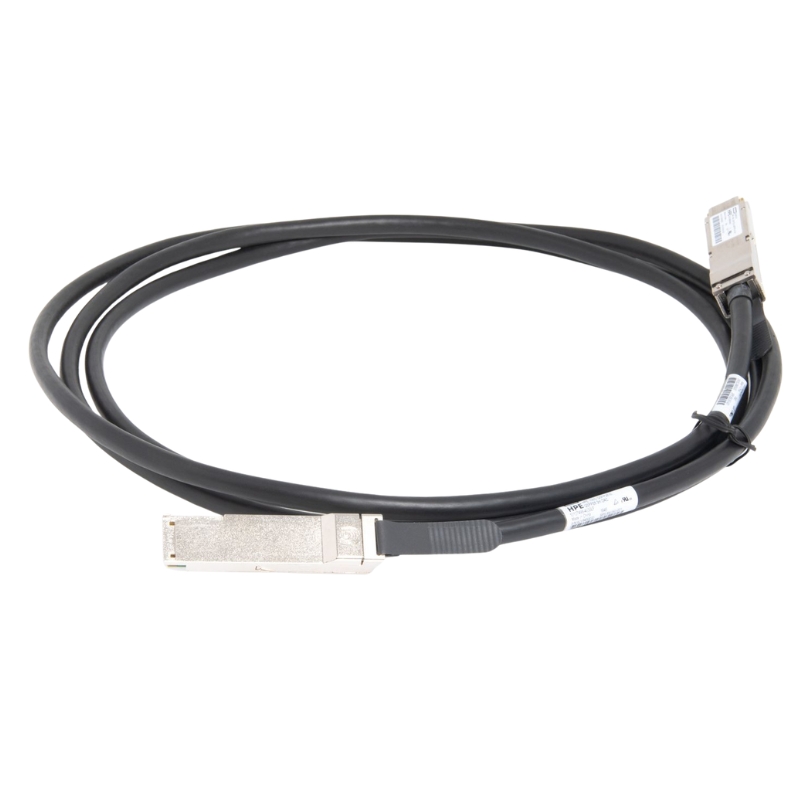


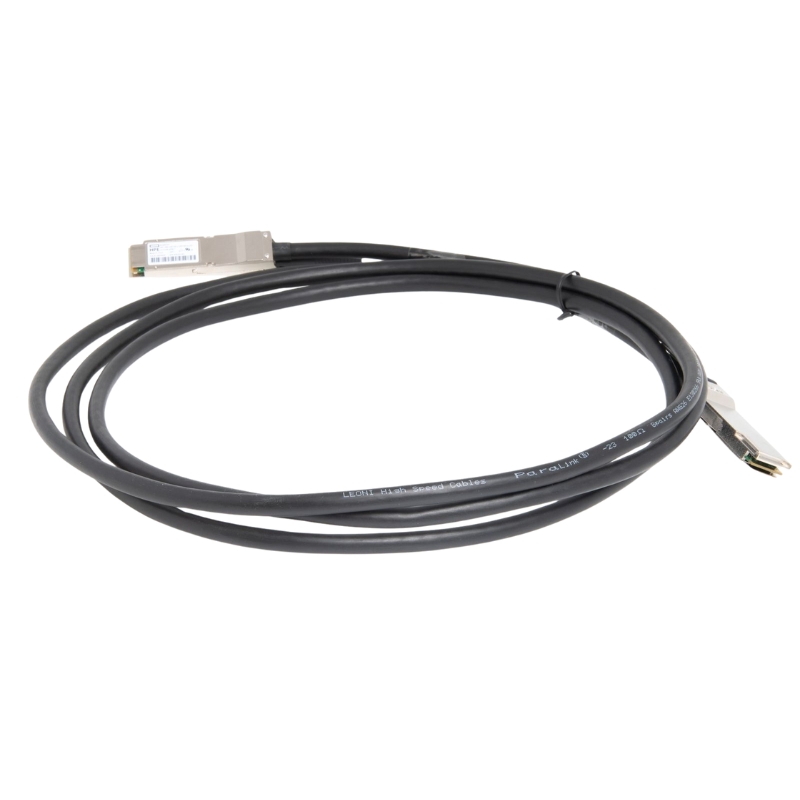
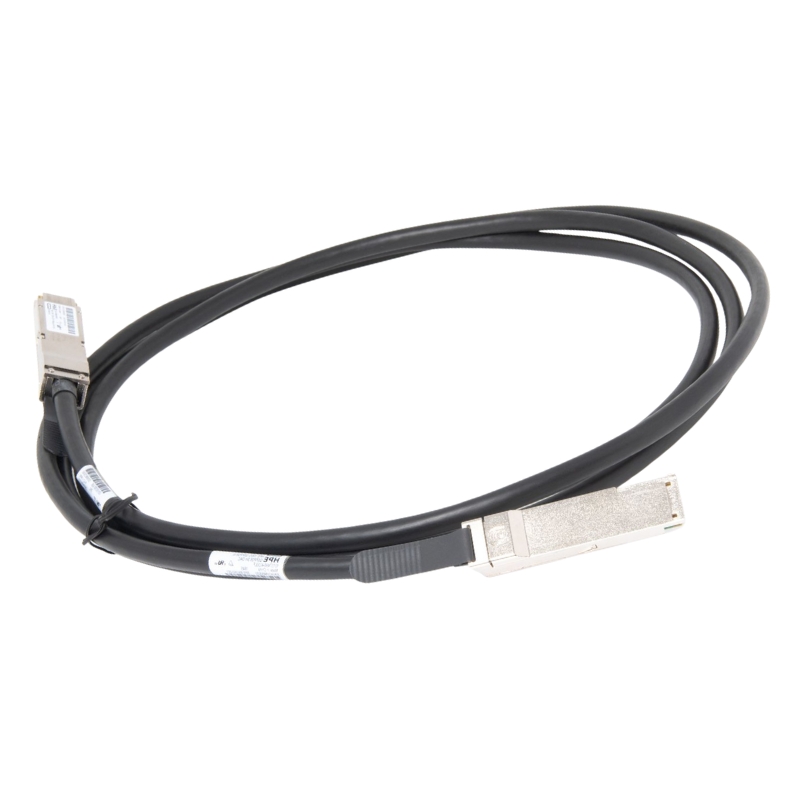
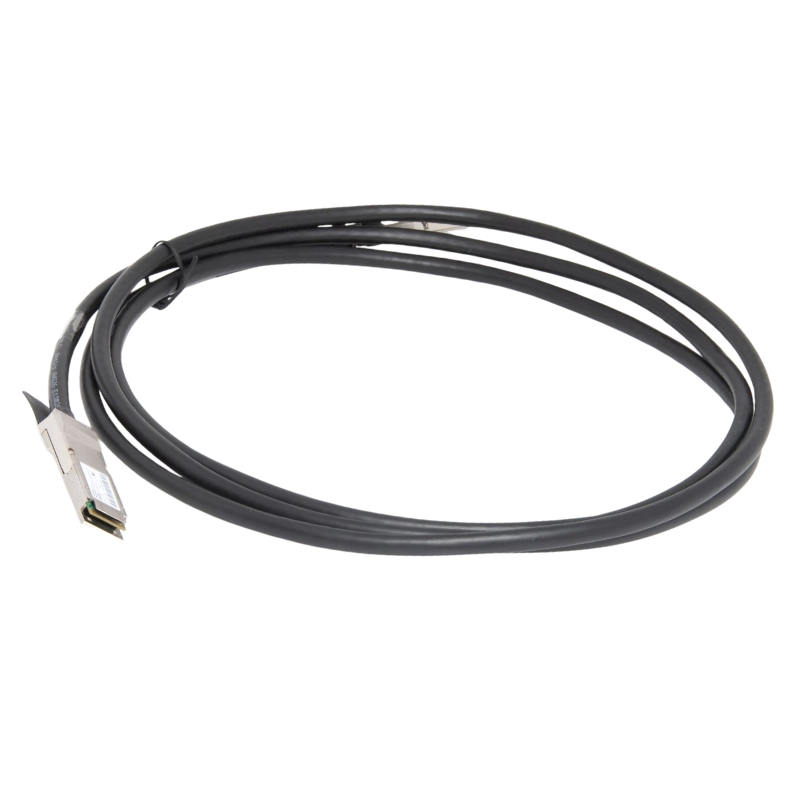
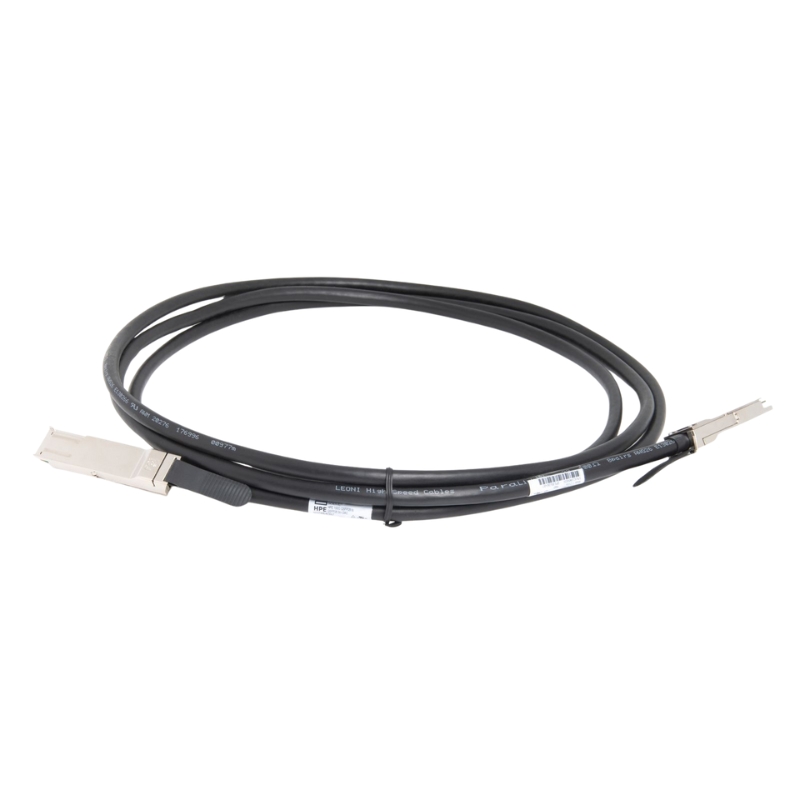
HPE 845405-001 100GB QSFP28 to QSFP28 3m Direct Attach Copper Cable. Excellent Refurbished with 1 year replacement warranty
The HPE 845405-001 100GB QSFP28 to QSFP28 3m Direct Attach Copper Cable is a high-performance interconnect solution designed to meet the growing demands of modern data centers and enterprise networking environments. With its 100Gbps transmission speed and durable 3-meter length, this passive DAC cable ensures reliable connectivity, reduced latency, and optimal efficiency for high-bandwidth applications.
Choosing the HPE 845405-001 100GbE QSFP28 to QSFP28 3m DAC offers multiple advantages for IT professionals and businesses upgrading their networking infrastructure. This interconnect is specifically engineered for seamless integration with HPE switches, servers, and storage platforms.
The HPE 845405-001 DAC is perfect for organizations seeking cost-effective, high-speed connectivity within short distances. It enables streamlined networking in various scenarios:
The HPE 845405-001 100GB QSFP28 to QSFP28 3m Direct Attach Copper (DAC) Cable belongs to a focused category of high-performance, short-reach interconnects designed for modern data centers, high-performance computing (HPC) clusters, hyperscale switching fabrics, and top-of-rack (ToR) aggregation. This category — 100Gb QSFP28 to QSFP28 DAC — emphasizes reliability, low latency, power efficiency, and cost-effective short-distance connectivity. Use this category description to highlight the distinct advantages of 100Gb QSFP28 DACs, identify the typical deployment scenarios, compare alternatives, and provide practical guidance for selection, installation, and lifecycle management.
Performance attributes to emphasize for buyers include channel insertion loss, return loss, crosstalk characteristics, and whether the cable supports passive direct attach or requires active equalization chips (usually in longer or higher-speed twinax assemblies). For 3m lengths the cable may be passive with excellent signal integrity across short runs, minimizing cost and power draw while keeping latency effectively at wire speed.
One of the principal benefits of copper DAC interconnects in the 100Gb QSFP28 category is minimal latency. Because these are electrical connections with no optical conversion, signals traverse the cable with near-instant propagation delay, offering deterministic performance desirable for trading systems, HPC messaging layers, and latency-sensitive storage fabrics.
Passive 3m DACs typically add negligible power draw to the host ports compared to optical modules. This yields lower cumulative power consumption across dense switch fabrics and reduces cooling burden. When evaluating deployments at scale, include power-per-port comparisons in total cost of ownership (TCO) calculations to show long-term savings.
Buyers should verify compatibility between the HPE 845405-001 (or any QSFP28 DAC SKU) and their specific switch, router, or adapter model. Although the QSFP28 form factor is standardized, vendors validate particular part numbers to guarantee electrical and management interoperability, like link training, port diagnostics, and firmware-based port controls. Provide clear compatibility matrices on product pages to reduce returns and support friction.
QSFP28 ports are often backward-compatible with lower-speed QSFP+ devices using appropriate lanes or breakout modes. For example, a QSFP28 physical connector can be used with 4x25G, 4x10G, or breakout configurations (1x100G or 4x25G), but actual support depends on the host device’s firmware and hardware capabilities. Always reference device release notes and vendor interoperability lists when documenting product compatibility.
Use QSFP28 3m DACs to connect ToR switches to adjacent aggregation or spine switches within the same rack or neighboring racks. Their short length and clean plug-and-play nature make them ideal for dense rack builds where fiber routing would be unnecessary overhead.
For servers equipped with QSFP28 network interface cards (NICs), 3m DACs are often used to connect directly to the local ToR switch, enabling 100Gb links for virtualization hosts, storage servers, and HPC nodes.
Performance-critical storage networks and clustered compute systems leverage DACs to reduce latency and jitter while maintaining high throughput and predictable performance.
When comparing DACs to optical alternatives, highlight trade-offs:
Passive twinax cables are typically used for very short reaches and have no active electronics; active DACs include integrated signal conditioning and support slightly longer reaches or enhanced eye margin. For a 3m length the design may be passive or low-complexity active depending on vendor engineering — specify whether the HPE 845405-001 is passive on the product page to set buyer expectations.
After installation, validate each 100G link by checking:
The QSFP28 form factor is a de facto standard for 100G electrical connectors. For category pages, emphasize industry-standard compliance, including mechanical dimensions and lane signaling conventions, so buyers are assured of fit-and-function across validated devices.
Provide operating and storage temperature ranges, humidity tolerances, and any specialized ratings such as RoHS compliance or halogen-free materials where applicable. Clear statements about environmental survivability help customers planning deployments in edge locations or non-traditional data rooms.
Copper assemblies are susceptible to EMI in noisy electrical environments. For installations near large power supplies or variable-frequency drives, route cables away from heavy electrical interference sources and use shielded patching channels where available.
Ensure end-to-end link settings (FEC, MTU, lane mapping) are correctly set to avoid undue retransmits. When possible, enable link-level diagnostics and periodic error monitoring to proactively address signal quality degradation before it impacts production traffic.
Monitor time-on-page for technical buyers, scroll depth to ensure long-form content is consumed, and FAQ click interactions to see what buyers still need to know. Use this data to iteratively improve product descriptions and address friction points in the purchase journey.


 Contact Us
 Information
 Catalog
 Solid State Drives (SSD)
 Network Switches
 Hard Disk Drives
 HBA & Controllers
 PC & Servers
 PC & Server Memory
 CPU & Processors
 Network Routers
 Power Supplies
 Tape Drives & Libraries
 Network Devices
 Computer & Network Cables