(7% discount is applied at checkout)
Cart is empty
Your go-to destination for cutting-edge server products
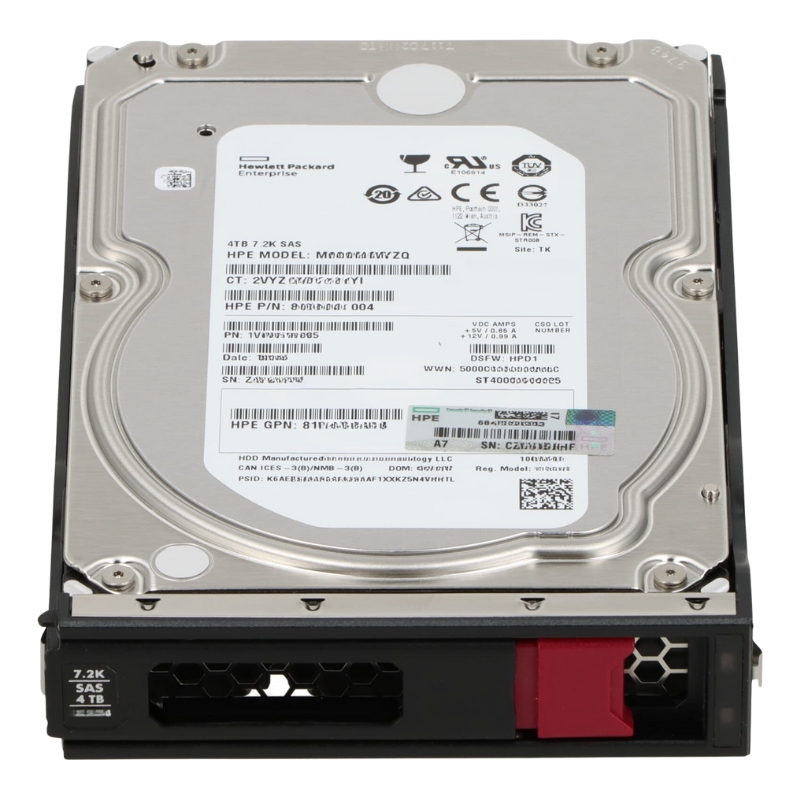


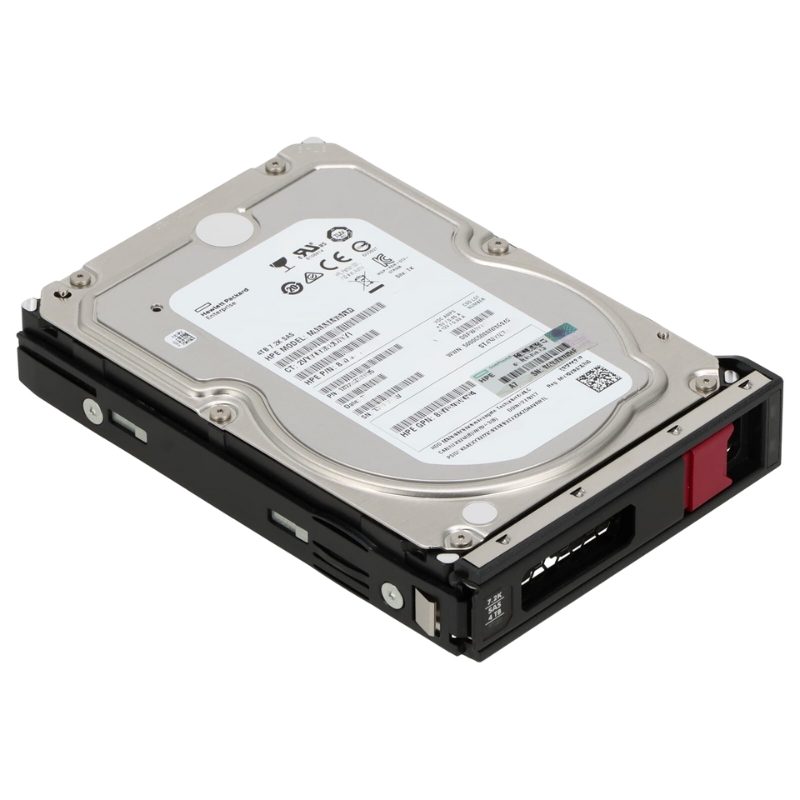
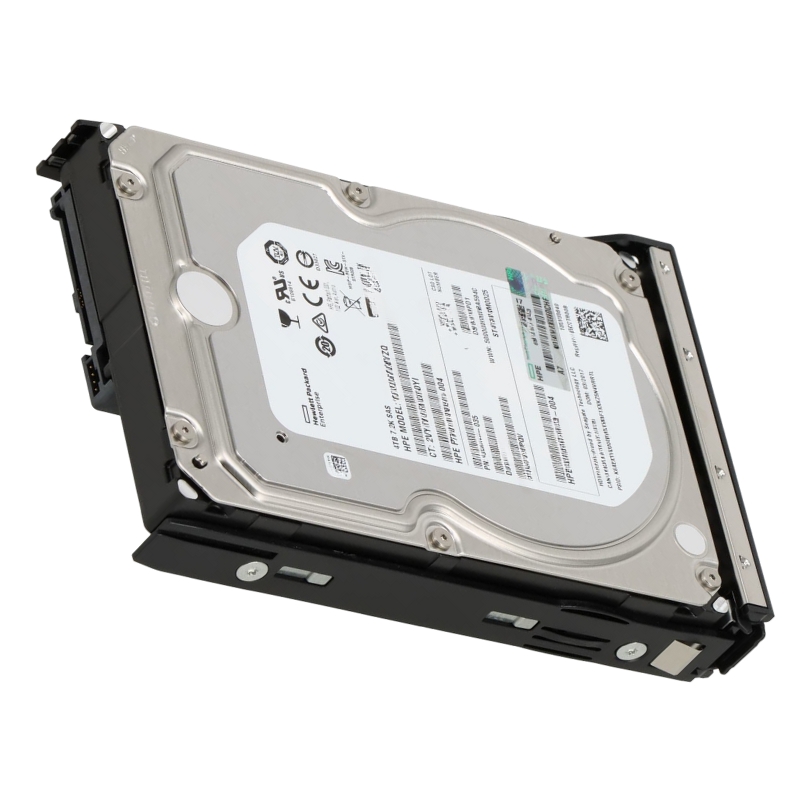
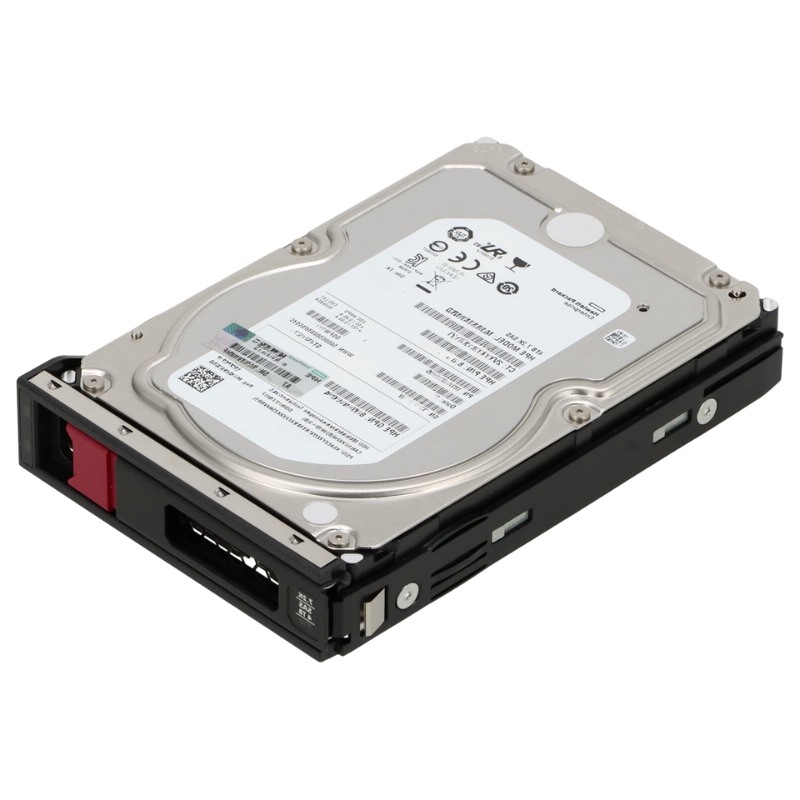
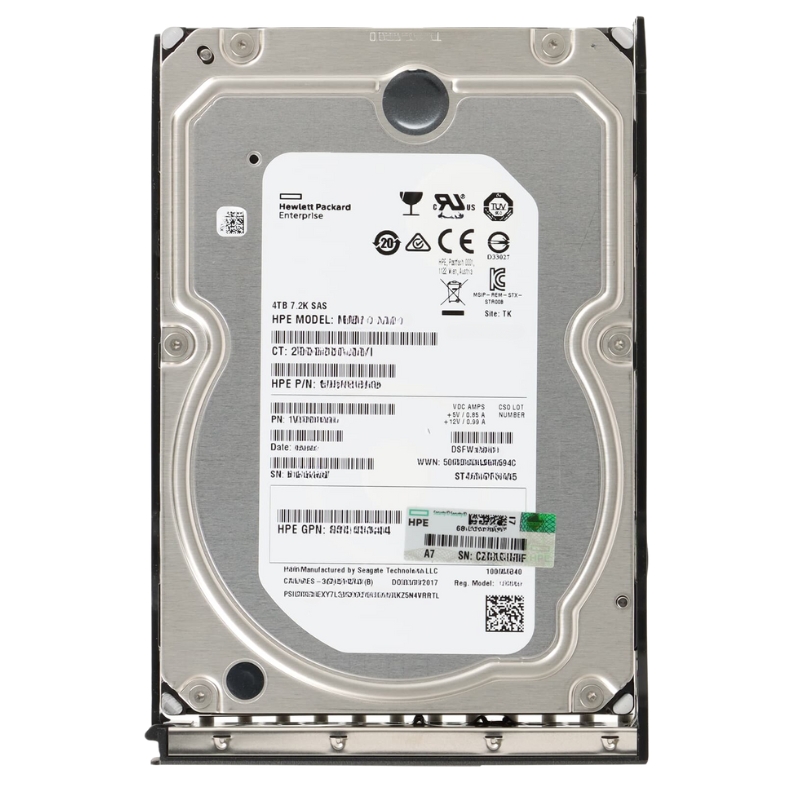
HPE 846787-005 4TB SAS 12GBPS 7.2K RPM 3.5Inch LFF LP 512e HDD. Excellent Refurbished with 1 year replacement warranty
The HPE 846787-005 is a high-capacity enterprise-class hard disk drive engineered for server and storage arrays that demand reliable, midline performance. This 4TB SAS (Serial Attached SCSI) drive delivers 12Gbps transfer rates, 7,200 RPM rotational speed and a 3.5-inch Large Form Factor (LFF) with a low-profile (LP) design — ideal for data-centric applications, backup nodes, and hybrid storage tiers.
Built for durability and predictable throughput, the HPE 846787-005 strikes a practical balance between cost and performance. It is especially well-suited for environments that need a large pool of persistent storage without the premium cost of top-tier performance drives.
The drive’s 7.2K RPM spindle provides consistent latency and power efficiency for workloads such as file servers, secondary replicas, archive storage and sequential-heavy tasks. The 12Gbps SAS interface ensures that the drive can participate in high-bandwidth arrays and scale-out storage architectures.
The HPE 846787-005 comes with a smart carrier tray attached, simplifying insertion into drive bays and enabling tool-less servicing. Its hot-swap capability minimizes downtime by allowing technicians to replace failed drives while the system remains operational.
Designed for enterprise usage, this midline HDD typically incorporates error recovery features, rotational vibration tolerance and power-management optimizations. These characteristics help safeguard stored data and improve long-term operational stability in multi-drive enclosures.
While the drive is built to integrate with HPE systems, ensure firmware and controller compatibility before deployment. Check drive bay types (SAS backplane) and verify that the target chassis supports 3.5-inch LFF, low-profile drives with hot-swap trays.
Follow simple deployment steps to maximize uptime and performance: hot-swap the unit into an empty bay, confirm drive recognition in system firmware/BIOS, and add it to your storage pool or RAID set per organizational policies.
The 12Gbps SAS interface provides a higher theoretical bandwidth than 6Gbps SATA/SAS drives, enabling improved throughput when grouped in RAID arrays or used with multi-path SAS controllers. With a rotational speed of 7,200 RPM, this HDD delivers steady sequential read/write throughput and predictable latency suitable for:
Expect moderate random IOPS compared with SSDs; however, when drives are deployed in dense RAID groups or in JBOD islands that leverage advanced caching and tiering, the aggregate performance becomes excellent for capacity-first tiers. For random I/O-sensitive primary databases and latency-critical transactional applications, consider a hybrid design: NVMe/SATA SSDs for hot tiers and HPE 846787-005 drives for bulk capacity.
These HDDs are specifically qualified to operate in many HPE systems and chassis. Compatibility highlights include HPE ProLiant Gen9/Gen10/Gen11 servers, HPE Apollo systems, and common 12Gbps SAS RAID controllers. The 512e sector emulation ensures legacy compatibility with operating systems and RAID stack expectations while delivering better physical media efficiency on Advanced Format platters.
Purchasing genuine HPE-labeled drives like the 846787-005 often includes vendor firmware that is tested against HPE system firmware for best interoperability. Using vendor-supplied firmware and diagnostics reduces the chance of drive dropouts, drive health misreporting, and RAID rebuild issues that sometimes arise when mixing non-HPE drives in HPE arrays. HPE support contracts typically require the use of certified components to maintain full hardware support — an important consideration for enterprise buyers.
The 3.5-inch LFF low-profile (LP) design provides a balance between physical capacity and chassis density. While 2.5-inch drives deliver higher density in server bays, 3.5-inch drives typically offer larger single-disk capacity at a lower cost per TB. The mechanical design adheres to standard SAS drive sled mounting points so that these disks can be replaced in hot-swap bays without custom adapters in most HPE enclosures.
As rotational drives, these HDDs consume more power and produce more heat than SSD options. For proper long-term reliability, account for the following when planning racks and cooling:
Enterprise-class drives like the HPE 846787-005 are designed with higher MTBF ratings than consumer HDDs, incorporating features such as rotational vibration tolerance (RVT), error correction algorithms, and robust mechanical bearings. While manufacturers publish MTBF numbers, the real-world reliability depends on operational environment, workload, and maintenance policies; plan for redundancy via RAID and regular health monitoring to maintain SLAs.
Because of its capacity-oriented design coupled with a robust SAS interface, this model is ideal in several architectural patterns that prioritize storage density and cost-efficiency:
Use the HPE 846787-005 as the bulk capacity tier behind an SSD-based cache layer. Modern storage controllers and software-defined storage platforms (SDS) can automatically tier hot data to SSDs while retaining colder datasets on high-capacity SAS disks. This approach reduces overall cost-per-GB while preserving acceptable performance for occasionally-accessed data.
In backup-to-disk workflows, 4TB SAS drives present an attractive balance between capacity, throughput for sequential writes, and total cost. When combined with deduplication and compression, an array of these drives can provide large backup targets that are both affordable and manageable.
In multi-tier data lakes, colder nodes often use HDDs with higher capacities to store historical logs, media assets, and compliance-related records. The HPE 846787-005 is appropriate for these roles where storage density and long-term retention matter more than ultra-low latency.
Deploying enterprise HDDs successfully requires attention to firmware, RAID configuration, and health monitoring. Follow these pragmatic steps to maximize uptime and performance:
Use drives of the same capacity and firmware level in RAID groups to avoid capacity mismatches and unpredictable rebuild behavior. When adding drives to an existing RAID set, choose identical models or thoroughly validated drives to maintain consistent rebuild timing and performance.
For larger arrays, RAID6 or erasure coding is often preferred because it offers protection across multiple simultaneous drive failures with lower performance impact than triple-mirror strategies. However, RAID rebuild times are longer with 4TB disks; plan for resiliency accordingly and consider hot spares and proactive disk rotation strategies to mitigate rebuild-related performance degradation.
Use HPE Integrated Lights-Out (iLO), StoreFabric diagnostics, and S.M.A.R.T. metrics to monitor drive health. Set up alerts for reallocated sectors, pending sector counts, and temperature thresholds. Early detection of degradation reduces data loss risk and helps schedule replacements without emergency interventions.
Choosing the right drive is about matching workload needs. Below is a comparative lens to help buyers decide when the 846787-005 is the right fit versus alternatives.
2.5-inch enterprise HDDs offer higher RPM and sometimes higher sustained IOPS per drive, enabling denser compute node storage. However, they usually have lower per-disk capacity than 3.5-inch models. If your priority is maximum TB per rack for cold storage, 3.5-inch 4TB drives like the 846787-005 are typically more cost-effective.
SATA drives tend to be cheaper and sometimes offer similar capacities, but SAS provides additional enterprise features such as dual-porting, better command queuing, and improved error recovery controls. When using RAID controllers in enterprise servers, SAS drives are often preferred for their manageability and multi-path redundancy.
SSDs deliver vastly superior random I/O and latency characteristics at higher cost per TB. NVMe devices outperform both HDDs and traditional SAS SSDs but at an even higher price. For primary hot tiers and transaction-heavy workloads, SSDs/NVMe are recommended; for cold bulk storage and backup targets, HPE 846787-005 provides the optimal price-to-capacity tradeoff.
Use multi-pass software wiping that adheres to standards (where required by policy), or physical degaussing/ shredding services if the disk platters need to be destroyed for the highest level of data protection. Note that mechanical destruction is irreversible and should be reserved for drives that are no longer required for reuse.


 Contact Us
 Information
 Catalog
 Solid State Drives (SSD)
 Network Switches
 Hard Disk Drives
 HBA & Controllers
 PC & Servers
 PC & Server Memory
 CPU & Processors
 Network Routers
 Power Supplies
 Tape Drives & Libraries
 Network Devices
 Computer & Network Cables