(7% discount is applied at checkout)
Cart is empty
Your go-to destination for cutting-edge server products


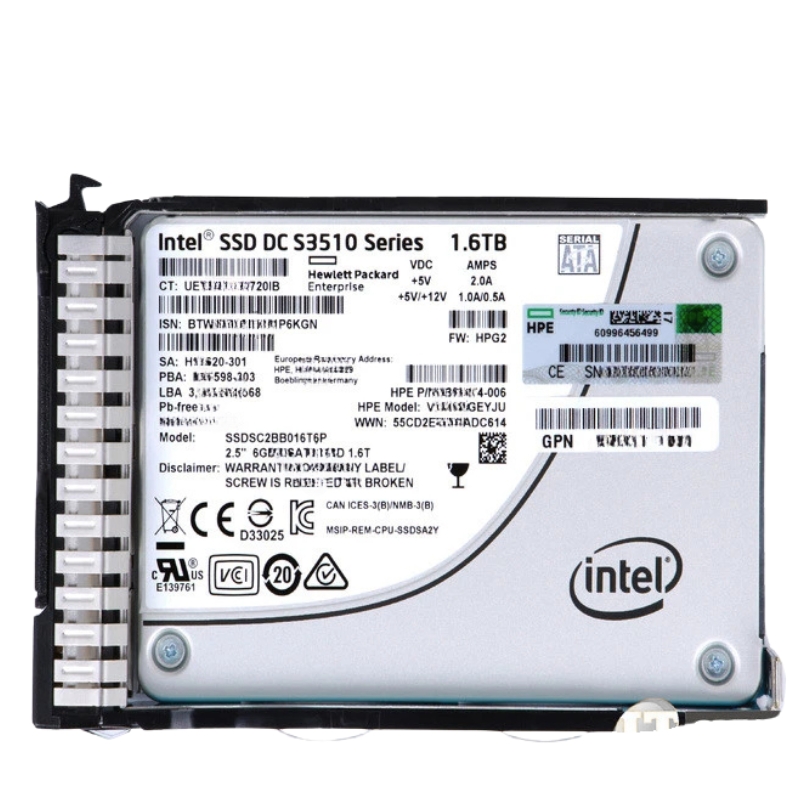
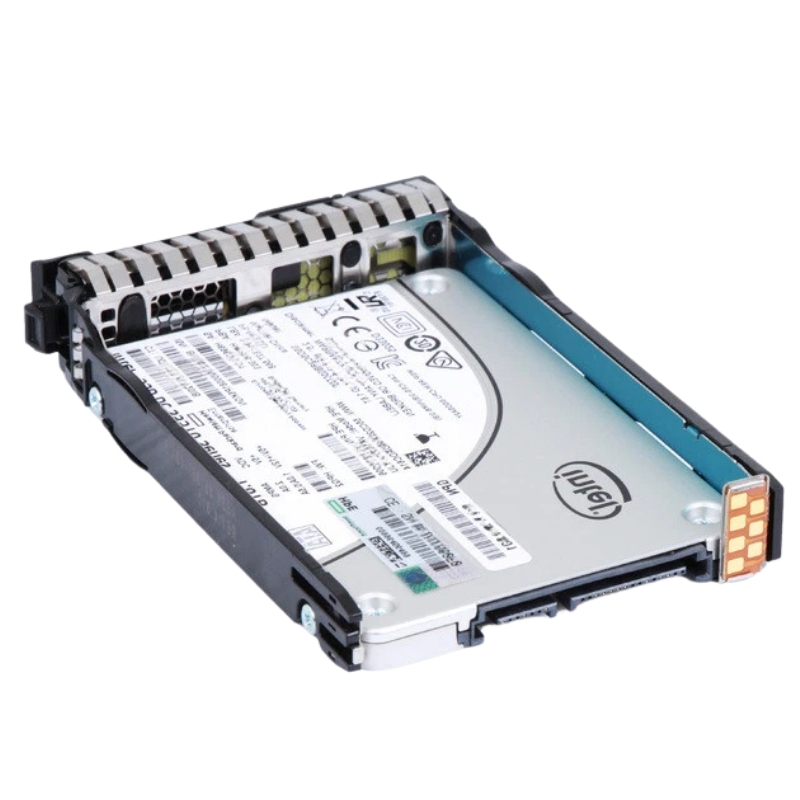
HPE 846788-B21 1.6TB SATA 6GBPS Mixed Use 3.5Inch LFF LPC SSD. Excellent Refurbished with 1 Year Replacement Warranty
The HPE 846788-B21 1.6TB SATA 6Gbps Mixed Use 3.5-Inch LFF LPC SSD is engineered to deliver enhanced performance for HPE ProLiant Server series platforms. Designed with enterprise-grade technology, this SSD provides exceptional endurance, superior IOPS performance, and lower power consumption compared to traditional hard disk drives (HDDs). It integrates seamlessly into existing HPE infrastructures, enabling IT professionals to achieve reliable storage solutions for mixed workloads.
This SSD is built to safeguard data integrity and provides continuous monitoring through HPE’s SmartSSD Wear Gauge, ensuring predictive analytics for drive life expectancy and avoiding data loss.
With 75000 IOPS for 4KB random read and 11000 IOPS for 4KB random write, the drive guarantees consistent speed and responsiveness, making it suitable for transactional databases, virtualization, and analytics.
Compared to traditional HDDs, the SSD reduces energy consumption while delivering faster performance, allowing enterprises to lower operational costs and minimize environmental impact.
The drive is purpose-built for mixed workloads, balancing read and write operations effectively, making it ideal for business-critical applications.
HPE SSDs integrate flawlessly with ProLiant Servers and HPE storage ecosystems, reducing complexity while maximizing uptime.
These drives are engineered with advanced firmware and features to secure enterprise data and support critical workload operations without compromise.
The HPE 846788-B21 is a purpose-built enterprise-class solid state drive designed for mixed-use workloads where capacity, consistent performance, and data center reliability matter. This 1.6TB SATA III (6Gb/s) drive ships in a low-profile carrier for 3.5-inch LFF bays and is targeted to HPE ProLiant and Apollo server platforms. Engineers used a mixed-use flash allocation profile to strike a balance between random read/write IOPS and long-term endurance, making the drive appropriate for consolidated file services, virtualization boot/storage tiers, caching layers, and general purpose server storage. Key mechanical and interface attributes — 3.5" low-profile form factor, single SATA port at 6Gb/s, and hot-plug capability — make it straightforward to integrate into rack servers and storage enclosures. :contentReference[oaicite:0]{index=0}
The most important hardware facts to know up front are capacity, interface, and form factor:
Vendors and HPE documentation list this model as a 1.6TB SATA MU LFF SSD and indicate it as part of HPE's G10/G11 generation drive family. That positioning clarifies compatibility with contemporary ProLiant and Apollo servers where LFF 3.5" bays are present. :contentReference[oaicite:1]{index=1}
Mixed-use SSDs like the 846788-B21 are provisioned to deliver strong random read IOPS while still maintaining significant write endurance compared with read-intensive drives. Typical characteristics to expect:
When planning storage tiers, position the 846788-B21 for workloads that require both capacity and responsiveness but do not demand the ultra-low tail latencies of NVMe drives. This makes it a sensible choice for hypervisor datastores, mid-tier databases, and frequently accessed object datasets.
HPE lists this drive for use in multiple platforms including HPE ProLiant and Apollo families — particularly servers and systems that accept 3.5" LFF low-profile carriers (for example Apollo 4200/4500 and ProLiant models documented in the drive and platform quickspecs). Before ordering, validate the server model, backplane type, and any firmware compatibility notes on HPE’s support pages or platform QuickSpecs. :contentReference[oaicite:2]{index=2}
SATA drives require a compatible SATA backplane or HBA (Host Bus Adapter). For some HPE configurations, selecting an HPE Smart Array controller or an HBA that supports SATA hot-plug and 6Gb/s signaling is required. If you plan to mix SAS and SATA in a single enclosure, confirm compatibility and the controller's handling of mixed device types. For high availability environments, pair the drives with controllers and firmware versions that are listed as supported in HPE's interoperability matrices.
HPE periodically publishes firmware updates and platform advisories. Keep drive firmware current where possible (follow HPE's maintenance windows and change control). Updated firmware can improve performance, endurance handling, and interoperability with new controllers or OS drivers.
Mixed-use drives are typically rated with higher endurance than read-intensive drives but lower than enterprise write-intensive types. Endurance is expressed as drive writes per day (DWPD) or total terabytes written (TBW) over the warranty period. For deployment planning, translate expected daily write volumes into projected lifespan and include margin for write amplification, snapshots, and rebuild activity. While vendor pages and reseller listings advertise the MU (mixed-use) class and suggest enterprise-grade endurance, confirm the exact endurance rating for procurement and warranty expectations. :contentReference[oaicite:3]{index=3}
RAID rebuilds increase write activity on remaining drives, so factor rebuild storms into the endurance calculation. Mixed-use SSDs handle rebuild workloads better than read-optimized drives, but for large arrays consider:
The mixed-use profile makes the 846788-B21 especially well suited for:
Align server BIOS, HBA/RAID firmware, and operating system driver versions to the compatibility matrix for your server generation. HPE platform QuickSpecs and support pages list validated firmware stacks. Applying vendor-recommended firmware and drivers reduces the risk of compatibility issues and improves performance predictability. :contentReference[oaicite:5]{index=5}
Use HPE management tools (iLO, HPE Smart Storage Administrator, or the OS-level storage management utilities) to monitor SMART attributes, temperature, and wear metrics. Set up alerts for parameters like media and data integrity errors, high temperature, or premature wear indicators to allow proactive maintenance.
SATA MU LFF drives like the 846788-B21 are cost-effective and straightforward to deploy in consumer and enterprise server backplanes. SAS SSDs can provide dual-port connectivity for multipath redundancy and generally higher robustness for mission-critical multi-controller SANs. Choose SAS when you need multipath redundancy and higher enterprise RAS features; choose SATA when cost per GB and wide platform compatibility are priorities.
NVMe delivers far greater IOPS and lower latency by leveraging PCIe lanes and a modern protocol; however, NVMe usually costs more per GB for equivalent endurance. SATA MU drives still make sense where a server’s backplane or budget restricts NVMe adoption, or when existing RAID controllers rely on SATA/SAS connectivity. For mixed cap/perf tiers, fleets often include both SATA MU drives and NVMe drives to optimize cost and performance across tiers.
When designing arrays with 1.6TB mixed-use SSDs, consider the following:
A 24-bay LFF chassis populated with 1.6TB mixed-use SSDs provides 38.4TB raw capacity. After RAID and provisioning, usable capacity will depend on the chosen RAID level and reserved overprovisioning; for example, RAID-6 with two parity disks will reduce raw capacity by the equivalent of two drives, leaving roughly 35.2TB raw minus controller/reserve overhead for usable storage.
In the event of degraded drives or SMART errors, follow HPE’s RMA and support processes. If the drive is under warranty, register the product and use HPE support to initiate an RMA. Keep snapshots or backup copies as part of your recovery plan — SSD failures are rare but possible, and rapid recovery strategies mitigate downtime risk.
Many enterprise drives provide hardware or controller-level options for encryption and secure erase to meet data protection policies. Verify whether a particular SKU includes self-encrypting drive (SED) capabilities or if encryption is provided at the array/controller level. When decommissioning drives, follow certified secure-erase procedures to avoid data leakage.
Enterprise SSD controllers often include capacitors or firmware features to minimize in-flight data loss during power events. While SATA SSDs usually include basic power loss protection mechanisms, verify the product brief if you plan to use the drives in write-critical applications where immediate persistence guarantees are mandatory.


 Contact Us
 Information
 Catalog
 Solid State Drives (SSD)
 Network Switches
 Hard Disk Drives
 HBA & Controllers
 PC & Servers
 PC & Server Memory
 CPU & Processors
 Network Routers
 Power Supplies
 Tape Drives & Libraries
 Network Devices
 Computer & Network Cables