(7% discount is applied at checkout)
Cart is empty
Your go-to destination for cutting-edge server products
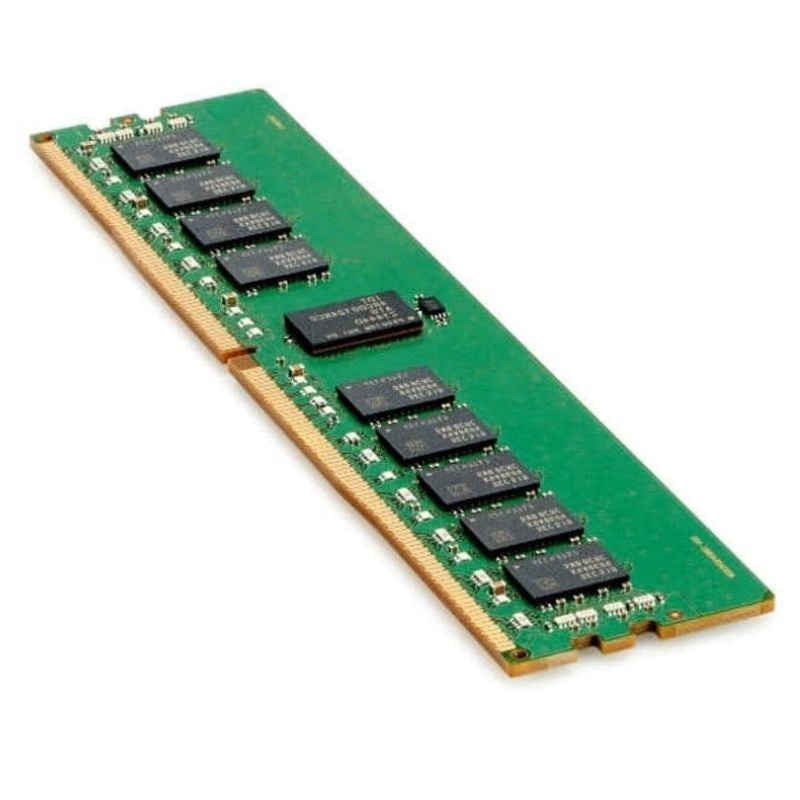


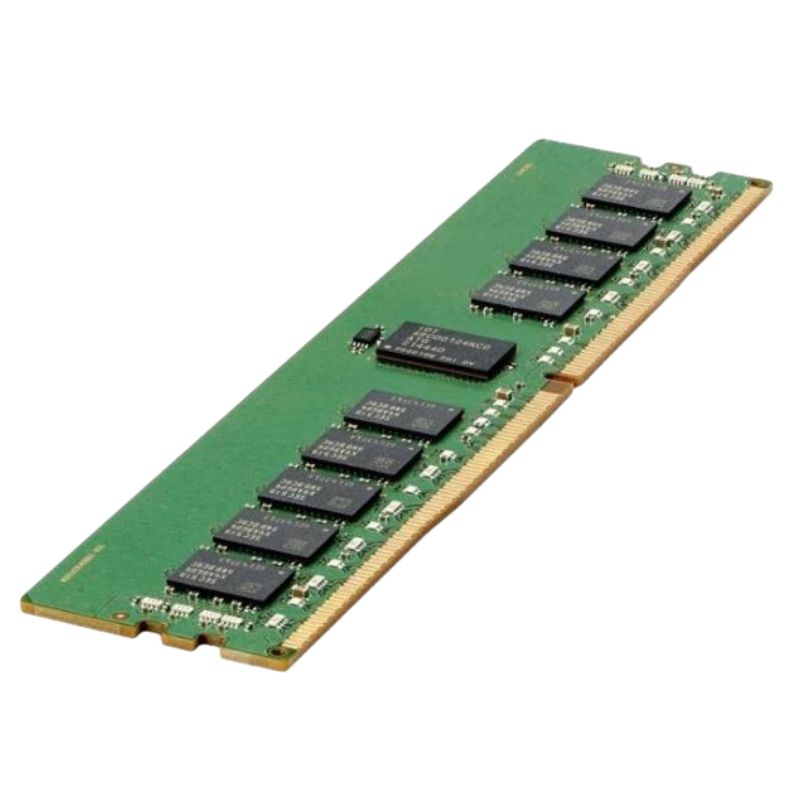
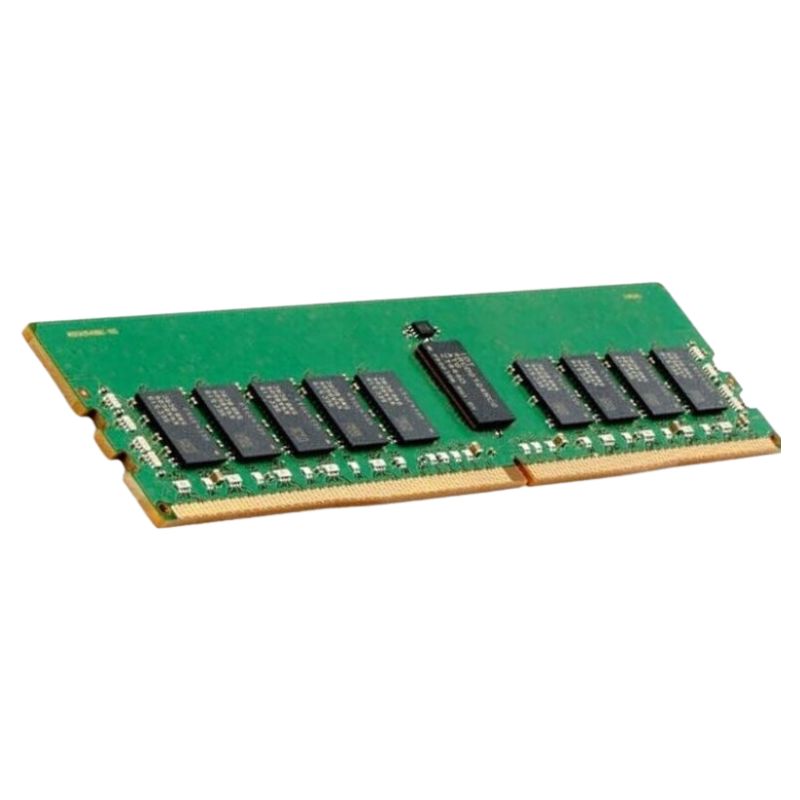
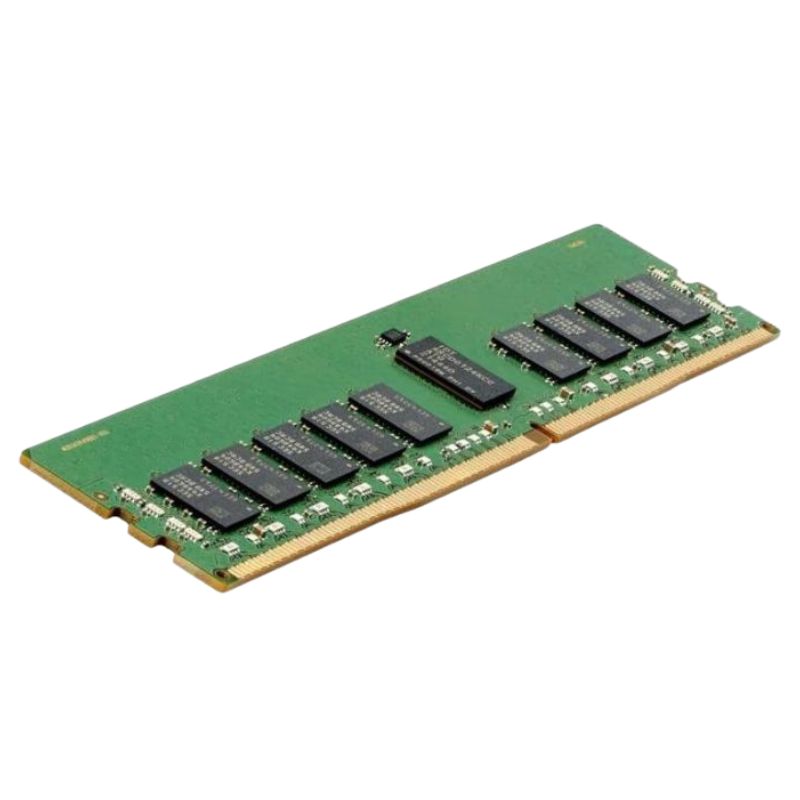
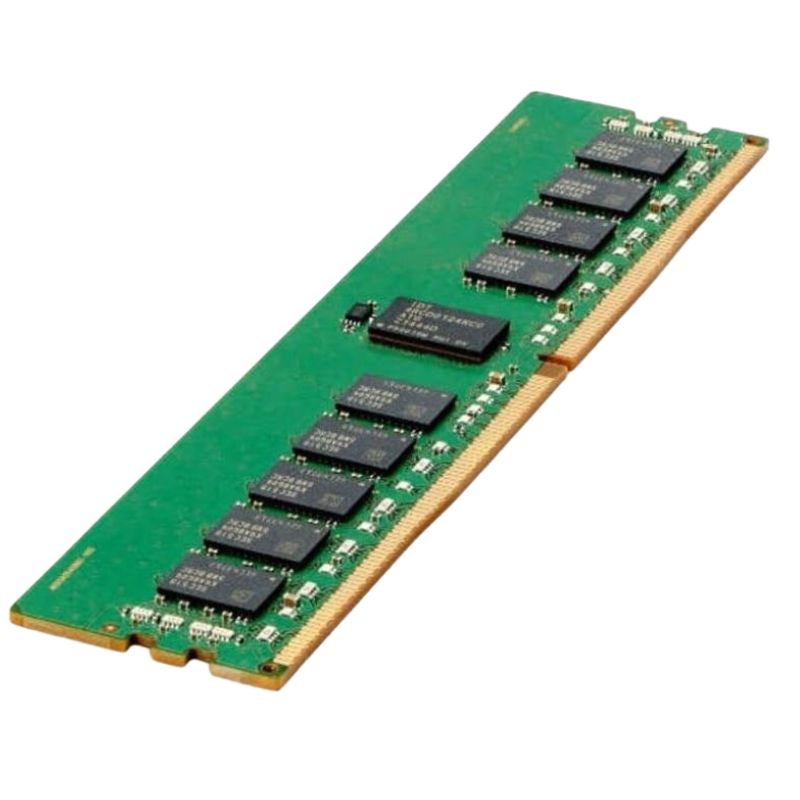
HPE 847828-B21 32GB DDR4-2666/PC4-21300 RDIMM 288-Pin CL19 Dual Rank x4 ECC Registered Memory Module. New (System) Pull with 1 Year Replacement Warranty
The HPE 847828-B21 memory module is a premium 32GB DDR4-2666 RDIMM designed to boost enterprise-grade servers and workstations. With ECC functionality and dual rank architecture, this module ensures reliability, consistency, and enhanced performance across demanding workloads.
The HPE 847828-B21 32GB DDR4-2666/PC4-21300 RDIMM 288-pin CL19 Dual Rank x4 ECC registered memory module is engineered for data center reliability, server-class performance, and predictable scalability. Built to HPE specifications and validated across ProLiant server platforms, this module addresses the needs of enterprise workloads where uptime, consistency, and error-free operation are non-negotiable. As a 32GB RDIMM, it balances capacity and density for virtualization hosts, database nodes, and compute-heavy applications. The DDR4-2666 (PC4-21300) speed grade delivers an ideal blend of throughput and latency for multi-core processors and multi-threaded workloads, while the CL19 timing and x4 organization ensure predictable memory access characteristics under load. Equipped with ECC (Error-Correcting Code) and register buffering, this memory module reduces the risk of data corruption and supports higher memory population levels than unbuffered DIMMs, making it the preferred choice for production servers and mission-critical environments.
Understanding the technical attributes of the HPE 847828-B21 module clarifies why it is frequently specified for enterprise upgrades and new server builds. The 288-pin RDIMM form factor conforms to the DDR4 industry standard for server memory, ensuring mechanical compatibility with HPE ProLiant systems and other server-class motherboards that accept registered ECC modules. The dual-rank x4 architecture influences memory interleaving and bandwidth utilization; dual-rank modules often provide better performance at certain memory population levels compared to single-rank modules. The CL19 latency describes the column access strobe delay, and while absolute latency is one variable among many, the DDR4-2666 frequency provides a strong throughput baseline—PC4-21300 refers directly to the module’s peak theoretical bandwidth in megabytes per second. ECC functionality automatically detects and corrects single-bit errors and detects multi-bit errors, which is critical for maintaining data integrity in database servers, file servers, and virtualization platforms. Registered (buffered) operation places a register between the memory controller and DRAM chips, stabilizing signal integrity when multiple DIMMs are installed and supporting higher overall memory capacities per channel.
Compatibility with HPE server models is an important practical consideration. The HPE 847828-B21 is validated on a range of ProLiant generations, ensuring firmware and platform-level support for features such as advanced memory mirroring, memory rank sparing, and platform-specific performance optimizations. Using HPE-qualified memory reduces the chance of unpredictable behavior that can arise with generic or incompatible third-party modules. For organizations that require predictable supportability, warranty coverage, and firmware updates, HPE-branded and validated modules simplify procurement and lifecycle management. IT teams planning upgrades should cross-reference HPE’s compatibility matrices for their exact ProLiant model and BIOS/firmware revision to confirm supported frequency and population limits, but in most modern HPE server lines, DDR4-2666 RDIMMs are widely supported and recommended for balanced performance.
Memory capacity and performance are primary drivers of consolidation ratios in virtualization environments. The 32GB capacity per module facilitates larger virtual machine footprints and enables higher VM density per host without compromising on per-VM memory reservations. DDR4-2666 bandwidth helps sustain aggregated memory traffic from numerous active VMs, reducing memory contention and improving responsiveness for I/O-bound and memory-intensive workloads. Dual rank modules can offer advantages in scenarios where motherboard and memory controller interleaving benefit from multiple ranks, sometimes resulting in higher effective throughput at identical nominal frequencies. For cloud and multi-tenant systems, ECC protection combined with registered buffering minimizes the risk of silent data corruption and system instability caused by memory errors, which is essential when multiple tenants share the same physical host.
While raw clock speed and CAS latency numbers provide a baseline, real-world application performance depends on the interplay between memory frequency, latency, rank organization, and the memory controller’s architecture. The CL19 timing at 2666 MT/s represents a reasonable trade-off: slightly higher CAS numbers relative to lower-frequency memory are offset by increased overall throughput. Applications such as in-memory databases, analytics engines, and high-performance computing workloads will see measurable improvements when memory bandwidth is increased, particularly under parallel access patterns. Conversely, smaller latency-sensitive transactions may show modest differences; systemic performance tuning should consider the full stack, including CPU model, number of populated channels, and DIMM placement to ensure balanced operation across channels and to enable optimal interleaving.
Reliability is a central selling point of the HPE 847828-B21 module. ECC functionality corrects single-bit errors and flags multi-bit errors, protecting data integrity in read/write operations and during in-memory processing. In large memory arrays typical of enterprise servers, the probability of a transient memory error increases with total installed capacity; ECC reduces the operational risk by providing automatic correction without service interruption in many cases. Registered memory further contributes to system robustness by buffering command and address signals, which reduces electrical loading on the memory controller and allows systems to populate more DIMMs per channel, achieving higher maximum memory capacities while maintaining signal fidelity. For businesses subject to regulatory requirements, data retention standards, or strict SLAs, the combination of ECC and RDIMM architecture is often a compliance and risk mitigation requirement.
HPE’s ecosystem includes diagnostic tools and firmware-level memory health reporting that integrate with the platform’s management stack. Using HPE 847828-B21 modules allows administrators to leverage HPE Insight diagnostics, system event logs, and integrated lights-out management for pre-failure indicators and DIMM-level fault reporting. When memory errors occur, the server can usually identify the failing DIMM, enabling targeted replacements without unnecessary downtime. Supportability is further enhanced when replacement modules match HPE’s part specifications—mixed-population of different speed grades, ranks, or ECC types can lead to suboptimal operation or the server defaulting to lower nominal speeds. Therefore, consistent use of HPE-validated RDIMMs simplifies both remote troubleshooting and on-site maintenance flows.
Scaling memory in production servers is not simply about adding more capacity; it requires careful planning regarding DIMM population per channel, rank balancing, and thermal considerations. The HPE 847828-B21’s 32GB capacity enables mid- to high-tier population strategies where each memory channel can host multiple DIMMs to reach desired aggregate capacity while preserving rank interleaving benefits. Best practice suggests populating symmetric channels to maintain even memory distribution across processors and channels for dual-socket systems. Additionally, administrators should consider the server’s supported maximum memory per bank and whether enabling high-performance memory profiles or interleaving modes requires matching DIMM sizes and ranks across channels. Rack density and cooling must also be addressed as higher memory populations can increase thermal loads; server fan and airflow profiles should be validated during upgrades to avoid thermal throttling or reduced component lifespan.
DDR4 technology brings improvements in energy efficiency over previous generations, and while RDIMMs introduce a small overhead due to register and ECC circuitry, the efficiency gains from higher density per module often translate into reduced total power per gigabyte when fewer DIMMs are used to achieve the same capacity. The HPE 847828-B21’s 32GB size helps consolidate capacity, potentially reducing the number of DIMM sockets occupied and lowering aggregate power consumption compared to arrays composed of smaller modules. For data center operators, this optimization can lead to lower cooling and electrical costs over time. However, energy savings should be evaluated holistically: CPU power, storage type, and network infrastructure combine with memory characteristics to determine overall energy profiles of a server fleet.
Concrete deployment scenarios illustrate where the HPE 847828-B21 RDIMM shines. Virtualization hosts hosting dozens of virtual machines benefit from the 32GB module density, allowing higher consolidation ratios while retaining headroom for burst memory usage. Database servers running in-memory or large buffer pool configurations use the added capacity to increase cache hit rates and reduce disk I/O, improving transactional throughput. High-performance analytics workloads and scientific computing tasks that rely on large working sets will gain from the increased bandwidth of DDR4-2666 and the reliability afforded by ECC. Additionally, hyper-converged infrastructure nodes, which often combine compute and storage functions on the same hardware, require reliable, high-capacity memory to maintain predictable service levels under mixed workloads.
When evaluating memory for HPE servers, purchasers often weigh RDIMMs against LRDIMMs and UDIMMs. RDIMMs like the HPE 847828-B21 provide a balanced approach—offering capacity and register-based buffering without the additional isolation features and higher maximum capacity that Load-Reduced DIMMs (LRDIMMs) provide. LRDIMMs allow even higher densities per module by offloading load from the memory controller, but they can carry a higher per-module cost and different performance trade-offs. Unbuffered UDIMMs, while cheaper, are not typically applicable for production-class HPE servers that demand ECC and registered operation. For many enterprise deployments, RDIMMs represent the optimal blend of price, performance, and compatibility, especially when aligning with HPE platform validation and support policies.


 Contact Us
 Information
 Catalog
 Solid State Drives (SSD)
 Network Switches
 Hard Disk Drives
 HBA & Controllers
 PC & Servers
 PC & Server Memory
 CPU & Processors
 Network Routers
 Power Supplies
 Tape Drives & Libraries
 Network Devices
 Computer & Network Cables