(7% discount is applied at checkout)
Cart is empty
Your go-to destination for cutting-edge server products
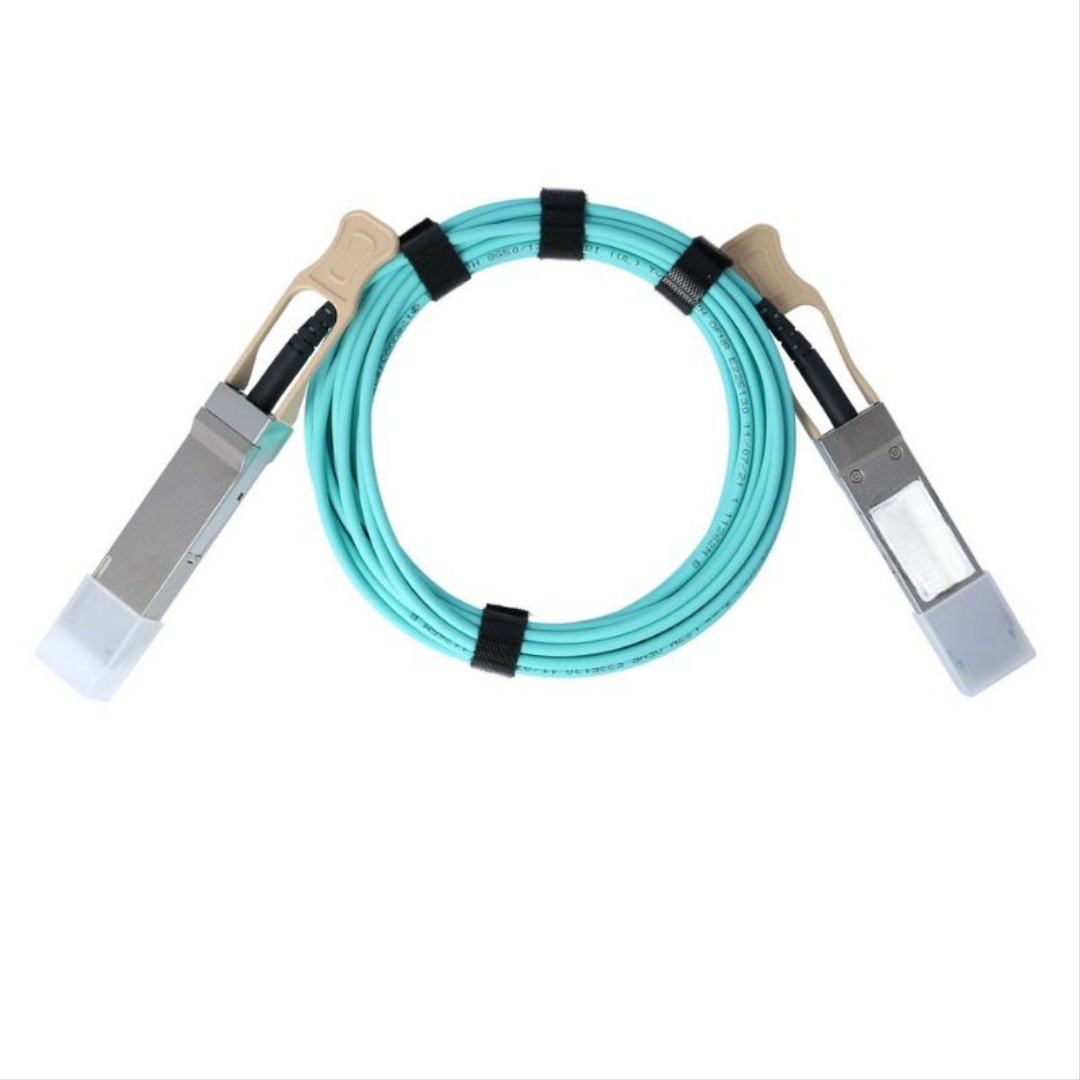


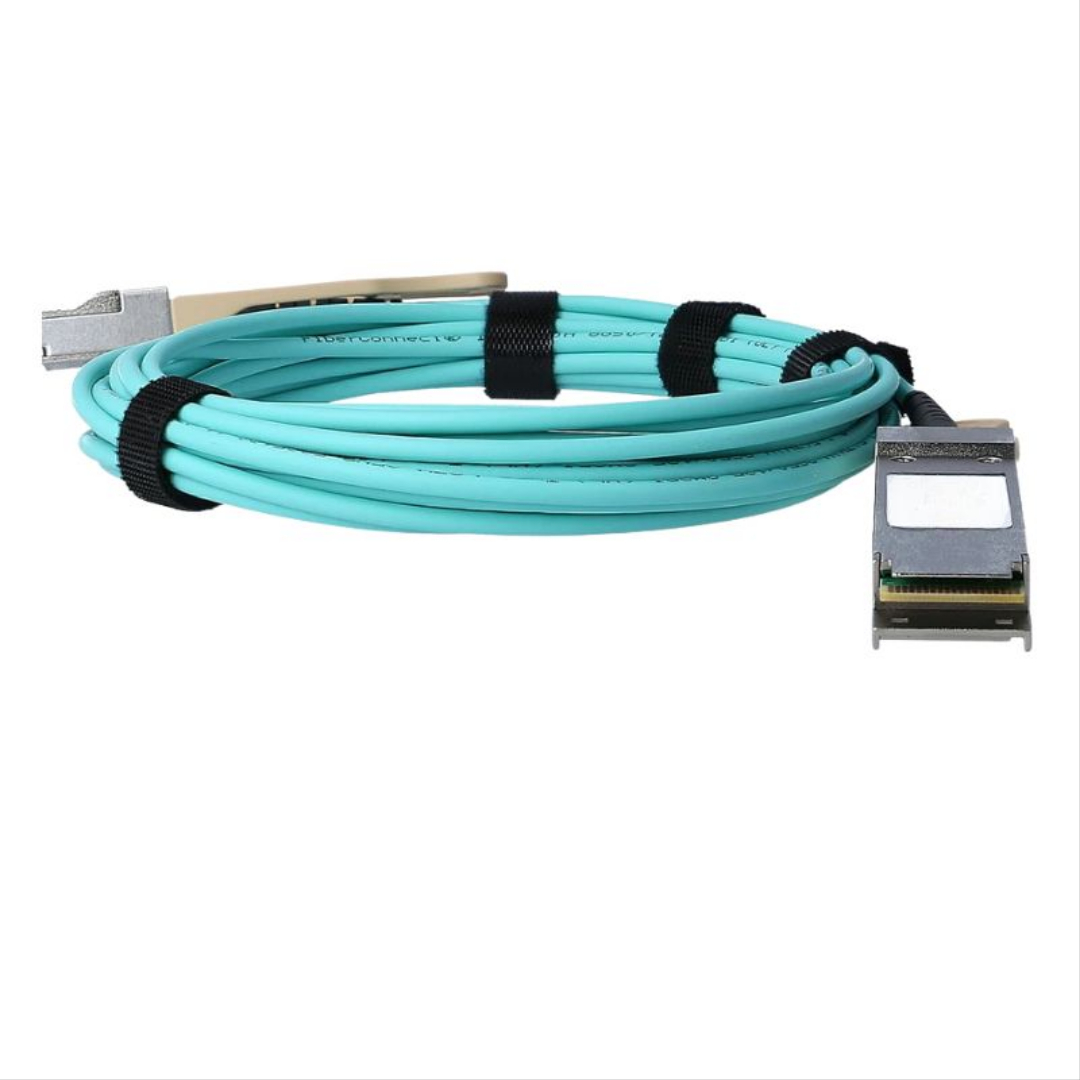
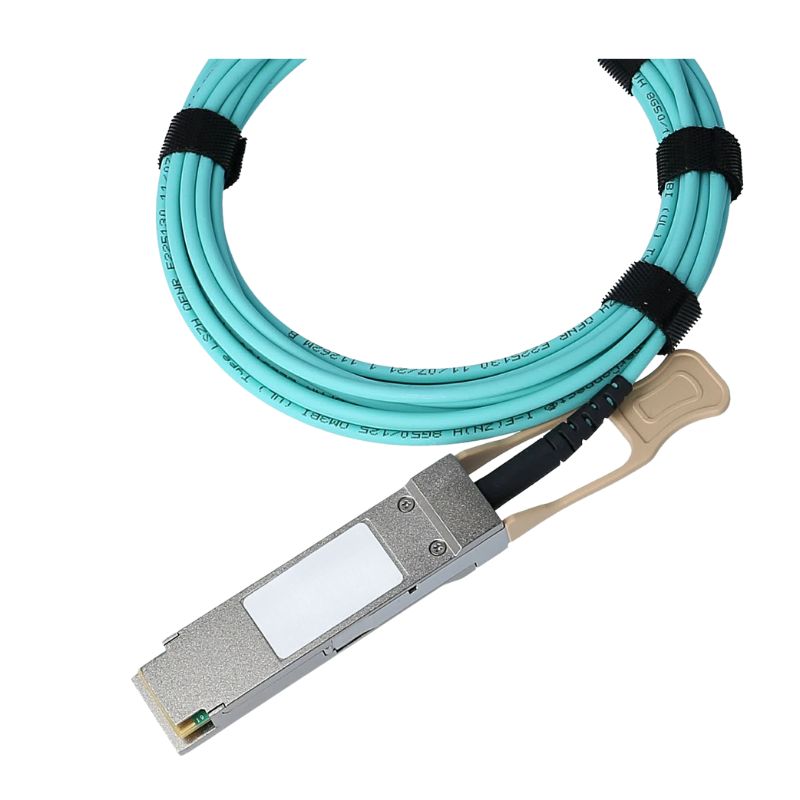
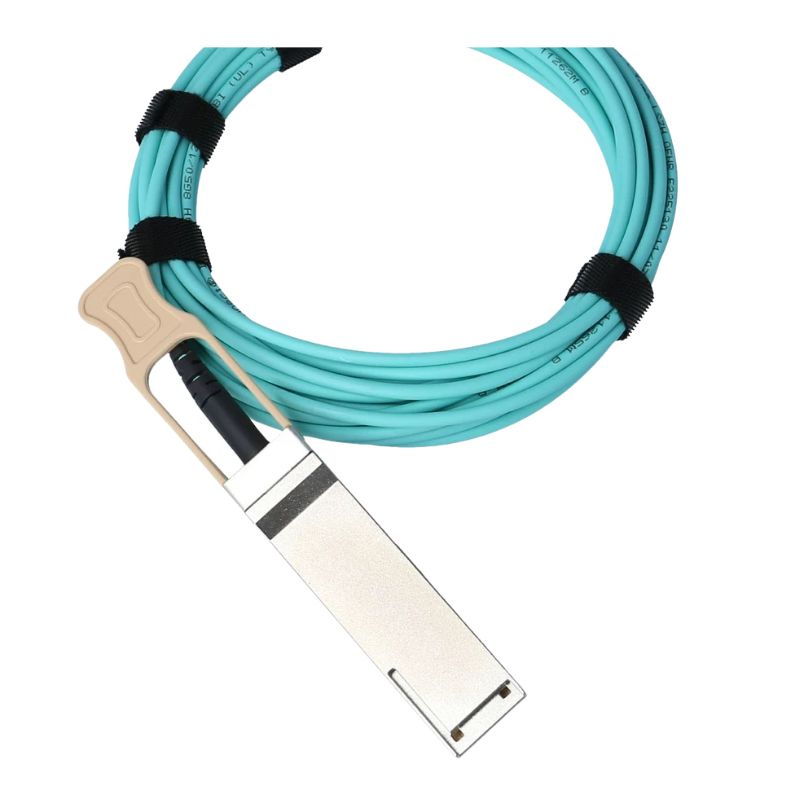
HPE 849435-001 25GbE SFP28 to SFP28 Active Optical/7m Cable. Factory-Sealed New in Original Box (FSB) with 3 Years Warranty
The HPE 849435-001 is a high-quality 25GbE Active Optical Cable (AOC) designed to meet the growing demands of modern data centers and enterprise networks. With its SFP28 to SFP28 interface and 7-meter length, it ensures outstanding connectivity and reliable data transfer across advanced infrastructures.
Enterprises benefit from this HPE active optical cable due to its performance-driven design and compatibility with advanced network hardware. Some of the notable benefits include:
This SFP28 to SFP28 active optical cable is widely used in various IT setups. It is particularly well-suited for:
The HPE 849435-001 25GbE SFP28 to SFP28 Active Optical Cable (AOC), 7 meters, is designed for modern data center and high-performance networking environments that demand low-latency, high-throughput, and reliable connectivity between SFP28 ports. Built to HP Enterprise specifications, this Active Optical Cable offers a factory-terminated, pluggable solution that bridges SFP28 transceiver interfaces without the need for separate transceivers and external fiber patch cords. As data center architectures evolve toward higher densities and higher speeds, a purpose-built 25 Gigabit Ethernet SFP28 AOC provides predictable electrical and optical characteristics, simplified procurement and deployment, and vendor-validated compatibility with HPE switches, servers, and network interface cards that expose SFP28 cages.
The HPE 849435-001 is a 7 meter active optical assembly that leverages integrated optics at both SFP28 ends. Each end contains a pluggable SFP28 form-factor transceiver harnessed to a single-mode or multimode optical engine depending on design intent. The cable transmits 25 Gigabit Ethernet (25GbE) signals over optical fiber embedded within a flexible cable jacket, converting electrical signals at each SFP28 host into optical pulses and back at the far end. This conversion minimizes signal attenuation across length and isolates the connected ports from the signal integrity burdens of long-reach copper interconnects. The AOC supports 25GBASE standards for serial 25Gb/s operation and meets the electrical, optical, and thermal requirements expected from HPE-compatible active optical interconnect solutions.
The physical interface on both ends is the SFP28 plug, preserving the widely adopted small form-factor pluggable (SFP) connector footprint while extending per-lane signaling to 25 Gbps. This means the cable will fit directly into any SFP28-compliant slot without mechanical modifications. The SFP28 pluggable heads are keyed and latched in the standard manner, making insertion and extraction straightforward and minimizing the risk of accidental disconnects. The cable jacket and strain relief are engineered to tolerate datacenter routing and cabinet bundling while maintaining fiber bend radius constraints; the construction aims to reduce microbend and macrobend loss while delivering predictable insertion loss across the 7 meter span.
Active optical cables such as the HPE 849435-001 typically incorporate integrated transmitters and receivers with laser sources carefully selected to meet telecom-grade and enterprise tolerances. The optical components are validated to provide stable operation over the device’s operating temperature range, offering consistent bit error rates (BER) that conform to 25GbE expectations. Because conversion to optical signals occurs close to the transceiver interface, the cable introduces low jitter and maintains signal integrity across the entire channel. HPE-branded or HPE-qualified AOCs are also subject to factory testing for link integrity, channel loss, and compliance with vendor compatibility lists, which helps reduce deployment risk in mixed-vendor or HPE-centric environments.
Compatibility is one of the most important aspects when selecting an AOC. The HPE 849435-001 is validated for use with HPE switches, routers, servers, and NICs that accept SFP28 modules. Using vendor-validated cables helps avoid compatibility checks such as firmware-level port disabled flags or vendor lock-out mechanisms that some network equipment may enforce. It’s critical to confirm that the target HPE platform’s software/firmware versions and hardware configurations include support for 25GbE SFP28 AOCs. While many third-party SFP28 AOCs will function interchangeably, choosing an HPE-designated part number simplifies warranty and support, and aligns with HPE’s interoperability matrices and compatibility guides.
In heterogeneous datacenter environments where networking hardware from multiple suppliers coexists, compatibility nuances can arise. HPE’s 849435-001 is specifically engineered to match HPE’s electrical and management expectations; in some HPE products the system may read digital diagnostics, vendor SFP identifiers, and module EEPROM fields to verify module authenticity. When deploying in mixed-vendor topologies, administrators should validate whether the non-HPE devices accept the HPE AOC without vendor enforcement policies blocking third-party optics. Many organizations prefer HPE-certified cables for their predictable behavior and to streamline support workflows with a single vendor responsible for both active hardware and the associated interconnects.
Twenty-five Gigabit Ethernet has become a sweet spot for server-to-top-of-rack and leaf-to-spine interconnects, providing a balance between cost and bandwidth that improves application performance and reduces oversubscription ratios. The HPE 849435-001 25GbE SFP28 to SFP28 AOC supports these modern traffic patterns with minimal latency and deterministic throughput for storage, virtualization, containerized microservices, and east-west traffic in hyperconverged infrastructures. For environments using NVMe over Fabrics, distributed storage clusters, or latency-sensitive trading applications, a 25GbE AOC can reduce serialization delays and deliver consistent link behavior compared to copper or patched optical assemblies.
Active optical cables bring the benefit of consistent propagation delay and low serialization latency. Unlike passive copper cables, which may introduce skew and frequency-dependent attenuation at higher speeds, AOCs modulate the signal optically and rely on the transceiver’s clock recovery circuitry to regenerate the signal at the far end. This reduces jitter accumulation over the cable and yields a more deterministic channel for high-performance workloads. In microsecond-sensitive applications, this deterministic behavior can be meaningful when aggregated across many flows and servers.
Deploying 25GbE AOCs such as the HPE 849435-001 helps future-proof rack-level interconnects by enabling upgrades to server NICs and switch uplinks without wholesale changes to cabling infrastructure. The SFP28 form factor is compatible with a range of modern transceiver speeds and migration scenarios. Upgrading from 10GbE to 25GbE becomes operationally simpler when cables and ports already support the higher signaling rate; this reduces transition overhead and minimizes physical changes in dense rack environments.
The HPE 849435-001 is ideal for leaf-to-rack, server-to-switch, and short-reach spine interconnects where 7 meters of reach is sufficient to cross a cabinet aisle or connect adjacent racks. Typical deployments include hyperscale and enterprise data centers, private cloud clusters, high-performance computing racks, and storage nodes in scale-out arrays. This cable length provides flexibility in rack layout, enabling cable routing above or beside racks without unnecessary slack. Use cases that benefit most include distributed storage clusters, database clusters with east-west traffic, and server aggregation where port density and predictable latency are required.
In a top-of-rack architecture, servers within the same rack can leverage 25GbE connectivity to a ToR switch using SFP28 ports. The 7m AOC can provide enough routing flexibility to exit from servers to switch ports while keeping cables neat and avoiding crossing aisles. This reduces patch panel complexity and minimizes additional fiber patching steps, simplifying operations and reducing potential points of failure.
For leaf-spine fabrics where multiple leaves are aggregated into short-run spine links, SFP28 AOCs enable high-bandwidth, low-latency links that support intensive east-west flows. When combined with software-defined networking overlays and modern routing fabrics, the 25GbE links maximize throughput between compute nodes and provide headroom for bursty application traffic.
When evaluating interconnect strategies, administrators often choose among three approaches: direct-attach copper (DAC), active optical cable (AOC), and separate modular transceivers with fiber patch cabling. DACs are cost-effective at short lengths but can become bulky and signal-challenged at higher speeds and longer runs. AOCs provide the convenience of a single assembly with low power consumption and better reach compared to copper while avoiding the inventory and management overhead of separate transceivers and patch cords. The modular transceiver plus patch fiber approach is the most flexible for serviceability and field repair, but it introduces more connectors and potential insertion loss at multiple mate points. The HPE 849435-001 positions itself as a low-complexity, high-performance option that reduces operational friction while remaining compatible with HPE’s product ecosystem.
Initial acquisition cost for AOCs may be higher than passive copper assemblies at very short lengths, but when factoring in installation time, management overhead, and potential support costs, AOCs frequently deliver a competitive total cost of ownership for 25GbE deployments. Fewer connector interfaces reduce troubleshooting time during outages and simplify spare inventory as each AOC is a single replaceable unit rather than multiple parts. For organizations that value vendor-backed interoperability and simplified lifecycle management, the investment in an HPE-branded AOC can be justified by reduced operational risk.


 Contact Us
 Information
 Catalog
 Solid State Drives (SSD)
 Network Switches
 Hard Disk Drives
 HBA & Controllers
 PC & Servers
 PC & Server Memory
 CPU & Processors
 Network Routers
 Power Supplies
 Tape Drives & Libraries
 Network Devices
 Computer & Network Cables