(7% discount is applied at checkout)
Cart is empty
Your go-to destination for cutting-edge server products


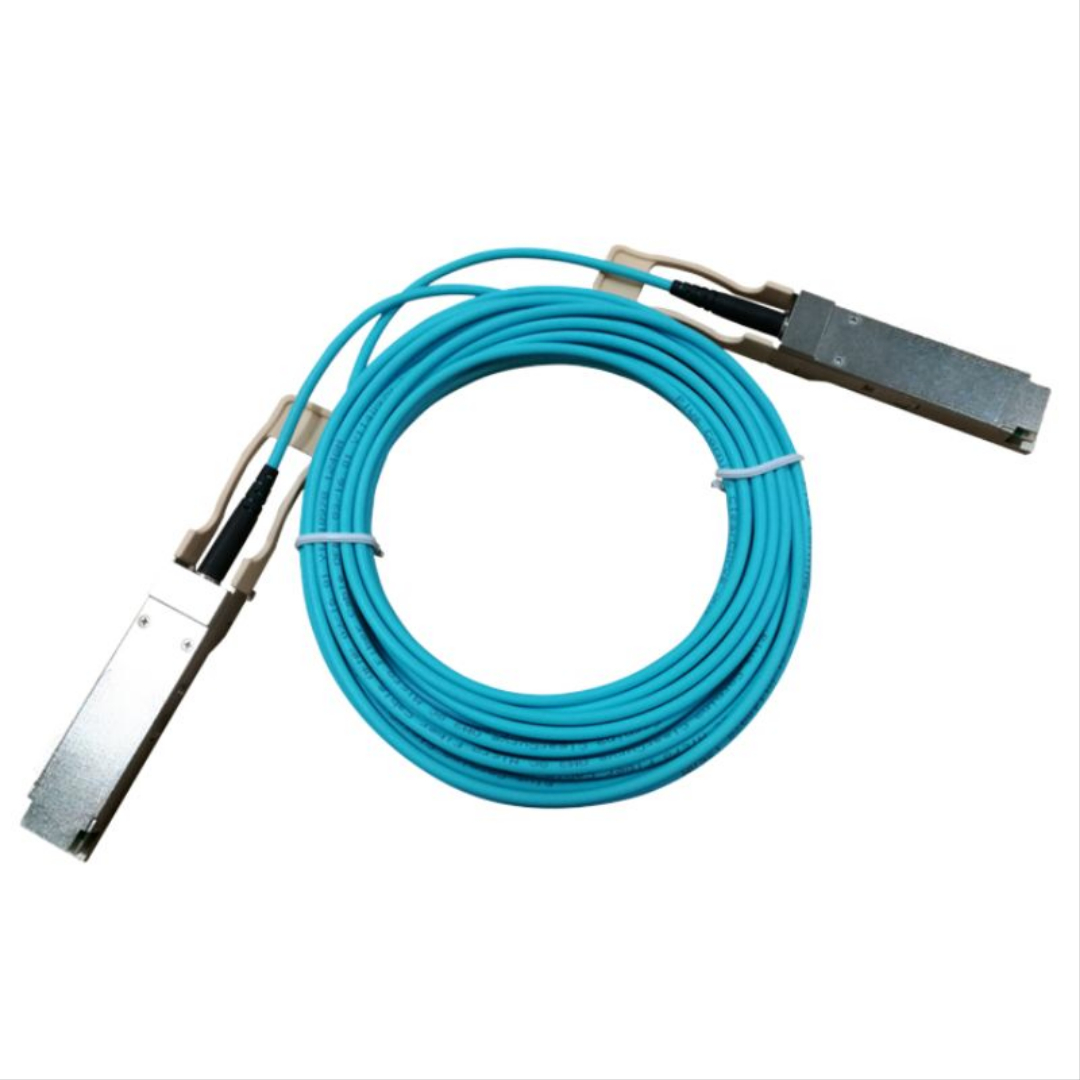
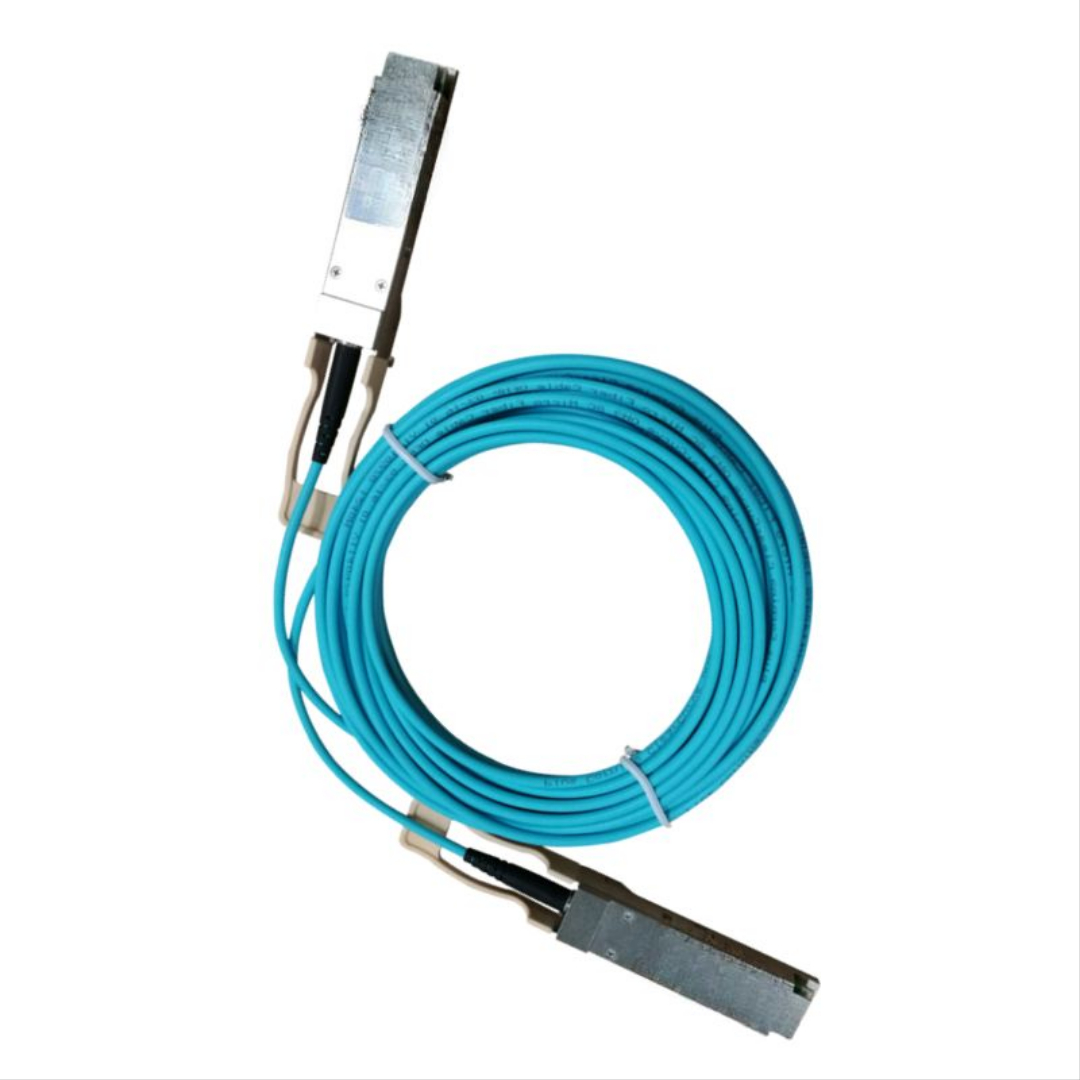
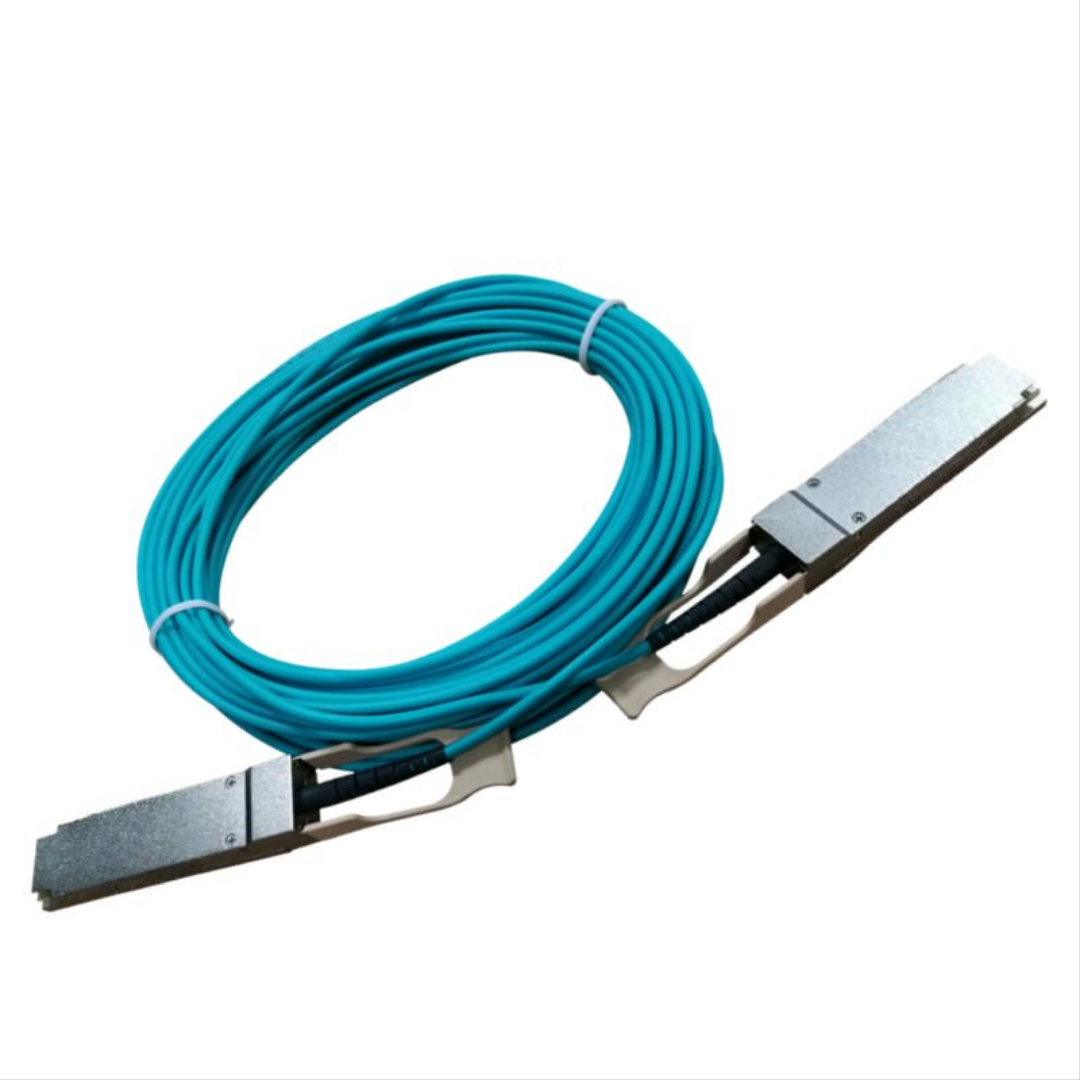
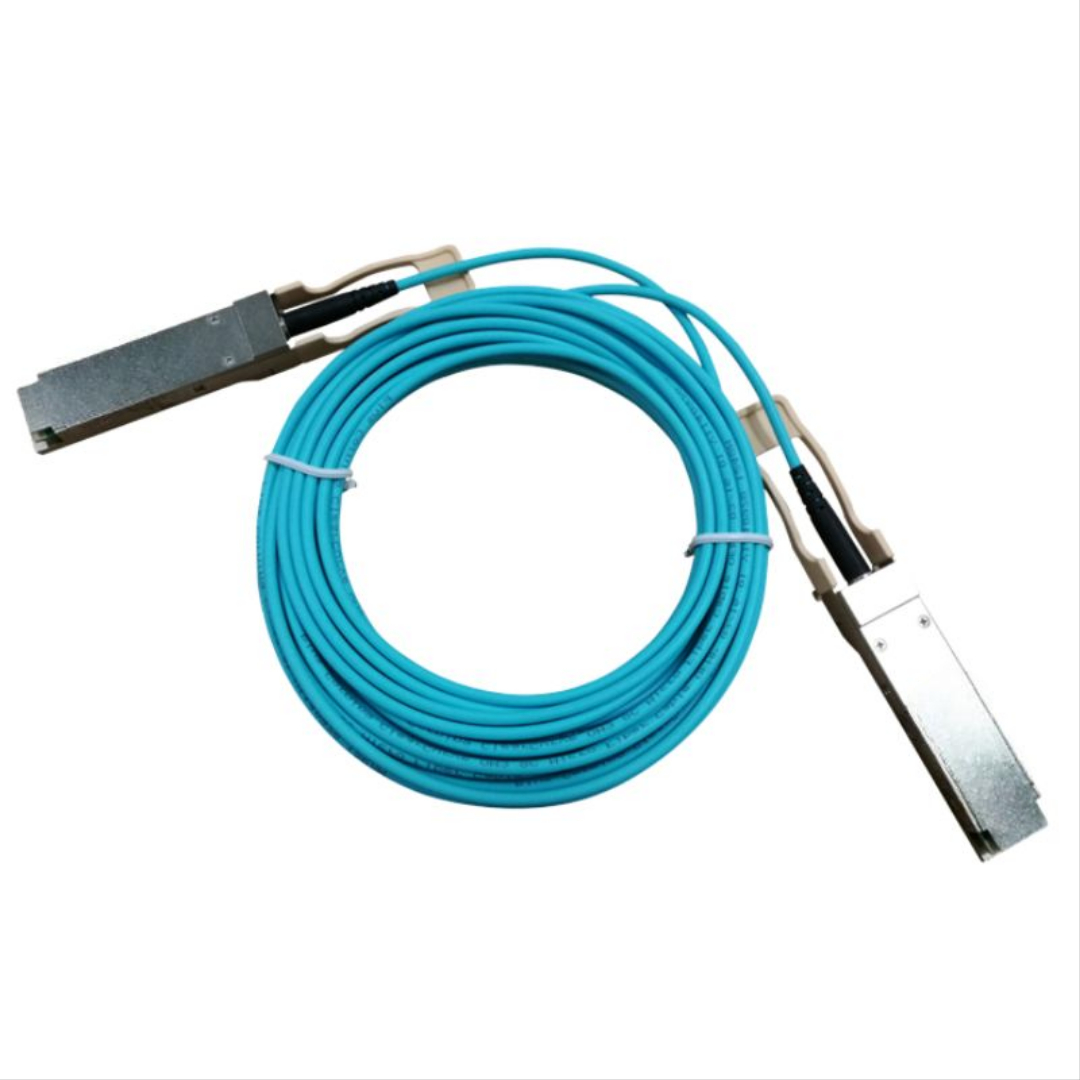
HPE 849437-001 100GB QSFP28 to QSFP28 15 Meter Active Optical Cable. Factory-Sealed New in Original Box (FSB) with 3 Years Warranty
The HPE 849437-001 100GB QSFP28 to QSFP28 Active Optical Cable is a high-performance connectivity solution engineered for modern data centers and enterprise-grade networks. With a generous 15-meter length, it ensures dependable signal transmission while maintaining low latency, making it an ideal choice for environments requiring speed, scalability, and stability.
Designed with advanced optical technology, the HPE 849437-001 cable delivers a balance of bandwidth, reliability, and long-distance reach. It enhances the efficiency of high-density network environments, supporting seamless connectivity for demanding workloads.
The HPE 849437-001 QSFP28 Active Optical Cable plays a vital role in accelerating infrastructure setups. Its applications range across high-density server interconnects to top-of-rack (ToR) and end-of-row (EoR) switch connections.
With its 15-meter reach, this HPE Active Optical Cable allows organizations to expand without compromising signal integrity. Its ability to maintain reliable data throughput ensures smooth scaling of IT operations.
Hewlett Packard Enterprise is known for delivering hardware with robust quality standards. The HPE 849437-001 cable is tested for durability and long-term performance, ensuring consistent uptime in mission-critical environments.
The HPE 849437-001 100GB QSFP28 to QSFP28 15 Meter Active Optical Cable is a high-performance, short-to-medium reach interconnect designed for modern hyperscale and enterprise data centers. Engineered to support 100 Gigabit Ethernet and compatible protocols such as 100GBASE-SR4, this QSFP28 AOC provides a direct, low-power optical interconnect between QSFP28 ports without the need for separate transceivers, reducing component count while simplifying inventory and deployment. The cable delivers predictable signal integrity across 15 meters using integrated optical transceivers and multimode fiber technology, making it an ideal choice for top-of-rack to top-of-rack, leaf-to-spine, and switch-to-switch interconnects where density, power efficiency, and deterministic latency matter.
This active optical cable is specified for 100 Gbps aggregate bandwidth using the QSFP28 form factor on both ends. The integrated optical engines support 4 lanes of 25 Gbps NRZ signaling or PAM4-ready lanes where applicable, providing flexibility across evolving 100G physical layer implementations. Typical electrical and optical specifications include low insertion loss, industry-standard pinouts consistent with QSFP28 modules, and support for digital diagnostic monitoring that reports on optical power, module temperature, and other health parameters. The 15 meter length positions this product in the sweet spot between direct attach copper for very short links and pluggable transceiver plus fiber solutions for longer distances, offering a balance of latency, power, and manageability.
The HPE 849437-001 leverages the QSFP28 mechanical and electrical interface standard. This means it fits directly into QSFP28-rated ports on HPE switches, routers, and many third-party networking devices that adhere to QSFP28 compliance. As an active optical cable with QSFP28 connectors at both ends, the cable behaves like a pluggable transceiver pair internally while presenting a convenient fixed-cable assembly externally. Compatibility is typically excellent with HPE networking platforms and a wide selection of third-party equipment, though validation against specific switch firmware and compatibility matrices is recommended in heterogeneous environments to avoid vendor-specific interoperability nuances.
Designed for 100 Gbps operation, this AOC supports full-duplex data transmission and maintains deterministic latency suitable for latency-sensitive applications such as financial trading, high-performance computing clusters, and real-time analytics. Because the optical transceiver elements are integrated and optimized for short-reach operation, power consumption per link is lower than many pluggable optics configured for longer distances. The cable’s active electronics perform signal conditioning and clock recovery, ensuring high link reliability and low bit error rates. Data center architects will appreciate the predictable thermal profile that helps maintain switch port availability and reduces cooling load compared to bulky copper alternatives.
The HPE 849437-001 15 meter QSFP28 AOC is particularly well-suited to several common deployment topologies. In leaf-spine architectures it provides a convenient leaf-to-spine connection where racks are spread across a larger floor area and where copper would be impractical or introduce too much attenuation. It is also ideal for inter-switch links within a row of racks where distances exceed the reach of DACs but remain within AOC length capabilities. For high-density top-of-rack (ToR) environments with limited cable management space, the reduced diameter and weight of multimode optical cables simplify routing and reduce strain on connectors. Additionally, in test labs and staging environments, AOCs speed up reconfiguration because each assembly is a single plug-and-play unit that eliminates separate transceiver and patch-fiber handling.
Physically, the AOC’s connectors follow QSFP28 form factor dimensions and are keyed for correct insertion. The cable jacket and fiber assembly are designed to withstand typical rack and data center handling, with bend radius specifications and pull limits that should be observed during installation to maintain fiber integrity. Because active optical cables contain electronics, they are sensitive to extreme environmental conditions; they should be deployed in temperature-controlled data center spaces and protected from direct mechanical stresses. HPE-grade AOCs typically conform to industry standard operating temperature ranges and electromagnetic compatibility requirements, but integrators should confirm environmental ratings against their facility’s conditions, especially in unconventional deployments like outdoor enclosures or heated staging rooms.
When installing the HPE 849437-001, observe careful cable routing to avoid tight bends and direct stress on QSFP28 cages. Use labeled cable management pathways and Velcro ties rather than rigid zip ties to avoid crushing fibers. Maintain recommended bend radii near patch panels and switch ports, and avoid kinks or sharp creases that can introduce microbends and degrade optical performance. Because AOCs are direct, discrete assemblies, plan for service loops that allow module removal and replacement without tension on the cable. Keep spare AOCs in static-free packaging, and match parts to port types to prevent accidental insertion into incompatible quad small form factor ports. Document port-to-port mappings in your network inventory so that replacements are straightforward and downtime is minimized.
Interoperability is central to successful deployment. HPE AOCs are typically validated on HPE switches and specified third-party platforms, and part numbers such as 849437-001 are listed in HPE’s compatibility matrices. When operating in a multi-vendor environment, it is important to confirm support for vendor-specific EEPROM programming and link negotiation behaviors. Many network operators choose HPE-certified AOCs to ensure full diagnostic visibility via switch software, which can report optical power, temperature, and age-related degradation. The DDM (Digital Diagnostic Monitoring) functionality on compliant AOCs is a valuable troubleshooting tool for identifying underperforming links before they cause service disruption.
Quality AOCs conform to laser safety standards and electrical safety regulations applicable to pluggable optical modules. The HPE 849437-001 is manufactured to meet industry norms for optical emissions and material safety, and it typically carries regulatory markings for regional requirements. Installers must be trained to handle optical connections safely: never look directly into an active fiber connector and follow workplace procedures for fiber inspection and cleaning. Proper training will reduce the risk of inadvertent exposure to laser light during troubleshooting and minimize contamination that can cause high insertion loss or intermittent connectivity.
Once installed, validate each link with both physical layer diagnostics and network-level testing. Use switch port counters and digital diagnostics to confirm received and transmitted optical power are within expected thresholds. Perform loopback or throughput tests at full line rate to detect any anomalies in error rates or latency. Periodic inspection of cable routing and connector cleanliness is recommended, and some data center operators include AOC health checks in scheduled maintenance windows. For critical links, maintain spare assemblies and document replacement procedures to expedite recovery from physical damage or sudden failure.


 Contact Us
 Information
 Catalog
 Solid State Drives (SSD)
 Network Switches
 Hard Disk Drives
 HBA & Controllers
 PC & Servers
 PC & Server Memory
 CPU & Processors
 Network Routers
 Power Supplies
 Tape Drives & Libraries
 Network Devices
 Computer & Network Cables