(7% discount is applied at checkout)
Cart is empty
Your go-to destination for cutting-edge server products
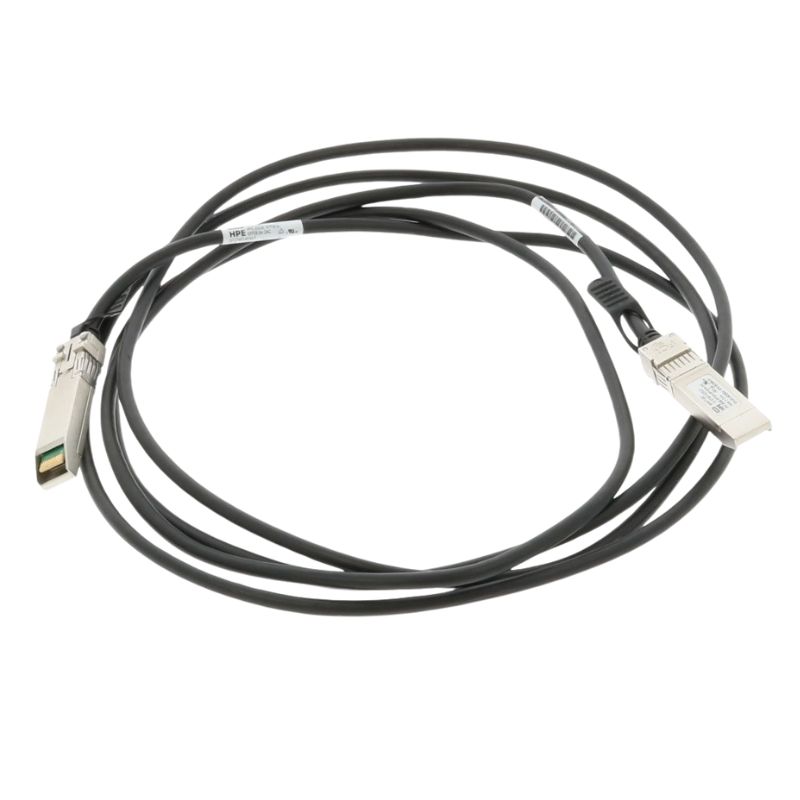


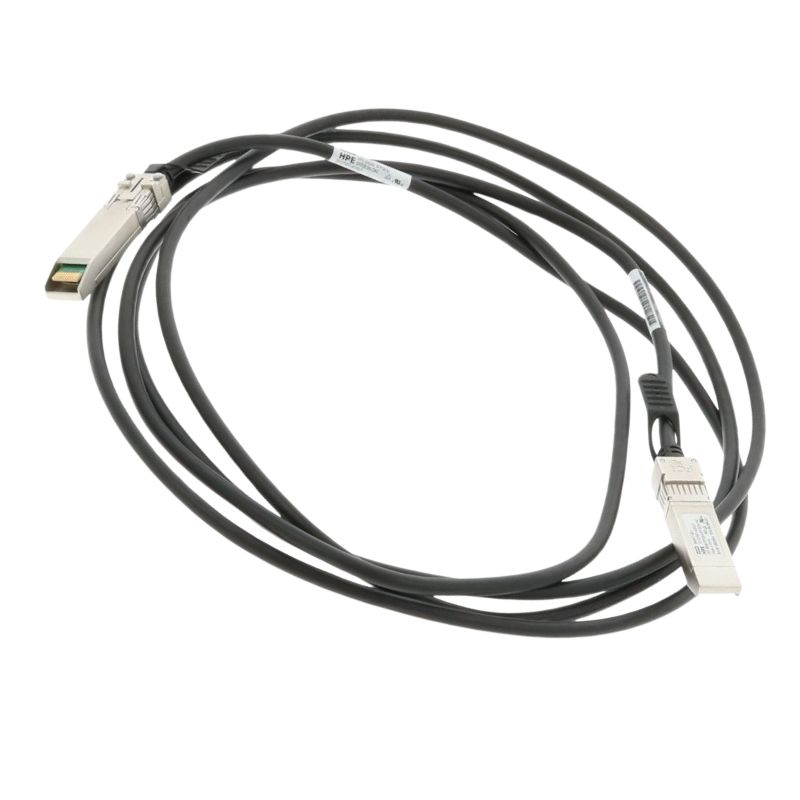
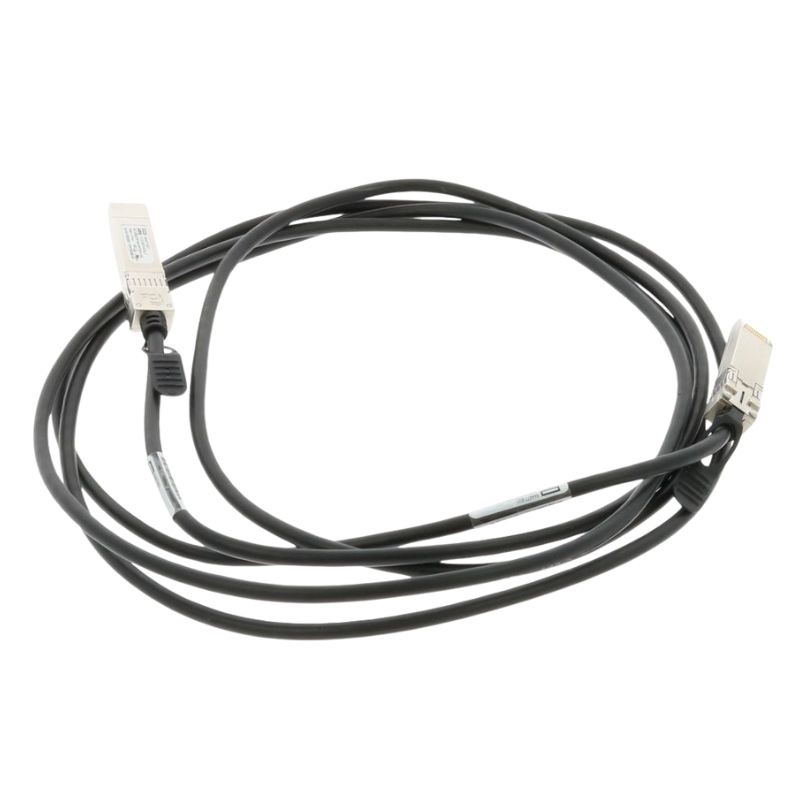
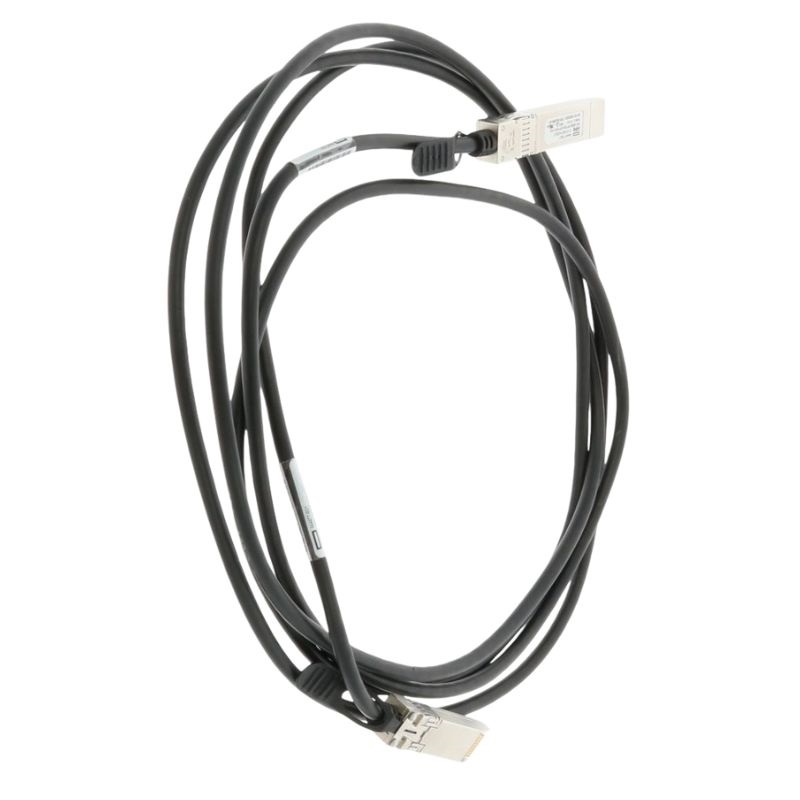
HPE 850389-001 3 Meter SFP28 to SFP28 Direct Attach Cable. New (System) Pull with 1 year replacement warranty
The HPE 850389-001 is a premium quality 3-meter SFP28 to SFP28 direct attach cable engineered for high-speed networking environments. Manufactured by Hewlett Packard Enterprise (HPE), this cable delivers fast and efficient connectivity for enterprise data centers, cloud infrastructures, and high-performance computing clusters. Its durable build and consistent performance ensure seamless data transfers while maintaining low latency.
This cable is specifically designed for environments that demand reliable high-speed networking. Some of the notable advantages include:
Built with precision, the HPE 850389-001 cable features a rugged yet flexible design to withstand demanding data center conditions. The robust copper construction ensures a long lifespan while maintaining stable connectivity. Its direct attach mechanism reduces the need for additional transceivers, simplifying deployment and minimizing maintenance costs.
Delivers high throughput for 25GbE applications, ensuring smooth traffic flow.
Consumes less power compared to traditional fiber optic connections.
Reliable locking mechanism prevents accidental disconnections in mission-critical networks.
Plug-and-play functionality for fast installation and network expansion.
The HPE 850389-001 3 Meter SFP28 to SFP28 Direct Attach Cable is a purpose-built, high-performance copper interconnect designed for 25 Gigabit Ethernet (25GbE) fabrics and low-latency data center topologies. This category includes factory-terminated SFP28 twinax copper assemblies that deliver predictable 25Gb/s signaling between SFP28 ports, providing a cost-effective, power-efficient alternative to optical transceivers for short-reach connections. Vendors and integrators value the 3 meter length for flexible rack-to-rack or shelf-to-shelf connectivity where a balance between reach and cable management is required. In the context of HPE networking and broader compatible ecosystems, this SFP28 Direct Attach Cable (DAC) is a pragmatic choice for connectivity that prioritizes throughput, signal integrity, and low operational cost.
The category centers on a small set of technical attributes that directly affect deployment decisions and operational outcomes: supported data rate, connector type, cable construction, electrical characteristics, and interoperability. The HPE 850389-001 supports 25Gbps per lane using SFP28 form-factor connectors on each end. The twinax copper construction ensures high signal fidelity at short distances without the need for an optical transceiver, which reduces both hardware spend and ongoing power consumption. The fixed 3 meter length makes cable routing simpler than bulk copper or patching solutions, while still offering enough slack to accommodate cabinet and top-of-rack (ToR) layouts. These attributes translate into faster provisioning, lower latency, and a smaller physical footprint—critical considerations for hyperscale and enterprise data centers migrating to 25GbE leaf-spine designs or upgrading server-to-switch uplinks.
Throughput is native 25GbE across each SFP28 connection, which aligns directly with the requirements of emerging storage, virtualized compute, and east-west traffic patterns inside modern cloud and enterprise environments. Latency advantages stem from the copper twinax medium which avoids optical conversion and typically yields lower end-to-end switching latency compared with optics plus patching. Thermal behavior is another advantage: because twinax DACs are passive (in many 3m configurations) or low-power active assemblies, they draw negligible additional power compared to transceivers with optical lasers and DSP modules. The reduced power dissipation eases cooling loads and contributes to better PUE (Power Usage Effectiveness) metrics at scale.
The cable is constructed from tightly controlled twinax pairs with precision-terminated SFP28 housings on each end, engineered to maintain controlled impedance and minimize crosstalk across the 25Gb/s channel. Shielding and drain wires ensure robust electromagnetic compatibility in dense rack environments. The HPE-branded part integrates vendor firmware compatibility to ensure host devices recognize the module correctly, applying optimized signal conditioning and power negotiation sequences when required. For purchasers, the predictable electrical profile simplifies link training and reduces the risk of intermittent errors that sometimes plague third-party passive assemblies.
An essential component of this category description is compatibility. The HPE 850389-001 is intended to work seamlessly with HPE networking platforms that expose SFP28 interfaces, including HPE switches and server NICs that officially support 25GbE SFP28 DACs. Nonetheless, the SFP28 physical and electrical specification is an industry standard, meaning that this cable is also typically compatible with other vendors’ SFP28 ports that adhere to the SFF-8431 and SFF-8411 family of specifications where electrical characteristics align. Many enterprise buyers choose HPE-branded DACs to avoid interoperability risks, to leverage HPE’s quality assurance and warranty support, and to ensure firmware-level recognition across HPE systems. When mixing vendors, it is advisable to consult the switch or NIC vendor compatibility matrix to verify interoperability due to occasional vendor lock-in behaviors or boot-time diagnostics that reject non-validated modules.
The 3 meter SFP28 DAC is used heavily for server-to-switch and switch-to-switch connections in top-of-rack and middle-of-row deployments. In a leaf-spine architecture, these assemblies are ideal for server uplinks or for short spine-to-leaf interconnects inside a single row or adjacent racks. Storage arrays with high IOPS profiles and low-latency-sensitive workloads also benefit from direct copper connectivity. Because the DAC reduces complexity and component count, it is often chosen for densely populated server environments where minimizing heat and power is a priority. Additionally, lab environments, development clusters, and testbeds that require quick, repeatable connections frequently rely on 3m DACs because they offer plug-and-play simplicity without the recurring costs of optics and their associated transceiver management overhead.
As organizations migrate from 10GbE architectures to 25GbE to meet rising bandwidth demands, the HPE 850389-001 category becomes a frequent procurement item. Compared to SFP+ 10Gb solutions, SFP28 has the same form factor but supports higher signaling rates—facilitating upgrades with minimal port density change. This makes the 3 meter SFP28 DAC a cost-effective bridge technology for incremental upgrades, enabling IT teams to reuse existing cabling pathways and rack layouts while achieving a 2.5x throughput increase on a per-port basis. The result is a smoother capital expenditure profile and faster performance gains for virtualization hosts, storage nodes, and east-west traffic-heavy applications.
This category naturally contrasts passive twinax DACs with active DACs and optical transceivers. Passive DACs—often available up to 3 meters—are simple copper assemblies that rely on the host for signal conditioning. They are typically the lowest-cost option and consume no additional power. Active DACs include electronic components such as retimers or equalizers that extend reach and maintain signal integrity over longer copper lengths, but they cost more and may consume additional host resources. Optical transceivers paired with fiber cabling outshine copper in reach and electromagnetic isolation, supporting multi-hundred-meter runs and campus-level interconnects, but they carry higher component and operational costs. The 3 meter HPE 850389-001 sits firmly in the passive DAC sweet spot: lower cost, lower latency, and ideal for short, high-density interconnects inside racks and adjacent racks.
When evaluating total cost of ownership, consider both acquisition cost and ongoing operational expenses. The HPE 850389-001 typically costs less per connection than optics plus fiber, and consumes less power than optical transceivers with lasers and sophisticated DSPs. Fewer active parts mean reduced failure rates and simplified spare-part inventories. Additionally, because DACs eliminate the need for separate patch-cords and fiber patch panels for short runs, cable management costs are often lower. However, for longer distances or environments requiring electrical isolation, fiber systems remain necessary despite their higher initial and running costs.


 Contact Us
 Information
 Catalog
 Solid State Drives (SSD)
 Network Switches
 Hard Disk Drives
 HBA & Controllers
 PC & Servers
 PC & Server Memory
 CPU & Processors
 Network Routers
 Power Supplies
 Tape Drives & Libraries
 Network Devices
 Computer & Network Cables