(7% discount is applied at checkout)
Cart is empty
Your go-to destination for cutting-edge server products
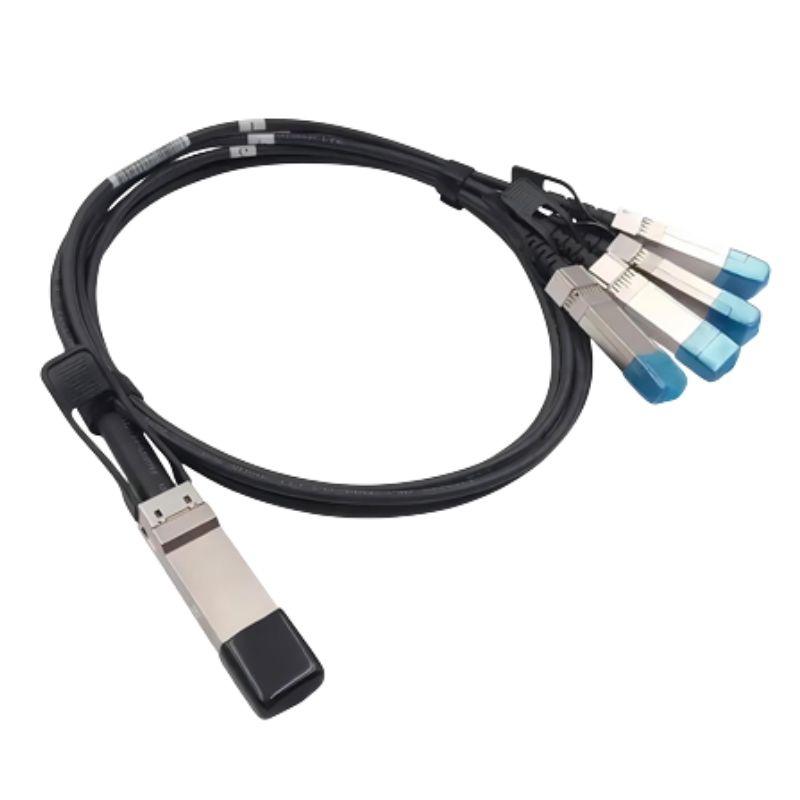


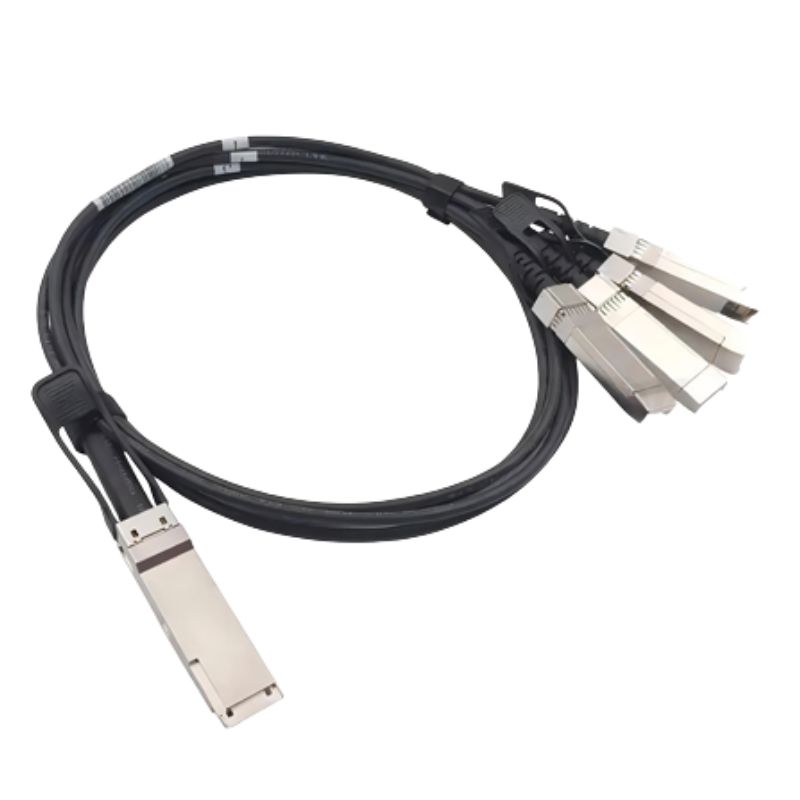
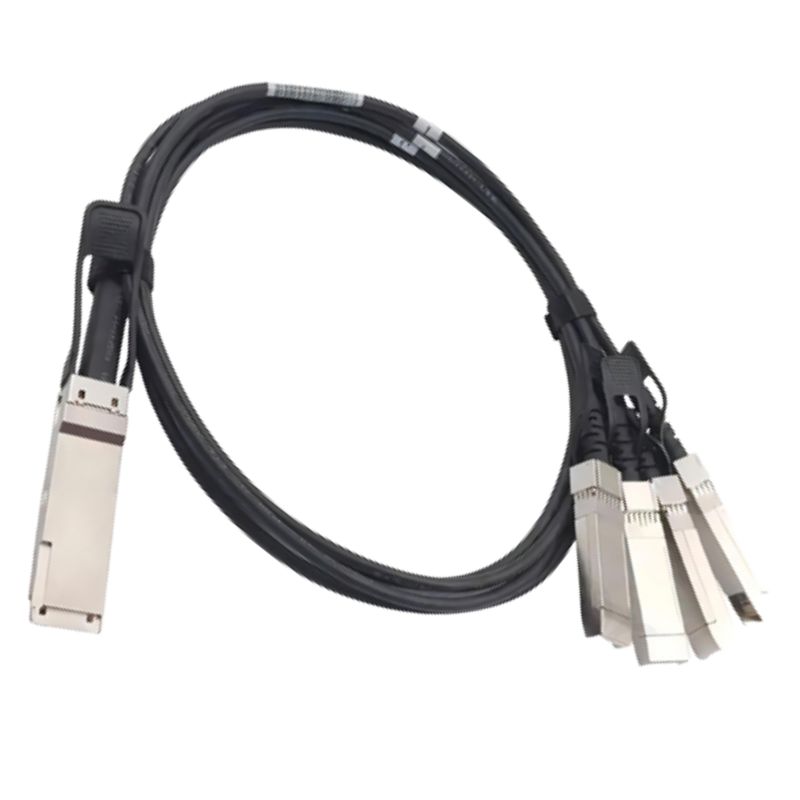
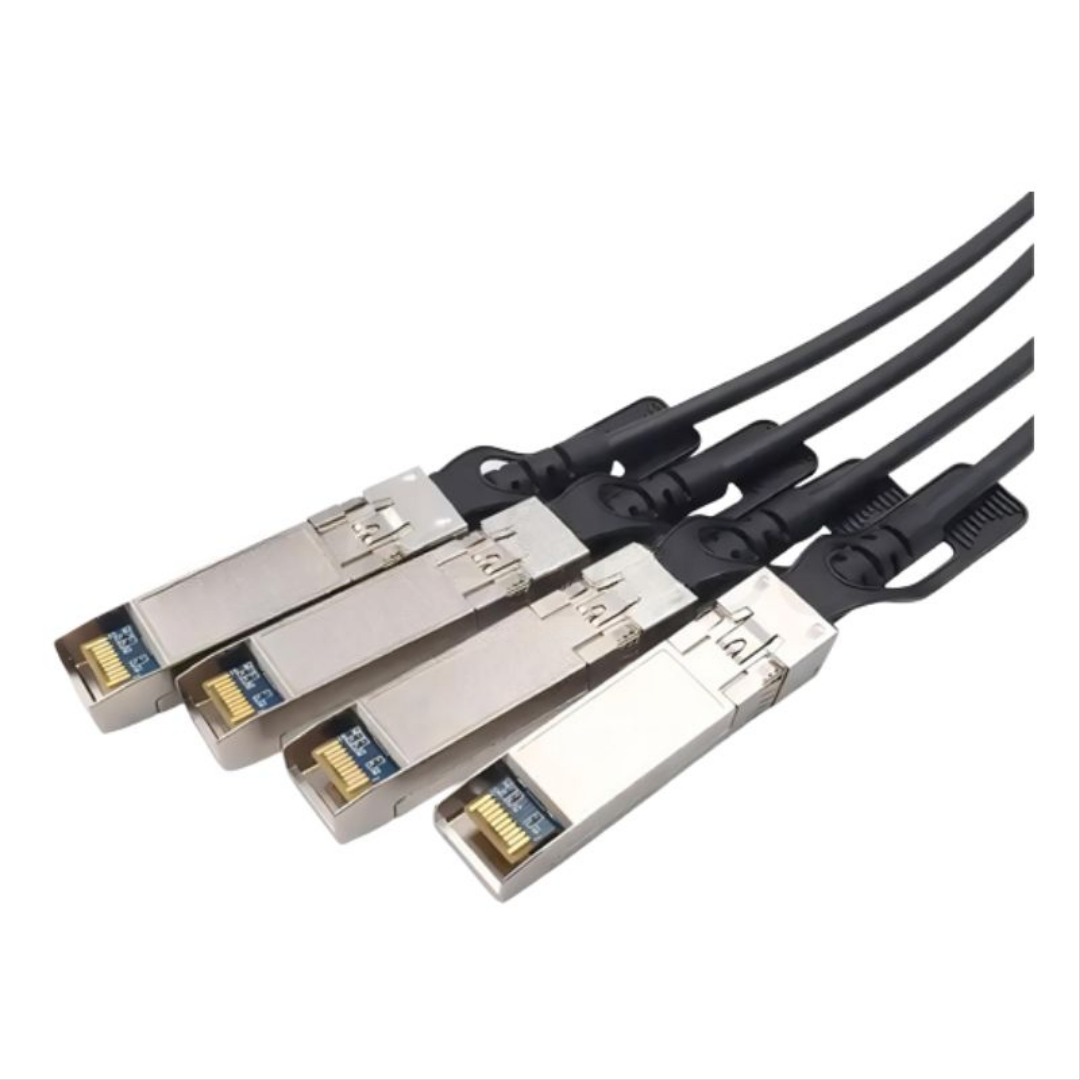
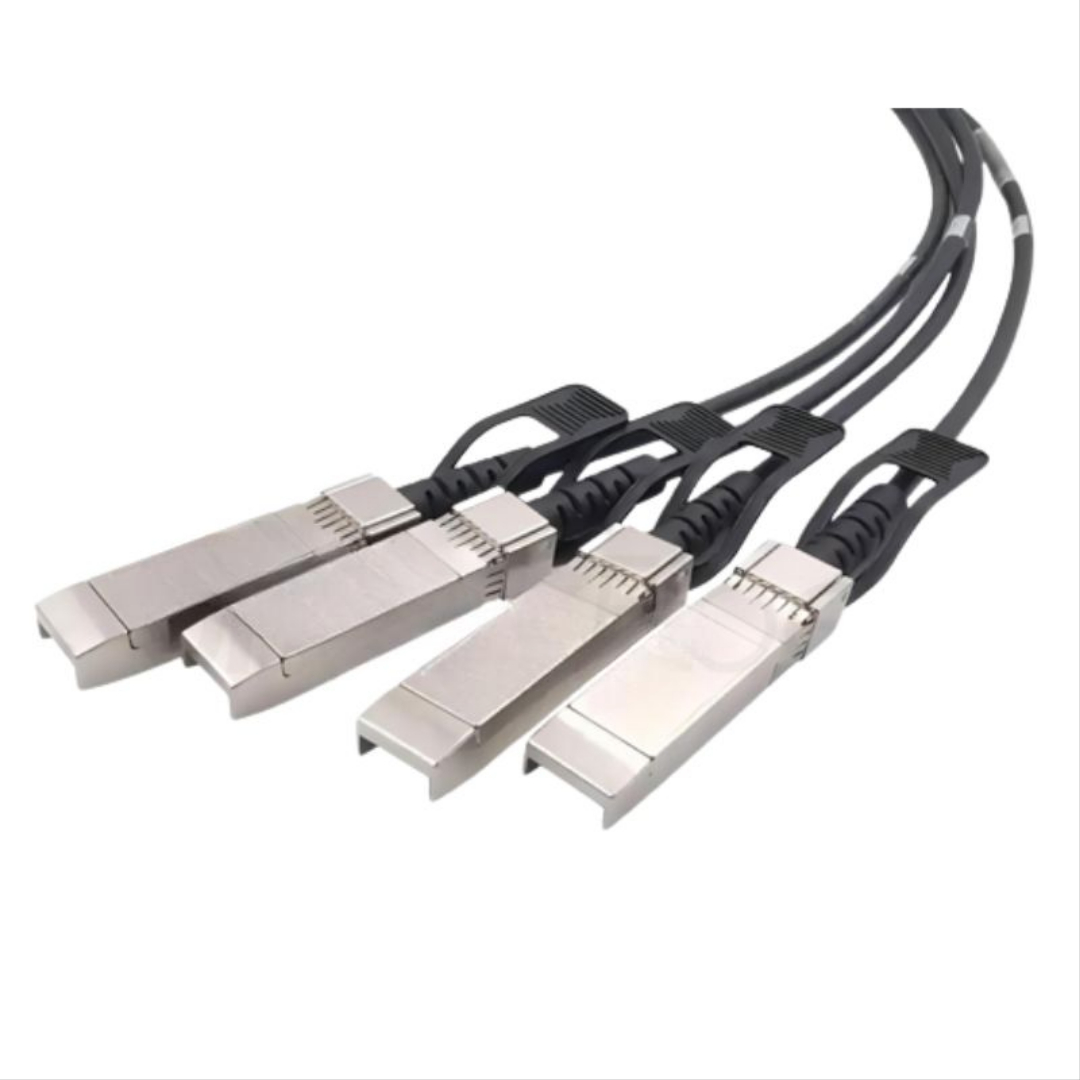
HPE 850397-001 3 Meter QSFP28 to 4 x SFP28 Direct Attach Cable. Factory-Sealed New in Original Box (FSB) with 3 Years Warranty
The HPE 850397-001 is a high-performance networking solution designed for seamless connectivity in enterprise environments. This QSFP28 to 4 x SFP28 direct attach cable is built to deliver outstanding efficiency for data transmission across short distances, ensuring reduced latency and stable throughput for demanding IT infrastructures.
This networking cable provides businesses with a reliable medium to connect switches, servers, and storage systems without the complexity of active optical components. Designed for modern data centers, it supports high-bandwidth applications while keeping costs in check.
The HPE 850397-001 DAC is commonly utilized in high-performance computing, storage networking, and enterprise-grade switching environments. Its design makes it an excellent choice for short-reach connections within racks or across adjacent racks.
Built with strict manufacturing standards, this cable ensures compliance with industry protocols. Its passive design reduces power consumption, while its compatibility with HPE networking equipment guarantees a seamless integration process.
The HPE 850397-001 3 Meter QSFP28 to 4 x SFP28 Direct Attach Cable represents a purpose-built breakout solution for modern 25/100 Gigabit Ethernet fabrics, providing a reliable physical connection between QSFP28 ports and multiple SFP28 ports. As a category, QSFP28-to-SFP28 direct attach cables serve environments where high-density switch uplinks, server connections, and top-of-rack consolidation must coexist with cost control, low latency, and simplified cabling management. This product sits at the intersection of performance and affordability: it combines the wide bandwidth capabilities associated with QSFP28 interfaces and the flexibility of SFP28 endpoints, enabling network architects to split a 100GbE QSFP28 port into four independent 25GbE SFP28 links without the complexity and power consumption of active optics.
The HPE 850397-001 is commonly classified as a passive direct attach copper (DAC) or a passive copper breakout cable, depending on the vendor labeling and the specific silicon compatibility. At a nominal length of three meters, this QSFP28 to 4 x SFP28 DAC balances reach and signal integrity for rack-to-rack and rack-to-switch connections inside data center pods. The cable is engineered to preserve the electrical characteristics expected by both the QSFP28 host and the SFP28 transceivers, ensuring that each 25GbE lane within the QSFP28 enclosure negotiates independently and cleanly with SFP28 NICs or downstream switch interfaces. In practical terms, this means lower latency and reduced power draw compared to optical transceivers, while still delivering full bandwidth per lane for bursty and sustained traffic patterns.
One of the most appreciated aspects of the QSFP28 to 4 x SFP28 direct attach cable category is its predictable performance envelope. The HPE 850397-001 supports the electrical signalling and lane mapping necessary for 100GbE split into four 25GbE channels. Electrical attenuation, crosstalk performance, and impedance matching are engineered across the cable’s length to minimize bit errors and ensure robust forward error correction (FEC) compatibility when required. Because the product is designed for short-reach interconnects inside the data center, it typically exhibits lower latency and jitter than optical alternatives. This makes it particularly well suited for latency-sensitive applications such as high-frequency trading, storage networking, virtualized workloads, and distributed database clusters where consistent microsecond-level performance is prized.
Compared with active optical assemblies, the HPE 850397-001 and its category peers consume negligible additional power because they do not host active optical transmitters or receivers. This passive profile reduces the thermal load inside switch enclosures and server chassis, which helps data center operators maintain lower cooling overhead and plan higher aggregate port densities. The passive nature also simplifies power budgeting for large deployments: each breakout cable contributes only the baseline power draw of the associated PHYs and switch silicon, not the additional wattage required by optical transceivers. For facilities optimizing for power efficiency and densification, choosing a 3 meter QSFP28-to-SFP28 DAC is a pragmatic decision with long-term operational benefits.
One of the critical selection criteria for QSFP28 to SFP28 breakout cables is compatibility with switch and server vendors. The HPE 850397-001 is positioned as a vendor-branded solution which often guarantees interoperability with HPE switches and compute platforms, easing firmware and hardware validation efforts. Nevertheless, buyers should understand the general compatibility model for this category: breakout operation depends on the switch silicon’s ability to map a single QSFP28 port into four independent SFP28 lanes. Most modern data center switches support this mode, but the mode may require explicit configuration or be constrained by certain firmware revisions. When procuring breakout cables, organizations must confirm that the target switch’s QSFP28 port can operate in 4x25G breakout mode and that the SFP28 ports accept the direct-attach endpoints without compatibility warnings or port disablement policies.
Network administrators should be mindful that compatibility extends beyond mere physical fitting: software-level readiness is equally important. Many vendors list supported cable assemblies and include firmware notes about lane mapping, cable length limits, and thermal thresholds. In some cases, firmware updates are necessary to enable the full suite of breakout capabilities or to remove artificial vendor locks that inhibit third-party passive cables. For enterprise environments using HPE switches and servers, the HPE 850397-001 often aligns with official compatibility matrices, reducing the administrative overhead of validation. It is nevertheless best practice to cross-reference switch release notes, NIC driver versions, and server BIOS documentation when integrating breakout cabling into a production fabric.
The 3 meter QSFP28 to 4 x SFP28 direct attach cable is particularly useful in several repeated deployment patterns inside modern data centers. In top-of-rack aggregation, a QSFP28 uplink on a leaf switch can be broken out into four 25GbE links feeding servers or smaller ToR switches, enabling flexible bandwidth allocation where not all endpoints require 100GbE. In leaf-spine architectures, breakout cables let spine ports with QSFP28 interfaces deliver multiple 25GbE fabric attachments into dense compute racks, balancing cost and port utilization. For hyperconverged infrastructure and composable storage nodes, the breakout cable provides an efficient way to connect multiple NVMe-over-Fabrics targets without incurring the expense of multiple optical transceivers, while still preserving high throughput and low latency for east-west traffic patterns.
At hyperscale, the economics of cabling scale dramatically. Each marginal reduction in power and cooling yields large savings at scale. In these contexts, the HPE 850397-001 category is attractive because it standardizes short-reach interconnects with well-known electrical properties, simplifying inventory and maintenance. Breakout cables reduce the number of transceivers required and, in many designs, allow a single QSFP28 port to serve multiple tenants or microservices without complex optical provisioning. The predictable latency and deterministic behavior of passive copper cable assemblies are also beneficial for tightly synchronized distributed systems that demand consistent timing and throughput across many nodes.


 Contact Us
 Information
 Catalog
 Solid State Drives (SSD)
 Network Switches
 Hard Disk Drives
 HBA & Controllers
 PC & Servers
 PC & Server Memory
 CPU & Processors
 Network Routers
 Power Supplies
 Tape Drives & Libraries
 Network Devices
 Computer & Network Cables