(7% discount is applied at checkout)
Cart is empty
Your go-to destination for cutting-edge server products
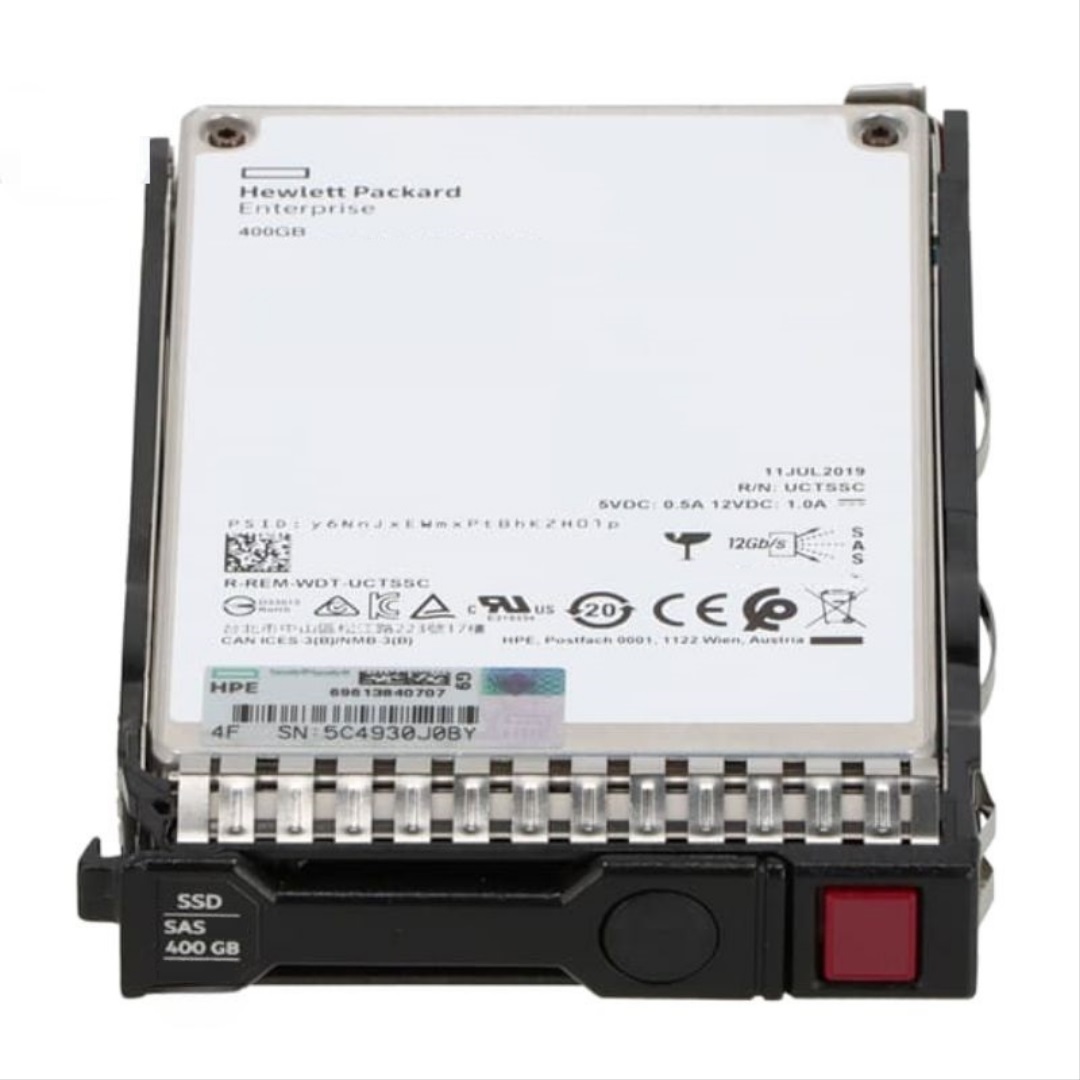


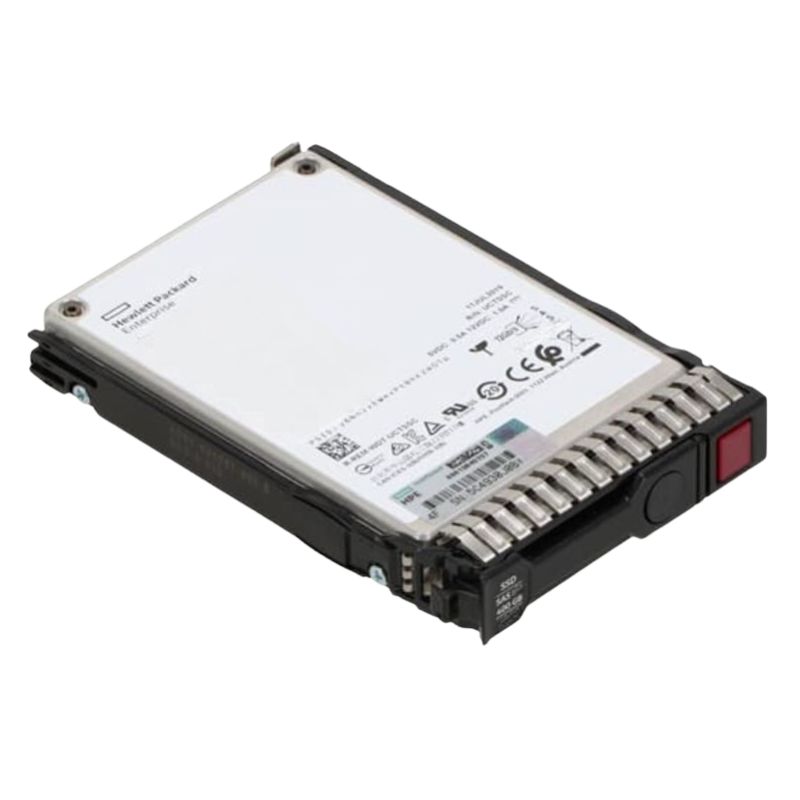
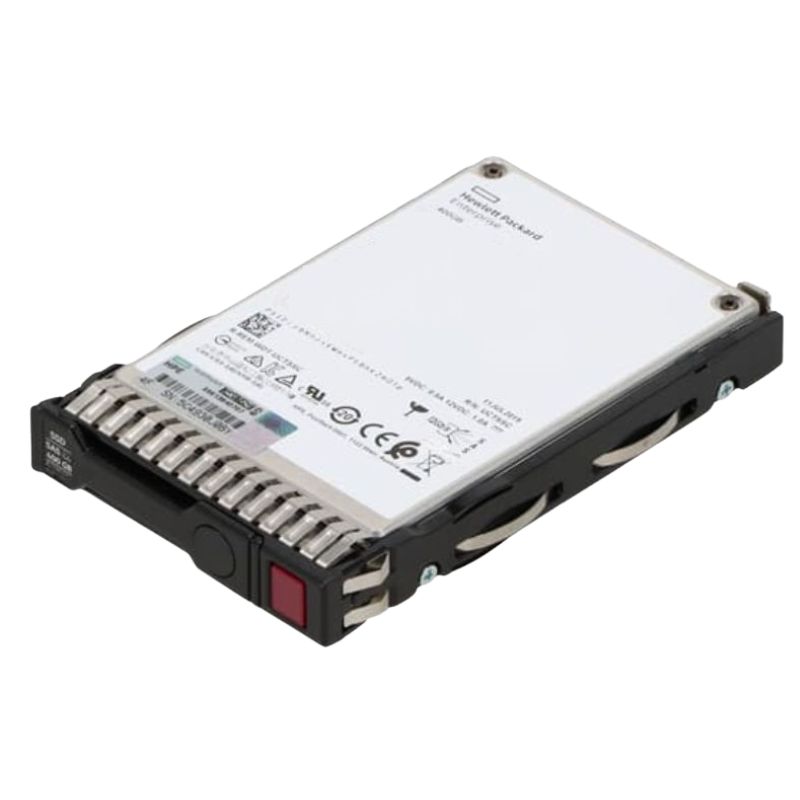
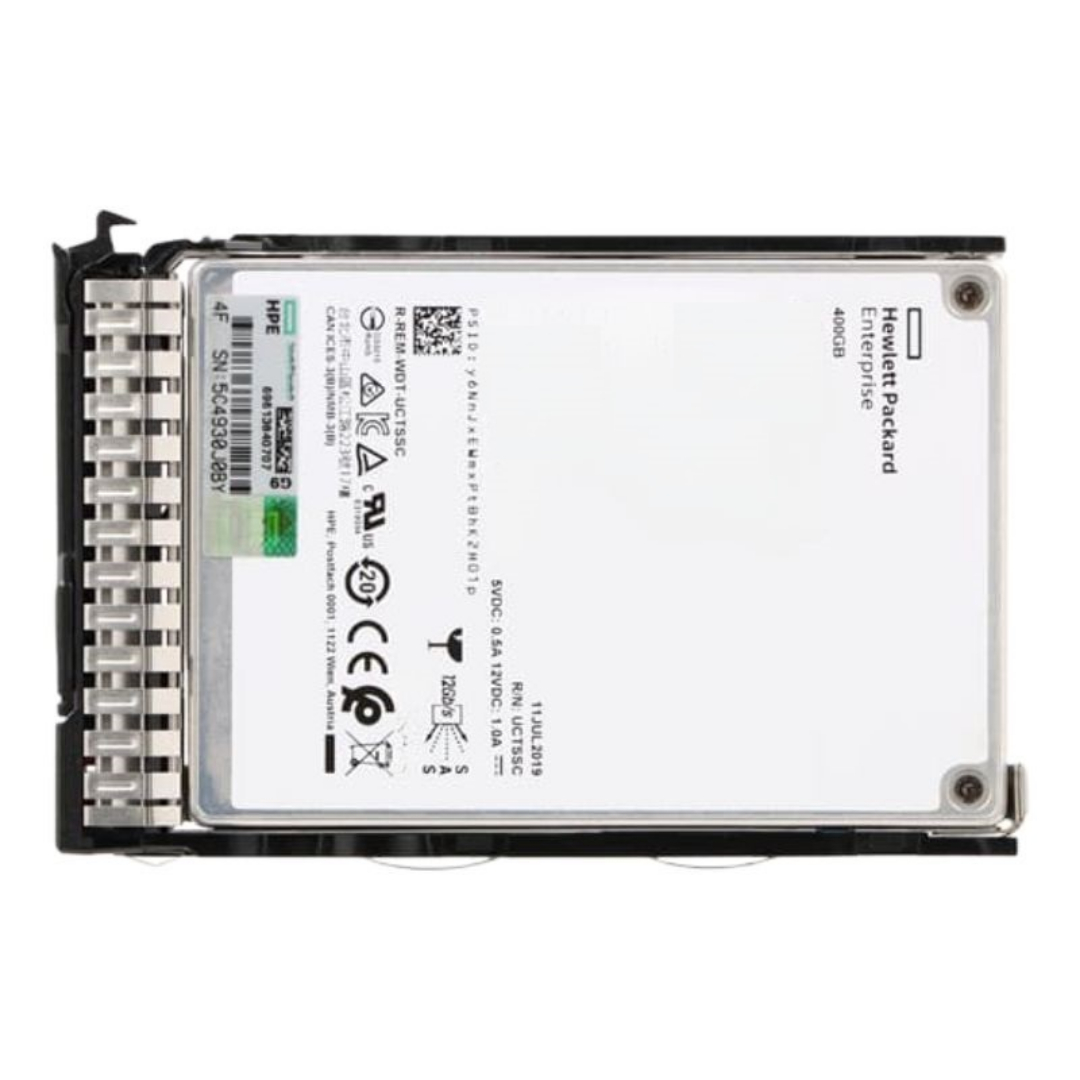
The HPE 851306-001 is a high-performance solid-state drive designed for enterprises requiring superior speed, reliability, and efficient storage. Built to handle demanding workloads, this drive ensures quick data transfer and long-term durability in data center environments.
This enterprise-grade storage solution delivers robust throughput, ideal for mixed workloads such as databases, virtualization, and large-scale transaction systems. Its 12Gbps SAS interface ensures seamless communication between the server and the drive.
The drive uses a 12Gbps SAS interface, making it compatible with enterprise servers and storage arrays. This ensures fast, secure, and dependable communication between hardware components.
Designed with sustainability in mind, this HPE SSD meets global environmental compliance regulations and reduces overall energy consumption.
The HPE 851306-001 is a 400GB mixed-use solid state drive engineered to deliver balanced performance and endurance in enterprise-grade storage environments. Built to HPE’s reliability and compatibility standards, this 3.5 inch (LFF) SAS drive connects via a 12Gb/s SAS interface and is intended for workloads that require a mix of read-intensive and write-transactional operations. As a Mixed Use (MU) SSD, it provides a midpoint between read-optimized and write-intensive drives, making it an ideal choice for general-purpose tiering, virtualization hosts, mid-tier databases, and mixed production workloads where consistent I/O and predictable latency matter.
The drive’s 3.5 inch large form factor (LFF) design makes it suitable for server and storage enclosures that accept LFF drives or use sleds that adapt LFF to 2.5 inch bays. The SAS 12Gbps interface provides dual-port connectivity options typical of enterprise SAS controllers and HBAs, enabling high-availability topologies and multipath configurations with redundant paths to host controllers. The 12Gb/s link speed ensures low-latency, high-throughput access for clustered and RAIDed setups, and supports the sustained transfer rates that mixed-use workloads demand.
Mixed-use SSDs are engineered to strike a careful balance between endurance, write performance, and cost per gigabyte. Unlike read-optimized drives tuned for mostly read traffic, or extreme write-endurance models designed for constant heavy transactional logs, a mixed-use SSD like the HPE 851306-001 provides sufficient write endurance for frequent updates while maintaining strong read throughput. This makes it well-suited to use cases such as virtual machine disks, medium-sized OLTP databases, boot and system volumes in large-scale deployments, and general-purpose caching tiers where both read and write operations are substantial over time.
Performance for an enterprise-class mixed-use SAS SSD is measured across IOPS, latency, sustained throughput, and quality-of-service under mixed workloads. The HPE 851306-001 is intended to provide consistent predictable latency under both random and sequential access patterns, and to maintain performance as drive utilization increases. This steadiness is crucial for multi-tenant virtualization hosts, container platforms, and hyperconverged systems where a single overloaded device can degrade the performance of many workloads. When deployed in RAID groups or in front of cache layers, these drives help stabilize application response times and ensure that service-level objectives are met.
Enterprise applications are sensitive to tail latency as much as to average throughput. Mixed-use SSDs minimize queuing delays and sustain high input/output operations per second (IOPS) for both reads and writes. The dual-port SAS architecture supports multipath I/O and failover, which contributes to lower effective latency in clustered or redundant storage topologies. Administrators building tiers of storage frequently place mixed-use SSDs between ultra-low-latency cache and higher-capacity HDD tiers to provide both fast access and cost-effective capacity.
Sequential read and write throughput are important when moving large files, performing backups, or streaming data between tiers. The HPE 851306-001’s 12Gb/s SAS link provides a headroom that helps maintain throughput for those larger flows. While random IOPS define responsiveness for small-block operations, sequential throughput defines how well the platform handles bulk transfers, snapshot consolidation, and rebuilds. In enterprise arrays, pairing reliable mixed-use SSDs with intelligent RAID or erasure coding strategies helps accelerate rebuild times and reduces rebuild impact on production workloads.
Reliability is a foundational requirement in enterprise storage purchasing decisions. The HPE 851306-001 follows HPE’s enterprise design philosophy, which emphasizes data integrity features, power-loss protection mechanisms, and firmware robustness. Mixed-use drives typically include over-provisioning, wear-leveling algorithms, and error correction capabilities designed to extend usable life and protect against bit errors over time. For mission-critical deployments, these drives are often used inside HPE ProLiant servers, storage enclosures, or third-party arrays that implement hardware RAID or controller-level data protection.
Endurance for mixed-use drives is engineered to accommodate a higher number of write cycles than read-optimized drives but less than top-tier write-intensive products. This design allows mixed-use SSDs to handle variable workloads for years in a production environment, provided they are configured and monitored correctly. Capacity planning should include write amplification considerations from RAID and filesystem behavior, and proactive monitoring of SMART attributes and vendor health metrics is recommended to predict drive wear-out timelines. Enterprise administrators often pair monitoring with automated replacement policies to maintain uninterrupted service.
Power-loss protection is a critical feature in enterprise SSDs because it prevents data corruption in flight during unexpected power interruptions. Drives intended for enterprise use typically include capacitive or supercapacitor-backed flush capabilities to ensure that volatile write caches are committed to non-volatile media. This capability reduces the risk of partial writes and metadata corruption, which is especially important when drives are part of RAID stripes or when they host filesystem metadata. When selecting the HPE 851306-001 for production, verify the specific model’s power-loss protection details in the official datasheet and configure storage controllers to complement the drive’s protection features.
One of the outstanding advantages of HPE-branded drives is their tested compatibility with HPE server and storage ecosystems. The HPE 851306-001 is intended to be compatible with a wide range of HPE ProLiant servers, HPE storage enclosures, and legacy systems that accept SAS LFF drives. Inventory managers appreciate how using vendor-validated components simplifies firmware updates, reduces integration risk, and streamlines support agreements. When integrating these drives into heterogeneous environments, ensure that controllers, backplanes, and enclosures support the 3.5 inch form factor and the 12Gb/s SAS protocol to avoid bottlenecks.
Enterprise environments demand serviceability features that minimize downtime. The 3.5 inch LFF form factor typically supports hot-swap operations when used in compatible enclosures and sleds, allowing drives to be replaced without powering down systems. Hot-swap capability, combined with RAID redundancy and multipath I/O, allows maintenance operations and drive replacement without service interruptions. Ensure that your server or array’s firmware and management tools are up-to-date to support hot-swap notifications, GRACEFUL_DEGRADED states, and predictive failure alerts.
Firmware plays a central role in SSD behavior, including performance optimization, security patches, and bug fixes. HPE provides firmware bundles and management utilities for validated drives, and firmware updates should be scheduled during maintenance windows with verified backups. Firmware compatibility tables and release notes clarify which controller versions and server platforms are supported. Enterprises should test firmware updates in staging environments prior to deployment, because firmware changes can alter drive characteristics like performance profiles and SMART reporting.
The HPE 851306-001 400GB mixed-use SAS SSD suits a variety of deployment patterns. In virtualization clusters, these drives are often used for virtual machine boot volumes and frequently accessed VM disk images. In database environments, mixed-use SSDs accelerate transactional workloads and act as a fast tier for hot tables and indexes. For hybrid storage arrays, they can serve as intermediate caching layers or as part of an all-flash tier that balances cost and capacity. Enterprise backup appliances and log aggregation systems also benefit from the sustained mixed-read/write characteristics of these drives.
Virtualization platforms, whether on-premises hypervisors or private-cloud orchestrations, impose a mix of small random reads and writes across many tenants. Mixed-use SSDs address these mixed access patterns effectively, delivering the responsiveness virtual machines expect while providing the endurance to withstand frequent snapshots and backups. When used within hyperconverged infrastructure, the drives can be pooled to provide both local performance and cluster-wide resilience through distributed replication and erasure coding.
For databases that require frequent read/write access to working sets, a mixed-use SSD can significantly reduce query latency and improve transaction throughput compared to mechanical disks. Analytic workloads that combine streaming ingest with read-heavy queries also benefit from the balanced characteristics of these drives. Placement strategies often put hottest data on mixed-use SSDs while colder archival data lives on higher-capacity HDDs, yielding an overall architecture that optimizes performance and total cost of ownership.


 Contact Us
 Information
 Catalog
 Solid State Drives (SSD)
 Network Switches
 Hard Disk Drives
 HBA & Controllers
 PC & Servers
 PC & Server Memory
 CPU & Processors
 Network Routers
 Power Supplies
 Tape Drives & Libraries
 Network Devices
 Computer & Network Cables