(7% discount is applied at checkout)
Cart is empty
Your go-to destination for cutting-edge server products
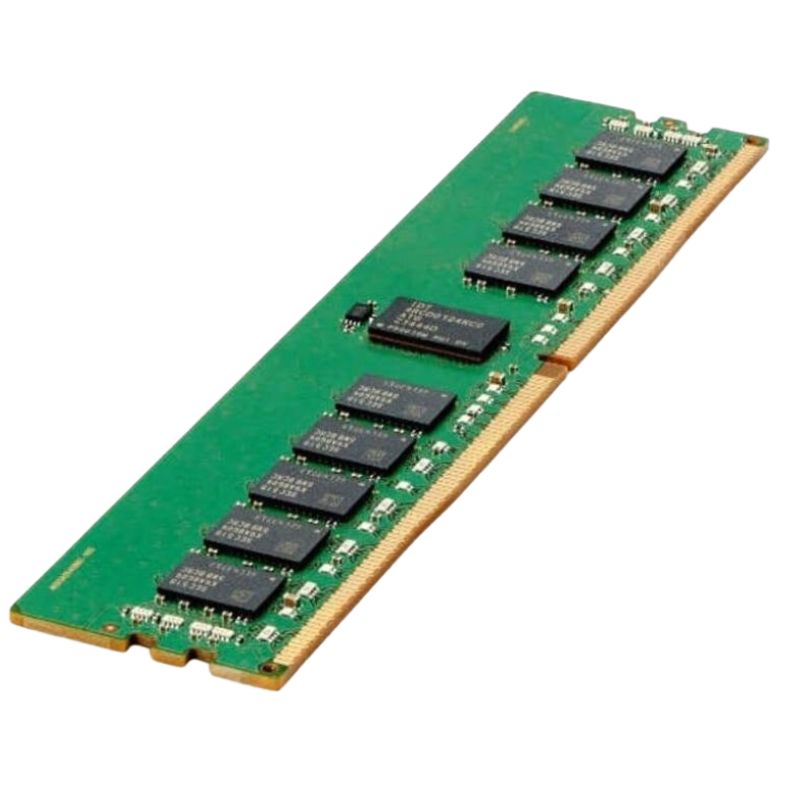


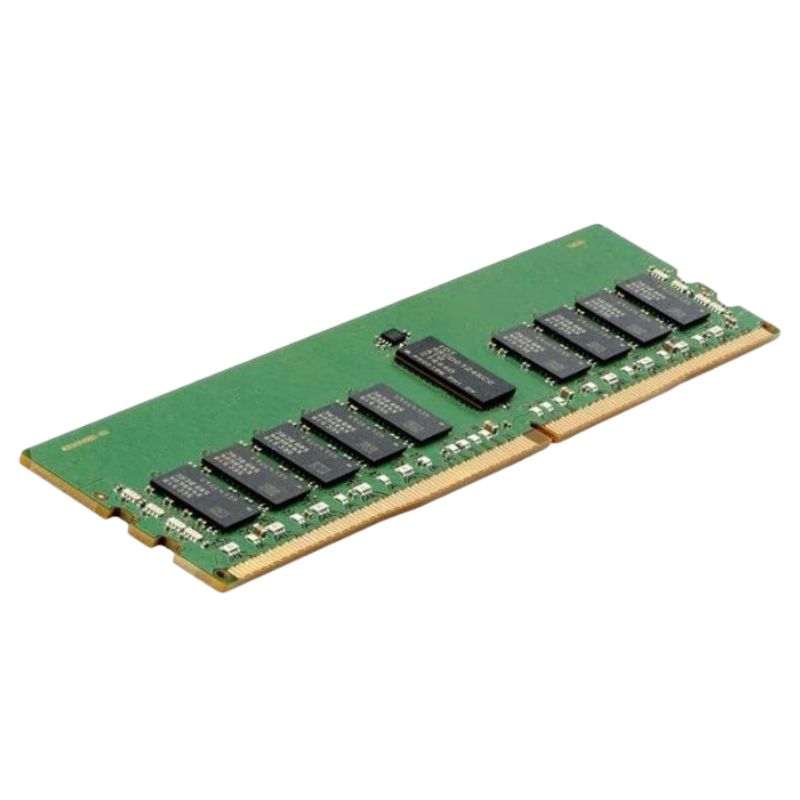
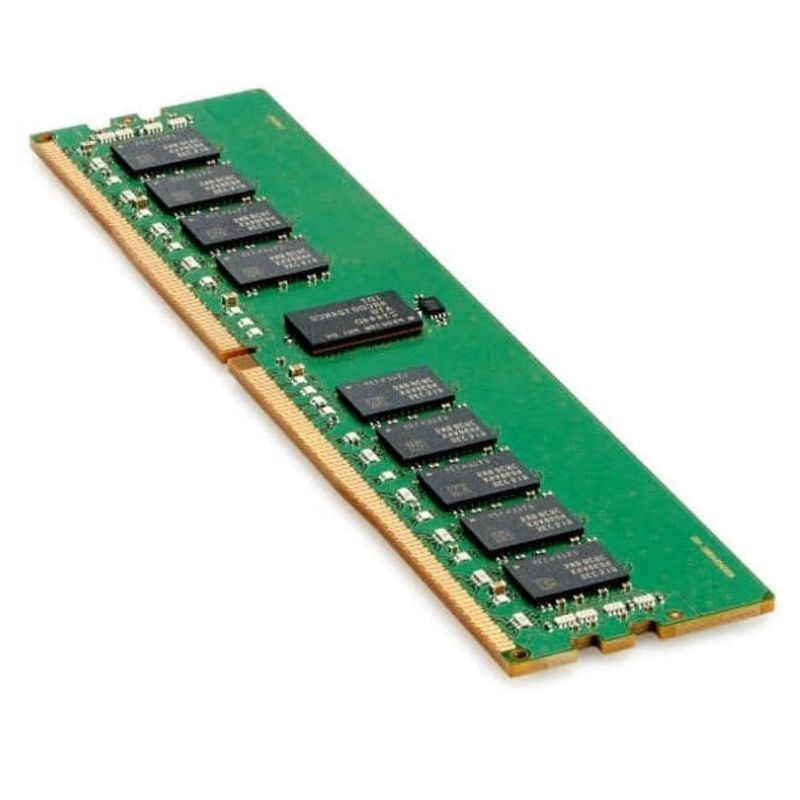
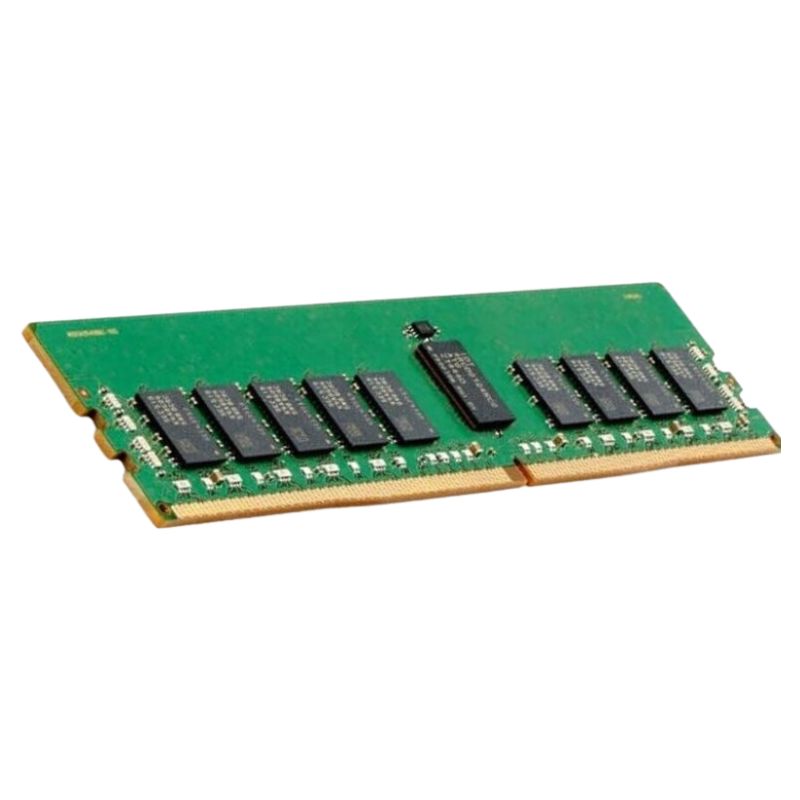
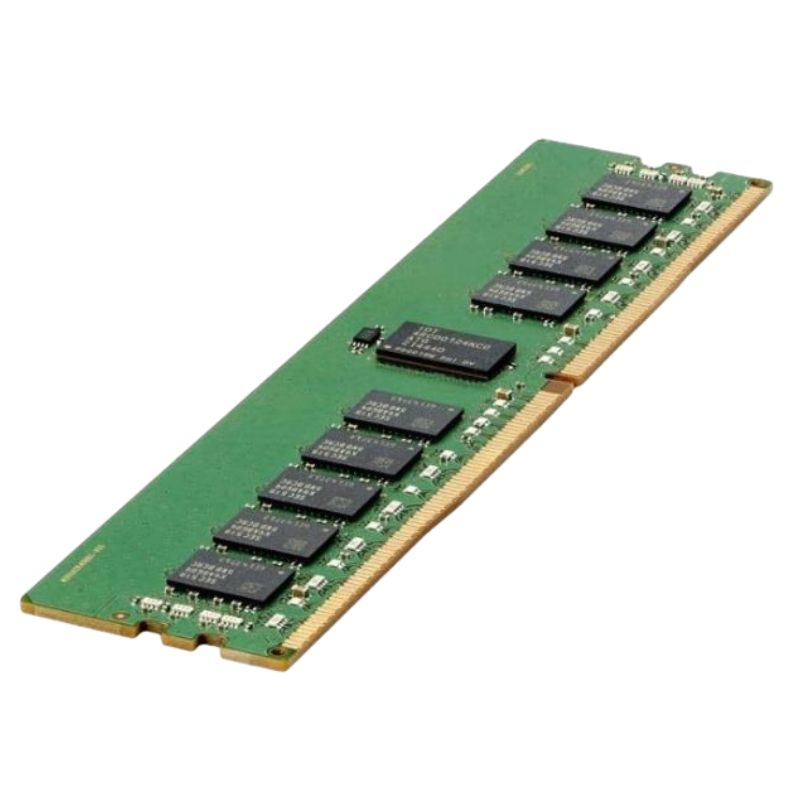
HPE 854786-001 32GB DDR4-2400 PC4-19200 RDIMM 288-Pin CL17 Dual Rank x4 ECC Registered Memory Module. New (System) Pull with 1 Year Replacement Warranty
The HPE 854786-001 32GB DDR4-2400 PC4-19200 RDIMM delivers reliable server performance with advanced error-correcting technology and optimized data transfer capabilities. Designed to enhance system stability, it ensures higher efficiency and dependable operation in enterprise environments.
This 32GB DDR4-2400 RDIMM is built for HPE servers, offering seamless integration with enterprise systems that demand high-speed and reliable memory solutions. With ECC support, it prevents data corruption and maintains consistent uptime.
The HPE 854786-001 memory module incorporates error-correcting code (ECC), ensuring high reliability and data accuracy. With 1.2V low-power operation, it helps reduce overall energy consumption while maximizing performance in demanding server environments.
The HPE 854786-001 32GB DDR4-2400 PC4-19200 Registered DIMM (RDIMM) is engineered for enterprise-class servers and workstations that demand a balance of capacity, reliability, and predictable performance. As a 288-pin ECC Registered memory module with dual rank x4 organization and CL17 latency, this module targets HPE ProLiant and other compatible systems where error correction, scalability, and stable multi-socket operation are essential. The designation PC4-19200 denotes theoretical peak transfer rates aligned with DDR4-2400 signaling, delivering memory bandwidth suited for virtualization hosts, database servers, high-performance computing tasks, and heavy I/O application stacks.
This module operates at DDR4-2400 speeds, offering a raw transfer rate commonly quoted as 19.2 GB/s per module in single-lane measurement terms and aligning with the industry label PC4-19200. The 288-pin edge connector conforms to standard DDR4 RDIMM mechanical specifications, ensuring physical compatibility with server sockets designed for registered ECC memory. ECC (Error Correcting Code) provides single-bit correction and double-bit detection capabilities for most server memory arrays, dramatically reducing the risk of data corruption due to transient memory errors. Registered buffering (the “R” in RDIMM) reduces electrical loading on the memory controller, enabling higher module counts per channel and per system compared with unbuffered DIMMs, which is crucial for memory-dense configurations and multi-socket motherboards.
The module’s dual rank x4 configuration describes the internal arrangement of memory chips and the width of each chip’s data path. Dual rank indicates two sets of DRAM chips that the memory controller addresses sequentially to increase effective module capacity and density. The x4 notation refers to each DRAM chip’s 4-bit wide data interface; modules using x4 chips typically offer higher density at the cost of requiring the memory controller to handle narrower chip data widths, which can influence compatibility with advanced mirroring or certain RAID-like memory features. Understanding rank and device width helps administrators plan capacity expansion and troubleshoot rank-related population rules that some server BIOS versions enforce for optimum stability.
CAS Latency 17 (CL17) is specified for this DDR4-2400 module. In practice, CAS latency expressed in cycles combined with the operating frequency determines absolute access latency. For memory administrators, this means CL17 at 2400 MT/s yields a certain predictable access timing that balances throughput and responsiveness. While raw latency is only one factor in application performance, in multi-threaded server workloads the increased bandwidth and capacity often outweigh microsecond-level differences in access time. For memory-bound workloads such as in-memory databases or large caches, the overall system throughput achievable when populating all memory channels with matched RDIMMs becomes the most important metric.
HPE part numbers are designed around HPE server lines and validated configurations; the 854786-001 module is commonly associated with a range of HPE ProLiant platforms where registered ECC DDR4 memory is specified. Compatibility extends to systems that accept DDR4 RDIMM 288-pin modules with the specified speed grade. It is essential to check server QuickSpecs, HPE memory population rules, and BIOS firmware notes before purchase and deployment to confirm the module’s support, maximum supported capacity per slot, and mixing rules with other memory types. Memory population rules often prescribe which DIMM slots to fill first, interleaving patterns for multi-channel optimization, and limitations when mixing ranks or speeds. Adhering to HPE’s guidelines ensures maximum performance and prevents boot-time errors or reduced memory speed due to mismatched modules.
For stable operation, avoid mixing RDIMMs with UDIMMs (unbuffered) or LRDIMMs (load-reduced) within the same server unless explicitly supported by the vendor documentation. Mixing modules of different speed ratings will frequently cause the system to clock down memory to the slowest module’s supported frequency, which can reduce throughput. If incremental upgrades are necessary, plan to replace all modules in the same channel or bank with identical parts to preserve channel interleaving and minimize rank-related performance penalties. Where budget constraints dictate staged upgrades, populate according to the vendor’s recommended slot population order and confirm via firmware and server management tools that all modules are recognized and operating at expected speeds and timings.
Server firmware plays a critical role in memory initialization and optimization. Updated BIOS and system firmware often include memory compatibility lists, training algorithms, and timing profiles that improve stability with higher density modules or mixed rank configurations. Before large-scale deployment, update server firmware to the latest available stable release and validate memory behavior under realistic workloads. Some systems provide advanced memory settings such as memory interleaving, performance vs. reliability modes, and options for enabling or disabling specific ECC features. Administrators should document baseline configurations and test changes in a controlled environment to avoid unintended downtime in production systems.
The 32GB capacity per module makes the HPE 854786-001 ideal for servers that require substantial memory pools without the footprint of many smaller DIMMs. Common scenarios include virtualization hosts supporting multiple VMs, database and analytics servers that benefit from large in-memory caches, application servers with heavy object or session stores, and HPC nodes where memory capacity directly impacts dataset sizes. The registered ECC nature of the module ensures the level of data integrity expected in enterprise deployments, reducing silent data corruption risk and improving long-term reliability in 24/7 critical systems. For environments requiring symmetrical scaling across sockets, using identical RDIMMs across all channels ensures predictable performance and avoids rank or speed mismatches that can complicate capacity planning.
Virtualization platforms derive direct benefits from larger DIMMs because each virtual machine consumes a slice of host RAM. Using 32GB RDIMMs enables denser VM consolidation while maintaining overhead for host-level services and page caching. For hyperconverged infrastructures, consistent memory performance across nodes is crucial for balanced cluster behavior; thus deploying matched HPE modules simplifies lifecycle management and support interactions with the platform vendor.
Database engines that leverage in-memory buffers will see reduced disk I/O and improved query response times when more physical RAM is available. The HPE 854786-001 supports these goals by providing substantial per-slot capacity while preserving ECC protection for critical data. Caching layers such as Redis or Memcached similarly benefit from larger contiguous memory allocations, lowering cache misses and improving throughput. For real-time analytics workloads, predictable memory timing and multi-channel population are more important than marginal latency differences between different DIMMs.


 Contact Us
 Information
 Catalog
 Solid State Drives (SSD)
 Network Switches
 Hard Disk Drives
 HBA & Controllers
 PC & Servers
 PC & Server Memory
 CPU & Processors
 Network Routers
 Power Supplies
 Tape Drives & Libraries
 Network Devices
 Computer & Network Cables