(7% discount is applied at checkout)
Cart is empty
Your go-to destination for cutting-edge server products
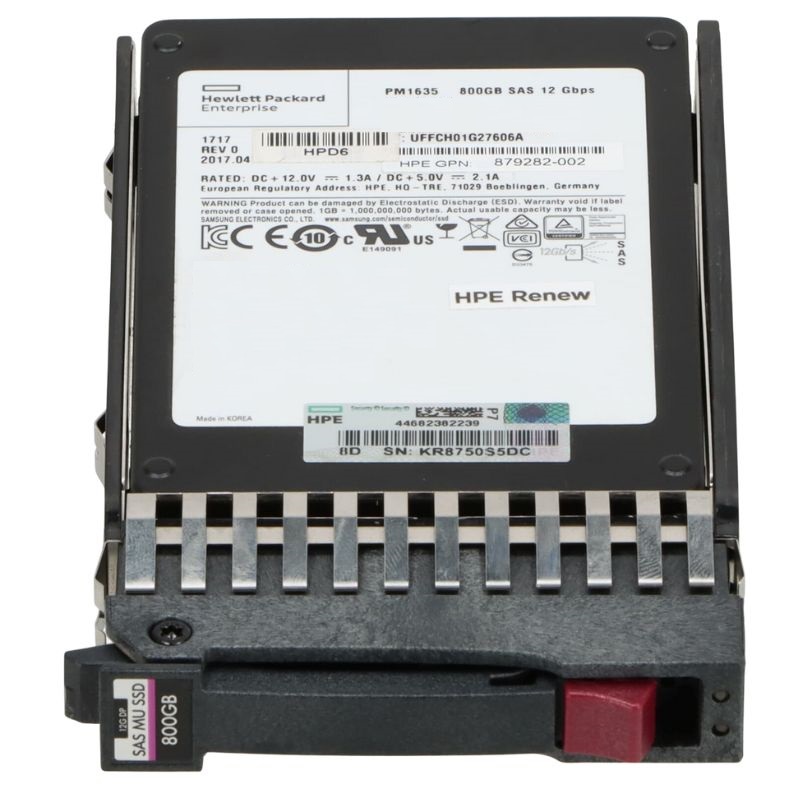


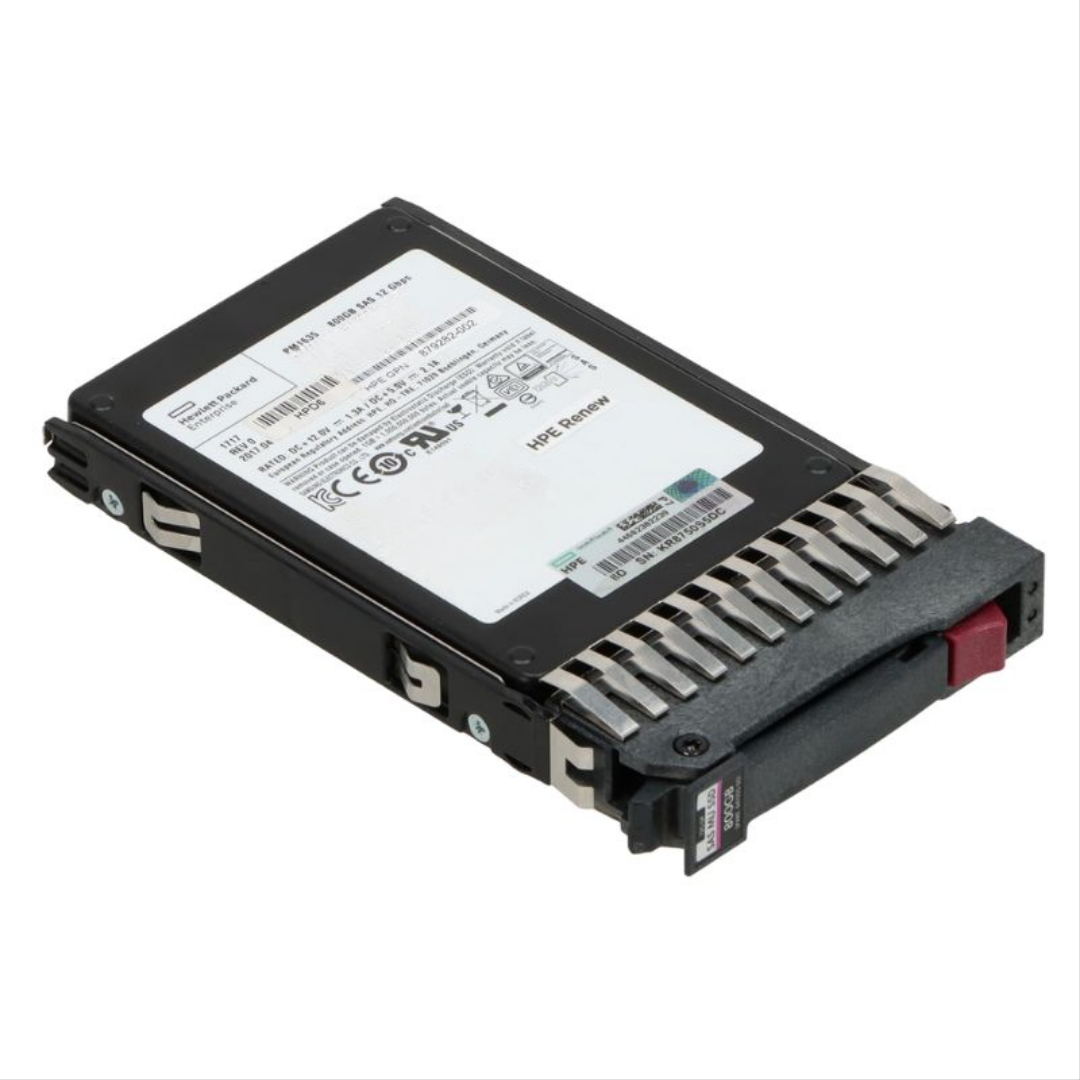
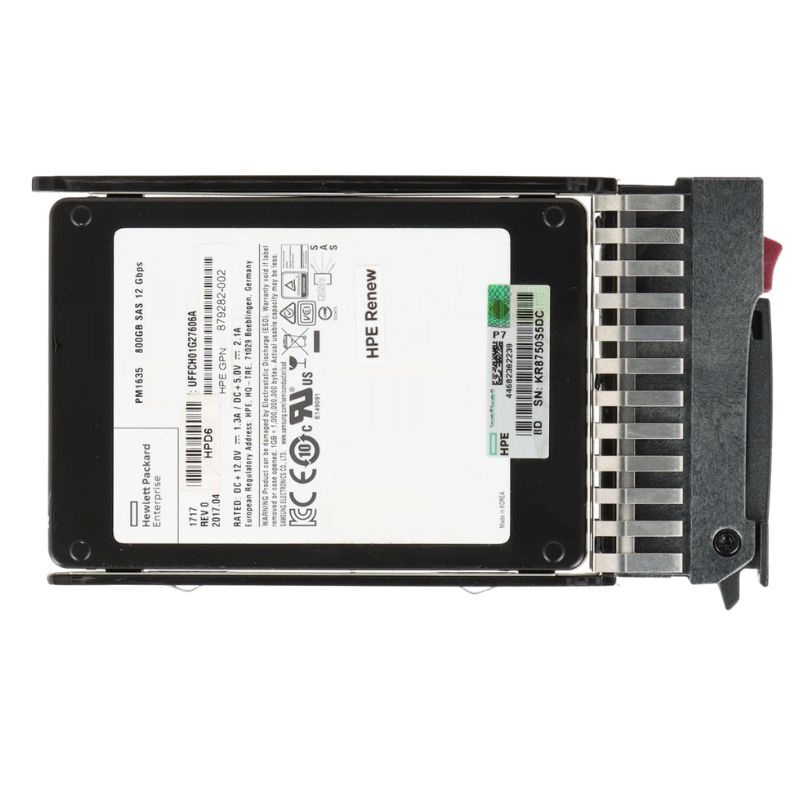
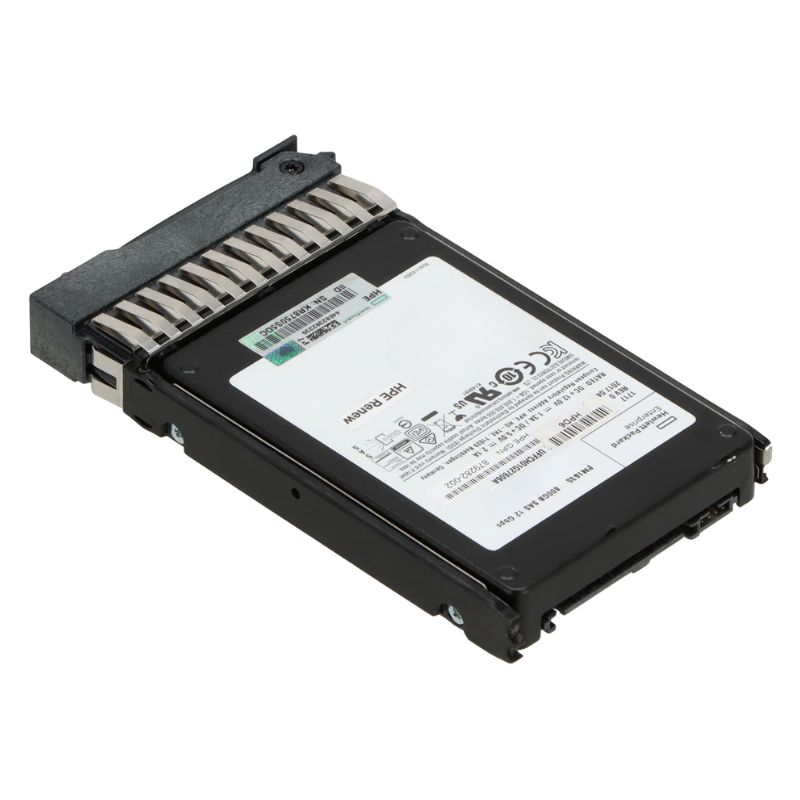
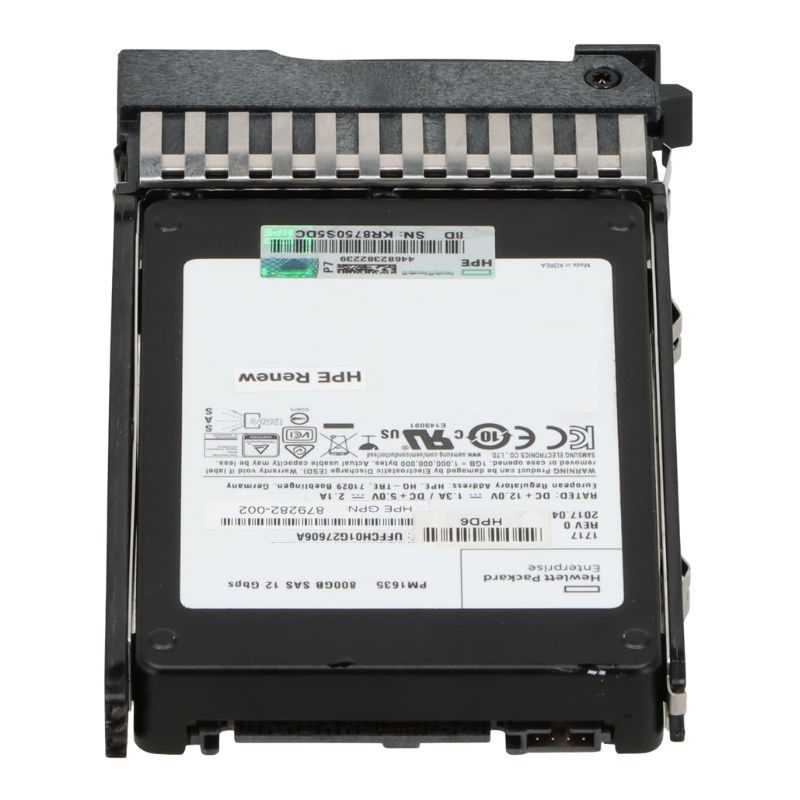
HPE 860097-001 800GB SAS 12GBPS Mixed Use 3.5 Inch LFF LP Solid State Drive. Excellent Refurbished with 1 year replacement warranty
The HPE 860097-001 800GB SAS 12Gbps Mixed Use 3.5-Inch LFF LP SSD is engineered for enterprise-grade applications, ensuring reliability, speed, and efficiency for modern workloads. Designed by Hewlett Packard Enterprise, this storage solution blends performance with durability for data-intensive environments.
This enterprise SSD delivers a balance between high-speed data transfer and endurance, making it suitable for both read-intensive and write-heavy applications. The SAS 12Gbps interface ensures seamless connectivity and faster throughput, reducing latency across business-critical operations.
The HPE 860097-001 SAS SSD is crafted to handle demanding enterprise workloads with dependable endurance. Its architecture minimizes failure rates and maintains stable performance under heavy stress conditions.
With its 3.5-inch LFF design, this SSD seamlessly integrates into enterprise storage arrays and servers. The SAS interface ensures wide compatibility across HPE storage infrastructures and supports flexible deployment strategies.
This mixed-use SSD is tailored for enterprise operations where both read and write performance are crucial. Businesses benefit from consistent throughput and efficient handling of complex data processing tasks.
The HPE 860097-001 800GB SAS 12Gbps Mixed Use 3.5-inch large form factor low-profile solid state drive represents a high-value category of enterprise storage devices designed to balance performance, endurance, and cost-efficiency for mixed workload environments. This category targets datacenter and enterprise IT teams who require predictable I/O performance for a combination of read-intensive and write-moderate applications. Drives in this category typically deliver strong sequential throughput and reliable random IOPS while preserving the longevity expected from mixed-use flash media. When deployed in storage arrays, servers, or JBOD enclosures, these 3.5-inch low-profile (LP) SAS SSDs provide administrators with a robust option for consolidating multiple workload types without the premium cost of extreme endurance, write-heavy flash, or the lower-cost but lower-performing SATA alternatives.
The 3.5-inch LFF low-profile format of the HPE 860097-001 makes it compatible with a broad range of enterprise chassis, storage shelves, and legacy systems that accept standard large form factor drives. The low-profile designation ensures that the drive occupies less height than a full-height LFF device, allowing denser packing in blade and rack servers where space is constrained. The physical design also includes standardized mounting points and connector alignments, minimizing the need for adapters or non-standard trays. This category emphasizes mechanical reliability: vibration-tolerant housing, reinforced connectors, and thermal design that enables stable operation under typical datacenter airflow and temperature ranges. For procurement and inventory planning, many organizations prefer this LFF LP SSD class because it simplifies compatibility with older server fleets while providing the performance advantages of SAS 12Gbps interfaces.
At the core of the category is the Serial Attached SCSI (SAS) 12Gbps interface, which provides enterprise-grade connectivity, full-duplex communication, and advanced command queuing appropriate for high-throughput and low-latency workloads. The SAS protocol supports robust error recovery, multi-pathing, and dual-port operation that are critical in SAN and clustered server environments. Compared to SATA-based alternatives, SAS 12Gbps drives in this category offer superior queue depth handling, higher sustained bandwidth, and better integration into Hewlett Packard Enterprise server controllers and storage systems. This makes the category especially suitable for mixed-use applications where simultaneous transactional and streaming operations occur, such as virtualization, hybrid database workloads, and multi-tenant application hosting. The 12Gbps throughput also future-proofs deployments against modest increases in per-drive demand without forcing immediate upgrades to storage controllers or backplanes.
With a nominal capacity of 800GB, drives in this category fit neatly into capacity tiering strategies where a balance between usable space and performance is required. This capacity point is often used as a mid-tier "performance+capacity" layer in hybrid storage architectures, positioned between high-end NVMe cache or all-flash tiers and high-capacity spinning-disk tiers. The 800GB capacity allows for efficient RAID and erasure coding layouts without excessive overhead on metadata or rebuild times. In virtualized environments, the 800GB LFF SSD can host a sensible mix of virtual machine disk files and application data stores, reducing latency for tenant workloads while controlling per-VM storage costs. For service providers and enterprises, the 800GB point often yields the best combination of price-per-GB and IOPS-per-GB in mixed-use flash categories.
This mixed-use category was designed for environments that include a broad spectrum of access patterns. Examples include virtual desktop infrastructure where read-heavy boot storms and random writes coexist, online transactional processing systems that require low-latency small-block random I/O, and content delivery workloads that combine sequential streaming with metadata updates. The drive's endurance profile typically supports sustained moderate write workloads expressed through drive writes per day (DWPD) or terabytes written (TBW) metrics suitable for mixed workloads. Because mixed-use SSDs are manufactured to handle more writes than read-optimized enterprise SSDs but fewer than heavy endurance devices, they are cost-effective for most business applications without incurring excessive replacement or warranty costs.
Performance in this category emphasizes a balanced blend of high random IOPS and generous sequential throughput. Random read and write IOPS performance benefits server virtualization, database indexing, and concurrent multi-user workloads. Sequential read/write throughput supports streaming ingestion and bulk transfers. Enterprise-grade caching algorithms, optimized firmware, and over-provisioning strategies help maintain consistent performance under sustained load, avoiding the steep performance cliffs that can appear in consumer-grade flash under heavy write amplification. Latency figures are engineered to remain low and predictable, which is critical for latency-sensitive applications such as online transaction processing and real-time analytics. When conducting performance planning, administrators should consider the drive's typical sustained IOPS, peak burst capabilities, and the influence of RAID parity calculations on effective throughput.
Drives within the HPE 860097-001 class prioritize reliability and data integrity through a combination of enterprise-grade NAND life-cycle management, power-loss protection mechanisms, and advanced error-correction firmware. Error correction codes (ECC), background media management, and wear-leveling algorithms extend usable life and reduce data retention risk. Power-loss protection features use on-board capacitors and firmware processes to ensure that in-flight data can be safely committed to NAND, minimizing the risk of corruption during unexpected power events. Additionally, the SAS interface and enterprise firmware provide drive health telemetry and S.M.A.R.T. attributes that integrate with HPE server management suites, enabling proactive maintenance and predictive replacement before catastrophic failure occurs. For mission-critical services, this lifecycle visibility is as important as raw performance because it reduces unplanned downtime and helps schedule seamless drive replacements during maintenance windows.
The endurance profile of an 800GB mixed-use SAS SSD is typically specified in DWPD or TBW and is calibrated for a realistic enterprise lifecycle. Warranty coverage for drives in this category commonly includes multi-year manufacturer warranties with optional support and replacement programs through HPE's spare parts channels. When planning procurement, IT teams should match endurance ratings and warranty terms to the expected write patterns in their environment. Workload characterization tools can help estimate TBW needs so that administrators can choose drives that satisfy both performance and longevity requirements while minimizing total cost of ownership. HPE's warranty and support services further reduce operational risk by offering certified spares, parts replacement, and firmware update channels through official support agreements.
Using the 860097-001 category in RAID arrays or in combination with erasure-coded distributed storage systems provides robust data protection while delivering high availability. RAID configurations such as RAID 1, RAID 10, or RAID 6 are common for SSD deployments, each offering a different balance between capacity efficiency and rebuild performance. Mixed-use SAS SSDs typically perform well in RAID rebuild scenarios compared to high-capacity HDDs due to faster random I/O and lower rebuild times, which reduces vulnerability windows. However, SSD-specific rebuild strategies and controller tuning are recommended because rebuild I/O can stress the drives and influence longevity. Administrators should also implement cross-system replication and backup strategies to protect against logical errors, operator mistakes, and site-level failures, complementing the hardware-level protections provided by RAID and SAS dual-port configurations.
Compatibility with HPE storage controllers, server platforms, and array enclosures is a critical selling point for drives in this category. The drives are engineered to work with enterprise-class controllers that support SAS 12Gbps, command queuing, and multipath I/O. Integration extends beyond basic plug-and-play; firmware compatibility and qualified firmware revisions are essential to maintaining system stability. Enterprises should reference HPE compatibility matrices and validated firmware bundles before deploying drives at scale. Firmware updates may deliver performance improvements, bug fixes, and feature enhancements; however, administrators must carefully schedule updates and follow vendor-provided procedures to avoid mid-update interruptions that can impact array health. Effective drives-inventory governance, label management, and firmware version tracking help eliminate compatibility drift across large storage fleets.
SAS backplanes and host bus adapters (HBAs) must be chosen to sustain 12Gbps full-duplex transfers with adequate queue depth and CPU offloading. In mixed-use deployments, HBA CPU overhead and controller cache sizes influence the realized performance of the drive category. Many HPE server controllers include adaptive caching and battery- or capacitor-backed write cache that can significantly improve small-block write performance and lower latency. Server cooling design and backplane air channels are also essential because SSDs, while generally cooler than spinning disks under similar workloads, still produce heat that can affect density and long-term performance. Proper tuning of airflow, fan curves, and thermal monitoring is necessary to ensure sustained performance in dense LFF LP configurations.
When deploying HPE 860097-001 class drives, several operational best practices help maximize performance and longevity. First, administrators should baseline workload characteristics across read/write ratios, block size distributions, and peak concurrency to align drive selection with actual demands. Second, over-provisioning and appropriate RAID stripe widths reduce write amplification and promote consistent performance. Third, monitoring tools should be configured to capture S.M.A.R.T. metrics, endurance consumption, and thermal telemetry so that proactive maintenance can be executed before failures impact service. Fourth, firmware management must follow a controlled release process with testing in staging environments to validate interoperability with controllers, OS drivers, and storage software stacks. Finally, training operations staff on SSD-specific behaviors, such as garbage collection and the effects of sustained large sequential writes, prevents misconfiguration that could degrade performance or accelerate wear.
Physical installation of LFF LP SAS SSDs should follow the server maker’s guidelines for drive insertion and tray securing to prevent connector misalignment and ensure proper airflow. Hot-swap capabilities mean that drive replacement can typically occur without powering down systems, but technicians must confirm that the logical array has failed-over and that host-side utilities indicate safe removal. When inserting drives into existing arrays, allow for background initialization procedures and parity verification to complete before exposing the array to full production load. Labeling and asset tagging at installation reduce the risk of mistaken removals and simplify future maintenance and RMA processing.
Thermal design and power provisioning for mixed-use SAS SSDs differ from spinning disks. SSDs often have lower idle power but can spike under heavy sustained writes. Data center architects should include these drives in power and cooling models, accounting for duty cycles under expected workloads. Adequate airflow and stable PSUs preserve long-term drive health; conversely, thermal throttling can reduce performance during hot-spot conditions. Hybrid racks that host both drives and GPUs or high-power CPUs demand careful thermal zoning to avoid localized overheating that might trigger SSD performance mitigation.
This category of 800GB SAS 12Gbps mixed-use 3.5-inch LP SSDs occupies a practical middle ground in modern storage stacks. It offers considerably better random performance and lower latency than traditional HDDs, while remaining more cost-effective per gigabyte than ultra-high-end NVMe all-flash solutions. Compared to smaller 2.5-inch SSDs the LFF format can deliver similar performance with simpler compatibility in older chassis and sometimes better thermal mass. Compared to read-optimized or heavy-endurance SSDs, mixed-use drives offer a more balanced price/performance profile for general-purpose enterprise workloads. The value proposition is strongest in environments that require moderate write endurance, consistent latency, and compatibility with legacy storage platforms, enabling organizations to consolidate workloads and reduce total operational complexity.
Enterprises across industries adopt the HPE 860097-001 category for a range of applications. Virtualization platforms use these drives to accelerate VM density and improve responsiveness during peak boot or update cycles. Databases that have a mixed profile of transactional writes and heavy reads use these drives to support faster query response while controlling cost. Analytics and log ingestion pipelines leverage sequential throughput and predictable latency to improve processing windows. Cloud service providers deploy these drives in multi-tenant nodes to balance performance SLAs against capital expenditure. Even high-performance backup and snapshot accelerations benefit from mixed-use SSDs when used as landing zones before transferring to lower-cost capacity tiers.
When planning migrations to mixed-use SAS SSDs, it is advisable to perform workload profiling, pilot deployments, and phased rollouts. Hot-swap compatibility facilitates in-place refreshes, while capacity planning must factor in RAID overhead and future growth. Migration strategies include incremental replacement of HDD tiers with SSDs for performance-critical datasets, tiered storage policies that automatically relocate cold data to HDDs, and hybrid caching layers where an SSD pool accelerates frequently accessed metadata and random I/O. Combining mixed-use SAS SSDs with software-defined storage that manages tiering automatically produces optimized utilization without manual intervention.


 Contact Us
 Information
 Catalog
 Solid State Drives (SSD)
 Network Switches
 Hard Disk Drives
 HBA & Controllers
 PC & Servers
 PC & Server Memory
 CPU & Processors
 Network Routers
 Power Supplies
 Tape Drives & Libraries
 Network Devices
 Computer & Network Cables