(7% discount is applied at checkout)
Cart is empty
Your go-to destination for cutting-edge server products
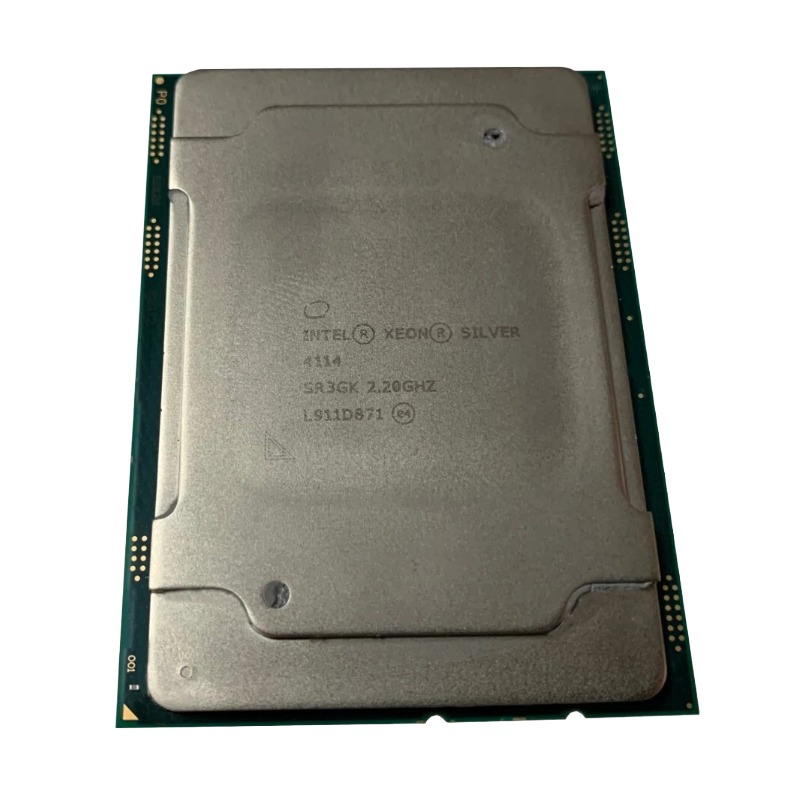


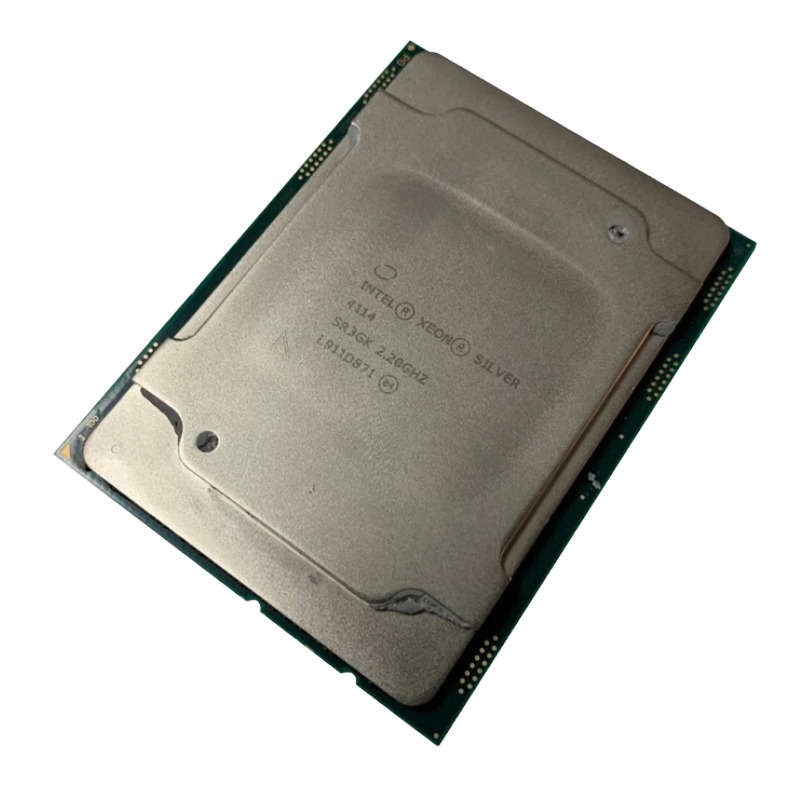
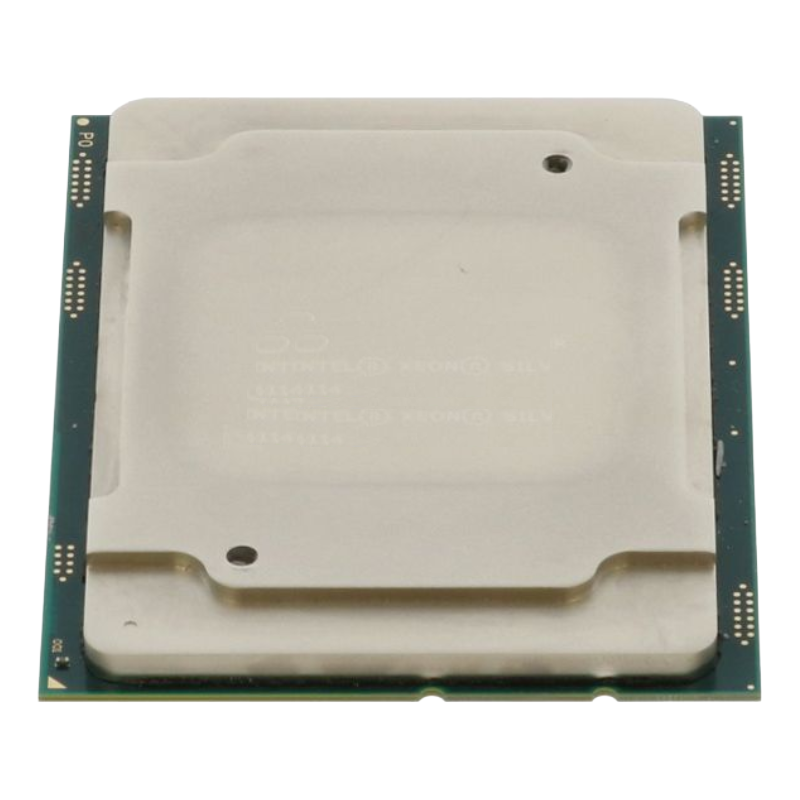
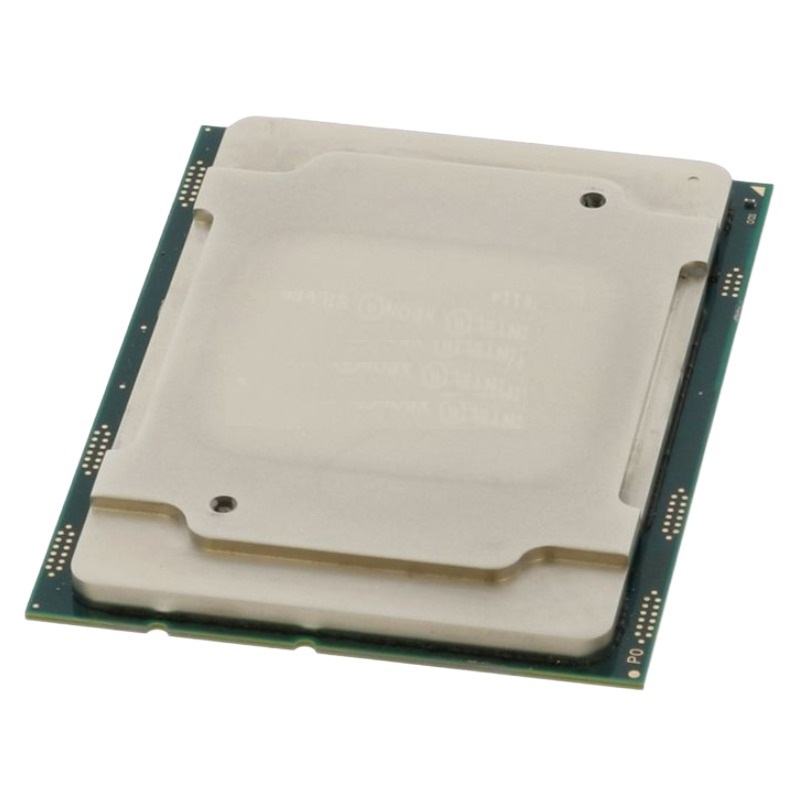
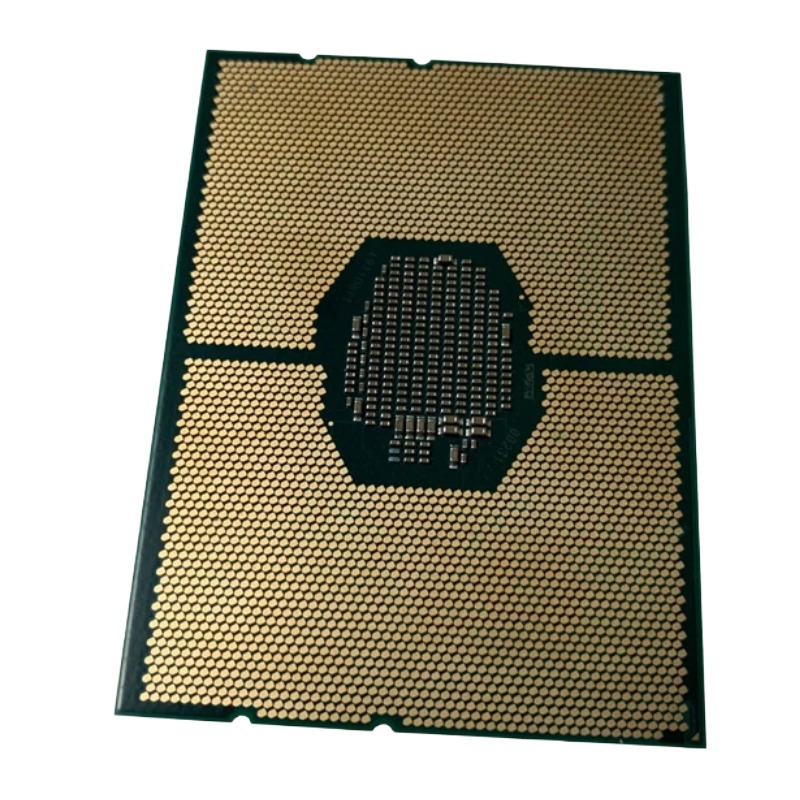
HPE 860657-L21 CPU Kit Intel Xeon Silver 10 Core Processor 4114 2.20Ghz 13.75MB L3 Cache Tdp 85W. New (System) Pull with 1 year replacement warranty
The HPE 860657-L21 CPU Kit is engineered for superior server performance, providing a balance of speed, scalability, and reliability. Designed for the HPE ProLiant DL360 Gen10, this processor kit includes one Intel Xeon Silver 4114 10-Core CPU and one heatsink, making it a ready-to-deploy upgrade option for enterprise-level systems.
The HPE 860657-L21 CPU kit centers on the Intel Xeon Silver 4114 processor engineered for dense, reliable rackmount environments and specifically validated for the HPE ProLiant DL360 Gen10 platform. This category collects genuine HPE replacement processors, factory-compatible CPU kits, and matched server components to help IT teams maintain peak rack density and predictable performance while minimizing downtime. The product heading — HPE 860657-L21 Intel Xeon Silver 4114 2.20GHz 13.75MB L3 10-core TDP 85W — signals the core attributes buyers care about: core count, base frequency, cache size, thermal design power, and platform compatibility with HPE ProLiant Gen10 systems. The copy below expands on technical, operational, procurement, and best practice considerations for integrating the 860657-L21 into enterprise server estates.
This category is focused on replacement and upgrade CPU kits sized for enterprise workloads: virtualized application hosts, database front-ends, web and application farms, and storage controller nodes. The HPE 860657-L21 is sold and stocked as a CPU kit intended to fit the ProLiant DL360 Gen10 chassis family. Owners of HPE ProLiant DL360 Gen10 servers choose this SKU when they need the specific combination of 10 physical cores, the 2.20GHz base clock designed for balanced throughput and single-thread responsiveness, and a moderate 85W TDP for predictable cooling and power planning in dense racks.
When evaluating server processors for the ProLiant DL360 Gen10, IT architects weigh raw core count, cache capacity, sustained frequency, and thermal characteristics. The Xeon Silver 4114’s 10 physical cores and 13.75MB of L3 cache provide an effective mix of parallel compute and on-die data locality, good for multi-tenant virtualization nodes or midweight database and analytics tiers. The 85W thermal design power helps data center teams plan cooling and power provisioning more easily than with higher-TDP parts, making this SKU appropriate for high-density deployments where heat budget and power per rack are tightly managed.
Across the enterprise, typical workloads that benefit from the Xeon Silver 4114 include consolidated virtual machine hosts, mid-sized relational database instances, application servers for business-critical software, and batch analytics jobs that distribute work across multiple cores but still require reasonable single-thread performance. The 2.20GHz base frequency provides headroom for core-heavy processing, and the sizeable L3 cache supports reduced memory stalls for cache-sensitive workloads. For I/O-intensive applications, pairing the CPU with adequate memory channels and modern NVMe or SAS storage is important to avoid creating I/O bottlenecks that the CPU cannot mitigate on its own.
Server consolidation strategies frequently use processors like the Xeon Silver 4114 to host multiple virtual machines while keeping per-VM costs predictable. For planners, the 10 physical cores offer an effective balance between VM density and per-VM performance. Consolidation planning should include realistic vCPU-to-core ratios, memory allocation per VM, and I/O capacity planning for network and storage. Careful NUMA placement, memory interleaving, and BIOS tuning on the DL360 Gen10 yield the best throughput for mixed workloads. IT teams should benchmark representative virtual machine images rather than rely solely on theoretical core counts.
One of the appealing characteristics of the HPE 860657-L21 kit is the 85W TDP rating, which simplifies rack power and cooling budgets. Compared with higher-power server CPUs, a lower TDP eases the design of redundant cooling and power distribution systems in multi-node racks. However, TDP is a design parameter for cooling solutions rather than a precise operating power figure; actual networked server power draw depends on workload, overall system configuration, memory population, and attached storage. Capacity planners should estimate full-system power including PSUs, fans, drive arrays, and NICs rather than considering CPU TDP in isolation.
To maximize reliability, data center operators must follow HPE’s thermal guidance when installing a replacement HPE 860657-L21 in a DL360 Gen10. Correct heatsink seating, verified fan speeds, and updated BIOS thermal tables ensure the platform can throttle and cool efficiently. Hot-aisle/cold-aisle airflow management and monitoring of inlet temperatures are essential, especially in dense configurations with multiple populated power sockets or when populated with high memory density. Regular firmware updates and thermal diagnostics help detect early signs of cooling issues before they affect server availability.
Before ordering or installing the HPE 860657-L21 kit, operations teams should confirm a short compatibility checklist: the ProLiant DL360 Gen10 chassis revision, BIOS and iLO firmware compatibility, correct socket type, and whether a single- or dual-CPU configuration is required. HPE CPU kits commonly include the processor, heatsink assembly or thermal interface guidance, and instructions tailored to the Gen10 family. Installers should power down and properly ground the chassis, follow HPE’s torque and seating procedures for the CPU carrier, and verify that firmware supports the microcode revisions that correspond to the Xeon Silver 4114 to prevent unexpected behavior after boot.
Where two CPUs are present in the DL360 Gen10, matching CPU SKUs and microcode revisions across both sockets is recommended for stability and performance. Mixing different stepping, frequency, or microcode revisions can lead to degraded performance or platform instability. If a service plan requires two populated sockets for high-throughput workloads, administrators should choose identical HPE-branded kits to maintain predictable thermal and performance behavior. HPE documentation should be consulted for memory population rules and channel interleaving when both sockets are used.
Processor selection alone does not determine system throughput; the memory type, speed, and channel population are critical. For the Xeon Silver 4114, selecting correctly sized and speed-matched DDR4 DIMMs per HPE memory population rules optimizes memory bandwidth and latency. Similarly, modern NVMe drives or 12Gb/s SAS arrays paired with sufficient PCIe bandwidth provide storage performance that complements the CPU’s compute capacity. Network adapters with appropriate offload features and the correct driver stack in the operating system further ensure the CPU is not wasted waiting on I/O.
Ensuring the DL360 Gen10 runs HPE-recommended BIOS, iLO, firmware, and driver versions is essential after installing any CPU kit. Proper driver and firmware versions enable power management features, microcode updates, and platform security mitigations. Operating system support matrices published by HPE list validated OS versions and kernel levels that have been tested with specific CPU families. Administrators should follow HPE update procedures and consider rolling out firmware changes in maintenance windows with validated rollback plans.
Processors in the Intel Xeon Silver family typically support a range of modern platform security features that are active in server environments when enabled and paired with updated firmware. When deployed in HPE systems, security features such as hardware accelerated cryptographic instructions or CPU microcode mitigations can be leveraged by the operating system and hypervisor. IT security teams should align CPU firmware updates and HPE security advisories to keep systems protected while maintaining performance and stability.
From a lifecycle perspective, keeping a small inventory of HPE-branded CPU kits like the 860657-L21 as spare parts reduces mean time to repair in large estates. Serviceability practices include tracking SKU numbers against asset tags, maintaining an inventory of compatible heatsinks and retention hardware, and documenting the BIOS/firmware configuration associated with each machine to simplify replacement. End-of-life planning should consider HPE’s spares availability and whether an upgrade path to newer CPU families is planned for future refresh cycles.
Procurement teams should evaluate total cost of ownership when choosing the HPE 860657-L21: initial price, expected lifespan, energy consumption in production, and the impact on rack density and cooling costs. HPE parts often command a price premium over generic alternatives because of validation and warranty alignment; however, the reduced risk of incompatibility and the streamlined support experience frequently offset higher upfront costs. Buying verified HPE kits from authorized channels also helps maintain accurate CMDB entries and simplifies field service support if on-site service contracts are active.
When comparing the Xeon Silver 4114 SKU against other parts in the Intel Xeon Scalable family, buyers weigh core count versus frequency, cache size, and TDP to match workload needs. The 10-core, 2.20GHz balance is often chosen over higher-core or higher-frequency SKUs when the goal is predictable throughput with modest power consumption. For workloads demanding maximum single-thread speed or extreme core density, the buyer might evaluate sibling SKUs accordingly, but for many consolidated enterprise workloads the 4114 strikes an attractive compromise.
Common deployment patterns for the HPE 860657-L21 include: (1) Virtualization hosts in SMB and mid-market clusters where predictable VM performance matters; (2) Application server tiers hosting business applications that scale horizontally across many nodes; (3) Database read-replica nodes where parallelism and cache locality accelerate query throughput; and (4) Edge and branch servers that require a lower thermal footprint while still delivering solid compute density. In each scenario, careful right-sizing and monitoring are essential to extract the best value from the processor investment.
Once installed, continuous monitoring of CPU utilization, tail latency for critical services, temperature trends, and power draw provides feedback needed for capacity planning and rightsizing. Administrators should instrument servers with HPE tools and standard telemetry to collect performance baselines under normal and peak load. Use baselines to inform future purchases, helping determine whether additional cores, faster clocks, or more memory will yield measurable improvements for a given workload.
For a successful deployment, follow these practical recommendations: validate BIOS and firmware compatibility with HPE support matrices before installation; use matched HPE-branded parts where possible to simplify warranty and support; plan cooling and power for full-system load rather than CPU TDP alone; test representative workloads in staging environments to set realistic performance expectations; and maintain a spare kit and documented rollback plan for maintenance windows. These steps minimize service interruptions and help maintain consistent performance across the fleet.
Long-term support requires procedural discipline: regularly check for HPE advisories related to DL360 Gen10, install vetted firmware updates during maintenance windows, and keep maintenance logs for each server. For regulated industries where change control is required, keep a clear trail of hardware swaps and firmware revisions. Finally, consider HPE support contracts or third-party hardware maintenance agreements that explicitly cover parts like the 860657-L21 to accelerate recovery in the event of hardware failures.


 Contact Us
 Information
 Catalog
 Solid State Drives (SSD)
 Network Switches
 Hard Disk Drives
 HBA & Controllers
 PC & Servers
 PC & Server Memory
 CPU & Processors
 Network Routers
 Power Supplies
 Tape Drives & Libraries
 Network Devices
 Computer & Network Cables