(7% discount is applied at checkout)
Cart is empty
Your go-to destination for cutting-edge server products
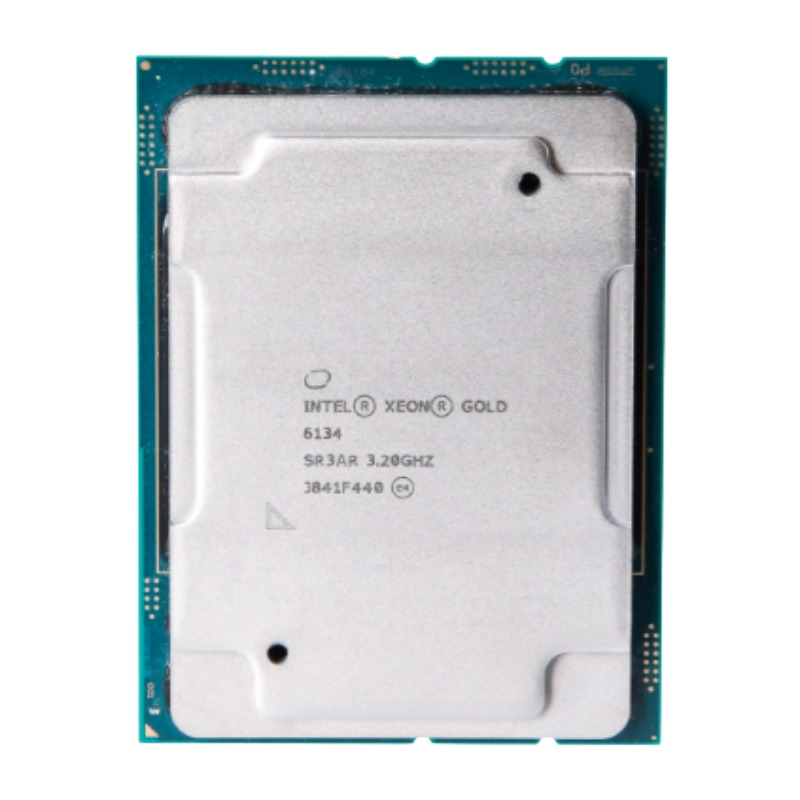


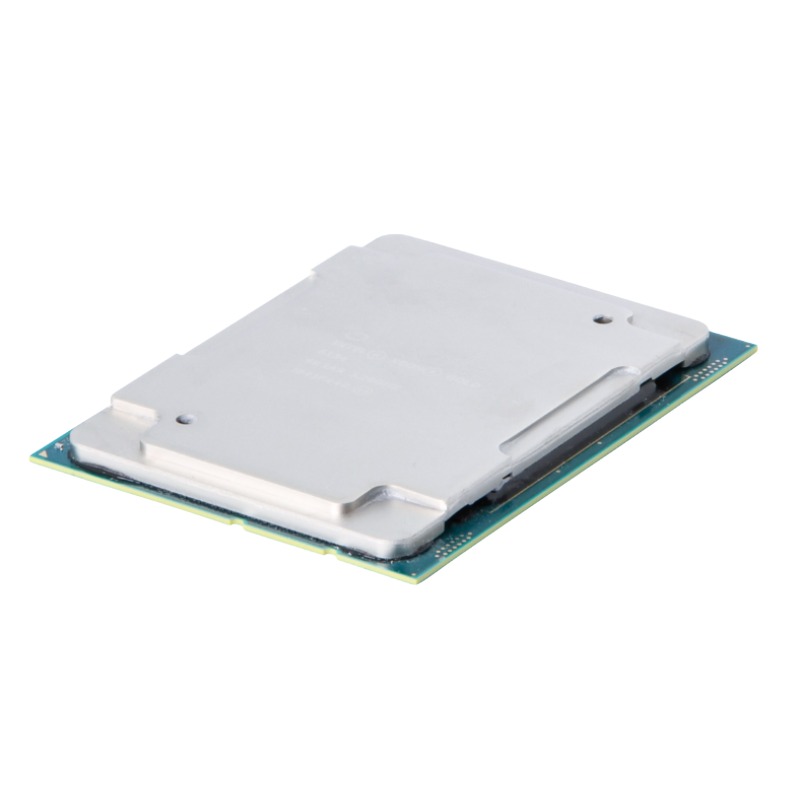
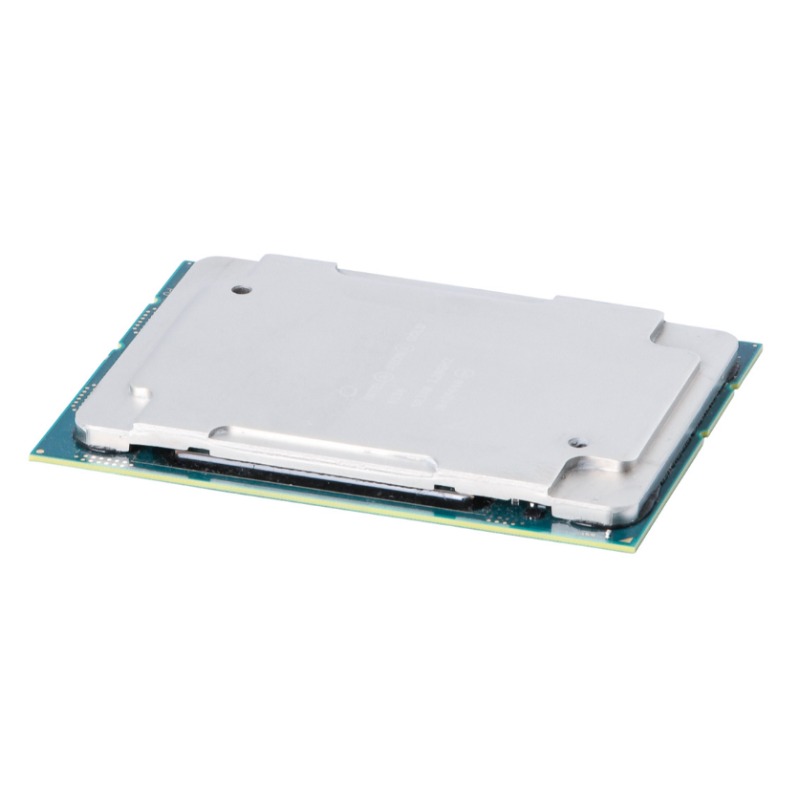
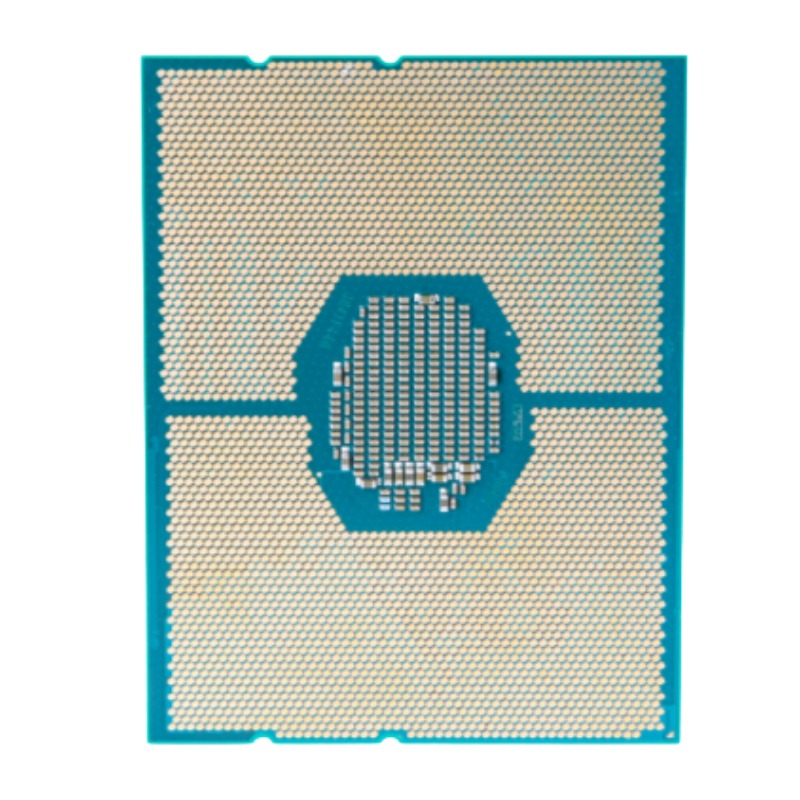
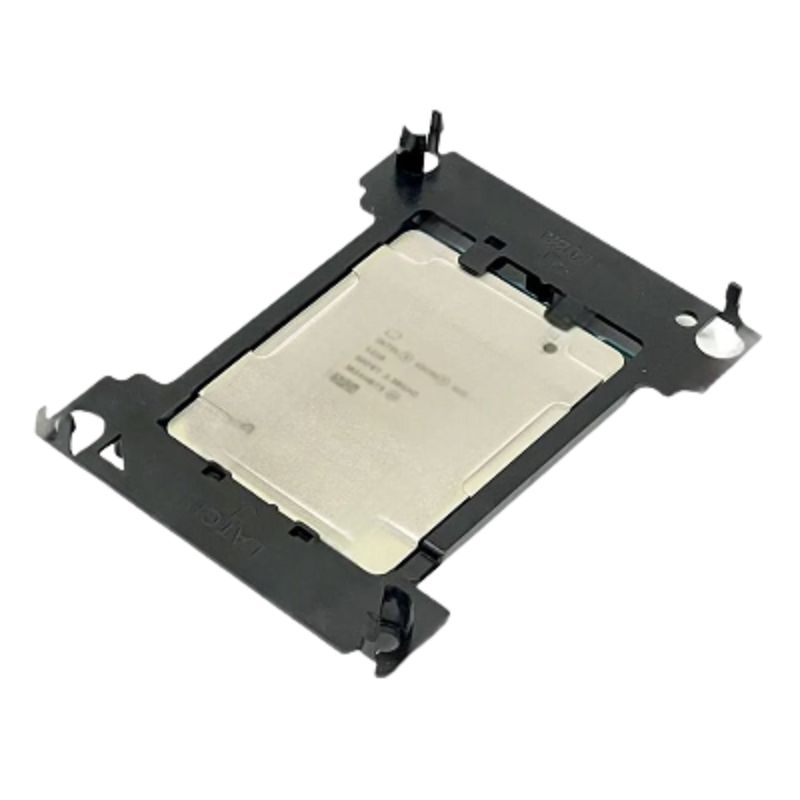
HPE 860689-L21 CPU Kit Intel Xeon Gold 8 Core Processor 6134 3.20Ghz 24.75MB L3 Cache Tdp 130W. New Sealed with 1 Year Replacement Warranty
The HPE 860689-L21 CPU Kit pairs the Intel Xeon Gold 6134 processor with HPE-tested firmware and validation for use in the HPE ProLiant DL360 Gen10 platform. This processor, an 8-core, 16-thread design running at a base frequency of 3.20 GHz with a large 24.75 MB L3 cache and a 130W TDP, is positioned for enterprise workloads that demand a balance of single-thread performance, multi-thread scalability and platform-level reliability. For customers evaluating server CPU upgrades, consolidation strategies, or refresh cycles, this HPE-branded kit provides a straightforward drop-in option supported by HPE's serviceability and platform optimizations.
The Xeon Gold 6134 is well-suited to a wide spectrum of enterprise tasks. With its higher base clock and strong per-core performance, it excels at latency-sensitive transactional workloads such as database OLTP, real-time analytics, and high-frequency data processing. The eight core count and Hyper-Threading support provide meaningful parallelism for mid-sized virtualization hosts, mixed virtual machine (VM) densities, application servers, and small-scale container clusters. When paired with the DL360 Gen10 chassis, the kit is particularly effective for edge compute nodes, rack-dense virtualization farms, web application tiers, and business intelligence servers where consistent single-thread performance influences overall responsiveness.
The Intel Xeon Gold 6134 in the HPE kit offers the following technical hallmarks: eight physical cores, support for Intel Hyper-Threading for up to 16 logical processors, 24.75 MB L3 cache, and a 3.20 GHz nominal frequency engineered for consistent throughput under enterprise load. The 130W TDP requires appropriate thermal provisioning; the ProLiant DL360 Gen10’s thermal design and HPE-specified heat-sink options are matched to meet this requirement while preserving acoustic and power envelope goals in rack deployments. Memory support on the Gen10 platform typically includes DDR4 Registered DIMMs with multi-channel operation — pairing the Xeon Gold 6134 with matched DIMM kits unlocks higher memory bandwidth and supports larger VM footprints and in-memory databases.
For optimum performance, populate memory channels symmetrically and select memory speeds supported by both the processor and the system’s validated memory list. The Xeon Gold 6134 benefits from larger memory configurations when running memory-heavy workloads such as caching, in-memory databases, and certain analytics engines. HPE ProLiant Gen10 platforms feature memory population guidelines and BIOS knobs that can be tuned for either latency-sensitive applications or bandwidth-oriented loads. Enabling memory interleaving and following HPE’s Qualified Vendor List (QVL) for DIMMs will deliver consistent performance and predictable platform behavior under sustained load.
Although the Xeon Gold 6134 is a single-socket-capable CPU in many deployments, when used in multi-socket systems with compatible processors, Non-Uniform Memory Access (NUMA) becomes an important architectural factor. Application topology — especially for large databases and scale-out applications — should be NUMA-aware. Proper VM placement and thread affinity tuning can reduce remote memory access penalties and improve determinism for latency-sensitive transactions. HPE ProLiant systems offer platform tools and monitoring to reveal NUMA node performance and assist administrators in topology-aware placement.
The 130W Thermal Design Power of the Xeon Gold 6134 requires attention when designing rack layouts or consolidating servers in high-density environments. The HPE ProLiant DL360 Gen10 provides multiple cooling profiles in firmware and iLO to balance fan speed, acoustic targets, and thermal headroom. For data centers prioritizing energy efficiency, pairing the CPU with energy-aware BIOS settings and HPE’s power management utilities can reduce average power draw without compromising workload performance. Conversely, for performance-first installations, administrators may select more aggressive thermal settings to maintain higher sustainable frequencies under load.
Upgrading to the HPE 860689-L21 kit can influence TCO through multiple vectors. Improved per-core performance reduces the number of servers required to handle an equivalent workload, leading to savings in rack space, cooling, and power. HPE’s platform-level optimizations reduce the time administrators spend troubleshooting compatibility issues, and bundled firmware management simplifies patch workflows. When factoring in multi-year maintenance contracts and support SLAs, buying validated HPE kits often yields lower operational friction and predictable lifecycle management that benefits medium and large enterprises.
Security is a core focus in HPE ProLiant systems. The CPU itself includes Intel platform security features such as Intel® Trusted Execution Technology (Intel® TXT) and Virtualization-based Security (VBS) support depending on firmware state and OS support. The HPE kit also integrates with HPE iLO and HPE OneView management stacks, which offer hardware root-of-trust, firmware integrity monitoring, and secure recovery options. For organizations operating in regulated industries, the combination of processor-level security primitives and HPE’s management features simplifies compliance with audit requirements and reduces exposure to firmware-level threats.
One of the advantages of purchasing an HPE-branded CPU kit is the inclusion of HPE-validated microcode and firmware updates. HPE regularly issues platform firmware and microcode bundles that address performance optimizations, security mitigations and hardware errata. Staying current with these updates is critical for maintaining both security posture and maximum performance. HPE's support documentation provides guidance on sequencing updates — for example, applying iLO, BIOS, and firmware packages in a recommended order to avoid transient service interruptions.
The Xeon Gold 6134’s combination of clock speed and core count makes it a strong choice for medium-density virtualization hosts. For virtualization managers and hypervisor administrators, the HPE kit supports common hypervisors such as VMware vSphere, Microsoft Hyper-V, and Red Hat Virtualization. When configuring a VM host, consider the balance between core allocation, memory assignment, and storage I/O to avoid contention. The processor’s per-core performance benefits latency-sensitive guest VMs such as those running databases or application servers, while the platform’s memory channels and PCIe lanes support modern NVMe and network offload cards that accelerate storage and network I/O for virtualized workloads.
For teams adopting container orchestration platforms like Kubernetes, the HPE 860689-L21 kit supports node types optimized for control-plane tasks, ingress endpoints, and stateful workloads. High single-thread performance improves the responsiveness of control-plane components and API servers, while multi-core throughput handles application containers and sidecars. Pairing the CPU with fast NVMe storage and CPU pinning strategies can yield predictable performance for stateful sets and operator-managed databases. HPE ProLiant Gen10’s hardware telemetry integrates with cluster monitoring solutions to surface CPU thermal and power metrics for capacity planning.
When deploying the 860689-L21 kit, consider the storage and networking fabric to realize the CPU’s performance potential. The DL360 Gen10 supports a variety of HPE Smart Array controllers, NVMe backplanes, and flexible networking modules. For I/O-intensive workloads, NVMe storage combined with CPU-affinity-aware interrupt steering reduces latency and maximizes throughput. Networking options such as 25GbE or 100GbE adapters are fully supported and, paired with CPU offload features, reduce host CPU utilization for network processing. Plan for enough PCIe bandwidth in the server configuration so that storage and network cards do not contend excessively for lanes, which could bottleneck system-level performance.
HPE maintains compatibility matrices and validated configuration guides for the ProLiant DL360 Gen10 family. These documents list supported CPUs, memory types, storage controllers and mezzanine cards that have been certified together. Using components from validated configurations ensures predictable system behavior and qualifies the hardware for full HPE support. When planning upgrades, consult HPE’s QuickSpecs and platform documentation to confirm that DIMM population, thermal settings and power supplies are adequate for a 130W TDP processor kit.
Performance tuning for the 860689-L21 involves configuration across multiple layers: BIOS and firmware settings, OS-level knobs, and application-specific tuning. For database workloads, tune kernel parameters and storage queues to match the I/O profile. For virtualization, follow guidance on vCPU entitlement, ballooning, and memory reservation to reduce oversubscription. HPE provides tools and documentation to automate some tuning tasks, and workload profiling during pilot phases will often reveal the most beneficial adjustments. Regular benchmarking using representative workloads helps validate changes and quantify improvements.
Continuous monitoring is essential for maintaining performance and detecting drifting behavior. HPE’s telemetry exposed via iLO, HPE OneView or other management tools gives administrators access to CPU temperatures, power draw, thermal throttling events, and DIMM errors. Integrating these metrics into centralized observability stacks — with alerting thresholds tuned for production noise levels — prevents minor issues from escalating into outages. Additionally, capturing baseline performance metrics before and after changes helps create an empirical basis for capacity planning.
Companies planning to migrate workloads to servers using the Xeon Gold 6134 should assess application behavior under the new platform. Performance profiling helps identify the most suitable consolidation ratios for virtualization and container hosts. The improved per-core performance of the 6134 supports consolidating workloads that previously required multiple slower servers. Nevertheless, validate storage I/O and network capacity when consolidating to ensure backend bottlenecks do not undermine CPU gains. HPE’s migration tools and professional services can accelerate large-scale refresh projects and reduce downtime risk during cutovers.
For database servers, the Intel Xeon Gold 6134’s cache size and per-core frequency enhance transactional throughput and reduce query latency. In virtualization, the processor supports a balanced VM mix and moderate consolidation densities while retaining predictable latency for critical guests. For edge compute, the DL360 Gen10 combined with the HPE CPU kit offers a compact, serviceable node with enterprise-grade management — ideal for branch processing, aggregation points, content delivery, or local analytics. Each use case benefits when the server configuration matches application I/O, memory and network characteristics.
When procuring the HPE 860689-L21 CPU kit, factor in not just the acquisition cost of the processor but also the downstream effects on power, cooling, high-availability design and support contracts. The return on investment (ROI) often materializes through consolidation, reduced licensing costs per server, and lower administrative overhead from a validated platform. A lifecycle plan that includes scheduled firmware updates, predictable refresh windows and capacity growth forecasts will maximize the total value delivered by the servers over their useful life.
Complementary hardware choices matter: selecting appropriate memory kits, redundant power supplies, and storage controllers enhances both resilience and performance. For I/O-bound services, NVMe drives and high-speed Ethernet adapters are recommended to avoid shifting bottlenecks to the CPU. HPE sells kits and tested accessory bundles that align with the ProLiant DL360 Gen10 family, and selecting these validated options speeds deployment and reduces integration risk.


 Contact Us
 Information
 Catalog
 Solid State Drives (SSD)
 Network Switches
 Hard Disk Drives
 HBA & Controllers
 PC & Servers
 PC & Server Memory
 CPU & Processors
 Network Routers
 Power Supplies
 Tape Drives & Libraries
 Network Devices
 Computer & Network Cables