(7% discount is applied at checkout)
Cart is empty
Your go-to destination for cutting-edge server products
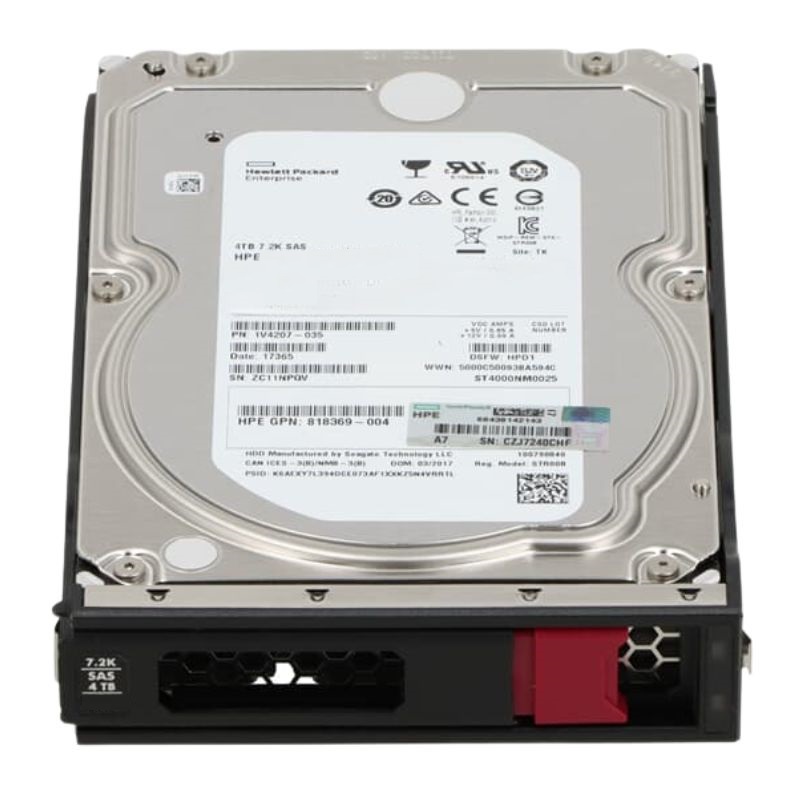


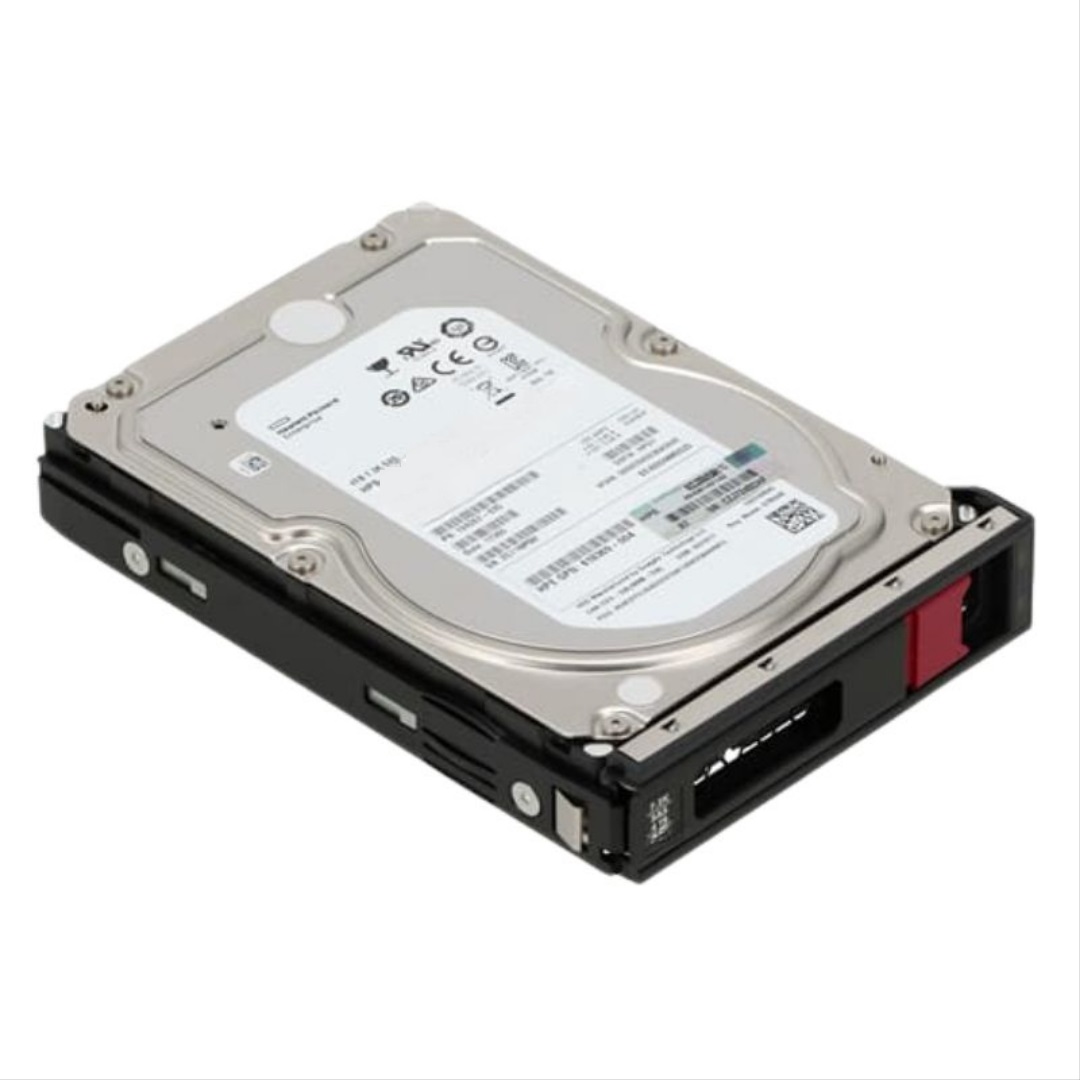
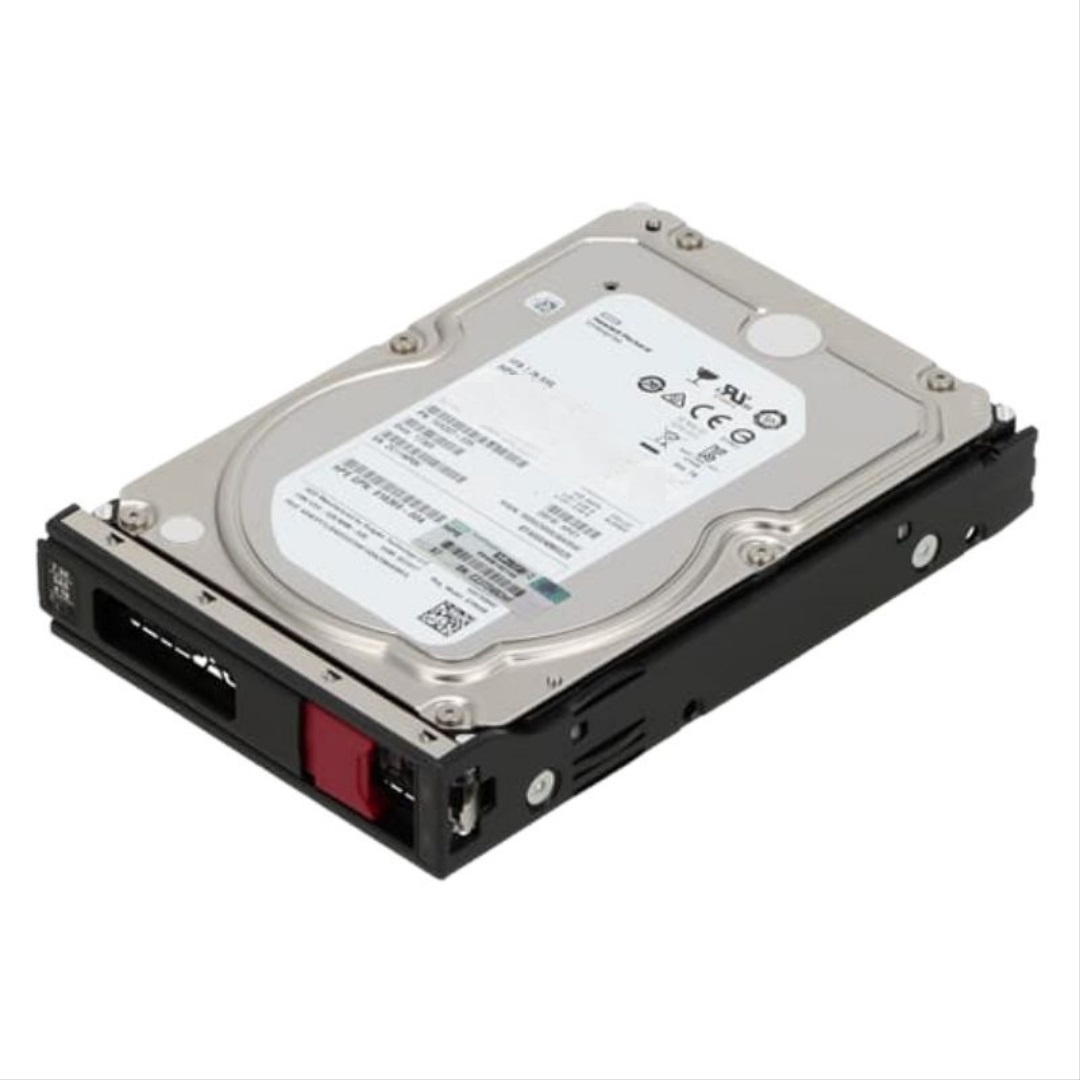
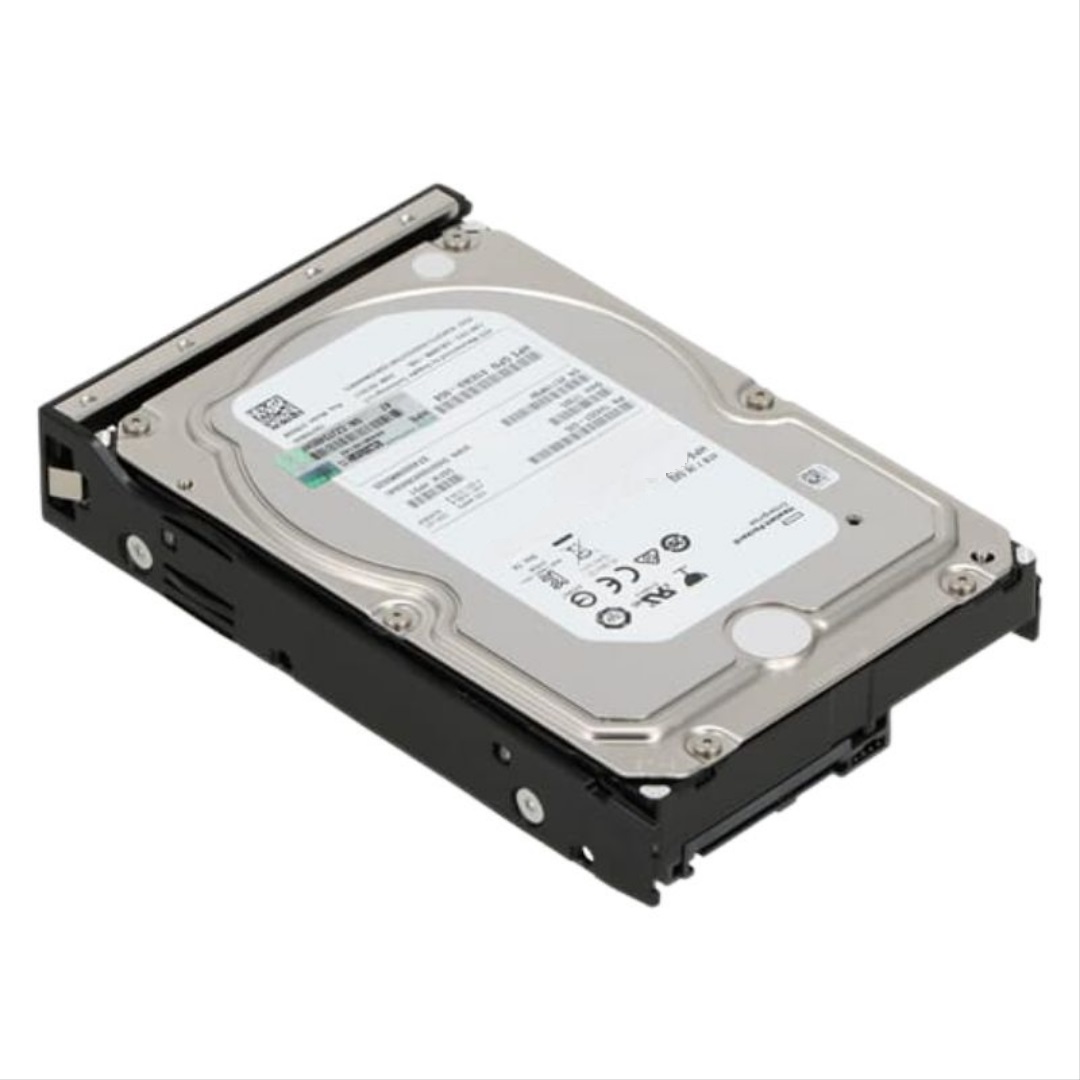
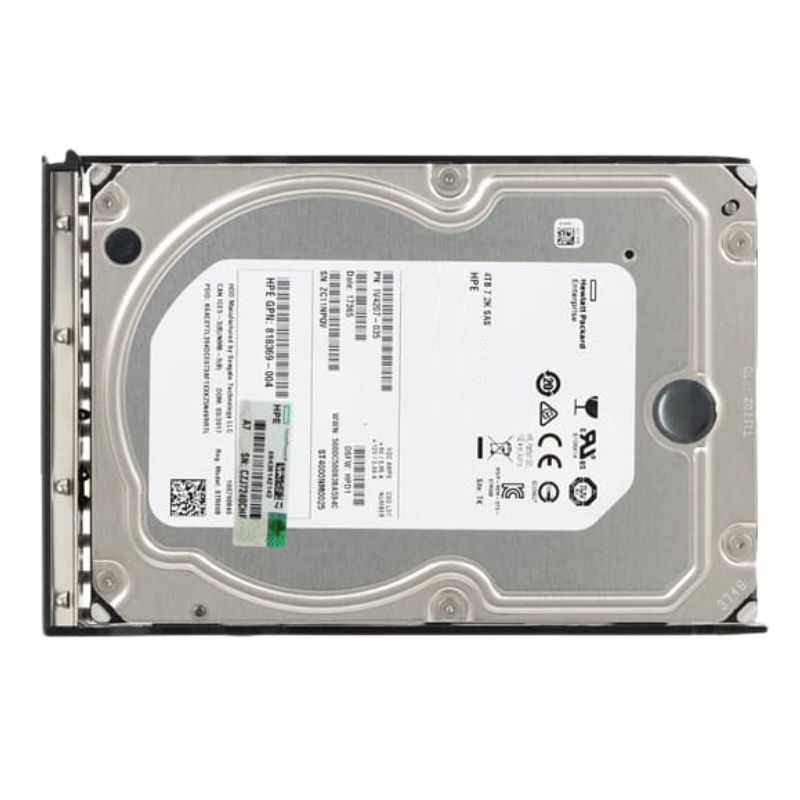
HPE 861759-007 4TB 7.2K RPM SAS 12GBPS 3.5 Inch LFF Hard Disk Drive. New (System) Pull with 1 year replacement warranty
The HPE 861759-007 is a reliable enterprise-class hard disk drive designed to handle demanding workloads. With a balance of capacity, performance, and durability, this 3.5-inch LFF internal storage device ensures efficient data management and faster access speeds, making it suitable for business-critical applications.
This HPE 4TB SAS hard drive offers advanced features that ensure speed and resilience:
The HPE 861759-007 is a 4TB 3.5-inch large form factor (LFF) enterprise-class hard disk drive engineered for HPE ProLiant servers, storage arrays, and dense rack deployments. Built to the SAS 12Gbps interface standard and spinning at 7,200 revolutions per minute, this drive balances sustained sequential throughput, proven reliability, and cost-effective capacity for a broad set of on-premises and hybrid data center workloads. The 4TB capacity makes it an ideal candidate for bulk storage tiers where capacity density, energy efficiency, and predictable behavior under sustained sequential I/O are primary concerns. Designed as a drop-in compatible HPE spare and upgrade option, the 861759-007 pairs HPE-certified firmware with the mechanical robustness and field-serviceability administrators expect in enterprise environments.
This model delivers 4 terabytes of formatted capacity in a 3.5-inch mechanical package and communicates over the 12Gb/s Serial Attached SCSI interface. The 7.2K RPM spindle speed is optimized for use cases that prioritize higher capacity per spindle over the absolute lowest latency, such as bulk archival, backup repositories, media storage, and cold-to-warm tiers in tiered storage architectures. Typical enterprise-class attributes include support for dual-port or multi-path configurations (where applicable, depending on chassis and backplane), HPE-validated firmware for compatibility with Smart Array controllers, and diagnostic telemetry accessible through HPE system management tools. The drive's design emphasizes consistent throughput for large-block sequential transfers while still handling moderate mixed random I/O workloads when configured in appropriate RAID arrays.
The 12Gbps SAS interface provides a robust link layer with enterprise features such as full-duplex communication, aggressive error detection and correction mechanisms, and support for SCSI command sets. Compared to SATA alternatives, SAS 12Gbps drives typically offer enhanced error handling, better multi-initiator support, and more predictable performance across multi-drive arrays. When connected to HPE Smart Array or third-party SAS controllers that support 12Gbps, the aggregate bandwidth per channel allows higher sustained sequential throughput and lower queuing delays during heavy sequential operations, making this drive well suited for sequential read/write heavy operations like large backups, video streaming repositories, or bulk object storage layers.
Although solid-state drives dominate high-IOPS tiers, the HPE 861759-007 excels in scenarios where cost-per-terabyte and sustained sequential throughput matter most. This includes long-term backup repositories, nearline data lakes, archive tiers in multi-tier storage policies, large media libraries, and object storage systems that favor high-capacity spindles. The drive is also appropriate for read-heavy databases or analytics nodes that process very large datasets in streaming fashion. With appropriate RAID levels and caching strategies, it can form a reliable bulk-storage layer behind a flash or NVMe tier used for caching hot datasets. For virtualization platforms with many low-intensity VMs that do not require the lowest latency, these drives provide a cost-efficient mass-storage option.
Deploying the 861759-007 in RAID arrays delivers both redundancy and improved sequential throughput. RAID levels such as RAID 6 are commonly recommended for large-capacity spinning media because they provide fault tolerance for dual-drive failure scenarios while keeping usable capacity high. Administrators should plan rebuild policies carefully: reconstructing a 4TB drive after failure is I/O intensive and can take considerable time; therefore, using controller features such as background rebuild throttling, patrol read schedules, and predictive failure alerts helps reduce risk during rebuild windows. Layering a write-back cache or read cache on faster media can dramatically reduce perceived latency for mixed workloads. When designing a storage tier around 7.2K RPM drives, balancing the number of spindles per array, choosing RAID stripe widths that optimize rebuild times, and implementing regular integrity checks are critical planning steps.
As an HPE-branded drive, the 861759-007 is intended for seamless integration with HPE ProLiant servers, HPE modular storage arrays, and HPE server enclosures that accept 3.5-inch SAS drives. HPE’s firmware tailoring ensures compatibility with HPE Smart Array controllers, HPE Integrated Lights-Out (iLO) telemetry, and the HPE OneView management suite, enabling drive health monitoring, predictive failure warnings, and simplified replacement workflows for service technicians. This compatibility reduces deployment friction for existing HPE shops and simplifies long-term support when drives are used as part of HPE-certified configurations. Cross-references to compatible part numbers and supported chassis can be obtained from HPE’s support matrices and product documentation to confirm that backplanes and firmware revisions fully support 12Gbps SAS operation with this model.
The 3.5-inch LFF design meets standard enterprise server bay dimensions, making the drive hot-swappable in chassis that support hot-plug operation. Hot-swap capability improves availability because drives can be replaced without powering down the host. Many HPE enclosures incorporate caddies with integrated LEDs and handle locks that streamline identification, extraction, and replacement. Serviceability is further enhanced by HPE’s labeling and part-number mapping, allowing technicians to rapidly identify the correct replacement unit (861759-007) and reduce human error during maintenance activities.
Enterprise drives such as the 861759-007 are designed with higher duty cycles and thermal tolerances compared to consumer drives. Typical metrics you may consider when specifying these drives include mean time between failures (MTBF), non-recoverable read error rate (NRR), and workload rating in terabytes written per year. Even though mechanical drives do not have the same write endurance constraints as flash media, they have mechanical wear elements such as bearings and actuator assemblies that must be factored into lifecycle planning. When deploying many high-capacity drives in dense enclosures, thermal design and adequate cooling are essential to ensure the drives operate within specified temperature windows and to avoid premature failures caused by sustained elevated temperatures.
Compared to smaller form factor or lower-RPM drives, the 3.5-inch 7.2K design typically consumes more power at spin-up and under sustained activity but offers better watts-per-terabyte efficiency at scale. System architects should plan for peak inrush currents during server boot or disk spin-up events and validate that power budgets accommodate multiple drives spinning concurrently. Acoustic considerations may be relevant in office-adjacent deployments or where racks are located near human workspaces; enterprise data center environments generally accept higher acoustic output. Thermal behavior affects both performance and longevity, so proper airflow engineering, rack layout, and intake/exhaust routing are critical to keep the drives within their rated operating temperatures.
For organizations seeking capacity growth without massive rearchitecture, the 861759-007 provides an upgrade path from smaller-capacity spindles. Replacing lower-capacity drives with higher-capacity 4TB spindles in supported arrays can increase usable pool size without adding additional chassis, subject to RAID controller and array geometry constraints. When replacing drives for capacity upgrades, administrators should verify controller support for larger LBA addressing and ensure that RAID rebuild procedures are compatible with new disk sizes. Cross-compatibility with prior HPE part numbers is often documented; however, always consult HPE’s official compatibility matrix and firmware advisories before performing in-place upgrades in production systems.
Operationalizing a fleet of 4TB 7.2K SAS drives benefits from routine preventive maintenance, including scheduled scrubbing or patrol reads, SMART threshold tuning, and staged replacement of drives exhibiting early failure signs. When used in RAID, spread spindles across multiple shelves or enclosures to avoid correlated failure risks due to power or cooling events. Use capacity planning tools and historical performance telemetry to size the number of spindles required to meet throughput and storage needs rather than relying solely on capacity targets. Documenting firmware versions, controller models, and serial numbers simplifies troubleshooting and speeds up vendor support interactions.
Compared with 10K or 15K RPM enterprise SAS drives, the 7.2K RPM 4TB model offers substantially higher capacity per spindle and better dollars-per-terabyte while delivering lower IOPS and higher average access latency. Compared with SATA drives, SAS 12Gbps models typically provide stronger error handling, better multi-initiator behavior, and vendor-tailored firmware for enterprise usage. Against solid-state storage, mechanical drives remain far more cost-effective at large capacities and are preferred for cold and bulk storage tiers. The proper architecture often pairs the 861759-007 with a flash or NVMe tier for hot data, creating a hybrid storage system that offers both performance and capacity efficiency.
Media and entertainment teams benefit from the drive’s large capacity for video asset libraries, where long sequential transfers make 7.2K RPM drives cost-effective. Backup and disaster recovery appliances utilize these drives in deduplicated and compressed repositories. Healthcare organizations can leverage the drives for PACS image archiving, where regulatory retention and large file sizes align well with high-capacity spindles. Scientific research clusters and engineering departments often use these drives as nearline buffers for simulation outputs and raw instrument data that must be retained affordably but accessed periodically for analysis.


 Contact Us
 Information
 Catalog
 Solid State Drives (SSD)
 Network Switches
 Hard Disk Drives
 HBA & Controllers
 PC & Servers
 PC & Server Memory
 CPU & Processors
 Network Routers
 Power Supplies
 Tape Drives & Libraries
 Network Devices
 Computer & Network Cables