(7% discount is applied at checkout)
Cart is empty
Your go-to destination for cutting-edge server products
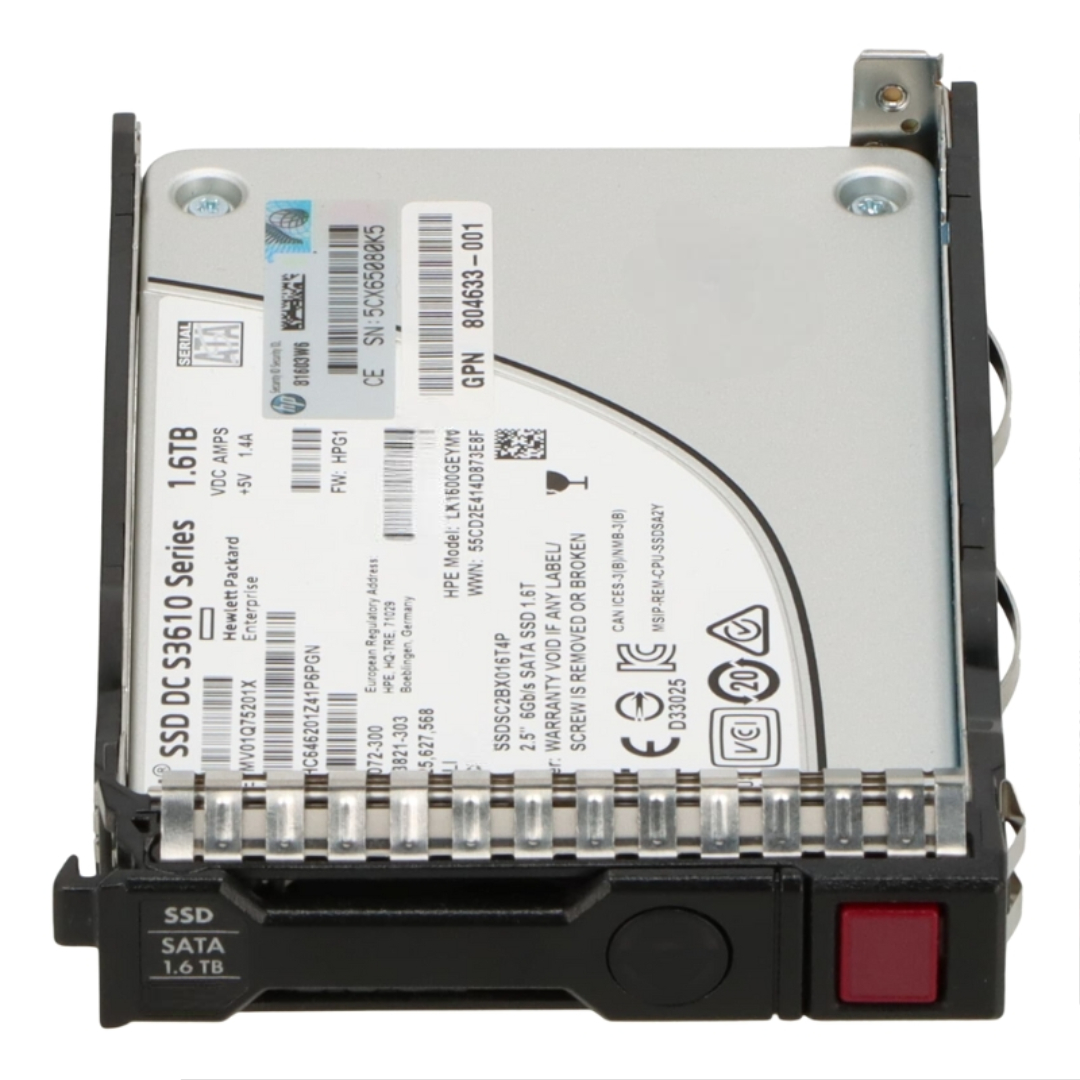


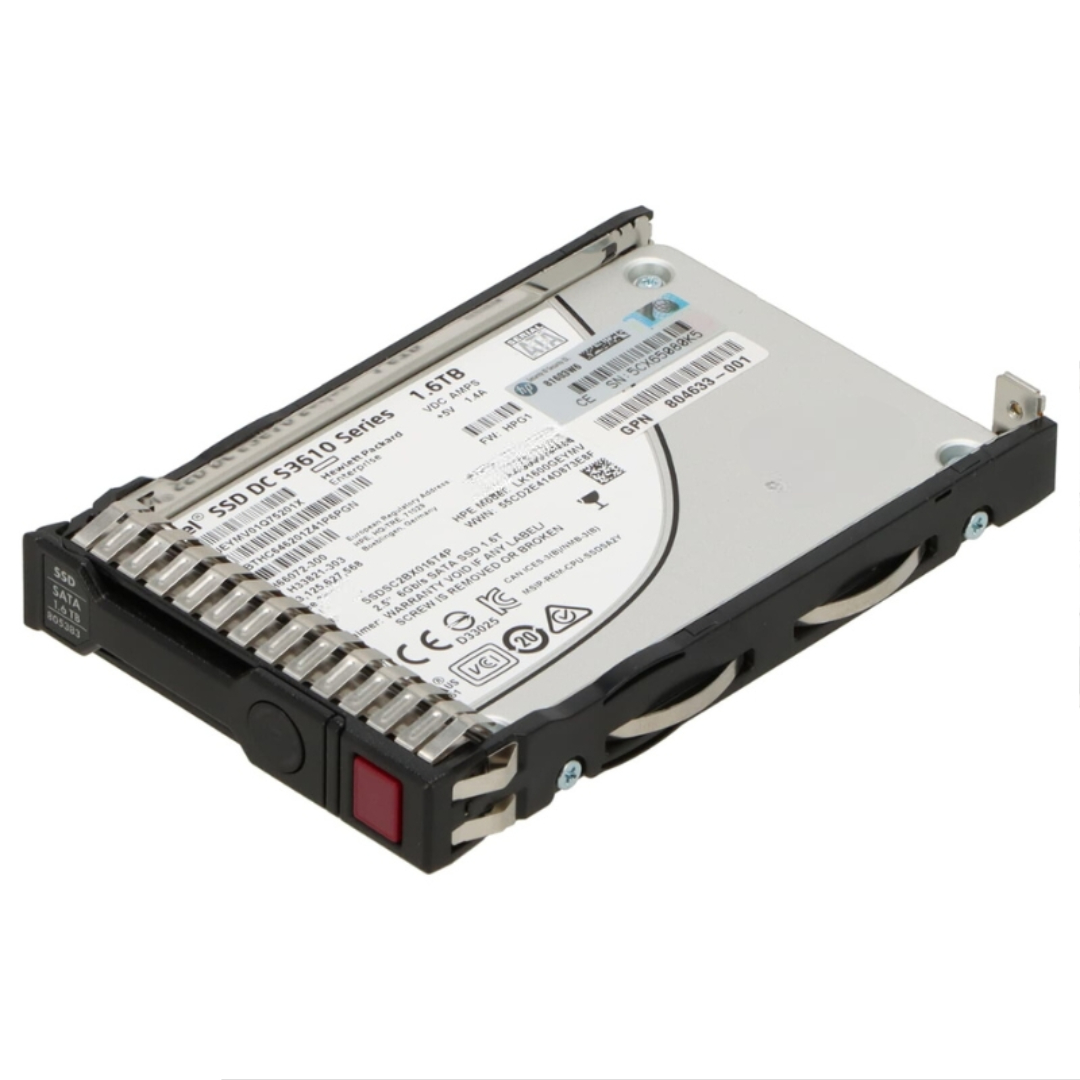
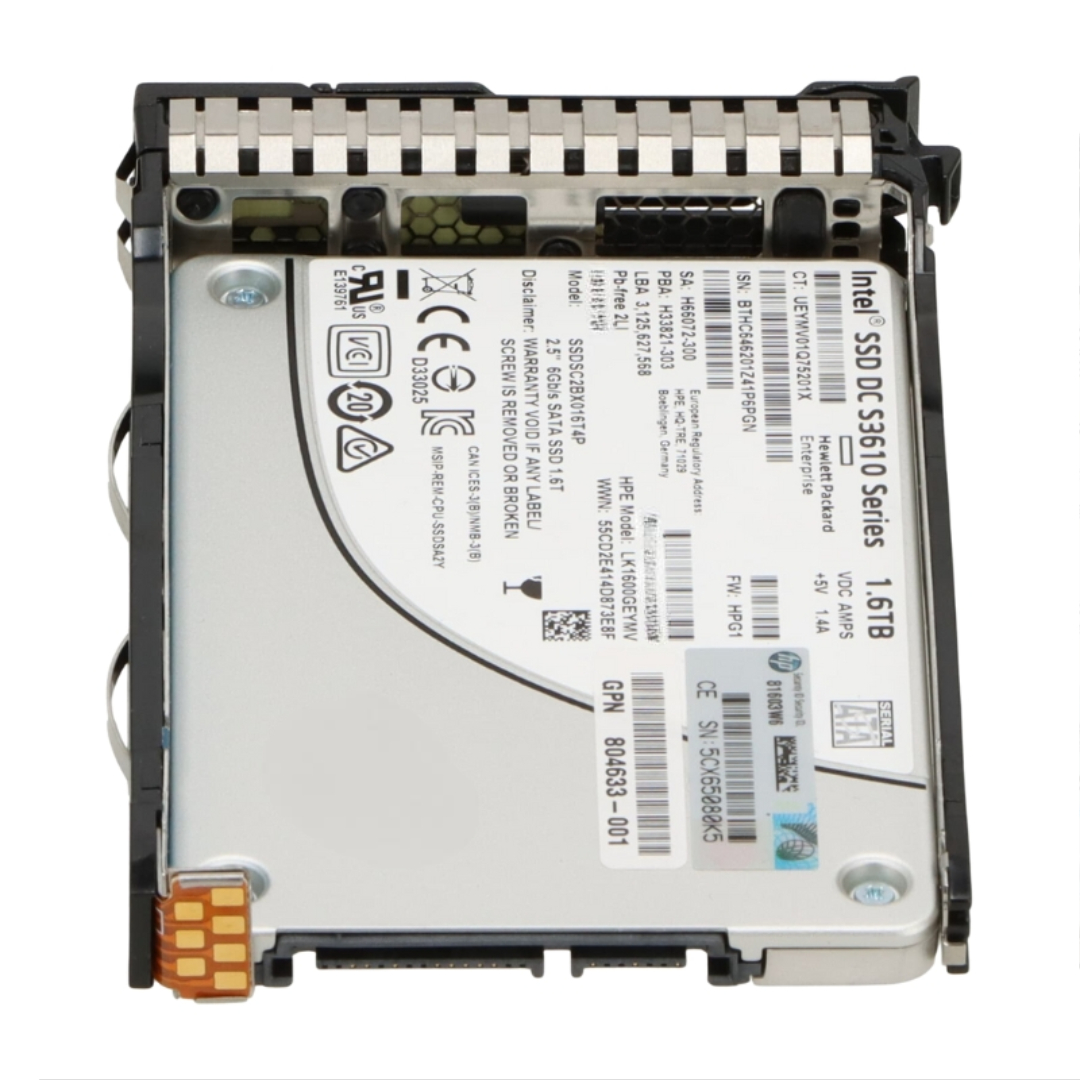
HPE 866822-B21 1.6TB SATA 6G RI SFF SC DS SSD. New (System) Pull with 1 year replacement warranty
The HP 866822-B21 is a high-performance solid-state drive (SSD) designed to meet the demanding requirements of enterprise environments. Offering a storage capacity of 1.6TB, it delivers exceptional speed, reliability, and efficiency for mission-critical applications. This refurbished drive is an ideal choice for businesses that want to boost their server performance while maintaining cost-effectiveness.
Engineered for read-intensive workloads, the HP 866822-B21 delivers stable throughput and reduced latency. It supports high-transaction applications such as data analytics, cloud computing, virtualization, and online transaction processing. The SATA 6Gb/s interface ensures a strong balance between speed and compatibility, making it suitable for diverse server infrastructures.
With its high-speed performance and read-intensive optimization, this SSD is well-suited for environments where quick data retrieval and stability are crucial. Businesses in finance, healthcare, cloud services, and IT infrastructure can benefit from deploying this model in their server arrays.
These core attributes make the 866822-B21 a convenient choice for datacenter operations seeking a balance between price per GB and reliable read throughput.
Read-intensive SSDs are provisioned for workloads where read operations vastly outnumber writes — typical examples include web servers, content delivery, analytics reference data, VM image stores, database indexes, and caching layers. The HPE 866822-B21’s firmware and flash management prioritize endurance and consistent read latency, allowing it to deliver predictable performance across extended periods of read-heavy use.
While SATA SSDs do not reach the peak IOPS of NVMe drives, they remain highly effective for many enterprise use cases where controller compatibility, cost per GB, and density are key. Expect low single-digit millisecond read latencies under typical conditions, predictable sustained throughput for sequential and random reads, and strong performance when deployed in appropriately architected arrays. For mixed or write-intensive workloads you should consider mixed-use (MU) or write-optimized SSD families instead.
The drive ships with HPE’s smart carrier design, which includes front-panel indicators and a "do not remove" safeguard to reduce human error during maintenance windows. This carrier makes the drive fully hot-swappable in HPE ProLiant bays and many server chassis designed for HPE drives, improving serviceability for enterprise operations.
Because the 866822-B21 uses a standard SATA 6Gb/s interface, it is compatible with a wide variety of RAID controllers and server backplanes that support 2.5" SATA SSDs — especially HPE-branded controllers and ProLiant generations that list read-intensive SATA SSDs on their compatibility matrices. Always confirm compatibility with your server's firmware/BIOS release notes and HPE hardware interoperability lists before large deployments.
The 1.6TB capacity provides a mid-to-high density option in 2.5" sleds, enabling data center architects to increase usable capacity per server bay without switching to larger 3.5" drives. When combined in arrays or RAID groups, these SSDs can dramatically increase effective read performance for distributed applications while keeping power and cooling per-GB lower than comparable spinning media for random reads.
Enterprise HPE SSDs routinely include features such as power-loss protection, advanced ECC, wear leveling, and SMART reporting to increase resilience and enable predictive monitoring. The 866822-B21 is intended to provide the predictable lifetime and reliability enterprises expect from HPE storage products; many vendors pair these drives with management tools that report drive health and remaining useful life.
Integrating the drive into HPE iLO, array management software or your monitoring platform lets you track SMART attributes, temperature, wear indicators and error counts. Routine monitoring enables proactive replacement long before failures occur, maintaining availability for critical services and making SSD lifecycle planning straightforward in large fleets.
Read-intensive SSDs typically have lower guaranteed drive writes than mixed-use or write-heavy models. When planning deployments, use TBW (terabytes written) or DWPD (drive writes per day) ratings from the vendor as the basis for endurance calculations. For cache-heavy or write-heavy applications, choose higher-endurance models or add additional redundancy to distribute writes. If absolute TBW/DWPD numbers are required for procurement or capacity planning, consult HPE or your reseller for the device’s official endurance specification.
For read-intensive drives, RAID levels that provide high read parallelism with acceptable redundancy are common — RAID 5 or RAID 6 for capacity-efficient redundancy, RAID 10 for lower rebuild times and consistent IOPS under failure conditions. Choose the RAID level based on your availability requirements, expected rebuild windows, and controller capabilities. Remember that rebuild operations create additional reads/writes; scheduling and spare provisioning are critical in large arrays.
A common enterprise pattern is to place read-intensive SSDs in a "warm" tier — above HDD bulk storage but below ultra-fast NVMe tiers — or to use them as a persistent cache for frequently accessed datasets. This hybrid approach balances cost and performance, letting architects deliver low latency for hot data while keeping cold data on cost-optimized disks. The 1.6TB capacity is well suited to warm tiers or cache layers for mid-sized datasets.
Enterprise drives often support secure erase commands and may support encryption features depending on the specific model variant. If hardware encryption is required for regulatory or security policy compliance, verify whether the drive model supports SED (self-encrypting drive) functionality or if encryption must be provided by other layers (controller-based encryption or software encryption). In procurement, confirm the exact security feature set with your vendor.
SSDs are not a substitute for a robust backup and DR strategy. Use enterprise backup solutions, snapshots and replication to protect data against logical corruption, ransomware and site failures. SSDs improve recovery performance by speeding reads during restore operations, but the same principles of versioning and off-site copies apply.
NVMe SSDs deliver substantially higher IOPS and lower latency than SATA drives, making them better suited for latency-sensitive, write-heavy or high-concurrency workloads. However, SATA RI drives like the 866822-B21 remain attractive where controller compatibility, price per GB, and the ability to reuse existing SATA backplanes and carriers are important. For many read-dominated workloads, SATA RI drives deliver an excellent cost/performance tradeoff.
Mixed-use (MU) and SAS drives typically offer higher endurance or interface bandwidth. SAS (12Gb/s) drives provide improved throughput and are commonly used for high-availability storage arrays. If your environment requires higher write endurance or SAS connectivity, evaluate those families; otherwise, the SATA RI class is a cost-effective option for largely read-centric data.
Plan regular refresh cycles based on endurance, capacity growth and evolving application requirements. Because SSD performance and endurance characteristics change over time, maintain an inventory of serial numbers, deployment dates, and SMART baselines to inform replacements and avoid unexpected capacity loss.


 Contact Us
 Information
 Catalog
 Solid State Drives (SSD)
 Network Switches
 Hard Disk Drives
 HBA & Controllers
 PC & Servers
 PC & Server Memory
 CPU & Processors
 Network Routers
 Power Supplies
 Tape Drives & Libraries
 Network Devices
 Computer & Network Cables