(7% discount is applied at checkout)
Cart is empty
Your go-to destination for cutting-edge server products
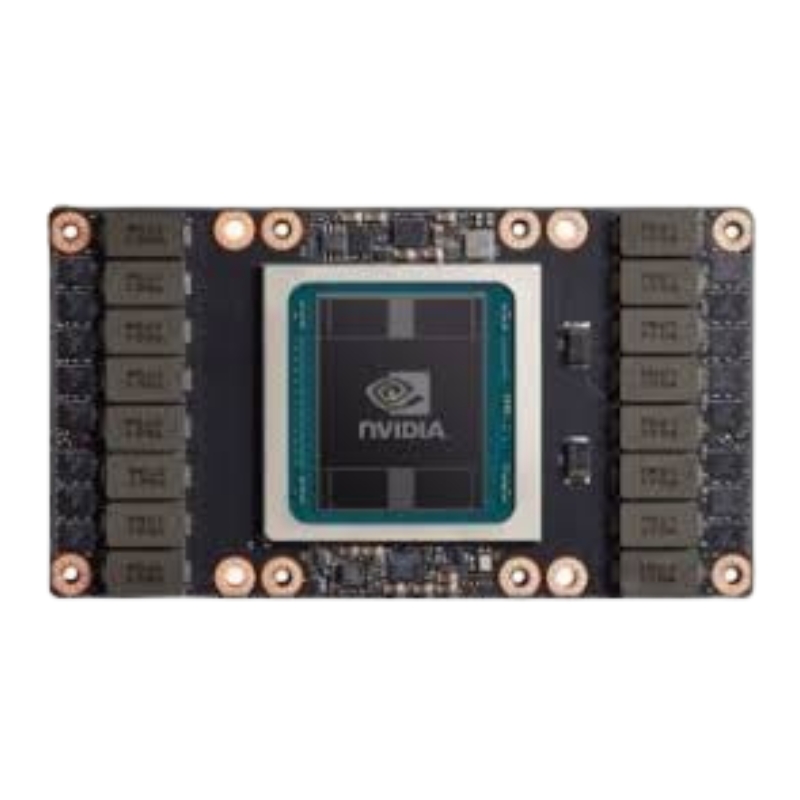


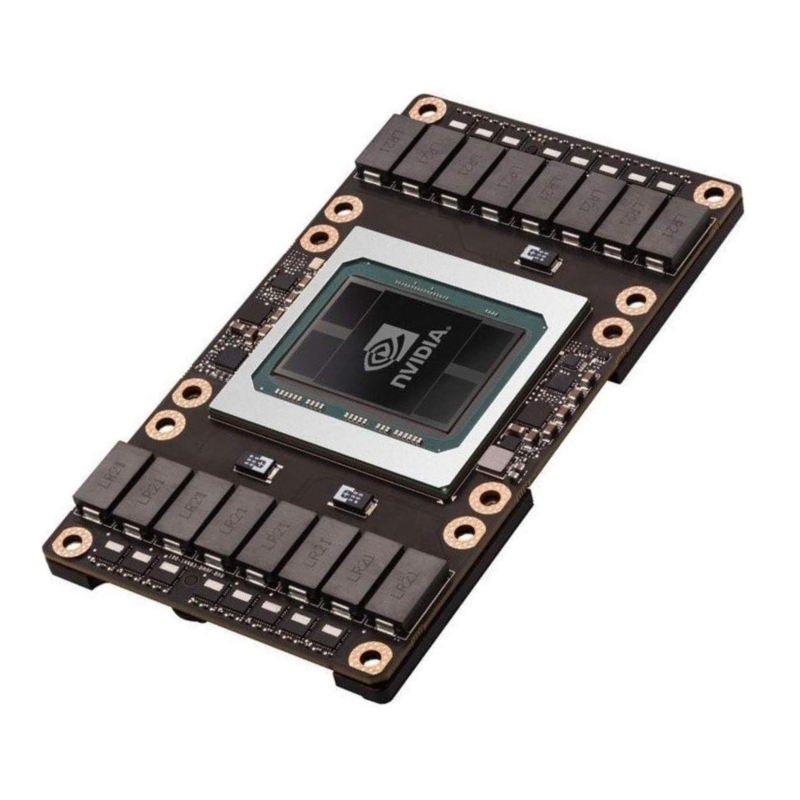
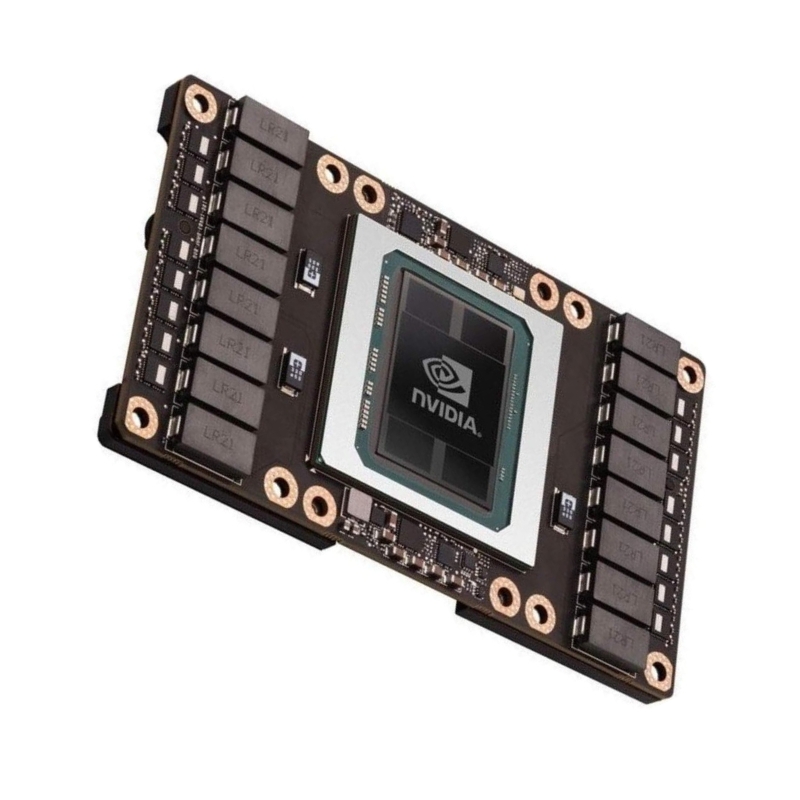
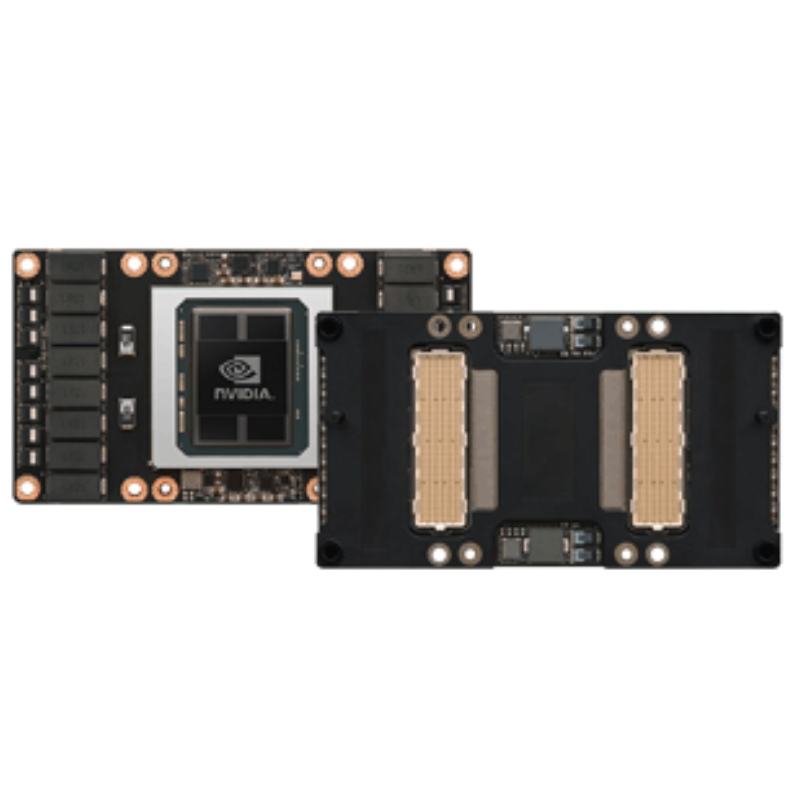
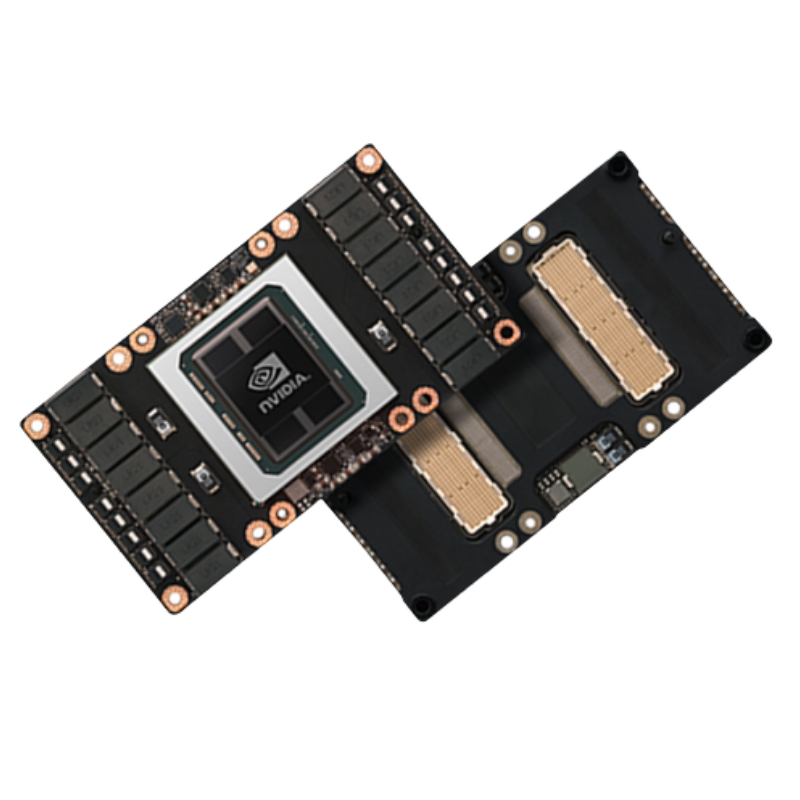
HPE 867620-001 NVIDIA TESLA P100 SMX2 16GB Module. New (Box Not Sealed) with 1 year replacement warranty
The NVIDIA Tesla P100 stands as a pinnacle of high-performance computing, engineered to accelerate intensive computational workloads. This advanced GPU module is designed for data centers, scientific computing, AI research, and enterprise-grade applications, delivering unmatched processing power and efficiency.
Powered by NVIDIA's sophisticated CUDA architecture, the Tesla P100 features:
The Tesla P100 comes equipped with a robust 16GB memory module, optimized for handling complex computations and large datasets without bottlenecks. Key memory features include:
Engineered with a fanless cooling system, the Tesla P100 ensures:
The Tesla P100 features a full-height plug-in card design, compatible with standard server and workstation chassis. Its compact yet efficient form factor allows easy integration into high-density computing setups while maintaining optimal airflow and thermal stability.
The versatility of the Tesla P100 makes it ideal for:
The Tesla P100 excels at both single-precision (FP32) and double-precision (FP64) floating-point operations, making it suitable for scientific simulations and machine-learning model training. With thousands of CUDA cores, optimized memory hierarchy, and specialized instruction throughput, the P100 delivers large gains over CPU-only configurations and earlier GPU generations.
The module’s 16GB of high-bandwidth memory provides the capacity and throughput necessary to process large matrix multiplications, dense tensor computations, and memory-intensive HPC kernels. The memory subsystem is optimized for streaming large data blocks and sustaining long-running compute jobs without memory thrashing.
The SMX2 module form factor indicates a blade-style GPU designed to plug into compatible HPE server chassis. This compact integration allows datacenter operators to deploy multiple GPUs in a small physical footprint while maintaining enterprise-grade cooling and power delivery.
Research institutions and engineering teams use this module to accelerate fluid dynamics, finite element analysis, molecular dynamics, seismic modelling, and climate simulation. The Tesla P100’s strong FP64 performance accelerates workloads where numerical precision matters.
The P100’s parallel matrix compute capabilities make it an excellent candidate for training deep neural networks, especially where FP32 and mixed-precision training offer speed improvements. Frameworks such as TensorFlow, PyTorch, and MXNet commonly benefit from GPU acceleration. The 16GB memory allows larger mini-batches and larger model architectures compared to smaller-memory cards.
GPU-accelerated analytics (for example, GPU databases, real-time streaming analytics, and ETL pipelines) benefit from massively parallel processing for sorting, indexing, and query execution. Enterprises that need sub-second responses on large datasets can leverage GPU offload to reduce latency and free CPU cores for orchestration.
The HPE 867620-001 module is an OEM-integrated product intended for deployment in HPE servers and blade enclosures that support SMX2-style GPU modules. When planning an upgrade or purchase, always verify chassis firmware, BMC, and BIOS levels to ensure compatibility with the module, and consult HPE documentation for validated server models and enclosure fitment.
To maximize throughput, profile memory access patterns and batch sizes. Use techniques such as overlapping compute and data transfer, pinned memory, and asynchronous kernel launches to hide memory latency. For deep learning, experiment with mixed-precision training where supported to improve throughput without sacrificing model accuracy.
Monitor GPU temperature and power draw using vendor tools. In densely packed configurations, balance the number of active GPUs per chassis to maintain thermal headroom. Some environments use server-level fan curves and power capping features to achieve consistent performance while staying within facility power limits.
When scaling across multiple P100 modules, use job schedulers and orchestration frameworks that understand GPU resource allocation (Slurm, Kubernetes GPU operator, NVIDIA Cluster Manager, etc.). For distributed training, ensure interconnects and network topologies are configured to minimize collective communication overhead.


 Contact Us
 Information
 Catalog
 Solid State Drives (SSD)
 Network Switches
 Hard Disk Drives
 HBA & Controllers
 PC & Servers
 PC & Server Memory
 CPU & Processors
 Network Routers
 Power Supplies
 Tape Drives & Libraries
 Network Devices
 Computer & Network Cables