(7% discount is applied at checkout)
Cart is empty
Your go-to destination for cutting-edge server products
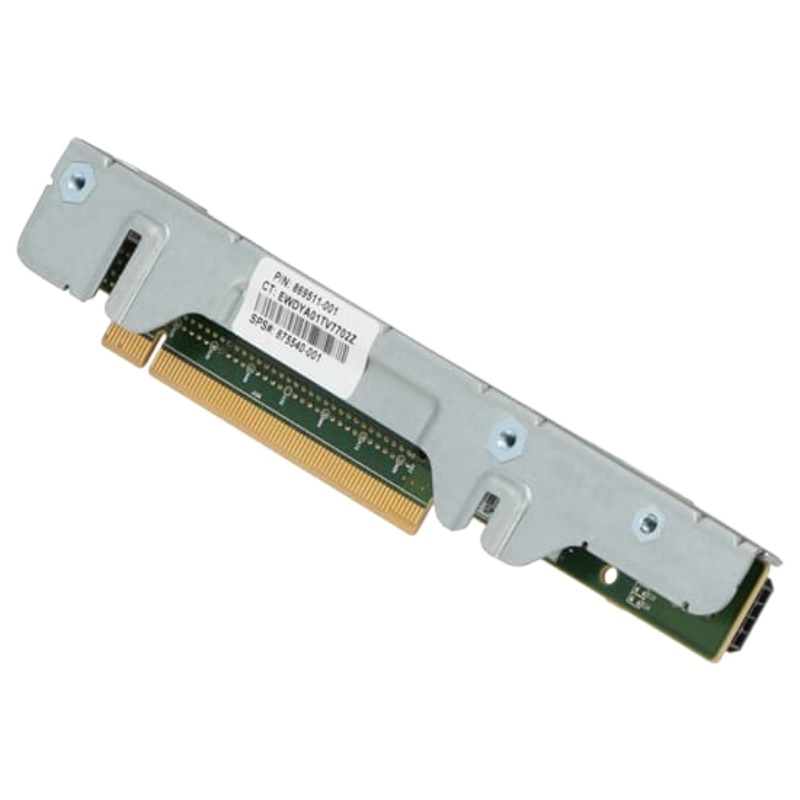


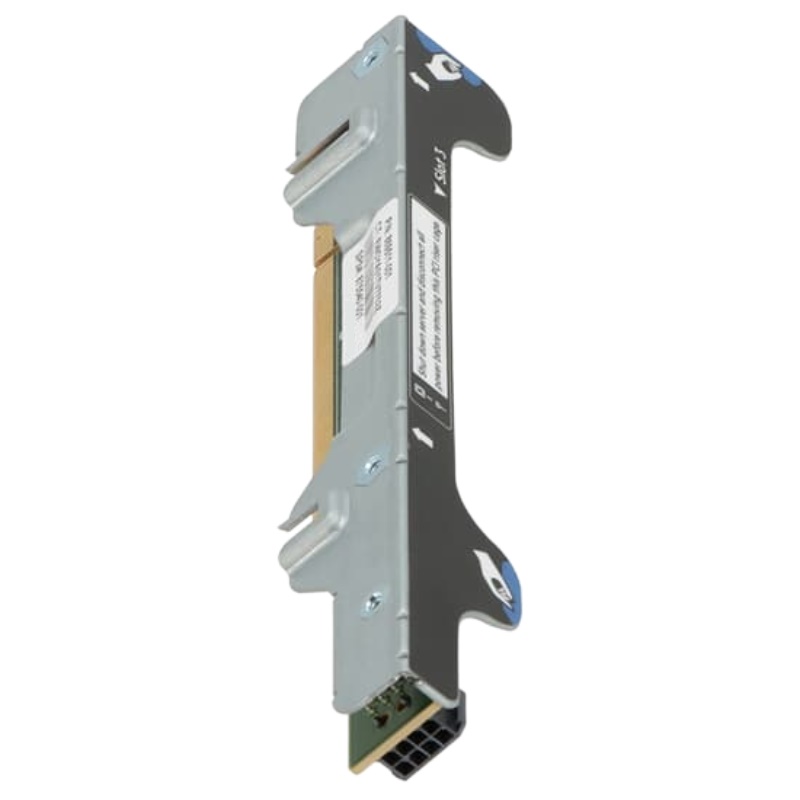
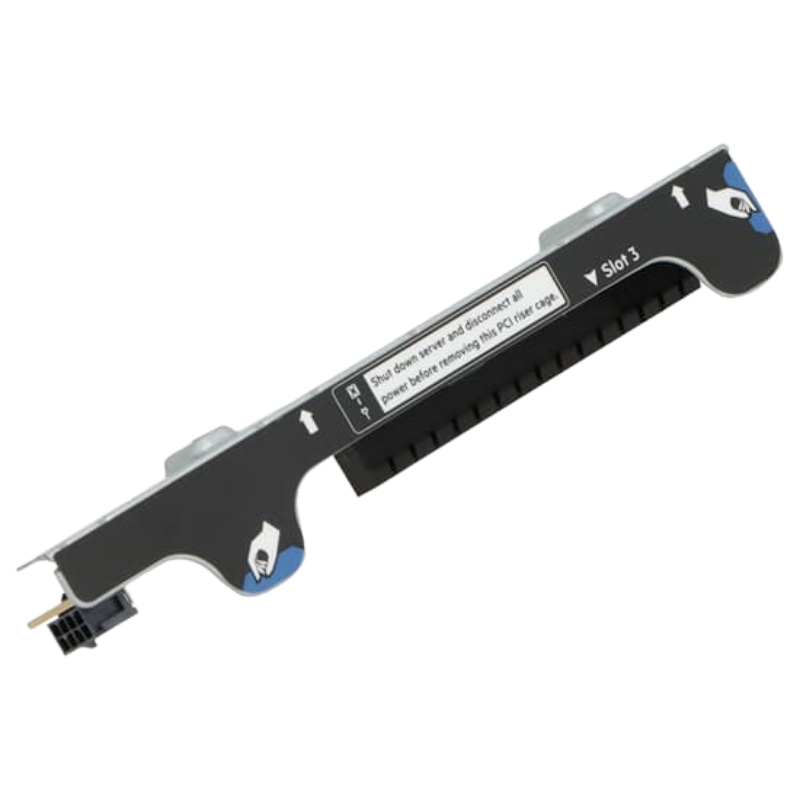
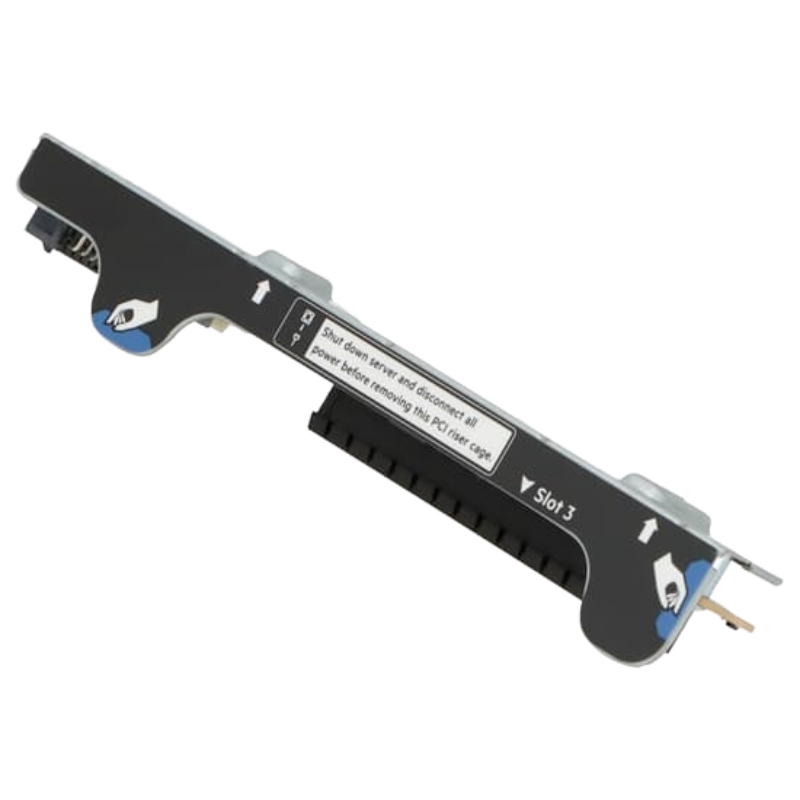
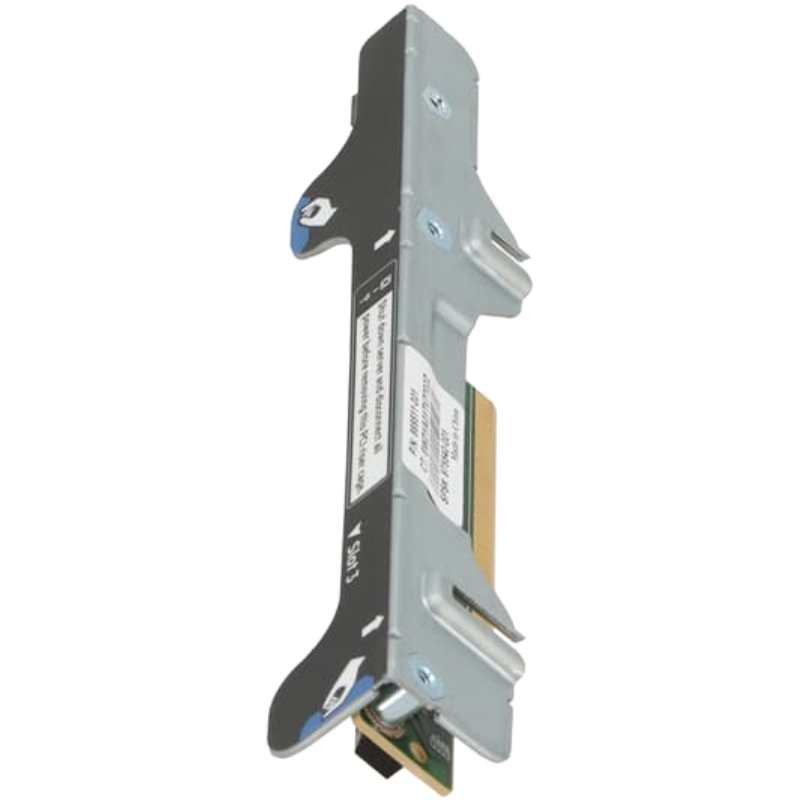
HPE 875540-001 DL360 Gen10 2P X16 GPU Full Height Enablement Riser Kit. New Sealed in Box (NIB) with 3 Years Warranty
The HPE 875540-001 riser kit empowers your DL360 Gen10 system with full-height GPU support, enabling high-performance computing and advanced graphics processing in compact server environments.
This riser module is engineered to unlock additional GPU capabilities, making it ideal for workloads requiring enhanced graphical throughput or parallel processing. It integrates seamlessly with HPE’s DL360 Gen10 architecture, ensuring optimal airflow and thermal balance.
Backed by HPE’s rigorous testing and quality assurance, this riser kit ensures dependable performance and long-term durability in demanding server environments.
The HPE 875540-001 DL360 Gen10 2P X16 GPU Full Height Enablement Riser Kit category covers server enablement hardware, riser assemblies, and accessory kits specifically engineered to unlock full-height, x16 GPU capability in HPE ProLiant DL360 Gen10 2-processor (2P) platforms. This category is focused on the intersection between compact 1U rack servers and the growing need for accelerated compute — allowing datacenter operators and edge deployments to incorporate powerful GPUs into systems that were not originally outfitted for full-height accelerator cards. Content in this category explains product functionality, compatibility considerations, mechanical and electrical constraints, thermal and power implications, installation best practices, and the key use cases where a riser enablement kit brings the highest return on investment.
The defining advantage of this category is the ability to bring accelerator-class performance to the compact footprint of the HPE ProLiant DL360 Gen10 1U chassis. Where traditional 1U designs limit expansion to low-profile cards, a full-height enablement riser kit reconfigures mechanical clearance and card mounting so enterprise-class GPUs, AI accelerators, and high-performance NICs can be installed. For customers seeking to maximize rack density while adding GPUs for machine learning inference, virtualization offload, or HPC workloads, these kits deliver a powerful density/performance tradeoff.
OEM kits such as those identified by specific HPE part numbers are intended to preserve the original support model and BOM traceability. Purchasing an OEM enablement kit typically helps sustain hardware warranty support, field-replaceable-unit (FRU) compatibility, and predictable repair workflows. For datacenter operations where predictable replacement cycles and vendor support are critical, the parts in this category are designed to integrate with HPE service procedures.
Instead of procuring a new GPU-optimized server family, datacenter teams can often retrofit existing DL360 Gen10 servers with an enablement riser kit and a supported GPU. This lowers capital expenditure (CapEx) and accelerates deployment timelines — enabling IT teams to reuse compute nodes and scale acceleration incrementally.
Compatibility is the single most important factor in selecting an enablement riser. The DL360 Gen10 family includes multiple motherboard revisions, chassis sub-variants, and different I/O module configurations. An enablement riser must match the server’s backplane connector, mounting points, and BIOS/firmware expectations. Product pages in this category should list explicit compatibility matrices — mentioning supported chassis sub-assemblies, BIOS minimum versions, and any required service pack or firmware updates.
A riser that exposes x16 lanes must align with the platform’s PCIe root complex and CPU lane allocation. On 2-processor systems, GPUs can be routed to lanes off one or both CPUs; administrators should confirm whether the chosen riser and motherboard allow full x16 electrical operation at the desired slot. When installing high-bandwidth GPUs, confirm whether the server supports PCIe Gen3 or Gen4 speeds in that slot and whether the thermal profile or BIOS will throttle lanes under conservative power policies.
GPUs demand significant power — often far exceeding the PCIe slot’s native 75W allocation. This category explains whether the enablement kit includes power routing for auxiliary GPU power (6-pin/8-pin connectors), whether an upgraded power supply is required, and how to confirm the server PSU’s available headroom. For multi-GPU scenarios or higher-wattage accelerators, customers are often advised to verify whether the DL360 chassis can be fitted with the required PSU option or whether an external power distribution option is necessary.
Adding a full-height GPU to a 1U chassis alters airflow paths. Enablement kits in this category typically describe recommended fan configurations, baffle changes, and whether some drive bay or cooling ducts have to be modified. When implementing GPUs, monitoring intake temperature, exhaust temperature, and fan RPM is essential. Product descriptions often include notes on potential thermal derating or the need to deploy GPUs with datacenter-optimized thermal profiles.
This category typically lists FRU numbers, alternative part numbers, and cross-reference guidance (e.g., which kits are OEM vs compatible). For procurement teams, it is helpful to include shipping contents, SKU variants (factory-only kits vs field-installable kits), and whether professional service installation is recommended. For systems under warranty, OEM kits with HPE FRU numbers are more likely to preserve warranty serviceability.
The greatest value of the DL360 Gen10 GPU enablement kits lies in bringing GPU acceleration to dense rack deployments. Inference workloads for computer vision, natural language processing, and recommendation engines benefit from GPU offload even when deployed at the edge or in lightweight clusters. Centric use cases include video analytics in retail/industrial environments, real-time inference for robotics, and NLP inference microservices co-located with application servers for low-latency responses.
Virtual Desktop Infrastructure (VDI) and GPU virtualization use cases can leverage single or multiple GPUs in DL360 nodes to serve many virtual users. This category discusses considerations such as hardware pass-through, SR-IOV support if available, and how enablement kits allow system administrators to configure resources for mixed workloads while preserving space efficiency in the datacenter.
While some HPC environments prefer larger GPU-optimized systems, small-scale HPC clusters benefit from retrofitting DL360 Gen10 nodes with accelerators to provide a low-cost, high-density compute layer. Workloads such as accelerated simulations, molecular modeling, and small-batch training or preprocessing pipelines can all take advantage of the added GPUs.


 Contact Us
 Information
 Catalog
 Solid State Drives (SSD)
 Network Switches
 Hard Disk Drives
 HBA & Controllers
 PC & Servers
 PC & Server Memory
 CPU & Processors
 Network Routers
 Power Supplies
 Tape Drives & Libraries
 Network Devices
 Computer & Network Cables