(7% discount is applied at checkout)
Cart is empty
Your go-to destination for cutting-edge server products
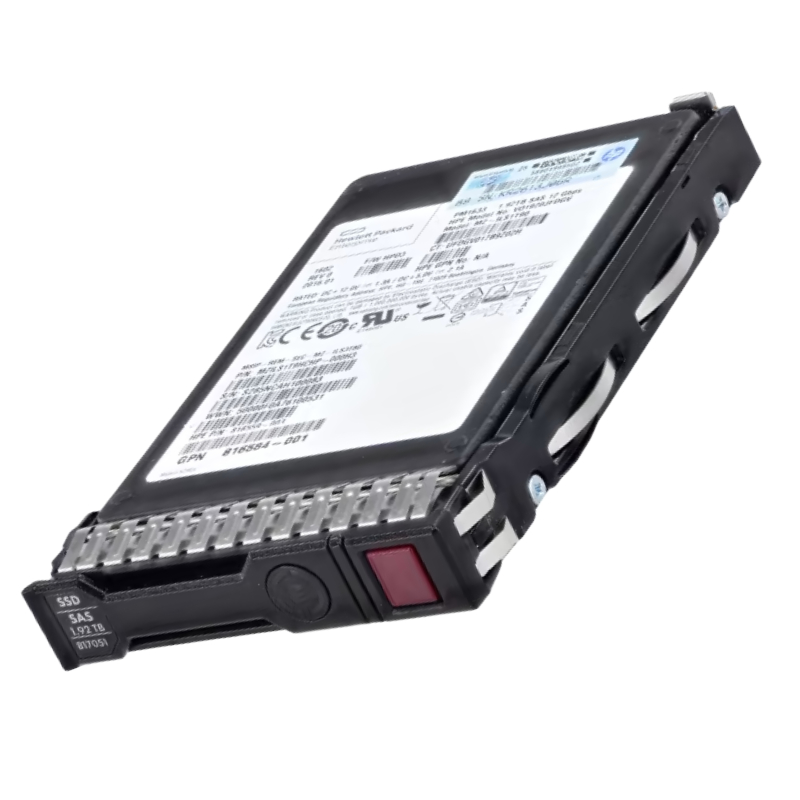


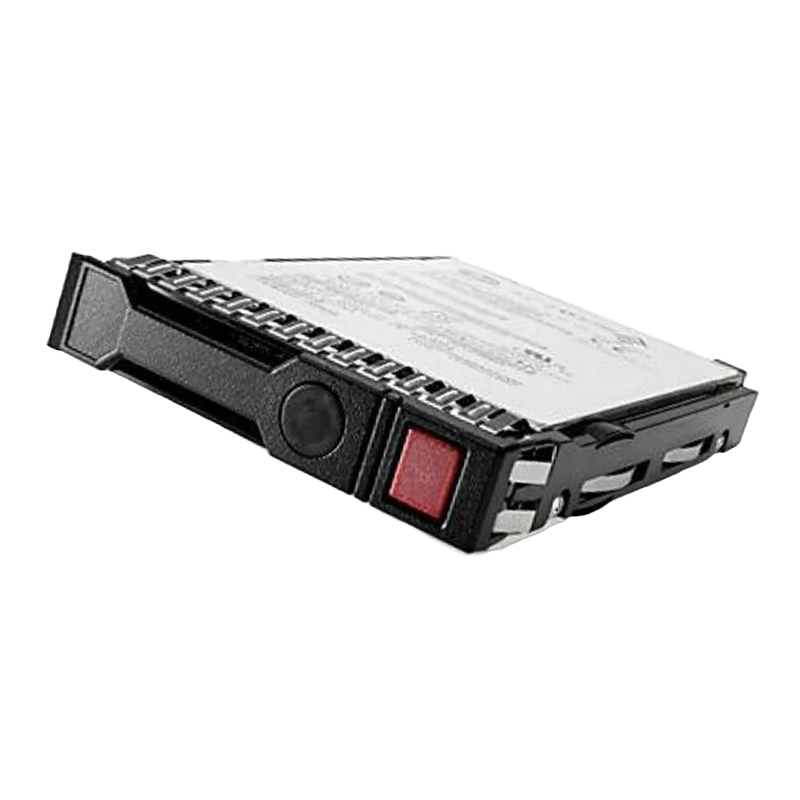
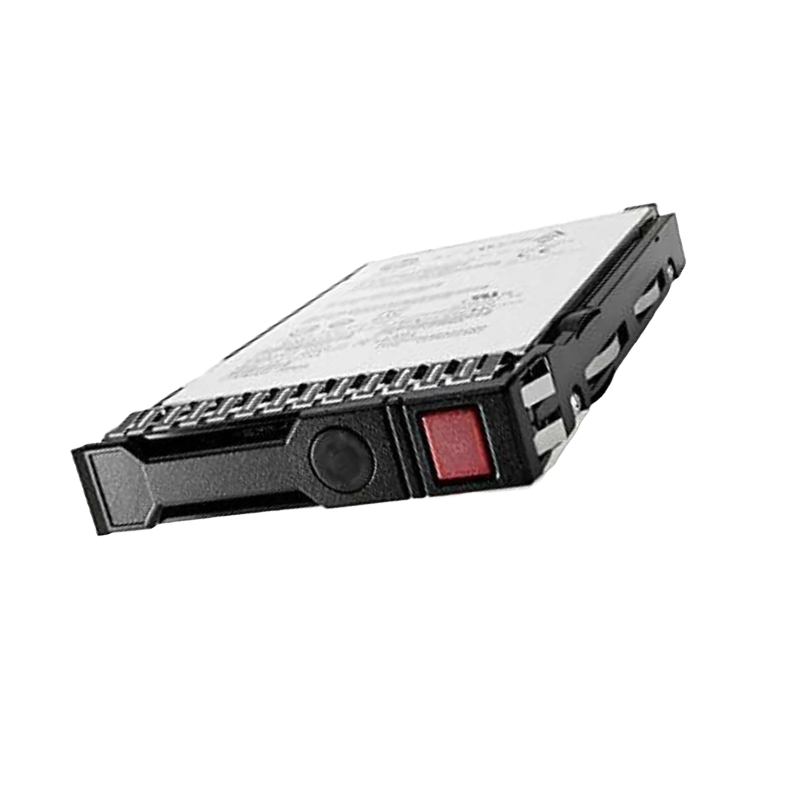
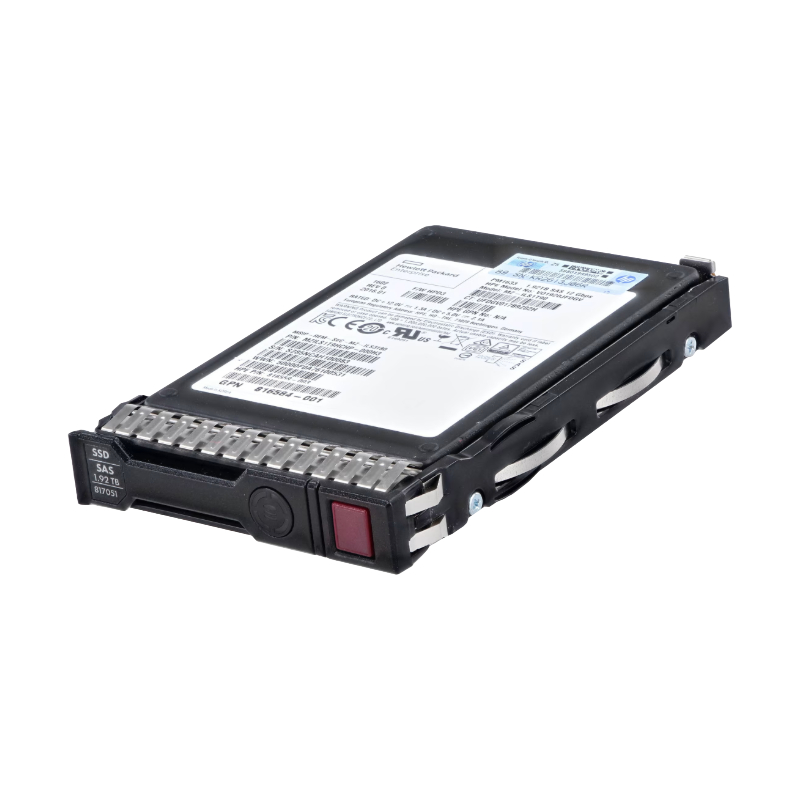
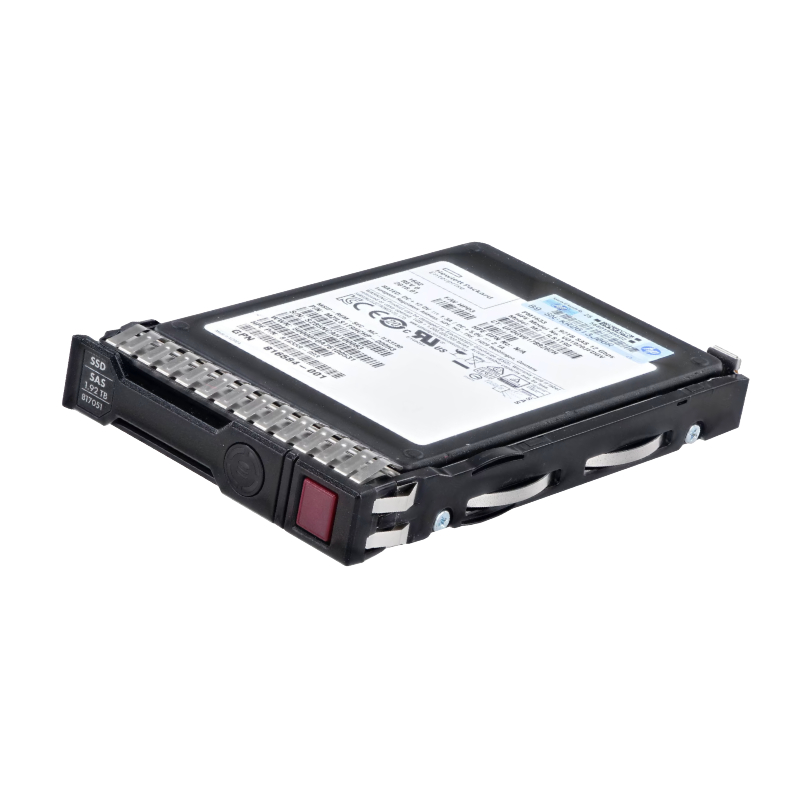
HPE 875591-B21 1.92TB SSD PCI-E X4 Nvme SFF Hot Swap SCN. Excellent Refurbished with 1 year replacement warranty
The HPE 875591-B21 solid-state drive delivers exceptional read-centric performance, making it an ideal solution for data-intensive environments. Designed for seamless integration into HPE ProLiant servers, this NVMe-based SSD ensures rapid data access and reliable operation.
The HPE 875591-B21 1.92TB Multi-Level Cell PCI Express NVMe x4 hot pluggable read intensive SFF 2.5-inch solid state drive with Smart Carrier for ProLiant DL380 Gen10 represents a focused category of enterprise-class storage designed for modern data center workloads that require high throughput, low latency, and robust operational reliability. This category description concentrates on the technical composition, deployment considerations, compatibility with HPE ProLiant systems—particularly the DL380 Gen10 platform—and the practical benefits that organizations achieve when adopting NVMe-based read-intense MLC storage in a small form factor. Emphasis is placed on architecture and interface choices, performance characteristics such as IOPS and sustained throughput, endurance metrics and write amplification considerations for read-intensive profiles, and the management conveniences of hot pluggability and Smart Carrier hardware integration that simplify maintenance and field servicing in scale-out infrastructures.
At the core of the category is the PCI Express NVMe x4 interface that unlocks the parallelism and command queue depth enterprise applications demand. The HPE 875591-B21 class of drives leverages a Gen3 or later PCIe lane configuration providing four lanes of direct processor-to-storage connectivity. NVMe as a protocol reduces software overhead by exposing lightweight I/O submission and completion queues to the host, which in turn enables higher IOPS with lower CPU utilization compared with legacy SCSI or SATA designs. The NVMe x4 bus is especially beneficial in read-intensive scenarios where random read latency is the primary constraint; the drive’s firmware and controller design prioritize retrieval efficiency and consistent latency under mixed request patterns. Engineers and procurement teams evaluating storage for virtualized workloads, database read replicas, analytics indexes, and content delivery nodes will find the NVMe x4 architecture a pivotal differentiator for throughput-bound applications.
Multi-Level Cell NAND occupies a strategic position in the product category by offering a balanced trade-off between cost per gigabyte and endurance. MLC stores more bits per cell than single-level cell technologies while retaining higher endurance and performance consistency than some higher density TLC or QLC alternatives. In the HPE 875591-B21 and similar part families, the drive is tuned for read-intensive workloads, a classification that implies firmware optimizations, over-provisioning strategies, and wear-leveling algorithms tailored to predominantly read operations with lower write amplification. Read-intensive SSDs are well-suited for large-scale read-heavy environments such as web indexing, content distribution, boot volumes in virtualized clusters, and cold database shards that require fast access but have limited sustained write cycles. The MLC technology used here helps sustain consistent read latency and throughput while providing predictable lifespan estimates under enterprise workload profiles.
The small form factor (SFF) 2.5-inch chassis enables dense storage configurations in rack-mounted servers like the HPE ProLiant DL380 Gen10. This category’s emphasis on SFF 2.5-inch drives ensures compatibility with modern server trays and sleds, maximizing rack density while maintaining thermal and serviceability standards. The hot-pluggable nature of these drives means that maintenance operations—drive swaps, replacements, and upgrades—can be performed without powering down the server, a critical capability for 24/7 production environments that can’t tolerate downtime. Hot pluggability works in concert with HPE’s Smart Carrier design which provides tactile, tool-less insertion and ejection coupled with LED indicators for activity and health, simplifying field operations and reducing Mean Time to Repair (MTTR). Sysadmins appreciate the Smart Carrier’s mechanical alignment and connector protection, which help prevent accidental damage during service procedures.
Compatibility with HPE ProLiant DL380 Gen10 is a primary selling point for this category. The ProLiant DL380 Gen10 is a versatile enterprise server platform used extensively across industries, and storage components certified for it go through rigorous interoperability testing with HPE firmware, BIOS, and management tools. Drives in this category expose essential features such as NVMe device health reporting, SMART telemetry, and HPE-specific identifiers that integrate seamlessly with HPE OneView and iLO management stacks. These integrations allow centralized monitoring of drive health, predictive failure analytics, and unified firmware update workflows. Organizations investing in HPE servers benefit from a reduced support surface and clearer compatibility matrices when selecting drives from this category, ensuring that procurement, deployment, and long-term maintenance proceed without unexpected compatibility hurdles.
Performance in this drive category is measured across sequential throughput and random IOPS for reads and writes. Because the drives are designated read-intensive, their firmware is optimized for high random read IOPS, low single-request latency, and sustained read throughput even under high queue depth. The NVMe x4 connection enables multiple outstanding commands, which benefits multi-threaded server workloads and virtualization hypervisors that generate high parallel I/O. Typical deployments will observe reduced CPU overhead per I/O when compared to SATA or SAS-based endpoints, allowing more compute cycles to be allocated to application processing rather than I/O handling. Profiling tools and storage benchmarks such as fio and Vdbench will show characteristic low 99th percentile latencies and predictable tail latency behavior, an important metric for latency-sensitive services.
Endurance metrics such as Total Bytes Written (TBW) or Drive Writes Per Day (DWPD) are crucial planning inputs for the adoption of read-intensive MLC drives. While MLC offers higher endurance relative to denser NAND types, read-intensive classification implies a conservative endurance expectation compared to mixed-use or write-intensive offerings. Lifecycle planning therefore focuses on accurate workload characterization: calculate average daily writes, factor in peak write bursts, and compare against the manufacturer’s TBW rating to establish a replacement schedule and over-provisioning strategy. HPE-branded drives frequently include firmware-level telemetry that assists in this forecasting by reporting cumulative writes, power-on hours, and estimated remaining life. When integrated with HPE OneView or third-party monitoring systems, administrators can set alerts to proactively replace drives before they approach critical thresholds, avoiding unscheduled maintenance windows.
Thermal behavior and power efficiency are fundamental considerations when deploying many NVMe SSDs within dense server chassis. This category’s 2.5-inch MLC NVMe drives are engineered to function in the thermal envelope of the ProLiant DL380 Gen10, accounting for sustained performance at typical data center inlet temperatures and under high-concurrency workloads. Power consumption is typically higher under heavy I/O but optimized during idle and low-activity states to reduce total energy cost. Reliability metrics such as Mean Time Between Failures (MTBF) and manufacturer-backed warranties are key procurement metrics; drives in this class commonly ship with multi-year warranties and vendor support that reflect their enterprise-grade design. When multiplied across dozens or hundreds of servers, these thermal and power efficiencies translate into meaningful reductions in operational expenditures and cooling requirements.
This category is particularly well-suited to a range of enterprise use cases where read performance is the dominant requirement. Typical scenarios include virtual desktop infrastructure (VDI) read cache layers, database read replicas, content delivery caches, search engine indexes, analytics query acceleration, and metadata stores for distributed file systems. Data lakes and big data clusters can assign such drives to nodes with heavy read scanning demands, improving end-to-end query response times without the cost premium of write-intensive flash. Additionally, boot and OS volumes in virtualized host clusters benefit from the fast random reads, resulting in accelerated boot times, quicker VM provisioning, and reduced host restart times following maintenance. For hybrid architectures, these NVMe drives often serve as a high-performance tier paired with higher-capacity HDD tiers for cold storage, enabling tiered storage policies that balance cost and performance across the infrastructure.
Integrating HPE 875591-B21 class drives into a tiered storage architecture requires careful policy definition for data placement and automated movement between tiers. In many implementations, the NVMe read-intensive tier acts as a hot or warm cache layer, absorbing the majority of read requests and thereby shielding slower, capacious tiers from frequent access. Automation frameworks, either within the storage array, hypervisor, or through data management software, orchestrate the promotion and demotion of data based on access patterns, frequently accessed blocks are promoted to the NVMe tier, while rarely touched objects are moved to economical HDD or archival tiers. For cloud-adjacent architectures, the NVMe tier can also service latency-critical workloads while offloading long-term retention to object storage or cloud archival services, ensuring performance while controlling costs.
When evaluating this category against alternatives such as SAS SSDs, SATA SSDs, or higher-density TLC/QLC NVMe drives, decision-makers should weigh performance needs, endurance expectations, and total cost of ownership. SAS and SATA options often provide a lower upfront cost but cannot match NVMe’s latency and throughput benefits. Higher-density TLC or QLC NVMe drives may lower cost per gigabyte, but at the expense of write endurance and potentially higher variability under mixed workloads. The MLC NVMe read-intensive class strikes a balance for applications where read performance is paramount and write patterns are moderate. For organizations that require the absolute lowest latency and highest write endurance, mixed-use or write-intensive NVMe drives might be more appropriate despite higher cost; conversely, for archival or inexpensive capacity, HDDs remain compelling for cold data.


 Contact Us
 Information
 Catalog
 Solid State Drives (SSD)
 Network Switches
 Hard Disk Drives
 HBA & Controllers
 PC & Servers
 PC & Server Memory
 CPU & Processors
 Network Routers
 Power Supplies
 Tape Drives & Libraries
 Network Devices
 Computer & Network Cables